
Guess which South Carolina county council is keeping secrets again? | Opinion
Has it really only been a month since I wrote that “things are starting to stabilize” at the state’s most maligned governmental body, the Beaufort County Council? Those were the days.
The County Council is unbelievably using the same playbook, telling the public to pound sand.
Its members’ pledges of openness and transparency seemed sincere, so I was willing to give the council I had criticized so often the benefit of the doubt. Now I’m feeling pessimistic again.
This year the council voted in a new chair and took steps to boost public involvement by holding meetings around the county and moving public comment earlier in those meetings. It was a fresh start for a group that so recently spent a stunning $350,000 of public money on a report on invalid employee “p-card” purchases, then tried to get away with a consultant just discussing it verbally rather than making the report public. Criticized and shamed about that, the council then brazenly tried to get away with releasing just a short summary of the report. When the council was called out again — by the public, local media and county sheriff — the council revisited the issue and finally decided to share it — but only to law enforcement amid a widening state probe.
No member of the general public has ever seen this report that cost so much taxpayer money on an issue so central to our understanding of government — how it spends taxpayer money!
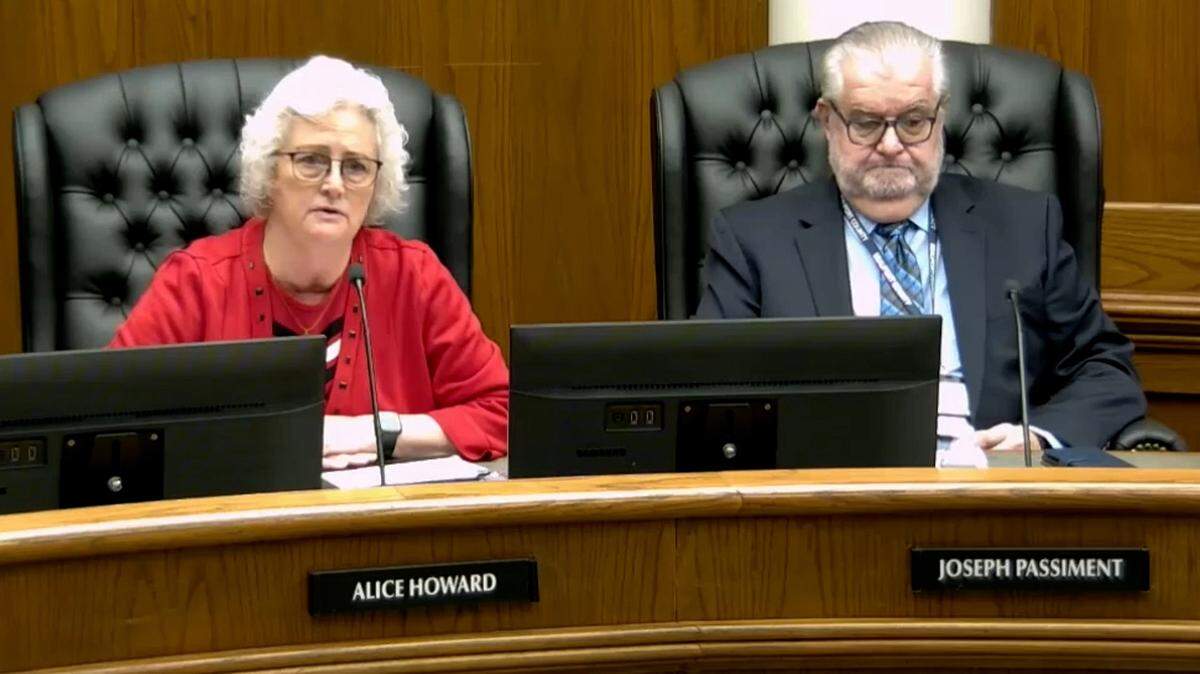
Yet enough council members had fruitlessly advocated for the report’s release that the majority’s election of Alice Howard as chair in January and her subsequent pledge to be “as open as we can” sounded like the council might be serious when it talked about a more transparent future.
Sadly, last week brought the frustrating news that another investigation into county staff activity had concluded and once again the report on it would be kept private per the council’s decision.
This time, the council paid a law firm $60,000 for an investigation into alleged leaks of sensitive or privileged information. To me, it all sounded like a witch hunt for one or more whistleblowers who in a different light should merit praise for trying to hold the county government accountable.
The council received a copy of the report March 10 to review in closed session. The contractual hourly rates of the Bettis Law Group employees who worked on the investigation ranged from $320 per hour for lawyers with 20-plus years of experience to $100 per hour for paralegals.
This time, the investigation was “inconclusive” — meaning that there was no evidence of any wrongdoing and that it was really money poorly spent — and again the county released nothing about it.
An overreach that breaks the law?
Eventually, in response to a request from The Island Packet and Beaufort Gazette, the county released a 12-page document with every word blacked out except for the first few lines containing the names of the people who sent and received the report, the date and a subject line.
The county cited attorney-client and work product privileges as the reason not to disclose more, but longtime South Carolina media law expert Jay Bender told reporter Chloe Appleby that the extensive redaction was an “overreach” that likely breaks state law.
Appleby also reported that the county’s secrecy didn’t end there. The county even refused to say how many employees were interviewed or what methods were used to interview them.
It’s bad enough it did all this once last year, but now twice? After all their pledges of transparency and openness?
Howard, the council chair, doesn’t see it the way I do. In an interview, she said it’s a clear-cut personnel issue and the county’s attorneys have advised council not to release it (when actually the law spells out which items and information can be withheld from disclosure, short of everything.)
In fact, the council could easily release it while protecting and redacting employee names or identifiers instead of making a mockery of the word redaction with a totally blacked-out report.
We disagreed on this, too: Howard said she sees no parallels between the council’s handling of the p-card report and its decision to withhold the new report.
“There were conclusions that needed further investigations with the p-cards and they were referred to SLED (the South Carolina Law Enforcement Division) and the (South Carolina) Ethics Commission and we’re still waiting on the results of that,” she said. “This is not similar. There is nothing that we’re being advised should be referred.”
When I asked her about the mood of county staff during this workplace investigation, she told me that she had heard from several county employees who had told her the probe was making them uncomfortable, but she added that it wasn’t her call to initiate it. She said it was county administrator Michael Moore’s call and that she felt like she had to trust his judgment.
I phoned him next.
Two steps back, one step forward
Given the scope, cost and results of this investigation, it certainly sounds like something that could have been better handled in-house. Instead, the law firm’s probe into potential employee handbook violations was initiated in June and lasted until mid-August, after which results were returned as inconclusive. Then the county re-opened the investigation in December and undertook it anew through February, when, for a second time, the results came back as inconclusive.
In our conversation, Moore, the county administrator, said he believes the investigation, while inconclusive, served a purpose because the county was now committed with new policies and assurances to take all employee complaints seriously, to offer greater protections for whistleblowers and to promise that there would be no retribution or retaliation against any worker who might come forward with something they wanted to share with county officials.
When I told Moore I see troubling parallels between the council declining to release two reports now and that it seems wasteful for the county to spend money on an inconclusive workplace investigation, he said he understood my perspective and appreciated my fiscal conservatism. But he said he had weighed its cost against the value of an outsider interviewing employees in a manner that might make them more open to talking.
He also said the council could decide to make the report public in the future but that it was within its rights to keep it secret. I hope it reconsiders. This is an embarrassing example of keeping the public’s business from it even though the public paid for the probe.
This council is clearly at a crossroads. It can drop the ruse of redacting everything and make the report public, or it can drop the ruse of saying it will be transparent when its actions show it won’t. I’m here to tell every council member actions speak louder than words.
In a related matter, multiple people who have submitted public record requests have also recently complained the county’s responses are too slow. This is deja vu all over again, and illegal. The county might think it can hold onto documents it might consider embarrassing until it absolutely has to release them. But the law doesn’t carve out exceptions for embarrassing documents, and the law applies to the council — and to county staff.
Luckily, county officials are showing signs of getting the message.
When I asked about the delays, Moore told me the county just hired two new Freedom of Information Act specialists to expedite the review and release of requests. This is the kind of openness that the county should be demonstrating. The decision to fill those vacancies shows an understanding about the definition of “public” and a desire to ensure the public has accurate, timely information.
But the step forward came after two steps back.
The question remains: What is Beaufort County hiding?
If you have a message for or about the Beaufort County Council, please email it to me at mhall@thestate.com and I may use it for a future column. Let me know, for example, if and why you want to see the report they’re keeping from us. Maybe they won’t get away with it this time.
This story was originally published April 21, 2025 at 6:00 AM with the headline "Guess which South Carolina county council is keeping secrets again? | Opinion."