Beaufort County spent $60k on two workplace investigations. It didn’t get any answers
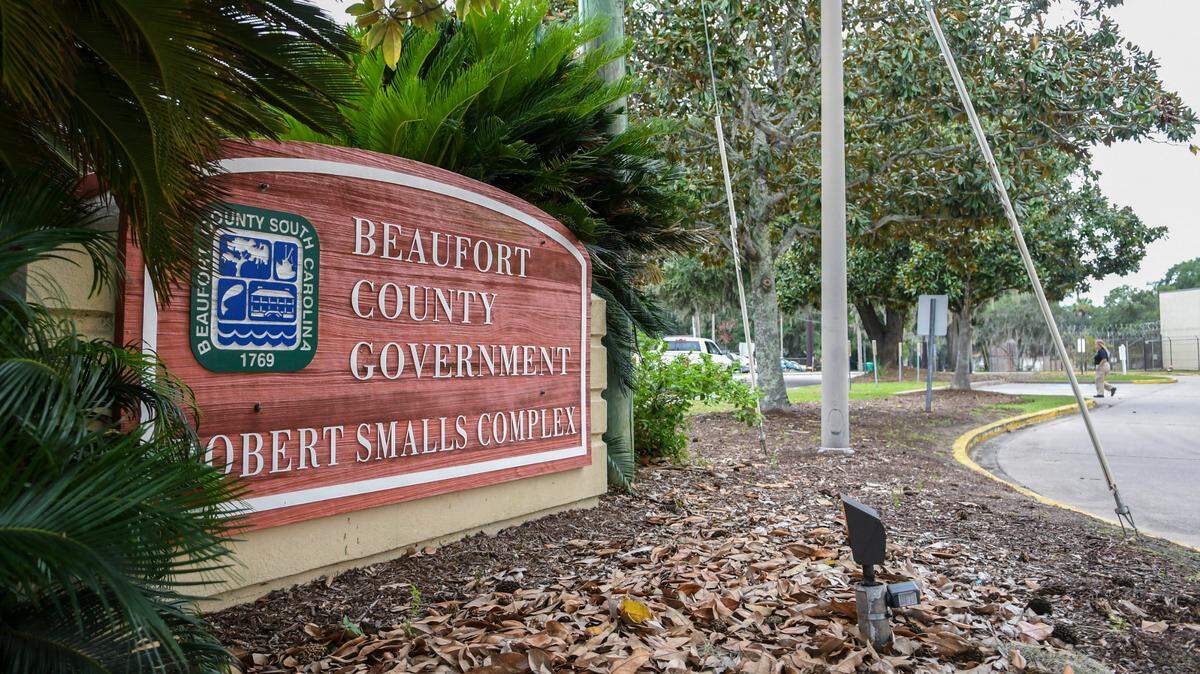
Beaufort County is no closer to knowing if employees are leaking sensitive or privileged information after a $60,000 internal workplace investigation came back as inconclusive.
In response to a request from The Island Packet and Beaufort Gazette, the county sent the papers a 12-page document with every word blacked out except for the first three lines, which included the title of the investigation, the names of the people who sent and received the correspondence and the date.
The county cited attorney-client privilege as the reason to keep the report undisclosed, but a South Carolina media law expert called the redactions an “overreach” that likely breaks state law. In addition to redacting the report, the county refused to answer broader questions such as how many employees were interviewed and what methods were used to do so.
The decision could have repercussions for a county trying to remake its reputation stained by past transparency issues and ethical violations. With recent leadership changes, elected officials and the county’s administrator have vowed to rebuild public trust by making decision-making and their spending more accessible.
The investigation
The investigation originally opened in June and was ongoing until mid-August. The results of that portion of the investigation came back as inconclusive. The county re-opened the investigation in December, with the final billable hours taking place on Feb. 28. Once again, the results of the investigation were inconclusive, said Hannah Nichols, the county’s spokesperson.
The investigation was conducted by Bettis Law Group, which is marketed as “South Carolina’s labor and employment law firm.” The firm provides services for employers in the state, such as conducting and supervising internal investigations, including those related to “discrimination, harassment, retaliation and whistle blower complaints,” according to their website.
The investigation initiated in June was “at minimum” considering item #3.8 in the Beaufort County Employee Handbook, said Nichols, which she described as the improper disclosure of confidential county information. The handbook further states that this includes finances, pricing, product development, marketing strategies, suppliers and customers.
It reopened in December due to “apparent continuing violations of employee handbook policies,” Nichols said.
The county did not answer what exactly triggered the reopening, but Nichols said that the second investigation could include additional items from the handbook, like stealing, removing or defacing county or a co-worker’s property, or violating the county’s computer system policy to transmit “fraudulent, libelous, or threatening” information to discriminate against or bully an individual.
The findings of that investigation came back again as inconclusive, Nichols said, but the council “may be adjusting some policies and procedures or taking other appropriate actions in the future.”
On March 10, County council members received a report of the findings to review during executive session, Nichols said.
When asked if any employees lost their job as a result of the investigation, she said that the county does not comment on personnel actions.
When asked how many employees were interviewed or the methods used to investigate whether they were the source of the leak, Nichols said the answers to those questions fall under the attorney-client privilege.
When asked how the county ensured employees did not feel targeted throughout the investigation, Nichols wrote that the county “calls on and values the assistance from its employees” to comply with its commitment to “all laws, regulations and ethical requirements.”
On average, the county employs 1,383 people at a time, Nichols said.
What did it cost?
According to the county’s open finance page, between August 2024 and present, the county has had 18 separate transactions with Bettis Law Group, spending a total of $91,800. That accounts for less than 1% of the county’s spending on vendors within the same eight-month timeframe.
The county has an ongoing relationship with Bettis as its employment law attorney and have been clients for many years, said Nichols. Invoices between the county and law firm reveal that between July and December, Bettis was employed for several different matters.
Between June, July and the first few weeks of August, Nichols said, the county paid the Bettis Law Firm approximately $5,000 for their work on the investigation.
Between December and February, when the investigation was reopened, the county paid the law group nearly $60,000 — about $20,000 each month — according to the public records. This accounted for over 200 hours of work, records show.
The engagement letter between C. Adair Bledsoe Jr., an attorney at the Bettis Law Firm, and County Administrator Michael Moore, states that legal fees are billed at hourly rates in quarter-hour increments. Hourly rates range from $320 per hour for attorneys with greater than 20 years of experience to $100 per hour for work conducted by paralegals.
Prior to the investigation’s closure, Nichols said that they would not be able to discuss the results of the investigation unless the Beaufort County council voted to waive their attorney-client privilege. A member of council first has to bring it forward for a vote.
The council’s chair and vice chair, Alice Howard and Tab Tabernik, said that so far, no one from the council has brought it forward. When asked if they planned on bringing it forward, they said they would not. Their reasoning was that the report includes personnel matters and is protected under the attorney-client privilege.
“There’s nothing in it,” the two leaders said.
The Island Packet and Beaufort Gazette requested a copy of the final report. The county provided the following documents:
What does South Carolina law say about this?
Of the 12-page lawyer’s report provided by the county, more than eleven pages were blacked out in the copy received by the newspapers. All that went unredacted were the three lines that included the title of the investigation, the names of the people who sent and received the correspondence and the date.
The county cited 30-4-40(a)(7), a section from the South Carolina Code of Laws for public records, as the reasoning for the redaction. In this case, the statute allows the county to keep from public view “work products” from lawyers or “any other material that would violate attorney-client relationships.”
But the county’s claim of having attorney-client privilege to redact the report of the publicly-funded investigation, almost in its entirety, may be an overreach according to long-time South Carolina First Amendment and media law expert Jay Bender.
“The attorney-client privilege is to be balanced against the public policy in favor of disclosure of government activities,” he said. “The privilege is not absolute and relates to confidential communications between the client and the lawyer.”
This is where questions arise about who can release the report. Attorney-client privilege only allows for the client, in this case the county, to waive its privilege to release the report.
According to Bender, the FOIA law requires that the county separate parts of the report that can be shared publicly the parts that can be withheld from the public.
“In my view the county’s claim of attorney-client privilege is broader than the law describes and the county has likely violated the FOIA law by not narrowly applying the exemption to allow non-exempt materials to be withheld,” he said.
This story was originally published April 14, 2025 at 10:49 AM.