Rare prehistoric, endangered fish washes ashore on SC coast. Here’s where, what we know
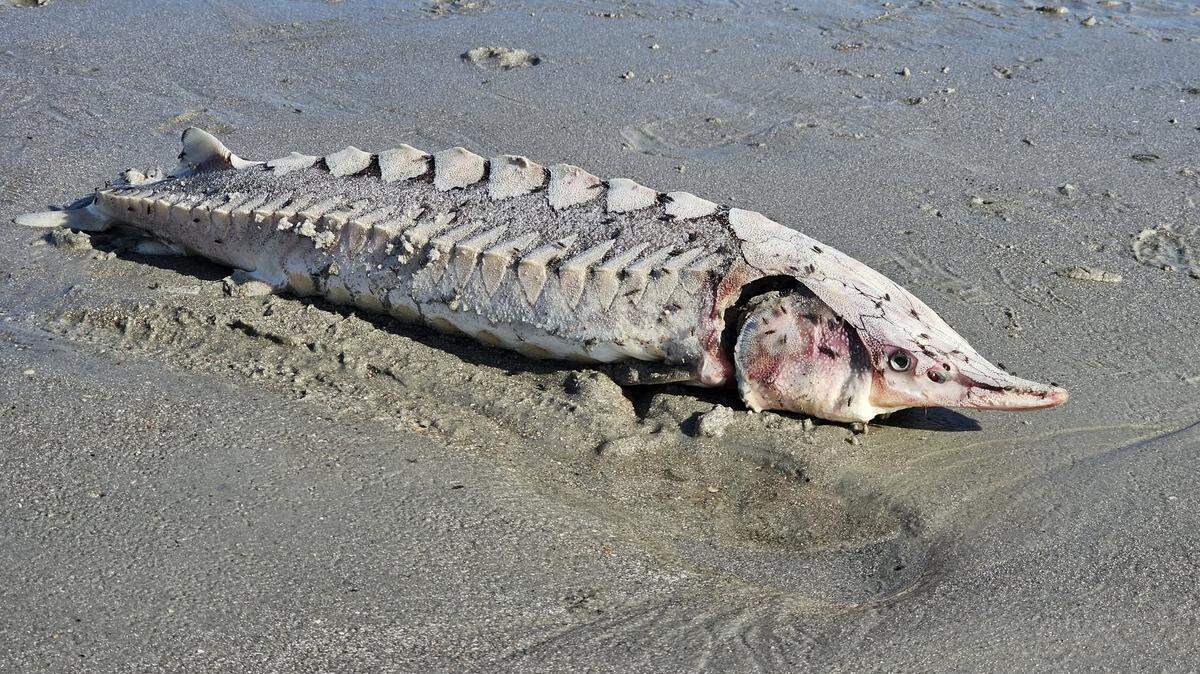
A prehistoric visitor washed ashore on Hilton Head on Nov. 19.
The fish, identified as a sturgeon, was first spotted by beach goers in front of the Islanders Beach Club. Shore Beach Services removed it and then turned it over to marine biologist Amber Kuehn, executive director of Sea Turtle Patrol Hilton Head Island.
Kuehn froze the fish at the request of the South Carolina Department of Natural Resources and will deliver it to the agency’s office in Charleston.
From there, the SCDNR Diadromous Fishes Program will measure it, take samples and photos, and submit a record to the National Marine Fisheries Service, according to Ellen Waldrop, a biologist with the program.
The discovery drew immediate attention because sturgeon sightings on Hilton Head are few and far between.
Waldrop confirmed that the fish has been identified as a juvenile Atlantic sturgeon — one of two species found in South Carolina waters, alongside the smaller shortnose sturgeon. Both species are federally protected, making it illegal to harm or keep them. Even a dead or stranded sturgeon should be reported.
A species built for the long haul
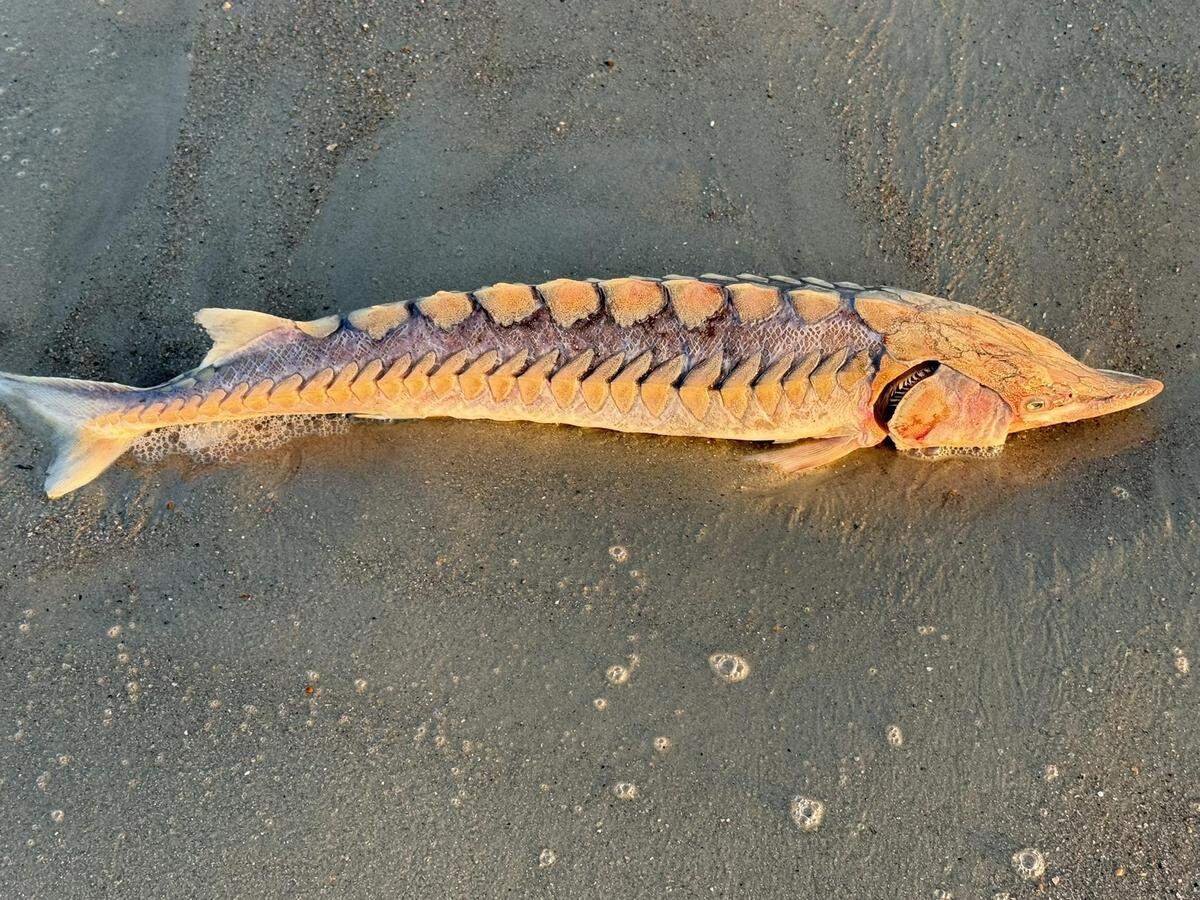
Atlantic sturgeon are known for their impressive lifespan and size.
The U.S. Fish and Wildlife Service says that sturgeons have a long fossil record, dating back 120 million years. Sturgeon ancestors even roamed the earth with dinosaurs 245 million years ago.
Adults can reach up to 14 feet and weigh up to 800 pounds, according to the National Oceanic and Atmospheric Administration Fisheries.
South Carolina’s populations tend to live anywhere from 25 to 30 years long and take five to 19 years to mature. These fish hatch in freshwater rivers, then spend much of their lives in coastal waters and return to their birthplace to spawn.
NOAA states that tagging data indicate that young Atlantic sturgeon travel widely up and down the East Coast.
The two types of sturgeons can appear similar, but Atlantic sturgeons can be distinguished by their larger size, smaller mouth, different snout shape, and tail scute pattern.
Once abundant, now endangered
Sturgeon populations were once abundant, but their numbers have plummeted due to overfishing and habitat loss. During the late 1800s, in what’s sometimes known as the “Black Gold Rush,” sturgeon eggs were a prized find and fueled a booming caviar trade.
Today, all U.S. Atlantic sturgeon population segments are protected under the Endangered Species Act.
Sturgeons are bottom feeders, sifting through riverbeds and coastal shallows for crustaceans, worms, mollusks, and bottom-dwelling fish.
Officials urge anyone who finds a dead or stranded sturgeon — or catches one accidentally — to report it to NOAA or the SCDNR.