
‘This is not a dolphin’: Ohio State student finds rare creature on Hilton Head’s beach
Kate Ross was on a bike ride on Sea Pines’ beach Wednesday afternoon when she came upon a creature that looked like it didn’t quite fit in on Earth.
“It has a rounded nose, so I thought maybe it was a dolphin,” she said of the carcass.
It wasn’t.
Ross had come across the body of a 6-foot Atlantic Sturgeon — a rare find for Hilton Head Island’s beaches.
An environmental sciences major at The Ohio State University, Ross took photos of the sturgeon and went back to her rental in Sea Pines to do her research.
“I just Google searched ‘giant fish carcass’ and I realized this is not a dolphin,” she said.
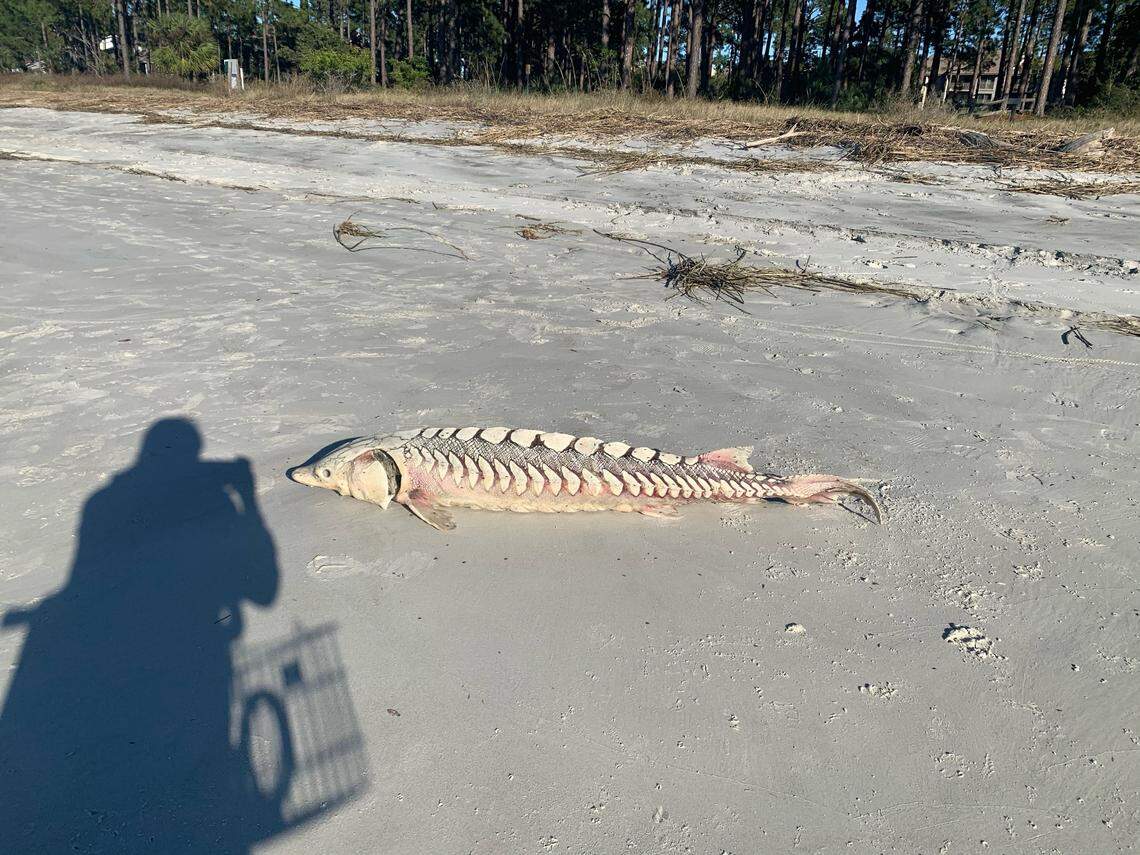
Atlantic sturgeon can grow to up to 16 feet long and can weigh up to 800 pounds. Marine biologist Amber Kuehn said Hilton Head has seen two to three of the prehistoric looking fish wash up on its beaches this year.
Sturgeon, endangered in the South Atlantic according to the National Oceanic and Atmospheric Administration, washed up in mid-March and mid-April this year.
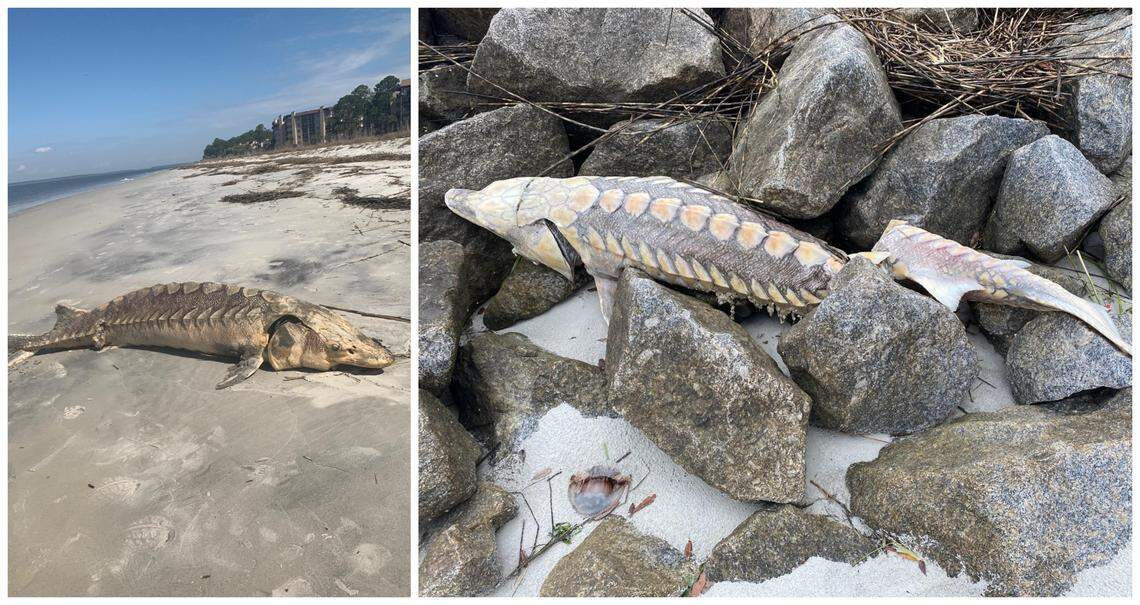
Kuehn said animal carcasses often show up on Hilton Head’s south end because the longshore currents push things south toward the curved tip of the island.
The lifespan of an Atlantic sturgeon correlates with where they live. In Canada, they live up to 60 years, but likely only 25 to 30 years in the Southeast, according to NOAA.
Although some on social media were anxious about sharing the habitat of such large fish, Atlantic sturgeon are bottom feeders.
They look for food that includes invertebrates such as crustaceans, worms and mollusks, and bottom-dwelling fish.
If you find a sturgeon on the beach, report it to NOAA on its website.
