SC had its first death from this virus in 22 years. What are the symptoms and are you at risk?
Last week, it was announced a Beaufort County resident had recently died after contracting eastern equine encephalitis, marking the first confirmed human case of the virus in South Carolina since 2020 — and the state’s first EEE-related fatality since 2003.
The disease, most commonly known by its initials of EEE, is a rare but potentially deadly virus spread to humans through the bite of infected mosquitoes.
Although only a few human cases are reported in the United States each year, about 11 on average, according to the Centers for Disease Control and Prevention, EEE has a high fatality rate.
Roughly 30% of people who develop severe symptoms die within 10 days, and many survivors suffer from long-term neurological damage.
The South Carolina Department of Public Health announced the death on Sept. 19, calling it a rare but serious incident that highlights the importance of mosquito prevention.
There is currently no vaccine or medical treatment to prevent EEE. Here’s everything to know about this virus and ways to stay protected.
How does EEE spread?
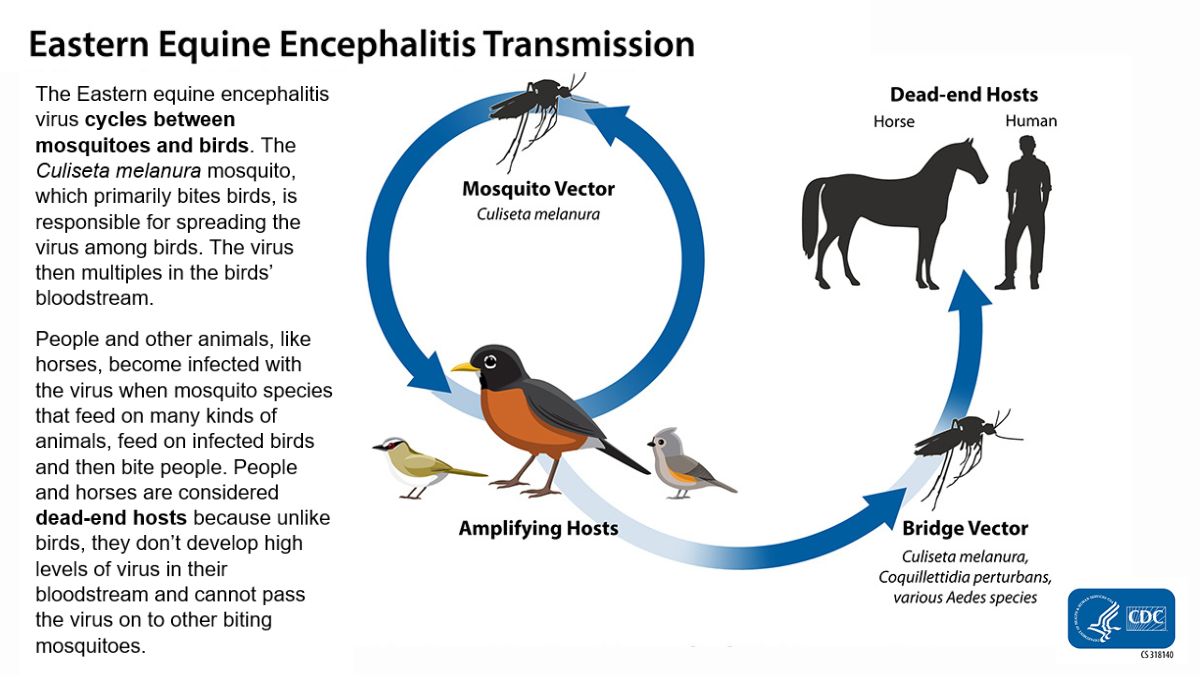
Mosquitoes become infected with the EEE virus by feeding on infected birds that live in swampy, wooded areas.
The virus is maintained in nature in this bird-mosquito cycle. Humans and other mammals, such as horses, become infected through mosquito bites, but do not transmit the virus further, making them “dead-end hosts.”
In 2025, the SCDPH states there have been 10 EEE-virus positive horses in Aiken County (3), Colleton County (2), Horry County (1), Jasper County (1), Orangeburg County (1), and Sumter County (2) from mid-July through August.
Who’s at risk and where?
EEE is most commonly found in the Atlantic and Gulf Coast states, as well as around the Great Lakes, the CDC reports. Most cases have been recorded near the Gulf Coast or in eastern states.
The virus is typically transmitted near freshwater hardwood swamps — environments that are known to support mosquito populations.
People who live in or visit these areas, especially those who spend a lot of time outdoors, are at increased risk. The CDC states the most vulnerable groups include people over 50 and children under 15, as they are more likely to develop severe neurological complications if infected.
Symptoms and diagnosis
Only 4-5% of human virus infections result in EEE, and most people infected do not show symptoms. However, in cases where illness does develop, symptoms can begin four to 10 days after a mosquito bite.
Symptoms of EEE can include fever, headache, vomiting, diarrhea, seizures, behavioral changes, and drowsiness.
The CDC notes that there are two types of illness caused by the virus. The type of illness contracted largely depends on the age of the person and other factors like possible exposure, travel, or where an individual lives.
- Febrile illness: Fever, chills, body aches and joint pain. This form typically lasts one to two weeks and may resolve on its own.
- Neurologic disease: More severe and includes encephalitis (brain inflammation) or meningitis (inflammation of the brain and spinal cord lining). Symptoms include fever, vomiting, seizures, behavioral changes, drowsiness, and coma.
The CDC says that rest, fluids and over-the-counter pain medicines might relieve some symptoms.
Diagnosis is confirmed through blood or spinal fluid testing.
Prevention and safety tips
The best way to reduce risk of infection of EEE virus is by preventing mosquito bites.
To reduce the risk of mosquito bites and potential EEE infection, the CDC recommends the following:
- Wear protective clothing like long sleeves, long pants, and light-colored, loose-fitting garments when outdoors.
- Use EPA-registered repellents such as products containing DEET, picaridin, oil of lemon eucalyptus, or IR3535.
- Treat clothing with permethrin or buy pre-treated items.
- Use screens on windows and doors, and repair holes in screens to keep mosquitoes outdoors.
- Use air conditioning, if available.
- Check and empty water-holding containers, both indoors and outdoors.
This story was originally published September 23, 2025 at 6:00 AM.