Interviewed in hiding, escaped NC inmate says he fled coronavirus ‘death sentence’
READ MORE
20 News & Observer stories to read from 2020
A sampling of the News & Observer’s journalism from 2020.
Expand All
An inmate who fled a federal prison camp in Butner and remains on the loose told The News & Observer on Thursday that he escaped because he feared death from coronavirus.
“I take ownership of having to serve my time,” said Richard R. Cephas, 54, who had been at the Federal Correctional Complex serving time on a drug conviction. “I signed up for a jail sentence, not a death sentence.”
Cephas contacted the N&O on Thursday morning, leading to interviews by phone and FaceTime. He didn’t reveal where he was — but he said he wants to turn himself in. He contacted the N&O, he said, to tell the public about the issues he saw at Butner and why he needed to flee.
Cephas fled Butner two weeks ago after the prison complex reported nine inmates and one employee had tested positive for the virus. Since then, those numbers have surged dramatically. The Federal Bureau of Prisons on Thursday reported 66 inmates and 25 staff had tested positive at Butner, one of the worst outbreaks in the federal system.
The bureau reported Butner’s first inmate death tied to the virus on Sunday, and has announced three other deaths since then. All had other health issues contributing to their deaths.
Cephas said he has neutropenia, a medical condition that makes him high risk for contracting the virus because his body struggles to make enough white blood cells that combat infections. His attorney, Bill Rhodunda of Wilmington, Del., confirmed in a phone interview that Cephas has the condition.
Prison conditions
Prison officials first reported a positive test at Butner on March 26. Since then, as the numbers grew, Cephas said he grew more fearful for his life. He said he sought early release but said the staff at Butner had not responded to his requests.
Making matters worse, he said, was the way the prison handled the outbreak. He said he works as an orderly at the prison camp, so he was acutely aware of a lack of soap. A staffer told him there wasn’t enough to go around, he said, and inmates were urged to use soap they had purchased.
Masks and gloves also hadn’t been issued, he said, and inmates couldn’t socially distance themselves in the confined space. A directive issuing masks for inmates and requiring staff to wear masks didn’t come until five days after he fled the prison, according to an email sent by the facility’s warden and provided to the N&O by an employee. The employee asked not to be identified for fear it could affect their employment.
Families of other inmates have also contacted the N&O in recent days to complain about a lack of soap and other unsanitary conditions.
Bureau of Prisons officials could not be reached after four phone calls by The N&O on Thursday afternoon.
Cephas was one of nine people from Delaware arrested as part of an investigation prosecutors called “Operation Bear Trap.” Prosecutors said in a news release at the time that it involved two different drug conspiracies with overlapping participants, one to sell methamphetamine brought in from Mexico and one to traffic cocaine.
Court records show Cephas was sentenced on June 22, 2017, in U.S. District Court in Delaware to 5 1/2 years. He said in Thursday’s interview with The N&O that he spent two years in a federal prison in Lexington, Ky., before being transferred to Butner in August 2019.
The prison informed local authorities that he was not considered to be dangerous.
The escape
On the day of the escape, Cephas said an inmate had returned from work at UNICOR, the federal prison industries company that has a textile plant nearby. He told Cephas another inmate working there had tested positive.
“He said ‘Don’t touch the phone, don’t use the computer, stay out of (that inmate’s) airspace,’ and I began to just tremble in fear,” Cephas said.
That night, after 9:30 p.m., Cephas said took some trash out to a bin as part of his normal duties as an orderly. But he had included his personal belongings in a bag contained within the trash bag. He removed them, dumped the trash and slipped away from the camp.
He said he tossed his personal belongings over a barbed-wire fence, then climbed it and ran into the woods.
He thought someone saw him as he fled, and he later saw trucks with bright lights , heard a helicopter and dogs barking. At one point, he said he submerged his body in a small creek to try to throw searchers off his trail.
“‘Come on, boys, we are going to get him,’” he said he heard in the darkness.
His story of his escape doesn’t match what the prison reported April 2. The news release said Cephas escaped shortly after midnight that day. The Butner town police chief also said the camp does not have a security fence.
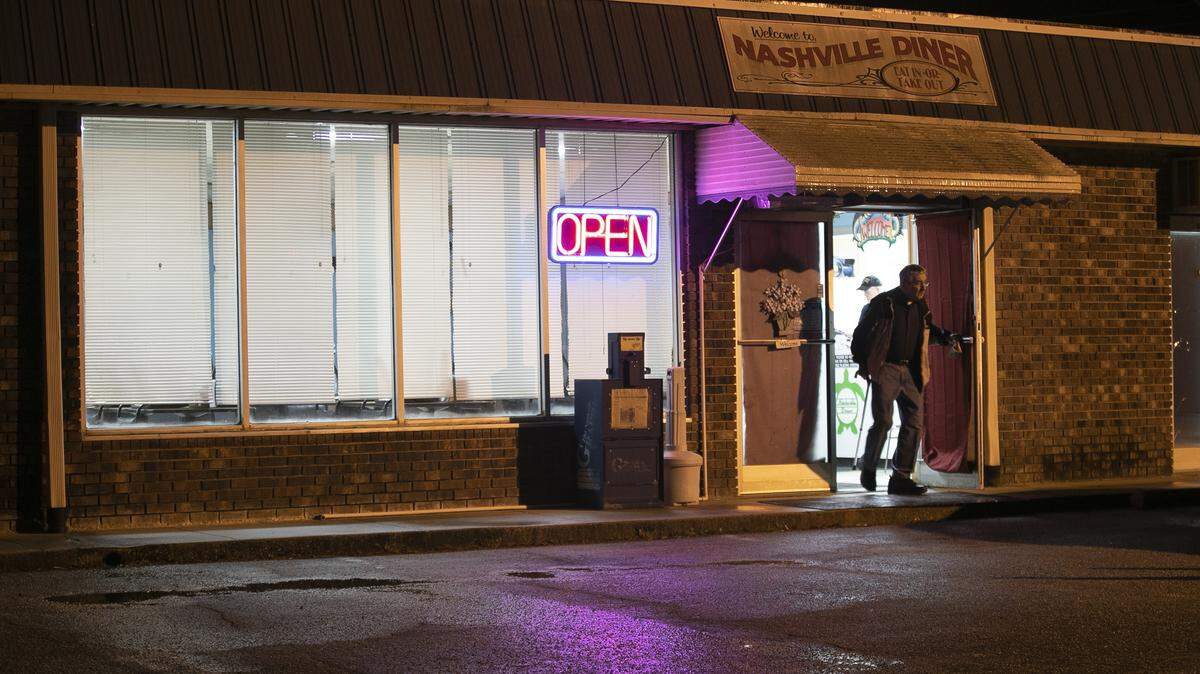
Cephas said it took him six hours on foot to make it to Durham, where he found a water pump behind a restaurant to drink from and rinse out his clothes. He said a homeless woman let him make a call from her cellphone, which he used to arrange to have money wired to him. He bought two T-shirts, two pairs of socks, a bus ticket out of Durham and something to eat. He had found a hat on the ground that he picked up and wore, he said.
He said he is now at a vacant house at a location he would not disclose.
Cephas does not believe that he contracted the virus while at Butner. But he now faces not having access to medication to counteract the neutropenia. He said he’s supposed to take a shot twice a week.
“I’m running a risk both ways, but I’d rather risk a run away from there than sitting right in the middle of a petri dish knowing I’d be the first to perish,” Cephas said.
After being on the lam for two weeks, however, Cephas said he wants to turn himself in. He said he has reached out to his attorney and criminal justice advocates to help him find a way to serve out the rest of his sentence without exposing himself to the virus.
“I want to turn myself in; that was my intent from day one, to make public awareness of what’s going on on the inside and so some of these guys can get out of there and not die in there,” he said. “So that’s my goal, for (criminal justice advocates) to reach back and contact me and tell me what is necessary to do moving forward.”
He said he hopes he would be allowed to serve the remainder of his sentence in home confinement. He said he has about 18 months left and had been a model inmate until he fled.
“I have to be honest, I don’t feel that I should get time for escaping from prison,” he said. “If it wasn’t for COVID I never would have left.”
Rhodunda, his attorney, said he wasn’t sure Cephas will get the outcome he seeks.
“He has legitimate health concerns, and I know he feels strongly that he wants to somehow find a way to position himself so he could be in a safe place if he turns himself in,” Rhodunda said. “I don’t know how he’s going to get there, but that’s his goal.”
This story was originally published April 16, 2020 at 5:28 PM with the headline "Interviewed in hiding, escaped NC inmate says he fled coronavirus ‘death sentence’."

.JPG)

.JPG)