Beaufort Co. pressures Hilton Head to quickly weigh in on hot-button US 278 issues
The looming and fiercely debated U.S. 278 corridor project is entering a crucial phase of development, and Beaufort County is upping the pressure on the town of Hilton Head Island to quickly weigh in on a variety of outstanding issues related to the $290 million endeavor.
The County Council voted 9-2 on Monday to support the county’s previous stance on a town-hired land planning consultant’s 26 suggested tweaks or additions to the favored U.S. 278 construction plan, but only if the town — within 30 days — provides municipal consent for the project; agrees to provide “at no cost” to the project team any town-owned land that’s needed for right-of-way acquisition; and agrees to pay for any additional project “enhancements” that the town wants.
The town now has until April 27 to respond to the County Council vote, said Jared Fralix, assistant county administrator.
(In its previous response to the town, sent in February, Beaufort County had agreed with many of the town-hired land planning consultant’s recommended changes to the project, such as maintaining left turns at the Squire Pope Road-U.S. 278 intersection, but opposed other ideas, including the suggestion of creating two new three-lane bridges between Bluffton and Hilton Head instead of one new six-lane bridge.)
Fralix in a phone call Wednesday argued that the County Council had not set an “ultimatum” for the town.
The county, Fralix said, is simply trying to ensure that the complicated highway project remains on schedule, which is important because an agreement between the county and the S.C. Transportation Infrastructure Bank, or SCTIB, says that if the project is not completed by Dec. 31, 2028, the county will have to reimburse the SCTIB for the bank’s prior financial assistance on the project.
The SCTIB has agreed to provide $120 million in grant funds.
“(The County Council resolution) was just, ‘Look, we need to keep this ball rolling, and in order to do so, please respond back in a timely fashion,’” Fralix said.
“Our goal is to start tying some bows on the loose, outstanding issues,” he said.
But the County Council’s resolution also caught some Hilton Head Town Council members by surprise and raised questions about whether the sometimes-frayed relationship between town and county officials has taken another blow.
“I’m not pleased with this direction,” said Alex Brown, the Ward 1 Town Council member, in a Tuesday phone call.
What is going on?
MKSK, the town-hired consultant, in October recommended several changes to the favored U.S. 278 construction plan, or “preferred alternative.”
Beaufort County in February responded to the firm’s 26 suggestions, agreeing with some and disagreeing with others.
The county, for example, opposed MKSK’s idea of building two new bridges instead of one, arguing that the proposal would add an estimated $27.3 million to the total project cost and jeopardize the $120 million in SCTIB funding, among other things.
Beaufort County staff, during the County Council meeting Monday, brought forward a resolution so the council could weigh in on whether it supported the February response to Hilton Head. County Administrator Eric Greenway explained the resolution.
Hilton Head Mayor John McCann in a phone call Thursday told a reporter: “I remember us telling Eric to go to the council and see what they really think.”
Town Manager Marc Orlando, reached by phone Friday, added: “I sent (the MKSK) recommendations to (the S.C. Department of Transportation) through Eric and requested their response, and in turn I knew that Town Council, my elected officials, wanted to know from Beaufort County Council ... what their response was to our recommendations.”
Greenway on Monday told the County Council that he thought the resolution should include some sort of “time frame,” through which the County Council could make its support conditional on the town providing municipal consent for the project; agreeing to provide “at no cost” to the project team any town-owned land that’s needed for right-of-way acquisition; and agreeing to pay for any additional project “enhancements” that the town wants.
Why?
Fralix, the assistant county administrator, explained that Beaufort County wants to submit project documents to the Federal Highway Administration for review sometime in April or May.
The highway administration, Fralix said, will then decide whether to issue a Finding of No Significant Impact, or a FONSI.
“If they find impacts, then you’re not granted that — basically — ‘keep going’ letter, (and) you have to do additional impact mitigation, whatever that might look like, which could take one month or it could take one year or 10 years,” Fralix said.
If the project receives a FONSI in summer 2022, he said, then the project can move into the design phase.
“We need to get (the) FONSI, or sign off from federal highways, this summer to maintain our schedule,” Fralix said.
That’s important because the county’s agreement with the state infrastructure bank, or SCTIB, says that if the project is not completed by Dec. 31, 2028, the county will have to reimburse the SCTIB for the bank’s prior financial assistance on the project. (If “exigent circumstances,” though, prevent the county or SCDOT from finishing the project on time, the SCTIB “in its discretion” can grant an extension for the completion date.)
SCDOT has said the project’s construction is expected to last three years.
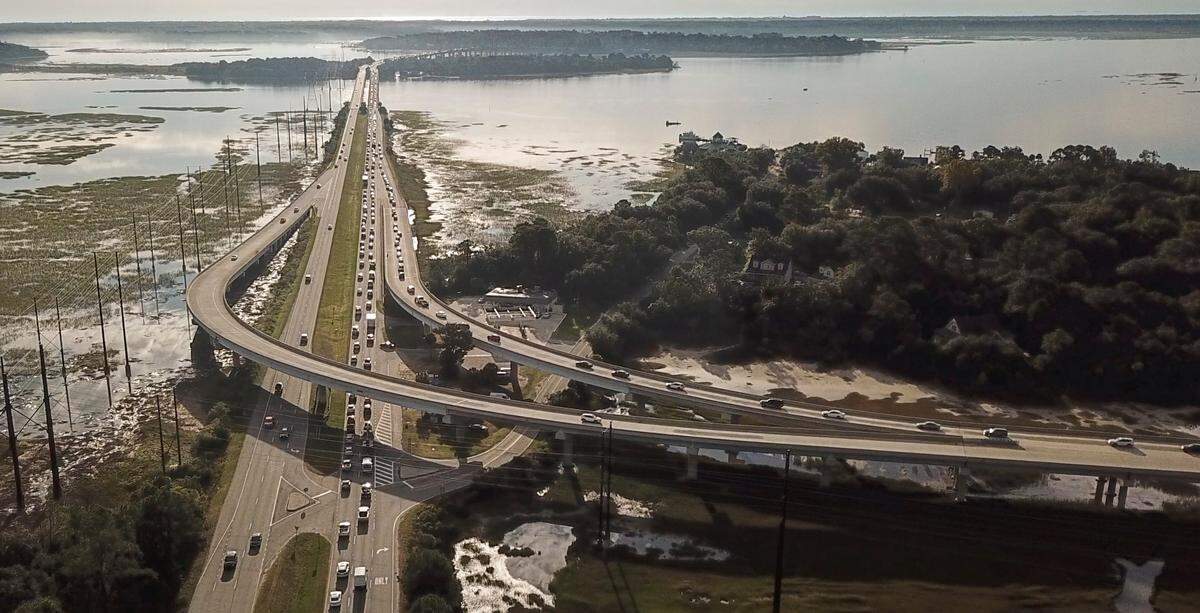
As part of the project, SCDOT wants to demolish the existing U.S. 278 bridges from the mainland to Hilton Head and replace them with a new six-lane bridge, and also plans to widen the entire highway corridor in the historic Stoney neighborhood to six lanes, among other things.
Many have said the project will be one of Hilton Head’s most consequential undertakings this century. SCDOT plans to reshape the island’s only entry and exit point.
“We now have a once-in-a-lifetime opportunity to improve our current traffic situation in a way that is beneficial to all,” wrote residents Diederik Advocaat, Steven Baer and Gray Smith, frequent critics of the handling of the project, in a May 2021 letter to federal highway officials.

What is municipal consent?
The municipal consent process has been a hot-button issue for years.
Pete Poore, an SCDOT spokesman, in an October statement to The Island Packet and Beaufort Gazette wrote that Beaufort County needs the town only to consent to proposed U.S. 278 construction within the town limits and outside of the approaches to the newly proposed bridge.
The existing bridges, Poore wrote, do not cross into the town limits on Jenkins Island.
The news was a blow to local critics of the project and ran counter to what many residents following the project had long believed: If the town opposed the plan to replace the U.S. 278 bridges, the state would have to go back to the drawing board.
The newspapers’ article prompted a meeting between the county, state and town and drew a sharp response from state Sen. Tom Davis, R-Beaufort.
“I realize state law provides that only work on state highways within a municipality must be with the consent and approval of the proper municipal authorities,” Davis wrote at the time.
“But I am making a political statement, not a legal one, and the bottom line is this: If the town requests changes, even as to areas of the project outside its municipal limits, they must be received, considered, and respected by the SCDOT; otherwise, the project is not going to move forward.”
Orlando, the town manager, meanwhile, in a phone call Friday said, “I know that we are working on getting to a point where there at least can be a decision point for municipal consent or not.”
“I still think there’s a lot of work to do on the project to get there.”

‘Policymakers gotta talk’
The County Council’s recent U.S. 278 resolution has received a mixed reaction, which is not surprising given the town and county’s sometimes-tumultuous relationship.
Stu Rodman, the District 11 County Council member who represents part of Hilton Head and lives in Sea Pines, argued Monday that the resolution “comes off as kind of heavy-handed.” He urged council members to postpone action on the matter and instead try to come up with a joint resolution with the town.
“I don’t see anything lost, and I see a lot to be gained, by having a more friendly approach with them,” Rodman said.
The County Council, though, still moved forward with the resolution as it was written Monday.
Hilton Head Town Council members had varying perspectives on the news this week.
Brown, the council’s Ward 1 representative, in a phone call Tuesday said he was “not pleased with this direction,” adding that he hoped that elected officials from both the town and county could meet together in the coming weeks to discuss the project.
“Policymakers gotta talk,” Brown said.
Ward 5 representative Tom Lennox, meanwhile, said he did not know beforehand that the County Council was going to vote on the resolution Monday.
“I think we ought to talk with (Chairman) Joe Passiment and find out what is the basis behind the county taking this position,” Lennox said in a phone call Tuesday.
Lennox stressed that he did not think the County Council vote had further strained the town and county’s relationship.
McCann, the mayor, on Wednesday said, “we weren’t caught blindsided. Nobody’s mad at each other.”
“We weren’t surprised about anything,” said McCann, but later added that before Monday, he had not been aware of the 30-day time frame in the county’s resolution.
“The 30 days is fine. It forces both sides to do something in a given period of time, as opposed to leaving it open.”
Tamara Becker, the Ward 4 representative, who has frequently raised concerns about the project, said Tuesday, “I can’t even get to the point (of) whether I can go along with what the county’s presented because there’s unanswered questions that I’ve been asking for months.”
“I was informed and updated on the county’s (Monday) agenda and the topic, this particular topic, by some concerned residents on Hilton Head,” Becker added.
Ward 3 council member David Ames had no immediate reaction to the county vote. Ward 2 representative Bill Harkins and Ward 6 council member Glenn Stanford did not respond to phone messages.
The town announced Thursday that a Town Council workshop will be held to discuss the issue Tuesday at 1 p.m. in Town Hall. McCann said the County Council has been invited to attend.
County spokesman Chris Ophardt confirmed Thursday that, tentatively, four County Council members and Greenway plan to be at the meeting, though final details are pending.
A text exchange provided to The Island Packet and Beaufort Gazette on Thursday, meanwhile, showed that town staff was aware, as of early March, that Greenway planned to bring a U.S. 278-related resolution before the County Council for consideration.
But Orlando in an interview added that “I was not aware of the 30-day” component of the Monday resolution.
“I know there’s urgency to advance this project,” Orlando acknowledged.