Hilton Head group withdraws tax increase after backlash over official’s involvement
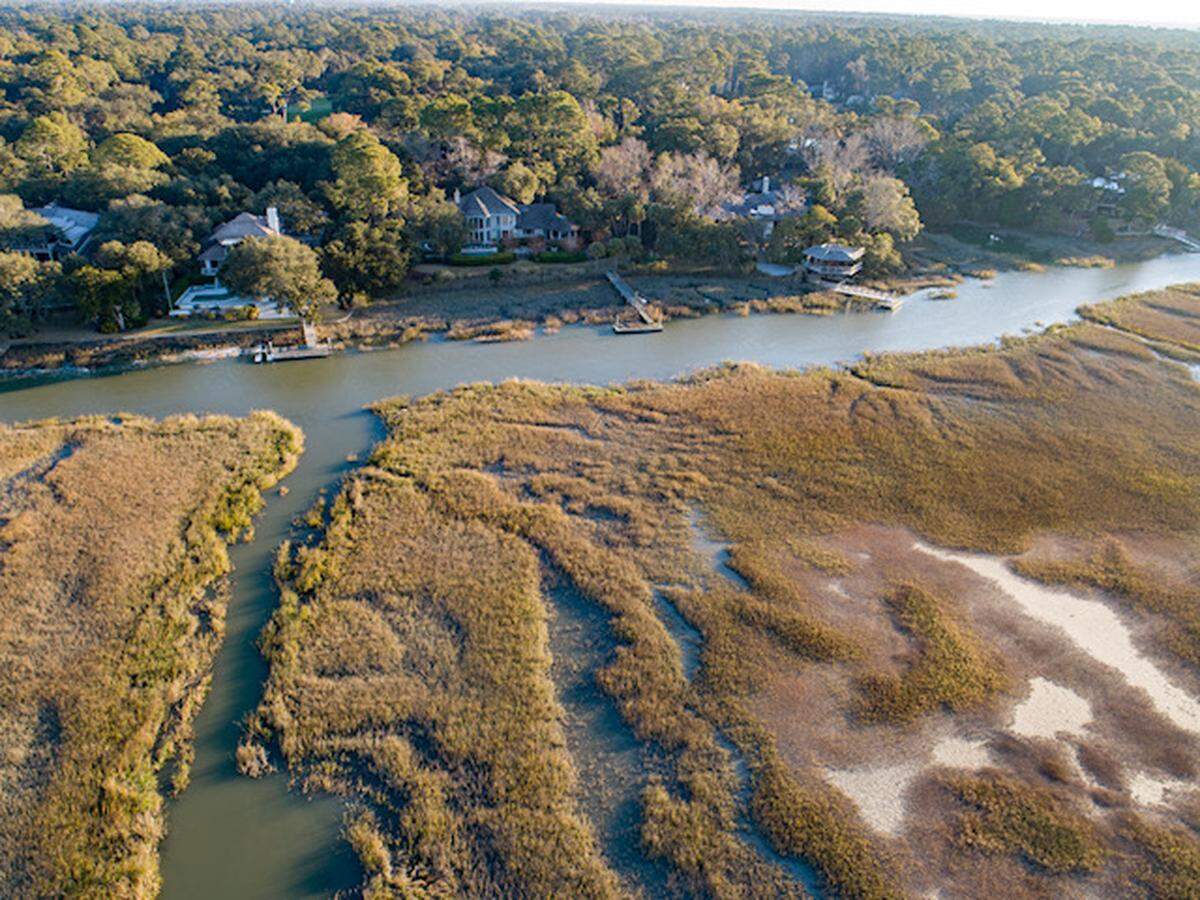
.jpeg "Drone footage of Baynard Creek in Hilton Head Island’s Sea Pines community.")
A plan to raise taxes for more than 200 Hilton Head Island property owners to pay to dredge Baynard Creek is no longer on the table after it caused a rift in the island’s most well-known gated community and prompted ethical concerns for a prominent elected official.
The group of six Sea Pines residents who were pushing for the tax hike, including Beaufort County Council member Stu Rodman, notified property owners last week that it had withdrawn its plan to create a rarely used mechanism called a special tax district (STD).
The committee will instead ask property owners to pay for the dredging voluntarily through a “vigorous effort,” the email said.
“Although the dredging survey results have shown that a majority of respondents are in favor of the proposal, including the establishment of an STD as the funding mechanism, there has been a reasonable number of neighbors who have expressed concern about the STD as a favored solution to funding,” the email said.
“Our goal as a committee has been to try to build enthusiasm among our neighborhood to protect and enhance a treasured asset. It was never intended to be a win-at-all-cost initiative that divides our neighborhood.”
The proposal would have raised property taxes for 214 property owners near Baynard Creek in Sea Pines, ranging from $300 to $5,000 per year for 10 years. The money would have been used to pay off a $920,000 bank loan to dredge — remove sediment and debris — from Baynard Creek.
The creek, supporters said, has not been dredged in 15 years and needs to be cleaned to stop it from silting up and to keep the neighbors’ property values in check.
Federal and state permits allow the lower part of the creek to be dredged through 2023, which is why the committee felt it was urgent to secure funding, according to a previous presentation sent to property owners.
Opponents, however, pointed out that the creek flows directly behind the home of Rodman, a member of Beaufort County Council — the county’s governing body which would have had advisory power over the tax district.
Critics also said that only Rodman and the 12 other property owners who lived near where the creek was to be dredged would benefit from the property tax increase. They worried that Rodman and the six-member dredging committee had misled neighbors into approving a tax increase that would not benefit the entire community.
After the backlash, the dredging committee last week said it would ditch the tax district and instead opt for property owners to pay for the dredging through voluntary contributions ranging from $3,000 to $40,000 per home.
The email to residents made no mention of specific concerns or the allegations against Rodman, who previously told The Island Packet and Beaufort Gazette that he was not pushing for the taxing district and would have recused himself from voting for it if it came before the council.
‘We decided it wasn’t sensible’
John Crawshaw, a citizen who has spearheaded the dredging committee, reached by phone Wednesday, said the committee decided to drop the tax proposal after it became clear that there was a campaign of property owners against it.
“We decided it wasn’t sensible to continue to do a tax district that was dividing the community,” he said. “We voluntarily withdrew the proposal and said we would focus on the voluntary contribution program.”
The dredging and replacement of the community’s dock is expected to cost $1.2 million, the email said. The group asked for property owners to commit to the payment by March 31.
Property owners, according to the email, would have to pay half of the money by April 15 and the full payment by Oct. 31.
As of Wednesday, Crawshaw said more than 50 people have already agreed to pay a total of $600,000.
The money will be managed by an escrow agent and returned if the dredging does not occur, the email to property owners said.
“We hope you will agree that this approach is worthy of your consideration and that you will support our goal of preserving and enhancing this treasured community asset,” the email said. “Since some may not contribute, we hope that those that can, will consider contributing above the recommended levels.”
Property owner Ron Thomas, a retired nuclear engineer and vocal critic of the tax district, painted the decision as a “near miss.”
In an email sent to several Beaufort County and Hilton Head elected officials, Thomas called for tighter rules surrounding the creation of special tax districts.
“Perhaps working with our SC state legislation to enhance the STD law to prohibit STDs that are not in the best interest of the county,” Thomas said in the email.
“For example, strengthen the county involvement in the process such that a STD cannot be formed unless it provides a true public service to the general county residents,” he said. “Prevent STDs that are so focused on personal benefit by taxing those who do not directly receive personal benefit.”
How would a special tax district work?
A special tax district is a way to collect taxes from a specific area for certain services.
South Carolina state code gives Beaufort County the power to tax different areas at different rates. To establish a special tax district, 15% of voters within the proposed district must petition the county government for a referendum.
Once on the ballot, a special tax district has to amass only a simple majority of votes (50% + 1) to pass.
Beaufort County has been home to six special tax districts, all of which are north of the Broad River and have been used to pay for road maintenance, paving and, in one instance, a community pool.