Proposed Beaufort County tax district would pay to dredge creek behind official’s home
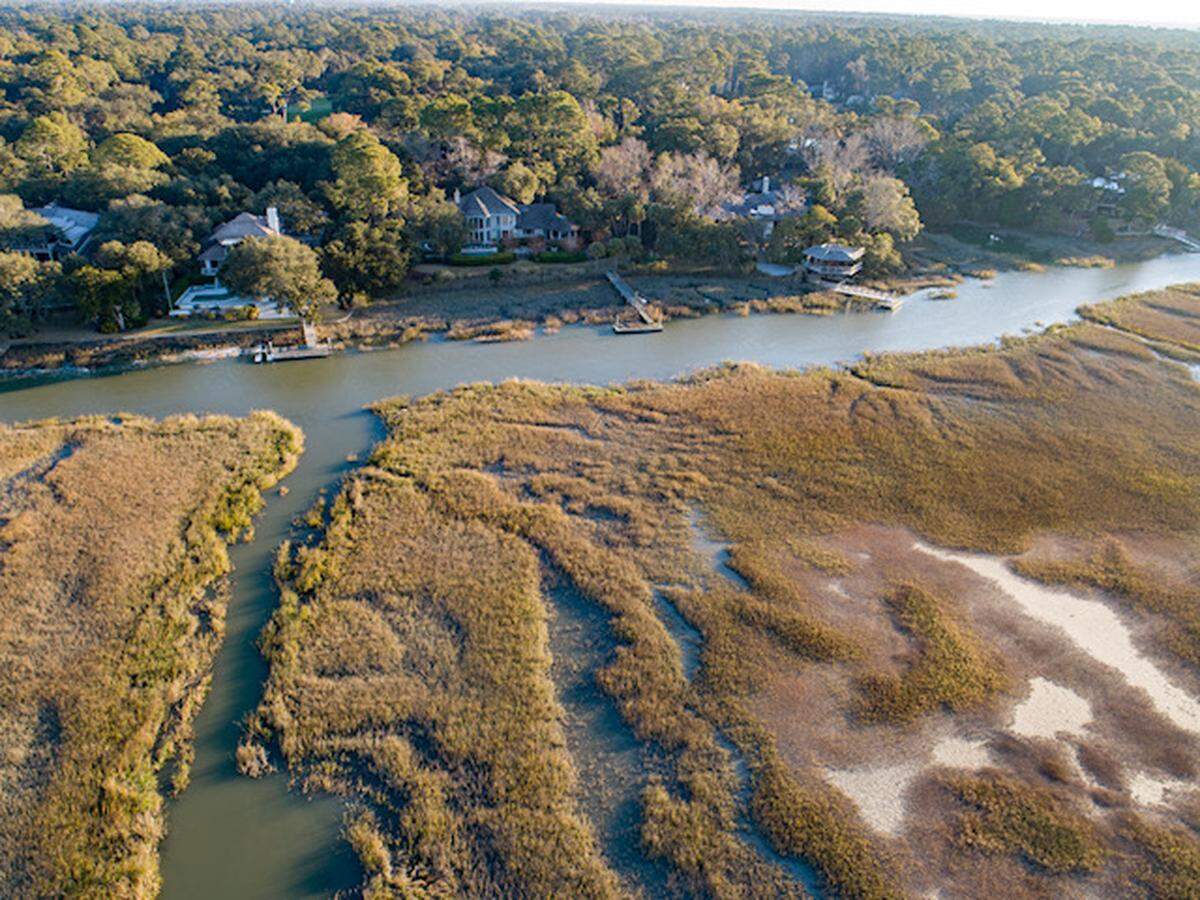
.jpeg "Drone footage of Baynard Creek in Hilton Head Island’s Sea Pines community.")
A Beaufort County elected official is facing scrutiny for being involved in a plan to raise his neighbors’ property taxes to pay for the dredging of a creek that flows behind his house.
The proposal, floated by a group of six Hilton Head Island property owners, including Beaufort County Council member Stu Rodman, would tax Rodman and more than 200 property owners at a higher rate through a special tax district — a mechanism rarely used in Beaufort County.
Rodman said he is not pushing for the taxing district and would recuse himself from voting for it if it came before the council.
If approved, the tax district would raise property taxes for 214 property owners near Baynard Creek in Sea Pines, Hilton Head Island’s most well-known gated community.
The annual tax increase for each home hasn’t been finalized yet, but it would likely range from $300 to $5,000 per year for 10 years. Homeowners who live closest to the creek would pay the higher amount.
That extra money, supporters said, would be used to pay off a $920,000 bank loan to dredge — remove sediment and debris from — Baynard Creek. The creek has not been dredged in 15 years and needs to be cleaned to stop it from silting up and to keep the neighbors’ property values in check, they said.
Opponents, however, point out that the creek runs directly behind Rodman’s home. Only Rodman and the 12 other property owners who live near where the creek is to be dredged will benefit from the property tax increase, critics said.
They worry that Rodman and the six-member dredging committee have misled neighbors into approving a tax increase that does not benefit the entire community.
Some neighbors say this presents a conflict of interest and raises ethical questions for Rodman, whose position on the Beaufort County Council gives him unique access to county resources and staff.
.jpeg "baynard park_20220118_0041-hdr (1).jpeg")
Rodman, reached by phone Thursday, disagreed with his critics and downplayed his role in pushing for the tax district.
“I have not advocated actively for it,” he said, adding, however, that dredging would be “good for the creek.”
If the proposed tax district is approved by a majority of neighbors, it would go before the Beaufort County Council for final approval before it can be added to property owners’ tax bills.
Rodman would likely have to recuse himself from that vote.
For property owner and Baynard Peninsula HOA President Celeste Schwitters, Rodman’s involvement in the proposal is “self-serving.”
“It’s (Rodman’s) house,” she told a reporter. “It would be one thing if it was benefiting the entire community, but they want to dredge a very specific portion of the creek. It stops one house past his. For us, we are paying for something we will never benefit from.”
Rodman listed three reasons why the tax district would benefit the whole neighborhood:
▪ Those closest to the creek would pay the most;
▪ The area around the community’s park would be dredged;
▪ If somebody doesn’t agree with the tax, they can vote against it.
“I don’t see that I’m conflicted,” he said. “I think I have an obligation to constituents that if there’s something they want to do, I’m somewhat obligated to help them.”
Asked whether he would recuse himself if the taxing district came before County Council, Rodman said “Sure.”
“I would be happy to,” he said. “I would not want to do something that the council was opposed to. That would be fine.”
Beaufort County’s spokesperson Chris Ophardt said Rodman’s discussions with the county about the tax district were legal and illustrate typical behavior by a council member.
Two people asked the county’s attorneys in early December how to create a special tax district to pay for the dredging. Rodman was not at the meeting and was not mentioned, he said.
“Mr. Rodman, as a property owner and resident of the proposed district, has the same right as any other resident to vote on whether or not to create the district,” Ophardt said in a statement.
“Mr. Rodman can and should provide advice on process and thoughts about the projects as he can to all constituents in his district.”
‘Crazy arrangement’
About a year ago, Rodman joined a six-member community committee to analyze how to pay for the dredging.
The group hired Charleston-based GEL Engineering, which determined that federal and state permits allowed the lower part of Baynard Creek to be dredged until 2023, according to a presentation sent to property owners.
Failing to dredge, the presentation said, will likely cause sedimentation in the creek and force the decline of the community’s dock.
Over the past few weeks, that committee has sought neighbors’ support of the tax district through informational Zoom meetings, email blasts and the PowerPoint presentation, titled “Why Baynard Creek needs to be dredged in 2022-2023.”
“Failure to dredge is not an option if we want to protect this community asset,” the presentation said.
Property owner Ron Thomas, a retired nuclear engineer, said the debate over whether to dredge is like “a magician that distracts you from what’s really going on.”
He was talking about the special tax district, which he called a “crazy arrangement” that will not benefit the whole community. The homes and villas near the proposed dredging are private properties and do not offer public access to the creek, he said.
Referring to Rodman’s role in pushing the tax, he said: “If I did this at my electric utility company, I’d be fired for an ethics violation for having such a self-serving activity that benefits me at the expense of others.”
Thomas and Schwitters have written letters to Beaufort County Council members, urging them to halt the tax district. Thomas also asked for clarity on where the proposal stands.
But John Crawshaw, a citizen who has spearheaded the dredging committee and invited Rodman to join, said he doesn’t view Rodman’s involvement as self-serving, but instead as a “sense of generosity.”
Crawshaw said it’s merely a coincidence that the dredging would occur behind Rodman’s house. Rodman has been a “very useful information source” for the committee because of his connections with County Council, he said.
Criticism of Rodman’s involvement is “presumably by someone that wants to bad mouth Stu,” he said.
“It’s very unfair to Stu, and it’s unfair to the dredging committee.”
How would the tax district work?
A special tax district is a way to collect taxes from a specific area for certain services.
South Carolina state code gives Beaufort County the power to tax different areas at different rates.
To establish a special tax district, 15% of voters within the proposed district must petition the county government for a referendum. Once on the ballot, a special tax district has to amass only a simple majority of votes (50% + 1) to pass.
Beaufort County has been home to six special tax districts, all of which are north of the Broad River and have been used to pay for road maintenance, paving and, in one instance, a community pool.
The district proposed near Baynard Creek is still in its early stages.
The dredging committee in late January sent a survey to property owners to gauge interest in the proposal. Property owners had until Friday to weigh in.
Here’s a breakdown of the estimated yearly tax amount:
▪ Villas on Baynard Creek (9): $4,000
▪ Villas off Baynard Creek (5): $2,000
▪ Houses upstream of dock (4): $5,000
▪ Houses on upper creek (31): $1,750
▪ Houses off creek (165): $300.
Rodman, according to estimates, would pay $5,000 per year.