New tax, government change: Here’s what Beaufort Co. is considering bringing to voters
Beaufort County wants to ask the county’s voters to decide two major proposals this November, as well as a new transportation tax in 2022.
The two issues proposed for this year — a change in the county’s form of government and a new tax — would be placed on the Nov. 2 ballot if approved by council. They come as the County Council grapples with how to handle disagreements with, and harassment allegations against, its county auditor and as local municipal leaders lobby for a new countywide sales tax.
The first issue would ask voters to change the county’s form of government, effectively make the county’s auditor and treasurer non-elected positions that report to the county executive. The other ballot question would be whether to approve a 1% local-option sales tax on all purchases countywide.
Officials have floated both proposals for years, but plans have either died in council meetings or were shot down by voters. This year, Beaufort County Council members approved both issues on first reading (two more readings are required by law) and are looking to hold an off-election year referendum in November.
Separately, on Monday, County Council member Stu Rodman floated a plan to ask voters to approve a new countywide transportation sales tax once the current one expires in 2022. The transportation tax, which council briefly discussed Monday, would partially fund what the county calls the “Beaufort Billion” — the total cost of all infrastructure projects countywide over the next 10 years.
Here’s a look at what Beaufort County residents may be asked to vote on this November:
Change of government structure
Beaufort County Council members have been tight-lipped about why they want to change the county’s form of government.
Under Beaufort County’s current form of government — council-administrator — the county’s auditor and treasurer are elected by voters and serve four-year terms. This form of government is used by 34 of the 46 counties in South Carolina (74%).
Beaufort County Council is asking voters whether to change that government structure to council-manager, a form utilized by only two S.C. counties: York and Greenwood.
Council-manager is similar to council-administrator in that the administrator or manager oversees county operations and reports to the elected council. The only real difference is that, in the council-manager form, the auditor and treasurer positions may be appointed by council rather than elected.
If council decides to appoint the two positions, those two people would serve as department heads hired by the county manager.
The council’s silence on motives for the proposal has drawn criticism from the public and from Treasurer Maria Walls, who in March said she hoped council members would be “forthcoming and honest with voters as to why they believe this course of action is necessary and not save those discussions for private settings.”

Earlier this month, Council Vice Chair Paul Sommerville responded to criticism, saying council members have to be “very careful” about what they say in public because of “slander and libel” concerns.
Although public statements about the ballot measure have been minimal, the proposal comes after acrimony and repeated run-ins involving the council, Auditor Jim Beckert and Treasurer Walls. The proposed change appears to be the council’s solution to their problems with Beckert. Last year, Walls and former County Chief Financial Officer Alicia Holland filed separate lawsuits against Beckert, claiming he harassed, bullied, verbally abused and lied about them for years.
County property owners’ tax bills were also delayed for four months last year due to a volatile tax-rate dispute between the council and Beckert. In court filings and pointed public statements, each side blamed the other for the delay.
Both Beckert and Walls were first elected to their positions in 2014 and re-elected in 2018. Their terms expire in 2022.
Sommerville, the council vice chair, has advocated for Beckert’s removal from office in the wake of the harassment suits. Sommerville also said the council had no power to remove him without an order from the governor.
But, he told a reporter in March, the change in government structure wouldn’t be in direct response to the county’s issues with Beckert.
“I don’t think it makes any difference who the auditor is and who the treasurer is — whether you have an incredibly competent person or you have someone who isn’t competent,” he said. “We want to put some requirements in there. I think the overall problem transcends individual personalities.”
Sommerville said he supports the change because it gives council the authority to fix problems with the auditor and treasurer positions, and it gives the county’s CEO — called a manager — power to hire qualified candidates instead of holding an election.
Others disagree.
Council members Brian Flewelling and Chris Hervochon have been vocal critics of the proposal. Last week, Hervochon said the new form of government would consolidate too much power at the county level. He called it a “knee jerk reaction” to a “small problem” — a problem, Hervochon said, that voters can resolve themselves.
Beaufort County Council approved the proposal 8-3 on first reading last week. Council members Flewelling, Hervochon and Logan Cunningham voted against it. It’s expected to come before the council for a second reading on Monday.
New sales tax
After pressure from local municipal leaders, including Bluffton Mayor Lisa Sulka, Beaufort Mayor Stephen Murray and Port Royal Council member Kevin Phillips, Beaufort County Council is debating whether to place on the November ballot a 1% local-option sales tax referendum on all purchases countywide.
The county has tried, and failed, to pass a similar tax twice since 1990. The county discussed the issue again in 2013 but never placed it on the ballot.
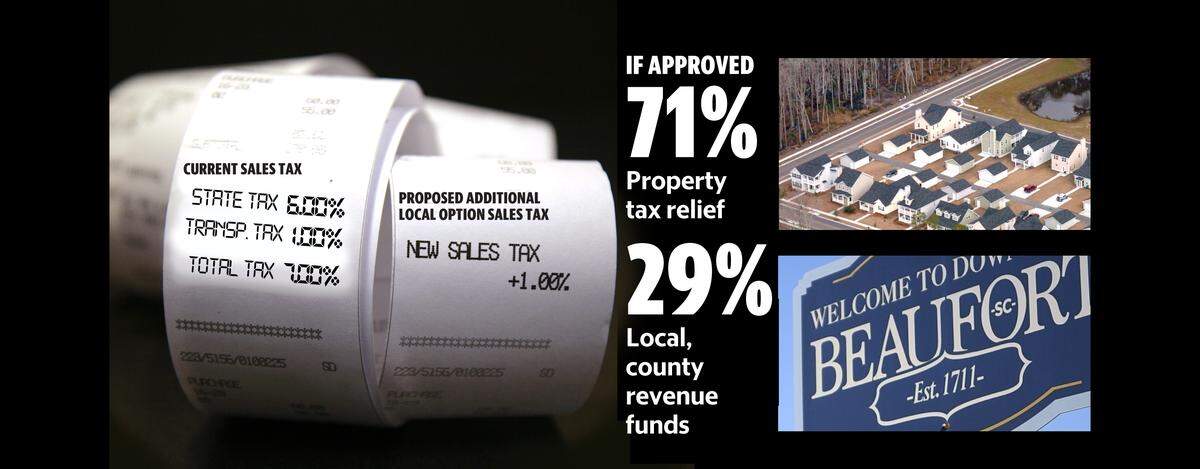
The local-option sales tax, or LOST, would be 1% tax on the gross proceeds of sales within the county.
It has the County Council split, with some members arguing full support of the tax, others saying it should be placed on the ballot for voters to decide, and outright critics who say it’s a regressive tax that hurts low-income residents.
Supporters say the tax would provide relief to Beaufort County property owners and split the tax burden between residents and tourists. Municipal government leaders say it would help pay for local capital projects like parks, roads and sidewalk improvements.
While some taxes can be used to raise money for specific purposes like transportation, school construction or other capital projects, the tax proposed in Beaufort County would have no dedicated use.
Instead, 71% of the tax proceeds would be distributed to the property tax credit fund, and the remaining 29% would go to the county and municipal revenue funds.
It would allow for a tax credit to offset a resident’s county and municipal property taxes and would be a source of revenue for county and municipal government operations. According to the S.C. Department of Revenue, which would collect the tax on behalf of the county, the tax is “on all sales at retail (with a few exceptions) taxable under the state sales and use tax” and is a way to reduce the property tax burden on property owners.
In essence, the proposed tax would shift some of the tax burden from Beaufort County property owners to tourists or visitors who don’t own property.
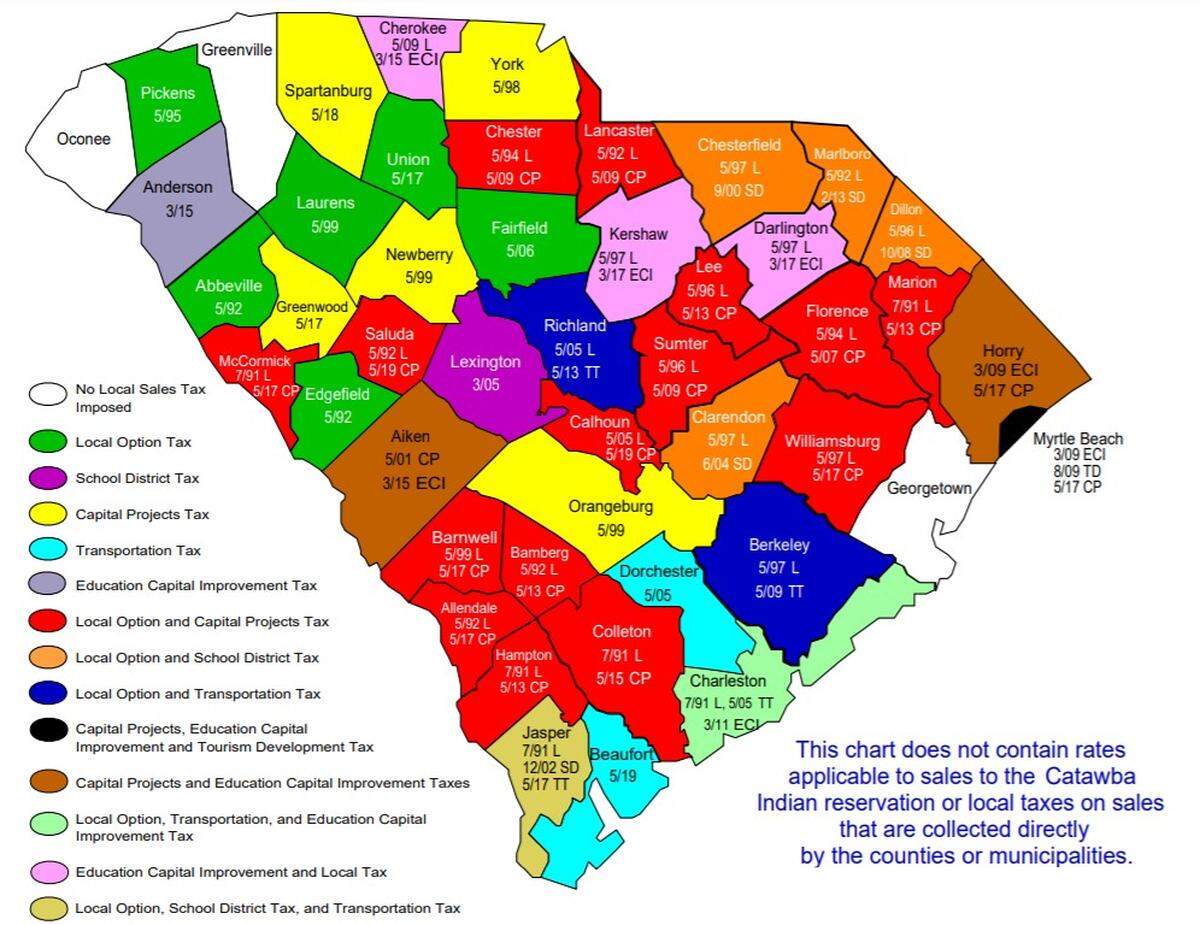
Beaufort County is one of only 14 counties in the state without a local-option sales tax, according to the S.C. Department of Revenue. Officials in Beaufort, Bluffton, Hardeeville Hilton Head Island, Port Royal and Yemassee signed a letter supporting the proposed tax.
“We have a significant amount of capital needs,” Beaufort Mayor Murray said. “A large percentage of our users are visitors, but they use our parks and they drive our roads. The sales tax is a better mechanism for them to contribute.”
Critics of LOST say it’s a regressive tax, favoring high-income property owners and landlords over renters and low-income residents. Unlike the 2018 transportation tax, a LOST does not have a set end date and would require another referendum to repeal. Some residents also criticize the concept of raising taxes with no dedicated use.
Council member Hervochon, who voted against placing the tax on the ballot, called it a “highly regressive” tax. He added that continually placing government issues on ballots is problematic and the council was “punting” its responsibilities to voters.
Council member Rodman, who is pushing for a new transportation tax in 2022, also said the proposal was problematic and called it the “largest tax in the history of Beaufort County.”
Beaufort County Council voted 7-3 on first reading to place the tax on the November ballot. Council members Cunningham, Hervochon and Rodman voted no. It’s expected to go before council on second reading on Monday.