‘We the people’ or ‘we the turtles?’ New Hilton Head beach lighting rules pass
New beachfront lighting rules for Hilton Head Island are just one step away from becoming law.
The restrictions that will protect nesting and hatching sea turtles between May and October were unanimously approved by the public planning committee. They now go to the Town Council for a final vote, but a majority of the council sits on the public planning committee and have already voted to approve the regulations.
The lighting rules have bounced between elected officials and staff nine times since January 2019. This is the second time the ordinance has been sent to council with a recommendation for approval.
“I’m excited we’ve passed this. We’ve been talking about it for a long time,” Ward 1 representative Alex Brown said.
Advocates for sea turtle protection, who helped write the original ordinance, have disagreed with beachfront property owners over how to best protect both animals and property rights. The final ordinance walked back some controversial measures aimed at keeping Hilton Head’s beaches dark.
Local wildlife advocates have pushed to limit lighting on the beach to keep hatchlings from becoming disoriented in their trek to the ocean. They originally asked the town for changes when tracking data showed sea turtle nesting success dropped from 62% to 48% between 2014 and 2018, according to town senior planner Anne Cyran.
Last year, about 35 nests showed instances of disorientation. That’s about 4,000 hatchlings, marine biologist and Turtle Patrol leader Amber Kuehn told The Island Packet.
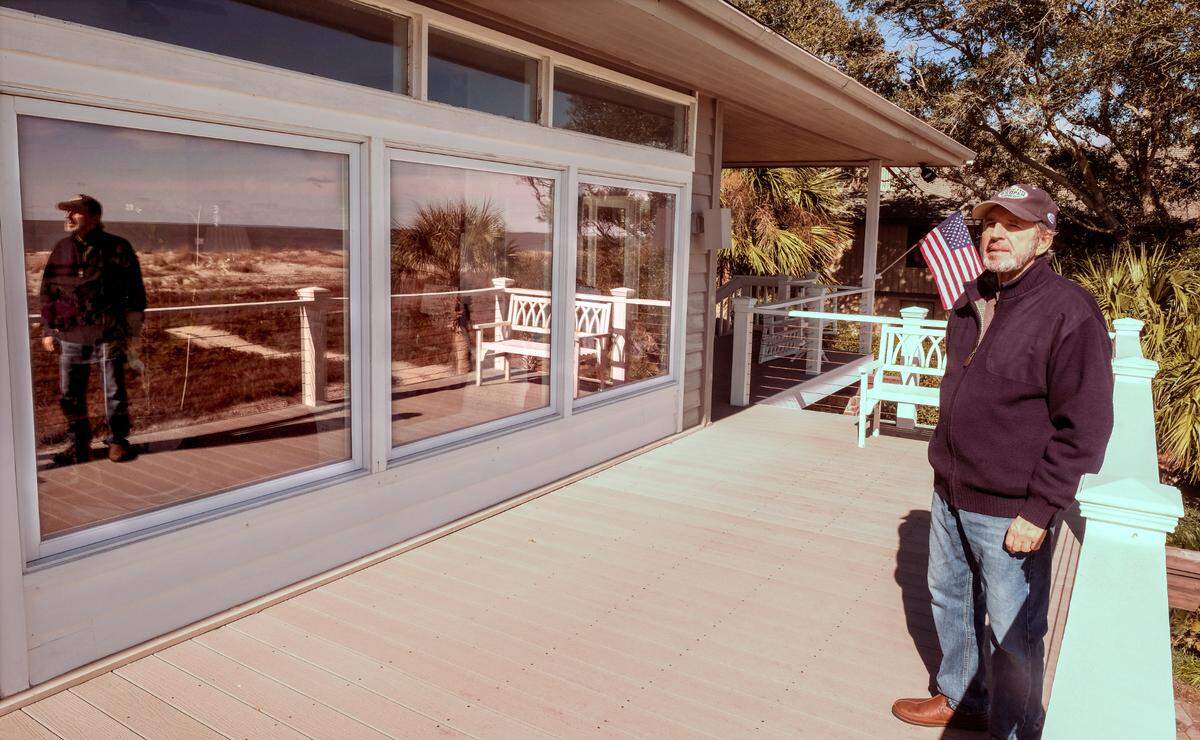
But some property owners from Port Royal Plantation, Palmetto Dunes and Sea Pines organized to oppose the regulations, which they say would have required costly window treatments like curtains and tinting. They argued that the government should not be able to limit retroactively their ability to use their own property.
The issue came to a head in the fall, when resident Howard Ackerman told the town committee that the lighting regulations emphasized the wrong island population.
“The Constitution’s preamble starts with ‘we the people,’ not ‘we the turtles,’” Ackerman said.
Advocates for lighting regulations responded by creating a bumper sticker, now available at the Coligny Piggly Wiggly, Frozen Moo and Big Bamboo Cafe.

New rules
If passed by the Town Council, the regulations will go into effect May 1.
Here are the details of the new rules for existing development:
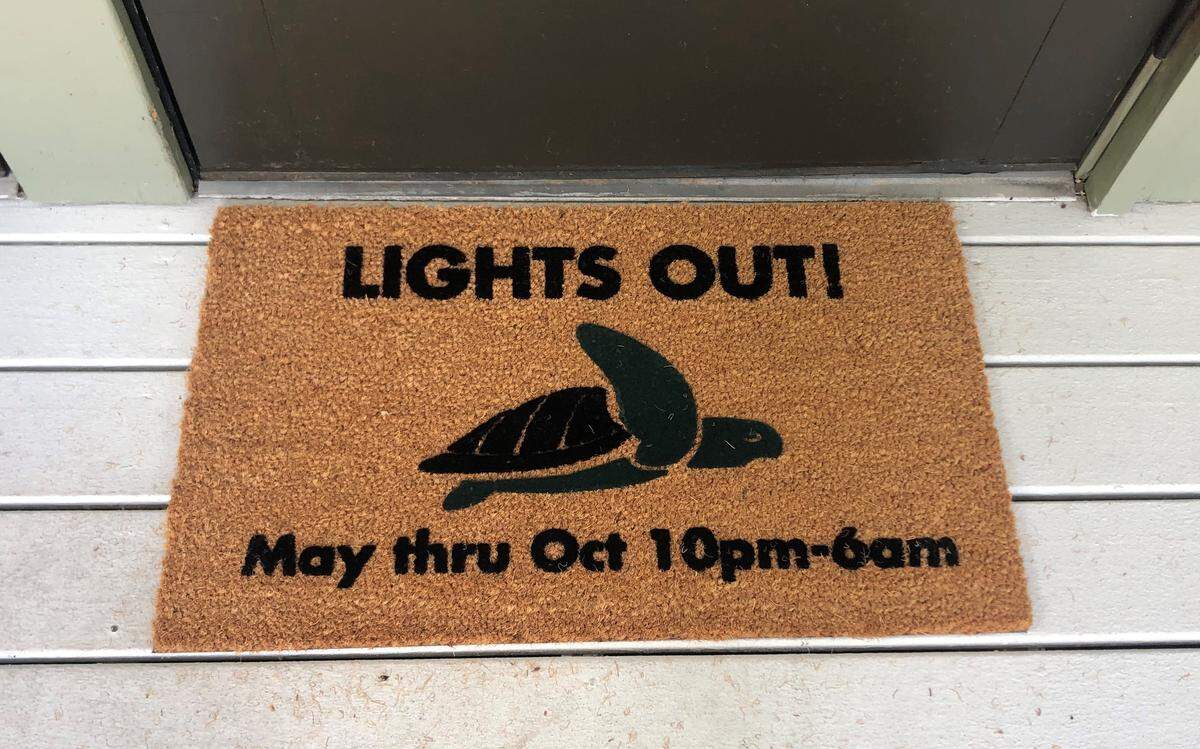
One or more of the following options must be used to make interior artificial light less visible from the beach between 10 p.m. and 6 a.m. during sea turtle nesting season:
- Use opaque material like curtains, blinds, drapes or solar screens to cover windows and glass doors that are visible from the beach between 10 p.m. and 6 a.m. during sea turtle nesting season — May 1 through Oct. 31.
- Apply tint or film with a manufacturer-verified, inside-to-outside light transmittance value of 0.45 (45%) or less to windows and glass doors that are visible from the beach.
- Use shields on light fixtures visible from the beach.
- Use long wavelength lightbulbs in light fixtures that are visible from the beach.
- Turn off interior lights that are visible from the beach between 10 p.m. and 6 a.m. during sea turtle nesting season.
Here are the other aspects of the regulations:
- All exterior light fixtures visible from the beach must be downward directed and have a shield, or they must be turned off between 10 p.m. and 6 a.m. during sea turtle nesting season.
- Floodlights visible from the beach serving as temporary security lighting at construction sites cannot be mounted more than 15 feet above the ground. Floodlights must be activated by a motion detector or use bulbs that produce long wavelength light such as amber, orange, or red light.
- Permanent security lighting visible from the beach will be permitted throughout the night as long as they are low profile lights or the lighting is turned off between 10 p.m. and 6 a.m. during sea turtle nesting season.
- Light fixtures illuminating areas of dune walkovers on the beach shall be turned off between 10 p.m. and 6 a.m. during sea turtle nesting season. Light fixtures that are downward directed, have a shield, and use bulbs that produce long wavelength light are exempt.
New windows and glass doors installed in existing development that are visible from the beach must be tinted or filmed glass, or must be installed with an interior or exterior solar screen. Existing development is exempt if the total area of all new windows and glass doors to be installed constitutes less than half of the total area of windows and glass doors that are visible from the beach.
A compromise?
Despite the proposal’s contentious history, both sides supported passing the newest incarnation of the sea turtle protection lighting ordinance.
“It represents a cooperative collaboration between the town and our property owners. Lots of work and discussion went into it from both sides,” beachfront property owner Al Emanuelli said.
Emanuelli said he and his neighbors on the beach should be “permitted some interior artificial light after 10 p.m. so they don’t have to live in virtual darkness or require floor-to-ceiling opaque curtains, tinted windows and the like.”
But advocates for sea turtle protection have expressed frustration with the back and forth over two years.
“They created such a scene that town council wanted to appease because of the visibility of the ordinance,” Kuehn told The Island Packet. But, she said, the new rules are “much stronger than they were.”
Asked if she thinks the lighting regulations will help protect the environment, she said, “it will not — unless there’s some enforcement to go along with it. But this is the first step. You can’t have enforcement without the rule.”
This story was originally published February 3, 2021 at 3:01 PM.