These 2 gated communities lead Beaufort Co. in census response as door knocking begins
Among the rather dismal response rates for the U.S. Census in Beaufort County, two areas stick out like oases of aggressive civic engagement.
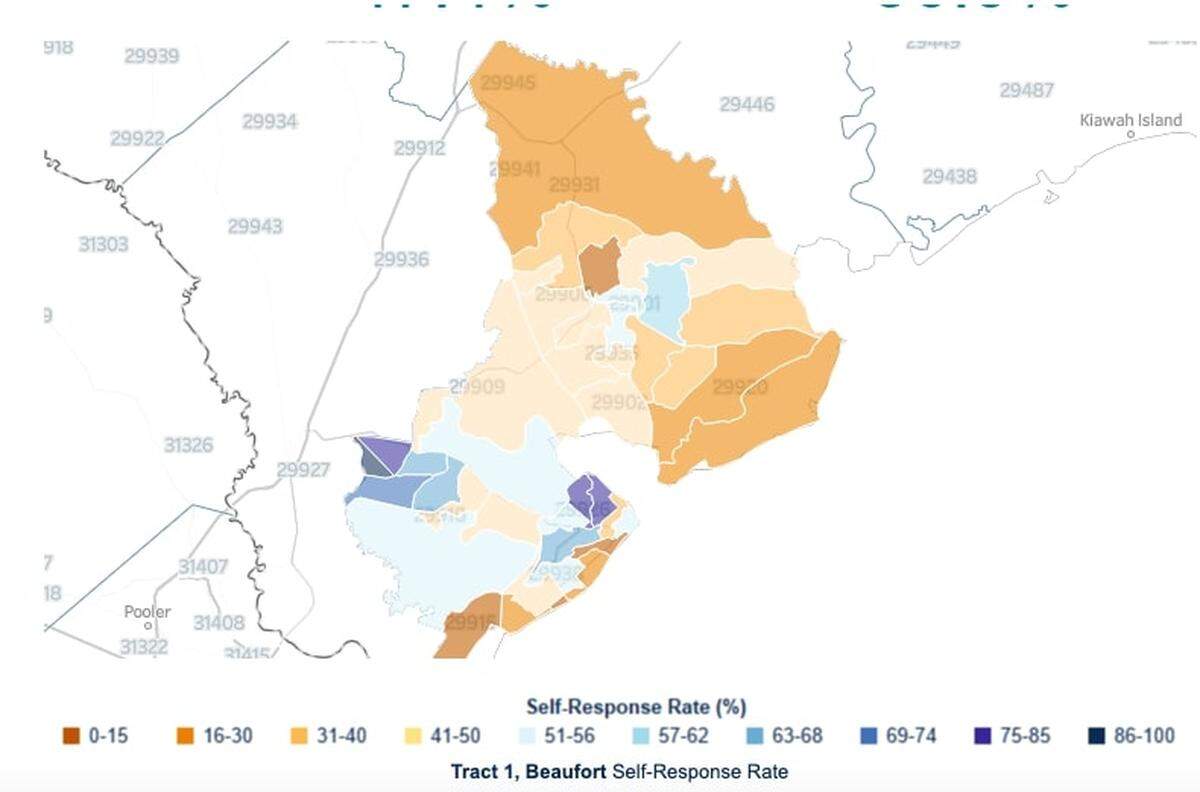
So far in Hilton Head Plantation and Sun City Hilton Head, over 75% of residents have responded to the 2020 U.S. Census, the decennial count of residents in the country that helps determine how $1.5 trillion is divided up into social services, from health care to school lunch programs.
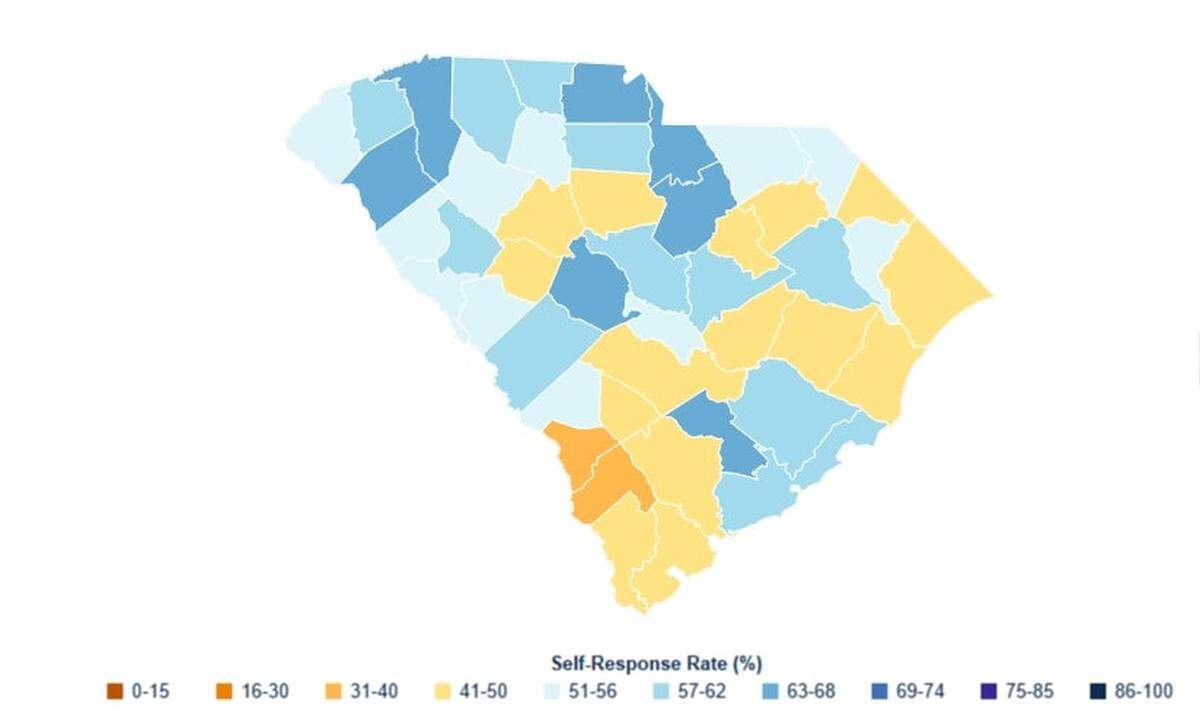
That’s almost double Beaufort County’s response rate of 47.4%. The communities’ response rates far exceed South Carolina’s statewide rate and even the census participation of the country as a whole.
If you know Beaufort County, the fact that Hilton Head Plantation and Sun City have the highest response rates is not surprising. The communities are known for their interconnectedness: from Sun City’s network of clubs and interest groups to Hilton Head Plantation general manager Peter Kristian’s 5,000 person-plus email alert system.
Kristian has sent three email reminders to his community, who are nearly all full-time residents, to fill out their census forms this year.
“I’m delighted ... but I’m not surprised given the track record of our residents of voter registration and voter participation,” Kristian said of the census response rate. “We have a very, very involved population that stays informed. A majority are retirees, and they have some time to do this.”
In 2020, that involvement is benefiting parts of Beaufort County in a way that outlasts a vote for any particular political candidate. By filling out a census form, residents determine the area’s funding for Medicare, elderly and disability programs and a host of other government programs.
Those responses are also used to determine political representation. Some states stand to lose seats in the House of Representatives based on population changes while others pick them up.
“These numbers will last for 10 years,” said Mary Peeler, South Carolina partnership coordinator for the 2020 Census, and a veteran of two previous decennial counts.
On Tuesday, census workers will begin following up with people who have not yet filled out their census form. They’ll be knocking on doors and encouraging residents to respond to the census.
Those census workers will have less time than previously thought to finish response efforts. The Census Bureau has abruptly cut short door-knocking efforts by a month, threatening the accuracy of the national count, NPR reported at the end of July.
How does Beaufort County measure up?
In a year marked by a global pandemic and hesitations about a potential citizenship question, Peeler has been working hard to get people energized for the 10-year count of all the country’s residents.
As a longtime activist, she views responding to the census as a way to empower communities.
“I’ve been involved for many years with just helping people to understand how they can help themselves, and I see the census as one of those avenues, a way to have our voices heard,” Peeler said.
Outside of Hilton Head Plantation and Sun City, most census tracts in southern Beaufort County report between 15% and 50% of residents counted. But some areas, including Daufuskie Island and a portion of Hilton Head near Mathews Drive, have counted only 9% and 14% of residents, respectively.
Peeler said her staff is trying to reach households that might not complete their census forms unless they’re given “an added nudge or push.”
In northern Beaufort County, there’s less range between the highs and lows of census responses.
Resident counts in historic Beaufort and Port Royal are between 50% and 60%, while St. Helena and Fripp Island are between 18% and 27% so far.
The census tract that includes the Marine Corps Air Station reports a 2% response rate, although the base has very few full time residents and most live nearby at Laurel Bay. The Laurel Bay census tract has a 49% response rate.
Beaufort County residents may have already heard announcements during morning worship services, seen flyers at local businesses and even attended “virtual census parties,” Peeler said, describing the bureau’s efforts to reach South Carolinians.
She’s sticking to one message: It’s not too late.
“It’s a simple process,” she said. “Don’t wait for the door knockers.”
How to fill out your census form
You can respond to the census online, by phone or by mail.
Online: Find the census form at my2020census.gov and choose your language
By phone: Call 844-330-2020 and speak with a Census Bureau representative
By mail: Some households, including ones that haven’t responded online, will receive paper census forms. Return them using the envelope provided.
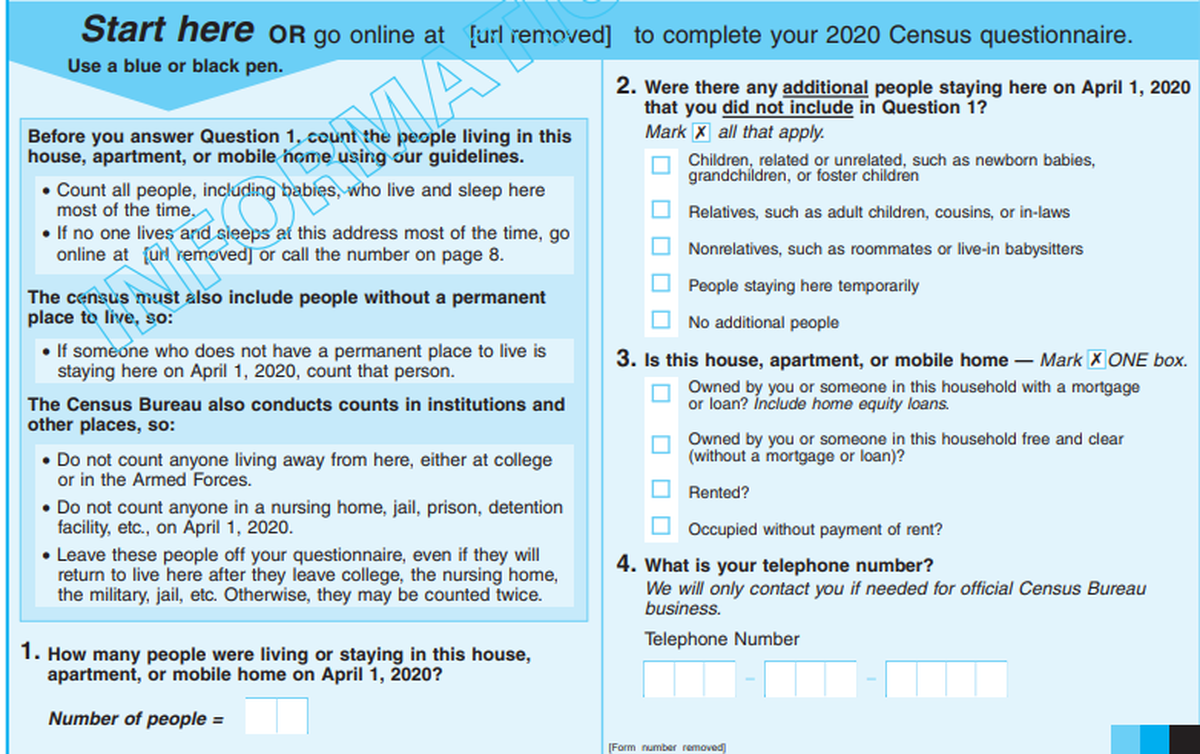
There are 12 questions on the census form, including how many people live in the home it was delivered to and basic demographic information about each person.
You should be counted where you were living and sleeping most of the time as of April 1 of this year.
There will be no citizenship question on the 2020 census, despite efforts by the Trump administration to add one for all respondents for the first time since 1950.
Federal officials said they needed to collect the data for the Justice Department to enforce the Voting Rights Act. But documents from the hard drives of a deceased Republican operative who lobbied the administration for the change revealed a different motive: the proposed use of citizenship data by conservative states to redraw legislative districts to their advantage.
All living in the U.S., including non-citizens, are required by federal law to participate in the census, and the bureau is also legally bound to protect the privacy of those who do.
Federal law prohibits the agency from sharing identifying census information until 72 years after it’s collected, and the data and can only be used for statistical purposes.
---
This story was completed with information from Reveal’s Seeing 2020 Census Reporting Collaboration.
Want to know what your 2020 census questionnaire will look like? Click here.
Have questions or concerns for our reporters on the 2020 census? Submit them here using the Seeing 2020 Census Reporting Collaboration’s form.
BEHIND THE STORY
MOREHow local reporters use the census
The impacts of the 2020 Census will go far beyond knowing how many people live where. Political representation, federal dollar allocation and healthcare programs all rely on census data.
Your local newspaper uses this data too. The decennial census and American Community Surveys are easily accessible metrics journalists use to measure demographic, income and employment data in their day-to-day reporting. It helps reporters answer important questions every day. Do arrest rates reflect the racial demographics of a community? Are predatory lenders targeting minority neighborhoods? Are local leaders meeting the needs of a changing population?
By participating, your census response can help ensure an accurate count and precise local reporting for years to come. To explore census data yourself, check out the U.S. Census Bureau’s online portal.
This story was originally published August 10, 2020 at 4:45 AM.