The 2020 Census starts tomorrow. How to fill out your form (and why you should do it)
Who represents you in Congress, how much money goes toward your interstate highways and the news you read in your local newspaper all depend in part on a slip of paper to be mailed to your home in the next two months.
It’s the 2020 Census.
Major outreach efforts in the decennial count of people living in the United States begin March 12 and culminate with national Census Day on April 1.
Results from the count are used to determine Congressional districts, allocate $1.5 trillion in federal funding to programs such as Medicaid and the Supplemental Nutrition Assistance Program, and shape our local reporting on communities’ demographics and income.
Here’s what you need to know about the census and the three ways you can fill out your form:
How to fill out 2020 Census form
For the first time in the census’ 230-year-history, officials are asking the majority of respondents to answer digitally. The form will be available online beginning March 12, and most households will receive a mailer asking them to fill it out online or by phone.
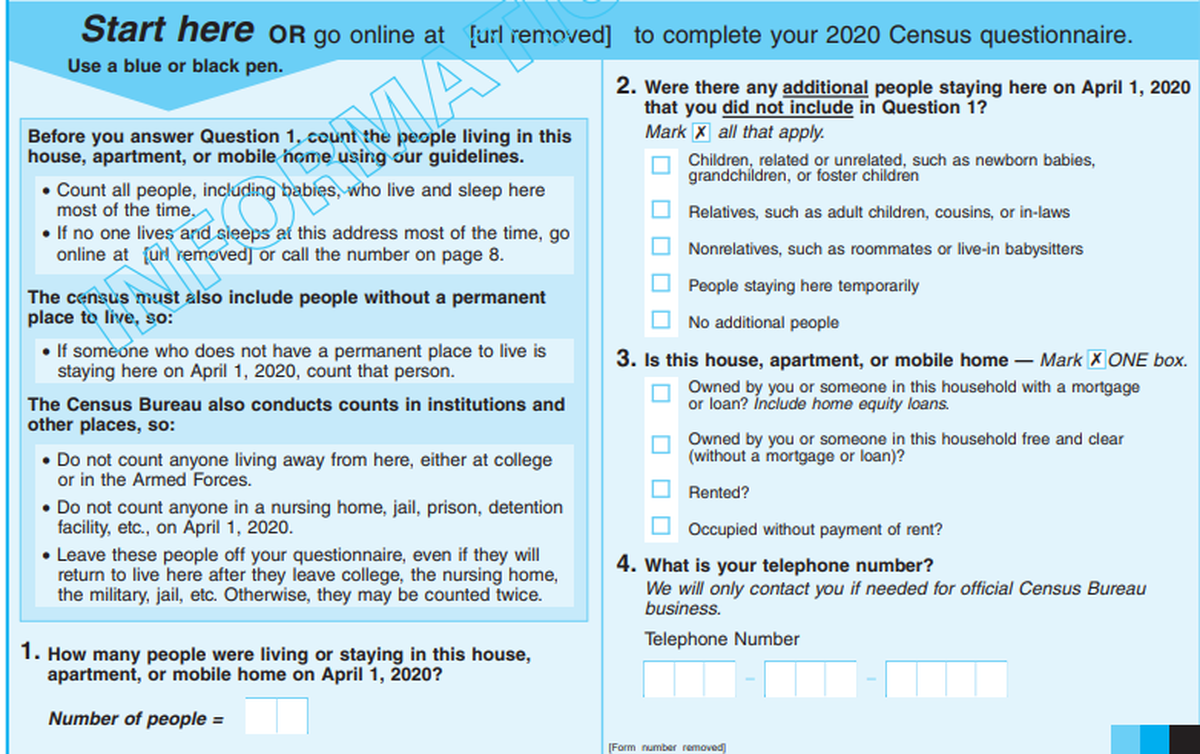
There are 12 questions on the census form, including how many people live in the home it was delivered to and basic demographic information about each person.
The Census Bureau will send a reminder to all households before the end of March and follow up with postcards until the end of April if no response is received.
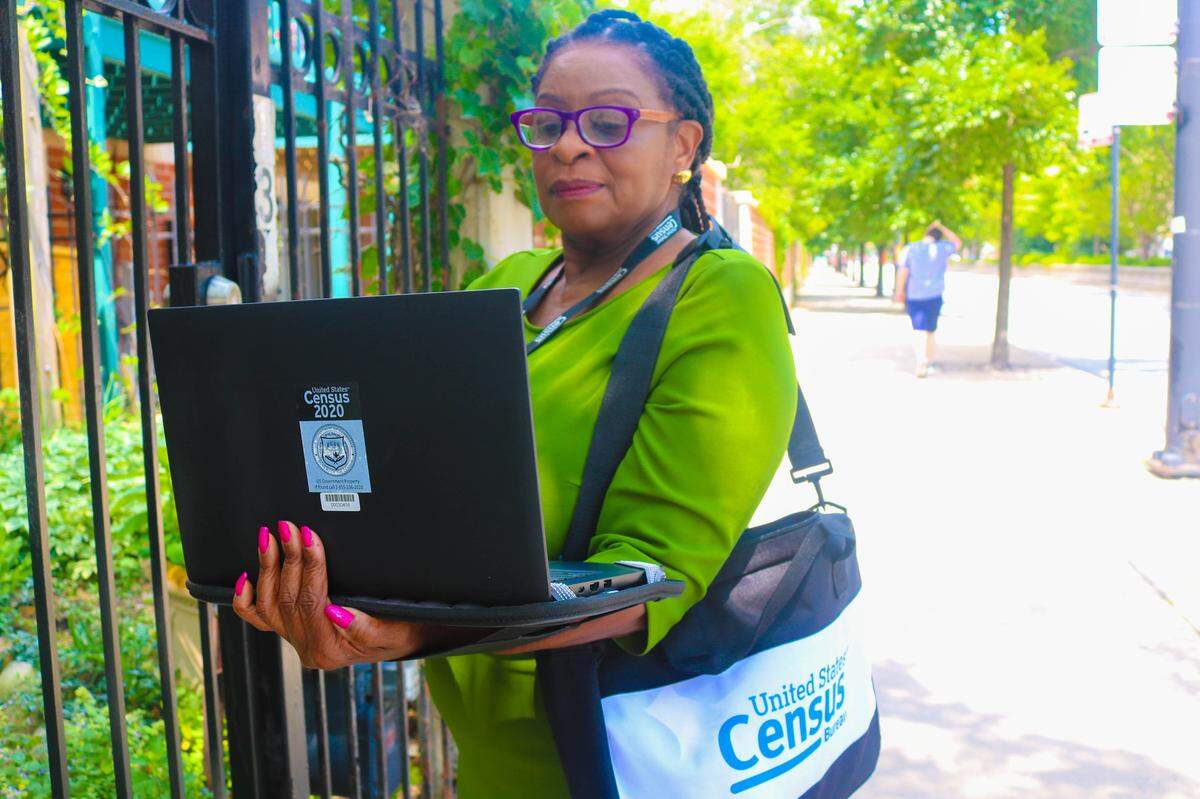
The bureau will send census workers to collect responses in person for all houses that don’t respond.
All living in the U.S., including non-citizens, are required by federal law to participate in the census, and the bureau is also legally bound to protect the privacy of those who do. Federal law prohibits the agency from sharing identifying census information until 72 years after it’s collected, and the data and can only be used for statistical purposes.
“The Census Bureau does not ask for a Social Security number, bank account information, or information about political party affiliation. The census form will not include any questions about a person’s religion or citizenship status,” according to the nonprofit Population Reference Bureau.
Not filling out a census form or refusing to be counted is punishable by a fine of up to $100, but no one has been prosecuted for this offense since the 1970s.
Who fills out the form?
One person per household — defined as everyone who occupies a house, apartment, mobile home or room on April 1 — completes the form. A household is not a family unit and includes all individuals living in the same space, whether they’re related or not.
The general rule used by the Census Bureau is simple: you are counted where you sleep most of the time.
There are special rules for some categories of people:
- College students are counted at their on- or off-campus residence even if they happen to be home on April 1. Boarding school students below college level are counted at the home address of their parents or guardians.
- Seasonal residents with more than one address are counted where they live and sleep most of the time, their “usual residence.” If they can’t determine where they live most of the time, they are counted where they are staying on April 1. Seasonal residents may receive repeated follow-ups at one of their residences after they’ve already responded elsewhere, said Beth Jarosz, senior research associate at the Population Reference Bureau, in an email. Residents can contact the Census Bureau to report a vacant residence, Jarosz said.
- U.S. Military personnel are counted where they are housed, including in military installations or barracks. If they are temporarily deployed overseas, they are counted at their home address in the U.S. If they are permanently stationed overseas, they are counted in their home states but not at a specific address.
- Incarcerated people are counted at the facility where they are imprisoned, including federal and state prisons and local jails.
- People living in RV Parks, hotels or transitory housing are counted at a scheduled time between April 9 and May 4 by census workers using a paper questionnaire.
- People in health care facilities are counted at their primary residence unless they are in a nursing home or psychiatric hospital for long-term care, or lack a usual home.
Fear of an undercount
While the form may not take long to complete, organizations such as the National Network for Immigrant and Refugee Rights fear the census will result in chronic undercounting of communities in 2020 due to underfunding, changes to the census process, and chaos surrounding a potential question about citizenship proposed by the Trump administration.
Especially in black and Latinx communities in the Carolinas, undercounting can diminish a town or county’s rightful political voice as well as access to billions of dollars for local programs. Black and Latinx children are consistently undercounted, past census results have shown.
A June 2019 study by The Urban Institute found that between 2.1% and 3.4% of black South Carolinians are at risk of being undercounted in 2020.
That means undercounting between 30,700 and 48,700 people — or wiping a city the size of Sumter or Hilton Head Island off the map. The state’s population is 27% black, the Urban Institute’s data show.
In North Carolina, that number is even higher: Black residents, who account for 23% of the population, could be undercounted by between 2.3% and 3.5% this year — or by 56,600 to 85,600 people.
The NAACP has sued the Census Bureau alleging “conspicuously deficient” preparations in the lead-up to the national headcount, disproportionately harming those communities by diluting their votes and depriving them of federal funds. In a filing, the Bureau called the claims “meritless.” The case is pending in federal court in Maryland.
Citizenship question on 2020 census?
There will be no citizenship question on the 2020 census, despite efforts by the Trump administration to add one for all respondents for the first time since 1950.
Federal officials said they needed to collect the data for the Justice Department to enforce the Voting Rights Act. But documents from the hard drives of a deceased Republican operative who lobbied the administration for the change revealed a different motive: the proposed use of citizenship data by conservative states to redraw legislative districts to their advantage.
After a legal challenge from the American Civil Liberties Union and several state and local governments, the U.S. Supreme Court ruled in June that the administration’s explanation for adding the question “seems to have been contrived,” but left open the possibility that it could provide an adequate reason.
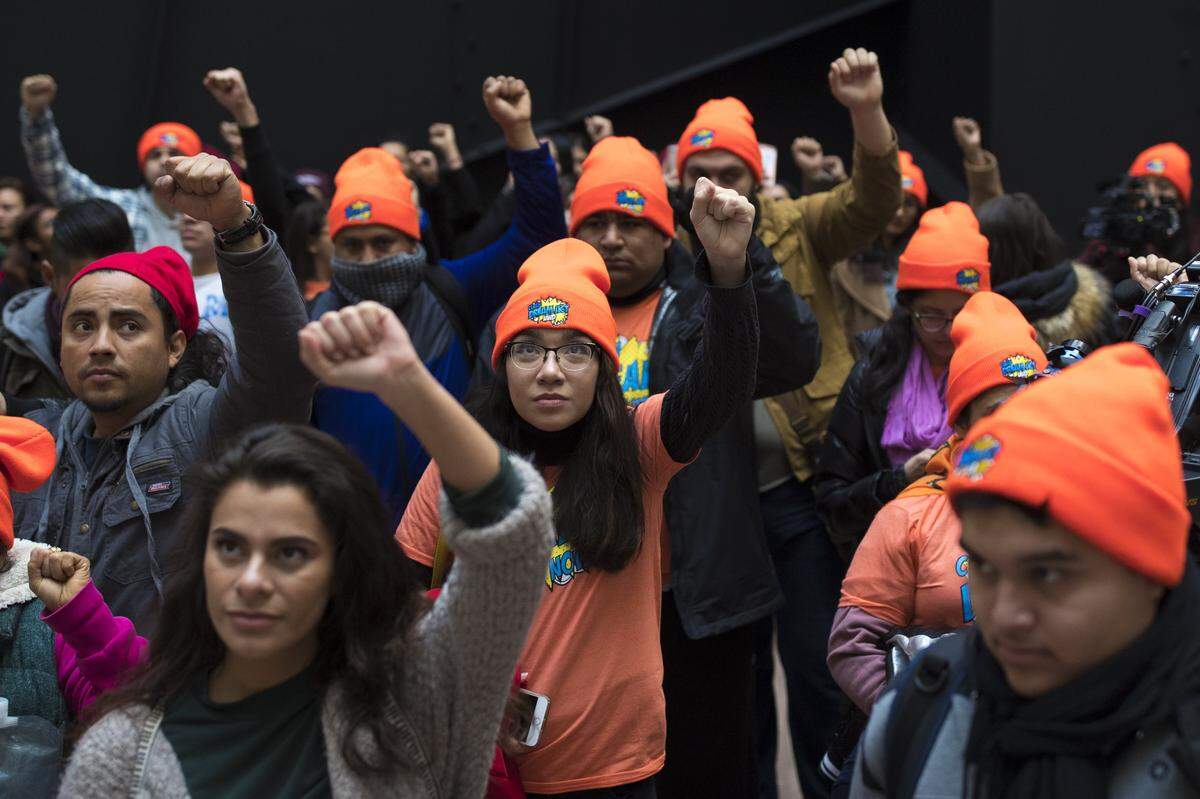
A week later, the Trump administration backed down, saying the census forms would not include a question about citizenship.
The discourse that surrounded the citizenship issue may still chill counting efforts in Latinx communities. Advocates for an accurate count have long feared that the national conversation about the question will compel families not to respond.
“To most people the Census Bureau is not any different from ICE,” Deborah Griffin, a retired Census Bureau researcher, told the Los Angeles Times in 2019. She was referencing Immigration and Customs Enforcement, which deports people in the U.S. without documentation.
Rules prohibit the Census Bureau from releasing data to government agencies, including ICE.
New languages in 2020
Census mailers in areas with significant Spanish-speaking populations, including most urban areas in the Carolinas, will be bilingual. And this year officials have doubled the number of languages used to collect responses, for the first time serving speakers of Arabic, one of the fastest growing languages in the U.S.
Online and phone response options will also be available in six other new languages, including French, Haitian Creole, Japanese, Polish, Portuguese and Tagalog. The new additions join English, Spanish, Korean, Russian, Vietnamese and Chinese for a total of 13 response languages for the 2020 census.
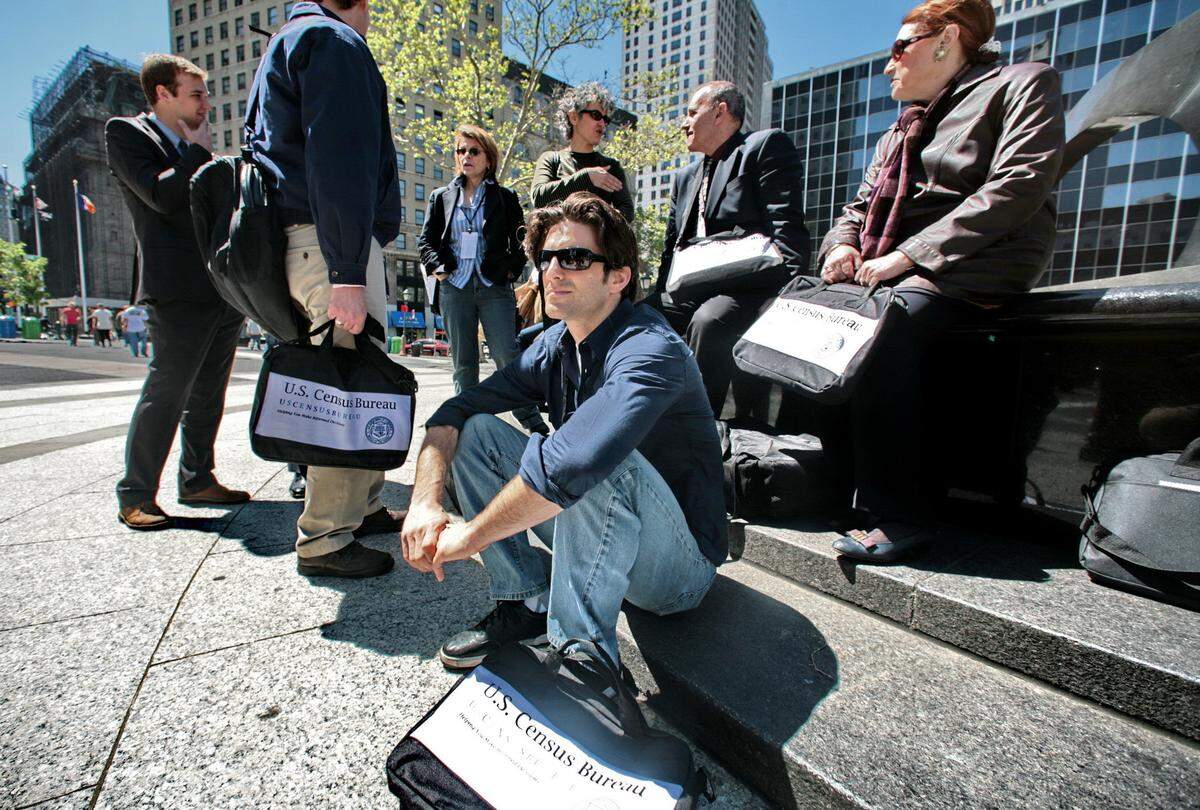
“This is a huge step in the right direction,” Rawaa Nancy Albilal, president and CEO of the Arab-American Family Support Center in Brooklyn, New York, told NPR in 2019. “But there is still a huge risk that immigrant communities of Arab, Middle Eastern, North African and South Asian descent will be undercounted.”
One of those risks is the lack of reliable access to the internet, where the Census Bureau is encouraging people to respond.
Nationwide, 21 million people live in areas without access to high-speed internet, according to the Federal Communications Commission. Mostly concentrated in rural areas, these residents will face a higher hurdle to respond to the census.
Black and Latinx adults who don’t have home broadband and rely on smartphones for internet access — nearly 1 in 4, according to the Pew Research Center — may also be less likely to navigate the census form through a phone screen.
While 60% of adults said they would prefer to submit their census information online, the Pew Research Center found that 12% of respondents who prefer a different method said they do not have reliable internet access.
Early problems
This month, federal watchdogs flagged inadequacies in the Census Bureau’s preparations. A Government Accountability Office report released Feb. 12 found that 202 of the 248 census offices around the country have failed to meet staff recruiting goals.
This could lead to delays when the Bureau begins in-person outreach, the report said.
At a hearing that day, House Committee on Oversight and Reform Chairwoman Carolyn Maloney (D-NY) called the Trump administration’s preparations for the census “woefully inadequate,” warning that they could “risk causing harm to this year’s census” by jeopardizing a complete and accurate count.
Meanwhile, some states are attempting to help with funding the census. California is pouring $187 million into ensuring an accurate count in the state and maintaining its 53-seat delegation in Congress, NBC News reported in October. The state joins 28 others with secured or pending funds.
South Carolina has not appropriated money toward the census, according to the National Conference of State Legislatures. In North Carolina, a bill to apply $1.5 million to census preparation is pending.
--
This story was completed with information from Reveal’s Seeing 2020 Census Reporting Collaboration.
Want to know what your 2020 census questionnaire will look like? Click here.
Have questions or concerns for our reporters on the 2020 census? Submit them here using the Seeing 2020 Census Reporting Collaboration’s form.
BEHIND THE STORY
MOREHow local reporters use the census
The impacts of the 2020 Census will go far beyond knowing how many people live where. Political representation, federal dollar allocation and healthcare programs all rely on census data.
Your local newspaper uses this data too. The decennial census and American Community Surveys are easily accessible metrics journalists use to measure demographic, income and employment data in their day-to-day reporting. It helps reporters answer important questions every day. Do arrest rates reflect the racial demographics of a community? Are predatory lenders targeting minority neighborhoods? Are local leaders meeting the needs of a changing population?
By participating, your census response can help ensure an accurate count and precise local reporting for years to come. To explore census data yourself, check out the U.S. Census Bureau’s online portal.
This story was originally published February 26, 2020 at 3:14 PM.