‘Hurting my community’: Lone native islander on Hilton Head panel challenges removal
A native islander removed from the Hilton Head Island Planning Commission for violating the land management ordinance contested his ouster Tuesday evening in a public hearing, citing flexibility given to previous white commissioners who broke the rules they’re appointed to enforce.
Palmer Simmons, who lives on Spanish Wells Road, was removed from the planning commission on May 5 after his neighbor complained to the town that Simmons was operating a truck washing business on his property next to the Oak Marsh subdivision. Simmons’ family has lived on the property for over 100 years.
Simmons was cited in April for not holding a business license to do commercial work at his residential property.
He said Tuesday at his public appeal of his removal that as a native islander, the dispute with his neighbor exhibits how difficult it is for historic families to use and keep their land when newer residents move in.
Simmons said it highlights the need for the town to be as flexible with native islanders as they have been in the past with white commissioners.
“We do not get the benefit of the doubt, we do not get the length of decision making that one might see others get,” Simmons said. “I think removing me from the planning commission was unnecessary.”
Following the hearing, the Town Council voted to sustain their decision to remove Simmons from the commission.
What happened?
The information given to town council members regarding Simmons’ violations was presented in executive session, and is therefore not available to the public. But Simmons and his neighbor have provided some information about the dispute publicly.
Simmons, who owns and lives on a large plot of waterfront land in Spanish Wells, is using his property for a commercial truck washing business.
Philip Smith, Simmons’ neighbor and the president of the Oak Marsh property owners association, said the business has intensified over the last year. Smith told The Island Packet that trucks were revving their engines and being cleaned on the property.
Simmons was cited for industrial light usage and not having a business license, and he didn’t dispute those charges Tuesday.
But he described what he sees as inequality between island residents, citing an example from 2017 in which the chairman of the town’s design review board was allowed to stay on the board even after being a contractor on an illegal deck project. That chairman was white.
“He was the chairman, violated LMO and was given every opportunity to correct his ... . It just went way beyond him being fined and and that was the end of it. He was coddled and continued to serve,” Simmons said.
Hilton Head land use
The comparison highlights an ongoing struggle on Hilton Head between native islanders, who want to use land they view as birthright, and the town’s efforts to control and enforce zoning.
While planned unit developments have made around 70% of the land private, some who live outside those communities struggle to build homes up to code, rent within the limits of the town and operate family-run businesses.
Land use debates often drive wedges between those who want to profit from their property and those who want restrictions on what island land can be used for.
At least once council member wanted to divorce Simmons’ removal from his character.
“Palmer Simmons is a good person and I want the community to know that,” council member David Ames said before voting to sustain Simmons’ removal. “We have a ways to go if we want to be one island, one community.”
Members of the public spoke on Simmons’ behalf Tuesday.
“Here we have once again a white neighbor who doesn’t like what a historic native is doing with their land and the town is taking the white neighbor’s side,” Tai Scott, who last year had a business license hearing after his neighbor objected to his food truck business, told the council in the virtual meeting.
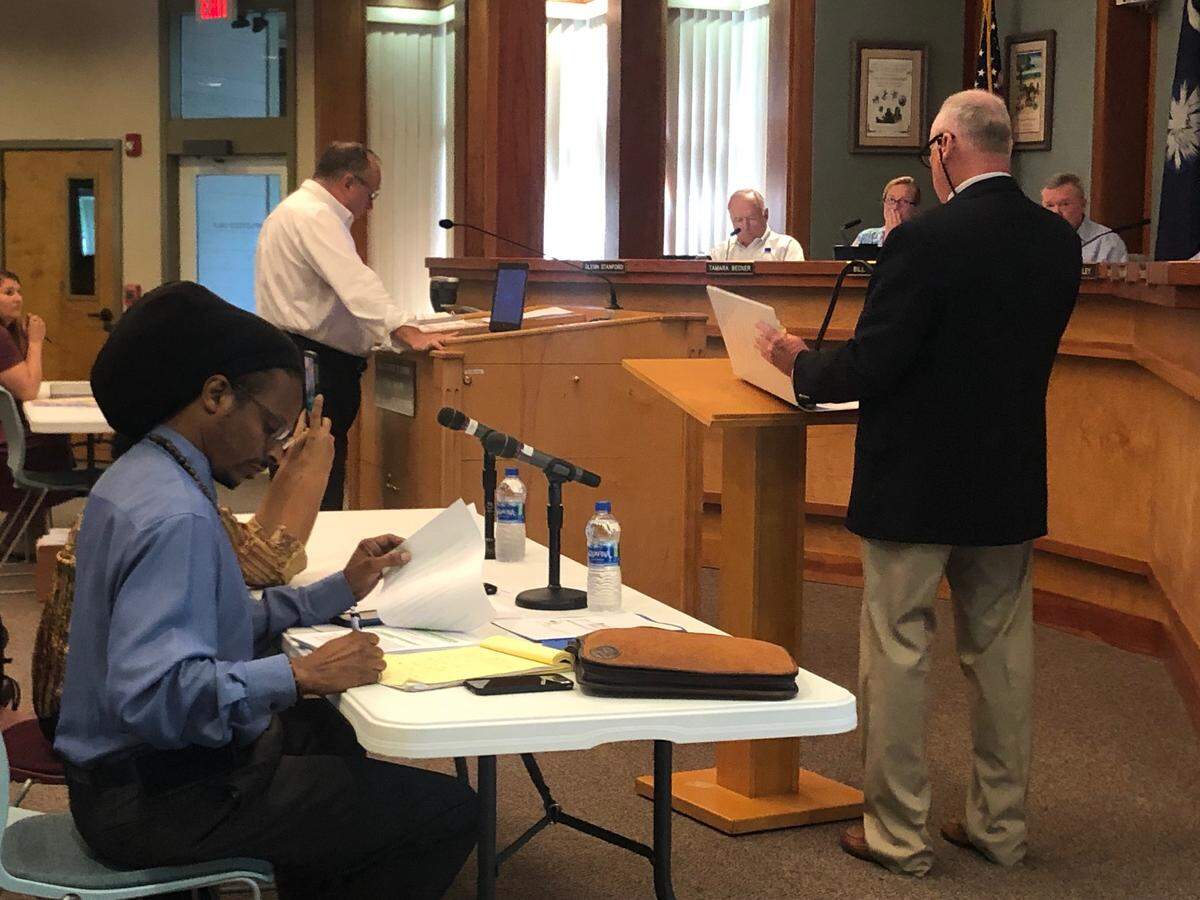
“Has he been derelict in his duties as a member of the planning commission?” Ibrahim Abdul-Malik asked the council. “Why wouldn’t the council follow the same action here? You overlooked the misdeeds of the chairman of the town (design) review board but did not overlook Mr. Simmons’.”
Simmons’ vacancy on the planning commission means there are no Hilton Head-born native islanders representing the community. Lavon Stevens, although not native to Hilton Head, remains on the commission as the vice chairman. He is often referred to as a leader in the native island community.
In the last year, an outside consultant suggested the town create a historic neighborhood overlay district that would relax some rules on land use in historic communities to allow for more development and flexible uses.
Creating that district would perhaps lead to different outcomes for residents who run businesses from their homes, although its details have not yet been hammered out.
“It happens in our community all too often,” Simmons said. “By kicking me off this commission you are hurting my community because of one ... neighbor.”