In the shadow of the Mountain: What’s next for the Okatie-area trash pile?
Nearly two months after packing their bags and fleeing toxic smoke and poor air quality, residents of Schinger Avenue have returned home.
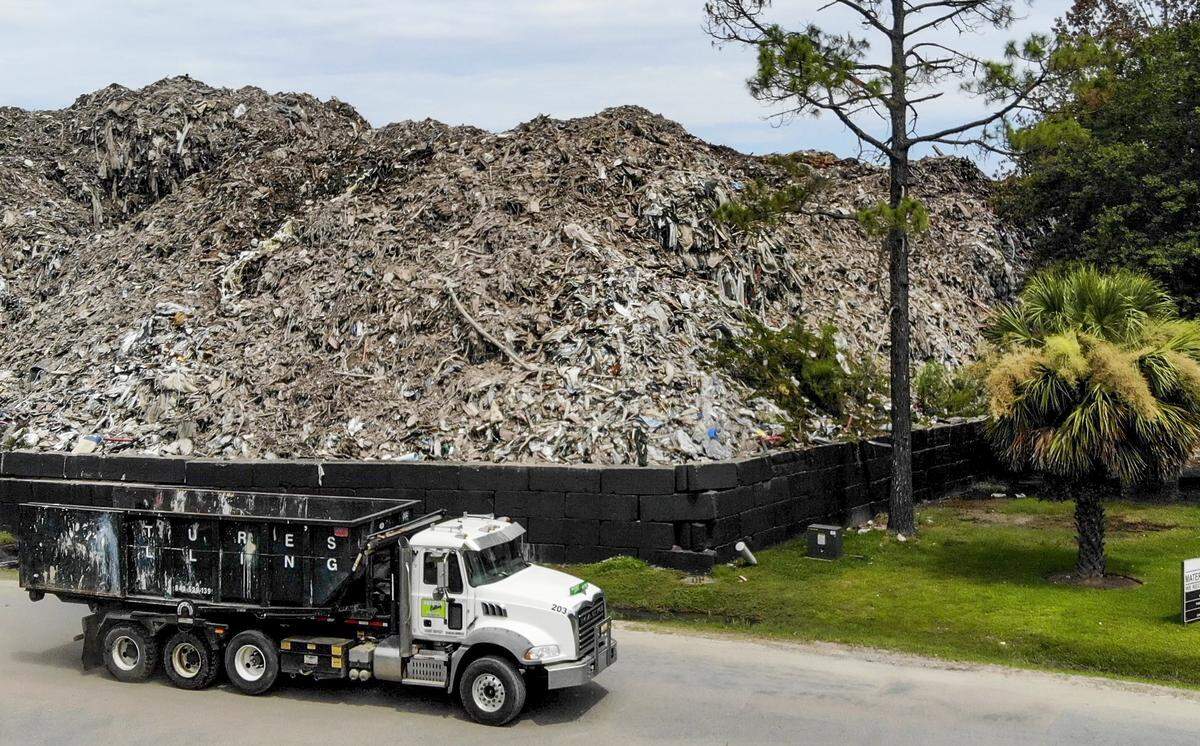
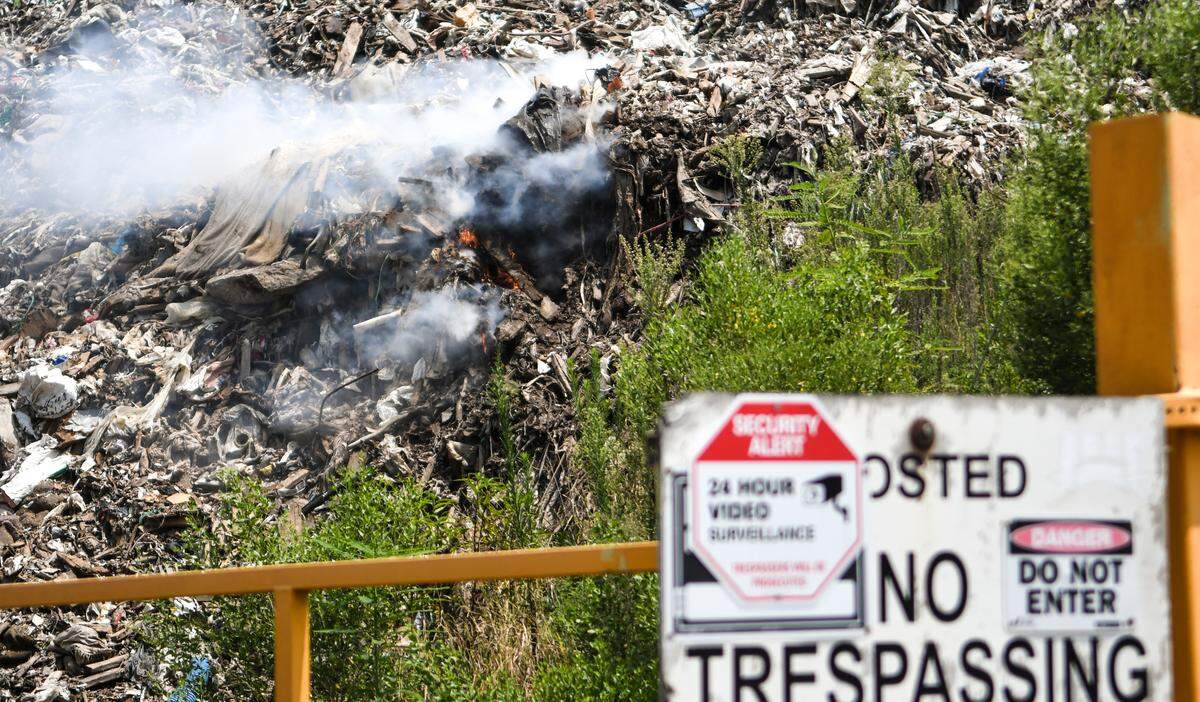
Down the road from the residents’ homes sits Able Contracting, the site of a once-towering mound of construction and demolition debris that ignited in early June. Since mid-August, the U.S. Environmental Protection Agency and the S.C. Department of Environmental Health and Control have been removing debris from the site, trying to extinguish the fires that self-ignite and burn deep within the pile.
The 31 neighbors near the mound evacuated to a hotel on Aug. 2 while government agencies monitored air and water quality and worked to reduce the mound of debris and the toxins coming from it. Terry Tanner, the EPA’s new on-scene coordinator, said residents were allowed to return home on Sept. 21, and that he has witnessed “fewer and fewer” places in the pile emitting smoke.
Since the EPA took over the lead in the cleanup, over 25,666 tons of debris have been removed from the pile, once 45- to 56 feet tall, and trucked off to Hickory Hill and Oakwood landfills. Although smoke was still seen billowing out of the debris on Friday, Tanner said EPA officials plan to leave the Able Contracting site “the week after next,” and DHEC will assume responsibility for the cleanup.
On Sept. 3, DHEC ordered Able Contracting to close and assume responsibility for any remaining material left on site once the state and EPA leave. Owner Chandler Lloyd reluctantly agreed.
The Evacuation
After smoke first started billowing from the pile of debris in early June, the state began hearing complaints from neighbors about the smoke, smell and potential health risks. However, DHEC regularly told residents and the media that the particulate levels at the site were safe and did not exceed the 24-hour, health-based standard established by the EPA.
On July 30, The Island Packet and Beaufort Gazette reported that the air quality levels at the site had been as high as 565 µg/m3 — more than double the range for air quality considered “hazardous.”
The next day, DHEC issued an emergency order that said the fire at the Able Contracting site put the health of nearby residents and the environment in “imminent and substantial danger.” On Aug. 2, Jasper County issued a Declaration of Local Emergency and began offering alternative housing for those living closest to the trash pile.
The EPA declared the trash pile at 472 Schinger Avenue a federal Superfund site and took over Aug. 16 as lead agency of the cleanup. This meant the agency also started paying to house the residents affected by the fire.
Tanner said the EPA paid for 31 adults and children to relocate to an undisclosed hotel for 35 nights. The families were housed in 15 separate rooms — with two more added during the relocation period — at a cost of $92 a night. The EPA also provided the adults $55 per day and children $27.50 per day for meals.
Based on these cost outlines, and using the most conservative estimates, the EPA spent more than $49,455 to house the residents.
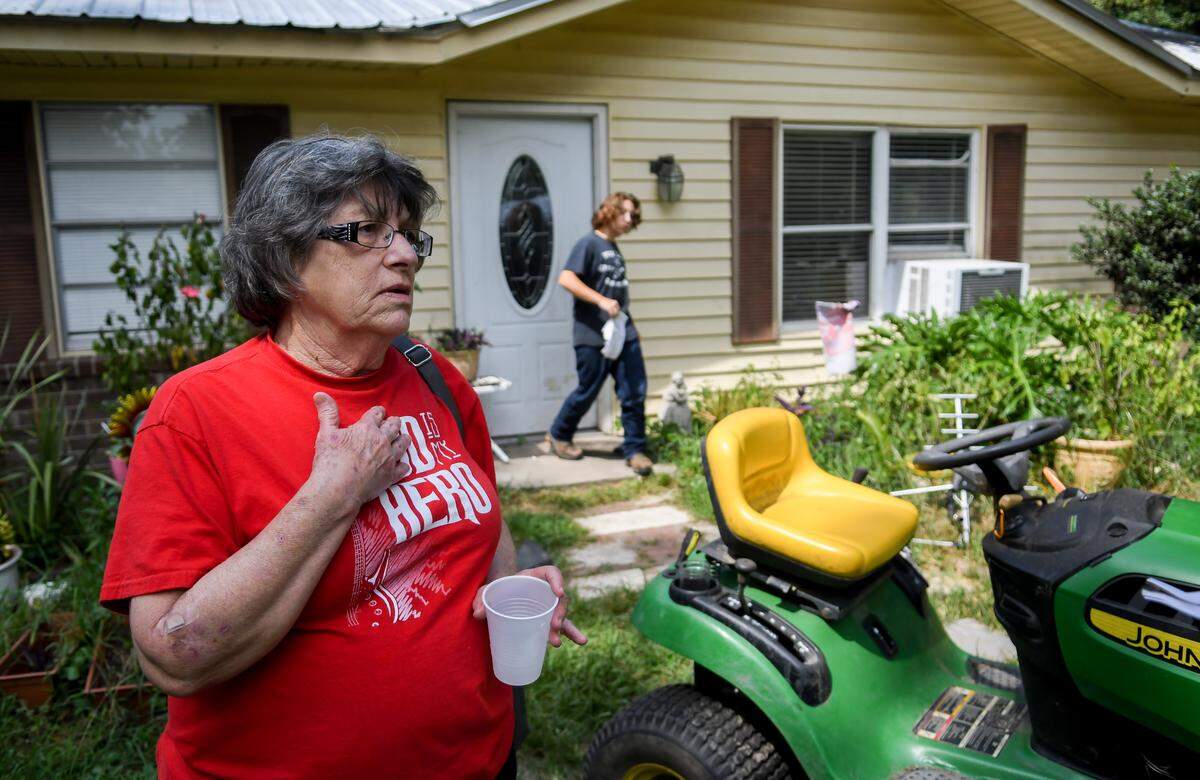
Mary Alice Benton, her daughters, grandchildren and her animals — which she considers family — were among the residents of Schinger Avenue who were forced to evacuate.
The evacuation, Benton said, “wasn’t long enough.”
She said she would like to enjoy being back home, but the smell from the smoking pile of debris, coupled with the constant flow of trucks carrying debris past her house and spreading dust across her lawn, have made for a tough transition.
“Everybody loves their home, but under these circumstances, I can’t get the black dust and dirt cleaned out of my house,” she said.
The latest update from DHEC’s website, posted Thursday: “significant quantities of smoke/steam began emerging” from the pile when crews started removing debris. “Water application was used all day to successfully control and reduce smoke discharge,” the website said. All DHEC sensors are still reading in the “good” range for the 24-hour air quality average, according to the website.
Able Contracting Closed?
Last month, DHEC issued Able Contracting a “closure letter” that required the company to stop accepting any construction and demolition debris at 472 Schinger Ave. and “immediately begin the closure process for this facility.” The letter also required the company to create a plan to remove all materials left on site once DHEC and the EPA complete “emergency actions.” The plan was supposed to be submitted by Sept. 18 with no room for extension.
In a Sept. 18 response letter, Lloyd, Able Contracting’s owner, reluctantly agreed to provide DHEC a schedule for closure of the facility once the EPA and DHEC leave the site. In the letter, Lloyd said he “has had absolutely no access or control to the site for weeks while (DHEC) and USEPA have unsuccessfully attempted to extinguish a fire that Able had under control before it lost all of its revenue stream.”
“As you know, because of adverse publicity, Able lost all of its customers and was no longer receiving C&D debris at the Recycling facility since mid-July 2019 and is currently unable to remove the remaining debris at the Recycling Facility due to the activities currently being conducted by (DHEC) and USEPA,” Lloyd’s letter said.
What’s Next?
DHEC officials estimate that when the EPA leaves the site in about two weeks, approximately 117,000 cubic yards of debris will remain. DHEC expects to have enough money to reduce the pile to 25,185 cubic yards, which, according to DHEC Director of Environmental Affairs Myra Reece, will cost $3.55 million.
So far, the agency says they have spent about $275,000.
It will cost an additional $964,000 to remove the remaining 25,285 cubic yards of debris, and DHEC could ask for an appropriation in the FY 2020-2021 budget in January. The total cleanup, which is expected to cost $4.5 million, will take 75 to 96 work days once the EPA leaves, according to DHEC’s estimates.
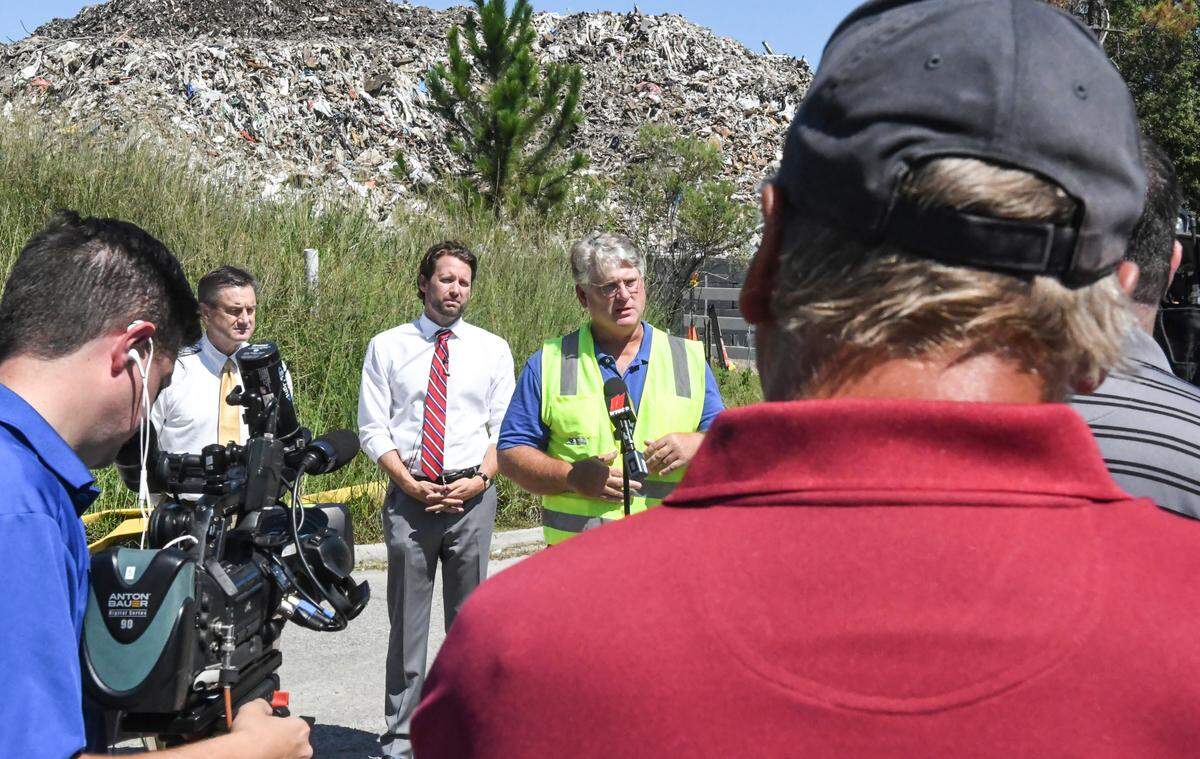
On Friday, Sen. Tom Davis hand-delivered S.C. Attorney General Alan Wilson and U.S. Attorney Sherri Lydon a resolution related to the cleanup. The resolution, which Davis proposed to the Jasper County legislative delegation in September, called for three actions: DHEC should reduce the size of the pile to 25,285 cubic yards until the remaining money is appropriated and the entire pile can be removed; Gov. Henry McMaster should include a $4.5 million appropriation in his FYI 2020-2021 budget to reimburse DHEC; S.C. Attorney General Wilson should pursue legal remedies to recover “all public funds expended” in fighting the fire and removing the material from Able Contracting.
Under the Comprehensive Environmental Response, Compensation, and Liability Act and the South Carolina Solid Waste Policy and Management Act, Davis wrote, Able Contracting “is responsible for reimbursing the EPA and DHEC for the public funds they expend at this facility. I respectfully ask that you assess whether the facts in this case warrant such reimbursement and provide me with your conclusions.”