With Hilton Head sea turtle season days away, volunteers tap island hospitality workers
It takes a village, so the proverb starts, to raise, save and nurture, well, just about everything.
For a community on Hilton Head Island, a growing and beloved village, working to keep sea turtle mothers on their course and give hatchlings the best chance of survival, it’s no different.
And, as the proverb often implies, it’s no small feat.
On Monday afternoon, with over 200 people packed into the University of South Carolina Hilton Head campus’ foyer, the community showed up to kick off the six-month sea turtle season days before its official May 1 start.
The first of its kind, the event plugged into a prominent asset of the island: hospitality workers.
Bartenders. Waitresses. Property management. Anyone who’s face-to-face with visitors. They have what Amber Kuehn, a marine biologist and director of Hilton Head Island’s Sea Turtle Patrol, calls a “captive audience.”
The millions of visitors each season may never see Sea Turtle Patrol volunteers monitoring the beaches before sunrise for turtle nesting and hatching activity, or the Turtle Trackers educational outreach and beach cleanup at sunset. But it’s difficult to go a day on the island without the help of hospitality staff.
Kuehn, who’s in her 24th consecutive season monitoring sea turtles, took Monday evening to prep them with answers and solutions.
“The hospitality industry, because of all the visitors that we have, over 3 million, they’re stretched pretty thin,” Kuehn said. “The fact that they are coming here is very inspiring to me, because I know that they care about this island.”
The greater the buy-in from different facets of the Hilton Head community, the better chance of supporting the safe nesting and hatching of the island’s sea turtles.
After all, as Kym Castillo, a Sea Turtle Patrol volunteer, put it: Hilton Head sea turtles don’t have it easy.
It’s not easy being a Hilton Head sea turtle
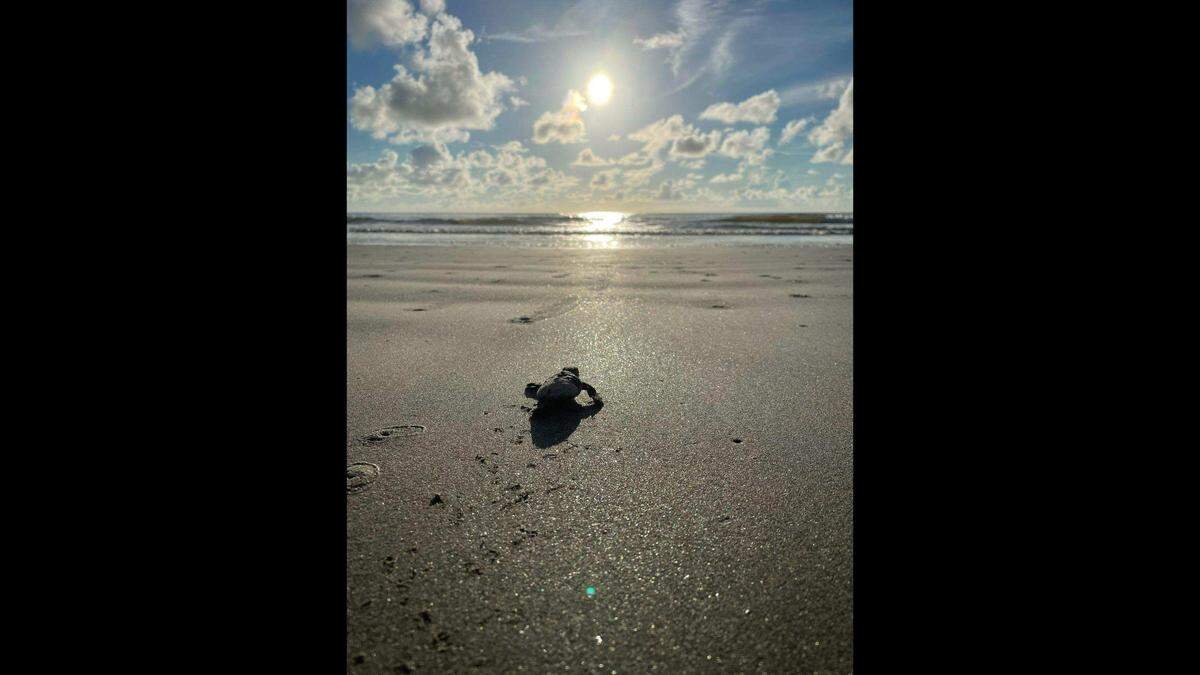
For the tiny turtles that hatch on Hilton Head’s beaches and make it to the ocean, they have a three-day, 70-mile swim in front of them to reach the Gulf stream.
About one in 100 will live to be 3 days old, Castillo said. And only one in 1,000 will make it to adulthood. They’re low odds, but even before the hatchlings attempt their journey, mother sea turtles need ideal conditions to nest.
“False crawls are when the turtle comes up and the intention is to nest, but she gets spooked and she turns around and goes back in,” Castillo said. “She has no legs, only flippers. So this is a very arduous task for her.”
Artificial lights shining onto the beach at night, loud noises, people getting too close and left-out beach furniture all can contribute to false crawls.
When she is successful, a mother will walk the shore at night, lay about 120 eggs in a nest, cover it and head back to the ocean. Based on the sand’s temperature, the eggs will incubate between 45 and 60 days. The hatchlings then take two-to-three days to wriggle from their shell and dig up to the surface.
From there, the hatchlings face innumerable threats before they even reach the water — many of which can be deterred and can lighten the daily load of Turtle Tracker volunteers evening cleanups.
“We have constant turnover,” said Beverly Crylen, Turtle Tracker president. “People leave on Friday because they’re checking out on Saturday, and they just walk away from their tents or their chairs.”
Keeping the beach safe during sea turtle season is a challenge. But visitor’s actions aren’t out of spite, Assistant Town Manager Angie Stone said, oftentimes beachgoers don’t realize the damage a hole dug too deep in the sand can cause.
It can trap a hatchling.
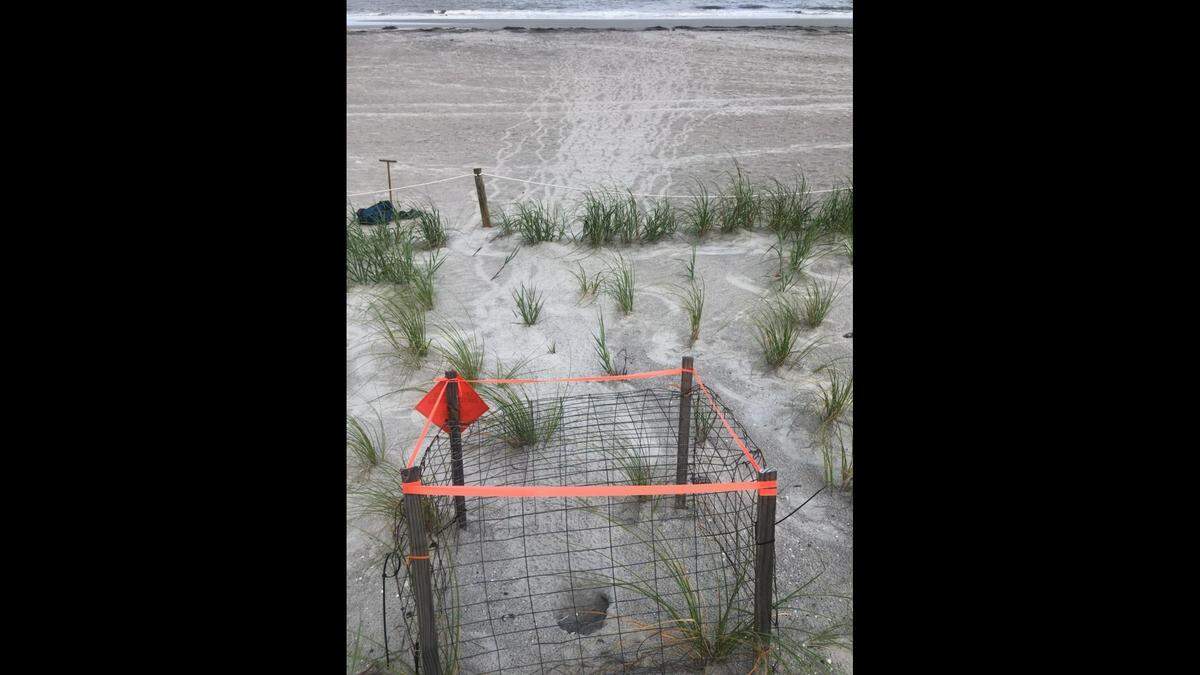
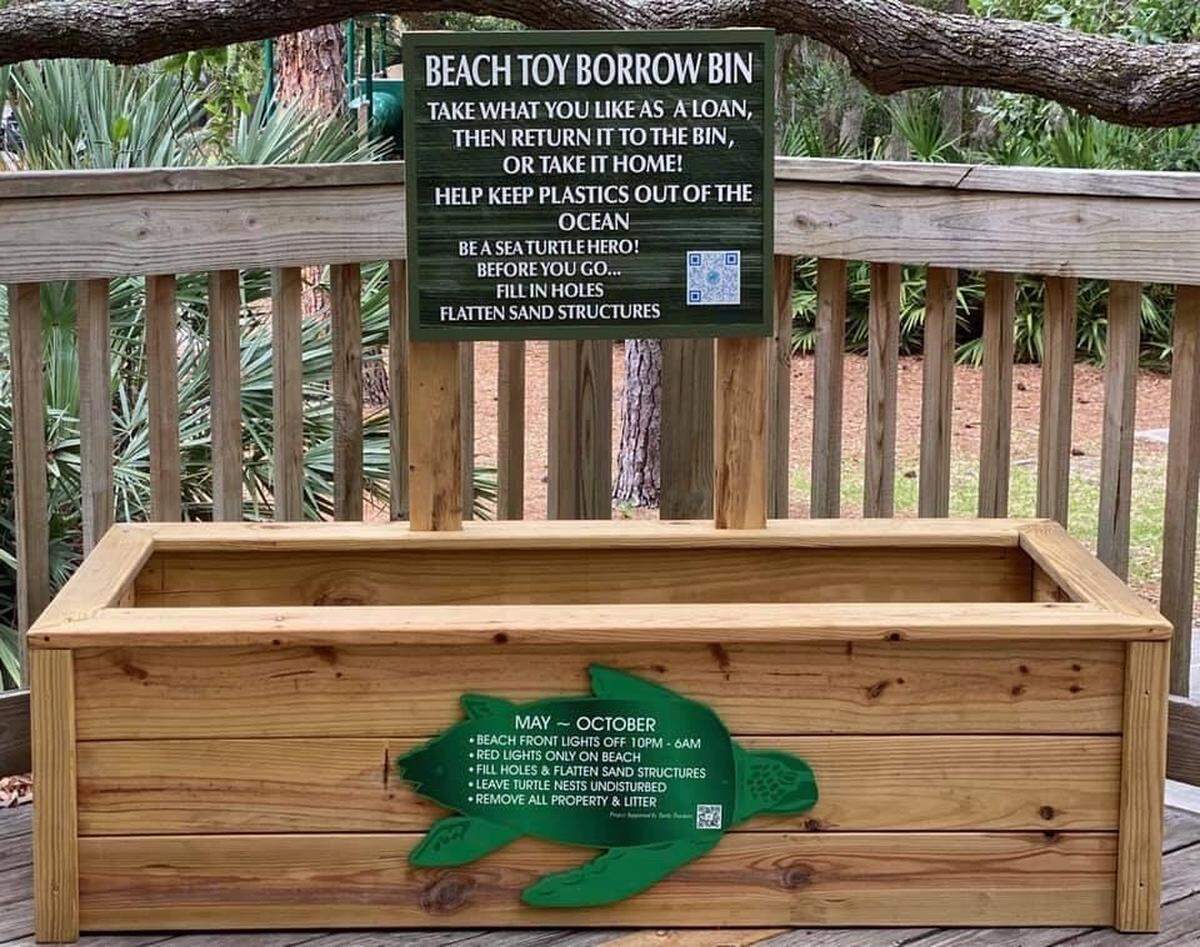
Kuehn pointed to a town ordinance, adopted in November 2019, that says holes on the beach cannot be deeper than a foot. The hole can neither be dug with a metal shovel, nor can it be bigger than 30 inches. When the beachgoer leaves, they must fill in the hole.
The rules, intended to keep the beach clear for sea turtles, also bar leaving personal property on the beach overnight and requires people to dismantle sandcastles 30 minutes before sunset.
A separate ordinance requires exterior lights on beachfront homes be shielded or pointed downward to quell the number of nesting adult females and sea turtle hatchlings disoriented by artificial light.
“These are 80 million-year-old reptiles. … They haven’t really caught up to electric light bulbs, people on the beach, the trash, they can’t navigate that,” Castillo said.
But as the town has increasingly embraced conservation efforts, the number of nests over time have grown.
Nanci Polk-Weckhorst, who’s had her hands in sea turtle monitoring and conservation since 1981, believes decades of advocacy and endless efforts to protect the turtles has built up the population of female sea turtles.
Four decades of work is clear to Polk-Weckhorst, when the very hatchling that swam into the ocean 30 years ago comes back to the island to nest.
“It brings tears to my eyes,” she said.
Data tells the story: In the 2009 season, there were 180 reported nests on Hilton Head Island. By 2019, a record year, there were 463. The number of nests ebbs and flow each year, but, in general, they’re trending up.
First nest dedication
On Monday evening, the crowd that had swelled within an hour to learn and teach about sea turtle season grew quiet.
Kuehn, alongside town council Ward 3 representative David Ames, dedicated the first nest of the season. There was no question in her mind who it’d be dedicated to.
“Scott Liggett is very alive in my memory and is responsible for much of my knowledge of the beach and best practices,” Kuehn said.
Liggett, who was 56 when he unexpectedly died Feb. 2, 2021, had a profound impact on Hilton Head, before his death working as the director of public projects and facilities for the town. And personally, for Kuehn, she said he helped channel her passion into memorable teaching moments.
“Our beach will be teeming with life under the sand and over the sound for the next six months, and the nest that we’re going to dedicate will not be incognito,” she said.
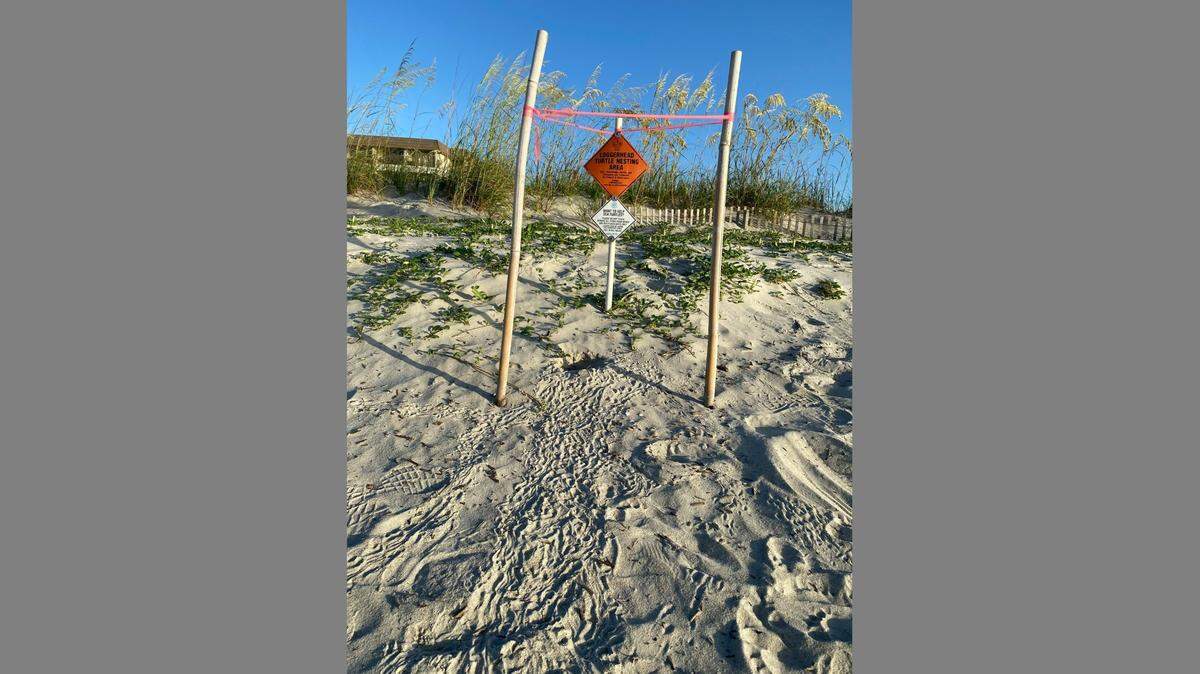
Kuehn pulled out a special nest marker, under the orange sign noting the nesting area, a golden plaque commemorating Liggett. His memory and impact living on.
And so will the work of hundreds of volunteers as the countdown nears to the official season’s start, with the hopes of growing education efforts through the island’s hospitality workers.
“It takes a village,” Kuehn said. “It really does.”
How to help save the sea turtles
- Remove large tents, chairs and personal property from the beach when leaving.
- Dismantle sandcastles and fill in holes before leaving the beach.
- Don’t touch a sea turtle on the beach.
- Follow boating laws, especially in small tidal creeks where sea turtles like to feed.
- Keep artificial lights off the beach at night during nesting season.
- Observe sea turtles from a distance.
- Keep beaches and the ocean clean. Plastic bags and balloons can cause injury or death when sea turtles mistake them for food.
Source: South Carolina Department of Natural Resources
This story was originally published April 26, 2022 at 12:40 PM.