How far will Hilton Head go to protect nature? What the beach lighting debate shows us
If you want to cut down a tree on Hilton Head Island, you have to submit an application to the town.
If you want to advertise a new business, you have to get your sign approved (and it best not have neon lights on it).
According to a new lighting ordinance heading to Hilton Head’s Town Council, if you want to live on the beach, you’ll need to stock up on sea turtle-friendly light bulbs for the summer — or tint your windows.
For some, the lighting ordinance represents the latest commitment to maintaining the island’s natural beauty, reaffirming its emphasis on the environment and protecting the endangered Loggerhead Sea Turtle.
For others, chiefly those who will be required to comply, it represents government “overkill” and the very regulations they sought to leave behind in other parts of the country when they moved here.
As the island’s leadership — three of whom are up for election this year — considers the proposed light ordinance, the sea turtle protections will show how far the town is willing to go to protect nature. It’s likely to affect development for decades to come on Hilton Head. After all, it last updated its sea turtle protection ordinance in 1990.
What do the proposed rules say?
After over a year of being volleyed back and forth among government committees, the final lighting ordinance has three major points:
- Exterior light fixtures visible from the beach should be directed downward and shielded.
- New and replacement windows and glass doors visible from the beach should be tinted, or be installed with an interior or exterior solar screen.
- Existing homes should turn off all the lights, use amber light bulbs, shades or tinting to limit light between 10 p.m. and 6 a.m. during nesting season, which runs from May 1 to Oct. 31.
Is it ‘overkill’ or ‘our little part’ in preserving Hilton Head?
Town Council member David Ames, who has long supported turtle protection ordinances, said the latest lighting ordinance represents a re-centering of Hilton Head’s original vision — one that he said started with Charles Fraser’s nature-blending development in Sea Pines.
“I think there are times when we as individuals lose sight of what makes Hilton Head special, and we all have to play our little part, or our big part, to make that work out for future generations,” he said on Thursday.
He and council member Tamara Becker voted to approve the ordinance and send it onto the full council. Glenn Stanford, who represents Ward 6, including Port Royal Plantation, voted against it.
“We have a turtle protection ordinance, and I support that one,” Stanford said. “We are protecting our turtles. This intrusion into someone’s home is what I’m opposed to.”
Ames’ and Stanford’s seats are both up for election this year.
Beachfront property owners, specifically those in Stanford’s ward, have shared their concerns with the ordinance.
Linda Swinehart, who lives in a beachfront home in Port Royal Plantation, said she loves sea turtles as they nest outside her home, but she says the island’s government has gone far enough in regulating what homeowners can do.
“I think it’s overkill to do anything more,” she said. “This limits your deck evenings or any kind of outside functions for six months out of the year.”
Swinehart said adding tinting would be expensive, too. She said it cost nearly $30,000 to replace five windows and a glass door in her home this year.
Dick Collins, who also lives on the beach in Port Royal Plantation, said the idea of covering his beachfront windows with drapes would be expensive, and it’d “look ridiculous.” On an island where unique architecture and elegance are highly valued, he said most oceanfront homes aren’t designed to have drapes on the windows.
That’s one of the reasons a buyer chooses a home on the beach. Collins said he supports other rules on Hilton Head about limiting signs and tree removal. But the lighting rules, he said, are different.
“It doesn’t really protect the look of the island,” he said. “We care about the sea turtles, and we protect them with our (existing) rule.”
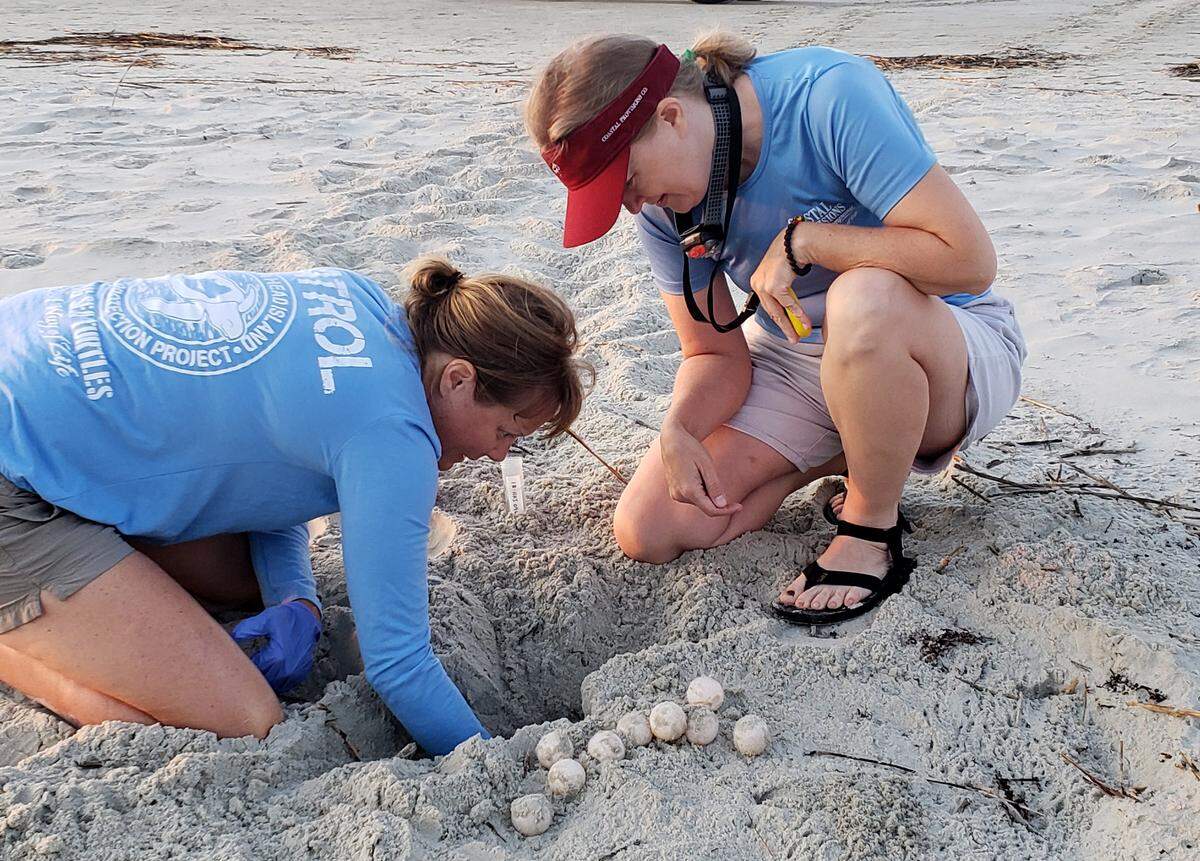
Amber Kuehn, who wrote the original sea turtle lighting ordinance and is the leader of the Sea Turtle Patrol, said it falls on everyone on the island to maintain a healthy environment for the island’s wildlife.
“We need the focus to be on the protection of endangered species instead of the inconvenience of a few property owners,” she said. “It’s literally changing the light bulb.”
Kuehn referenced the amber light bulbs that can satisfy the ordinance if homeowners replace their fixtures’ traditional lights during nesting season.
For Ames and others, property owners’ rights, home values and preserving the environment are inextricably intertwined.
“I understand the inconvenience at one level and the expense at another level, but I think about the setbacks and buffers, our tree and ordinances,” Ames said Thursday. “All of those were put in place because the community to protect the environment.”
If the island doesn’t have its environment, he said, it won’t have property values to worry about.
BEHIND THE STORY
MOREHow does artificial light impact SC's sea turtles?
Nesting and hatching sea turtles on South Carolina’s coast can be disoriented by artificial light that comes from beachfront homes, leading some coastal communities to limit light sources on their beaches.
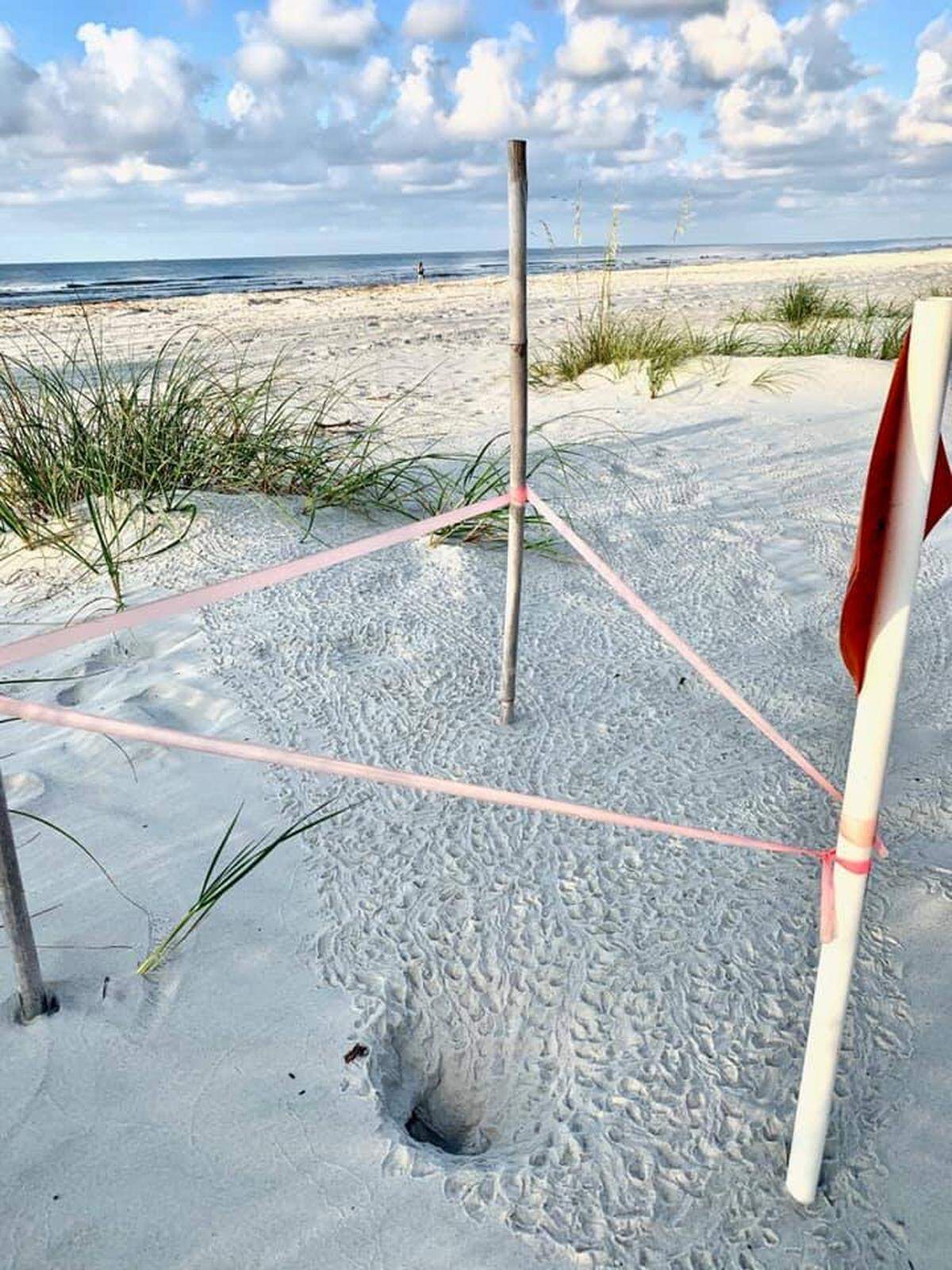
Sea turtle hatchlings have an inborn tendency to move in the brightest direction. On a natural beach, the brightest direction is most often the open view of the night sky over, and reflected by, the ocean, according to the Florida Fish and Wildlife Conservation Commission. If they become disoriented by lights in a nearby home and follow the light away from the ocean, they can get stuck in dune systems and die.
This story was originally published August 28, 2020 at 4:30 AM.