
How Beaufort County volunteers are making life easier for nesting sea turtles
A month into the sea turtle nesting season, things are off to a relatively slow start.
“If the girls aren’t feeling robust, they will skip it or lay fewer nests,” said Amber Kuehn, a Marine biologist who manages the Hilton Head Island Sea Turtle Protection Project.
By Thursday, Beaufort County had 70 loggerhead sea turtle nests and 1 green sea turtle nest. Thirty-one of the loggerhead nests are on Hilton Head Island.
At the end of last year's nesting season on Oct. 31, there were 848 nests the county.
The Palmetto State’s first nest showed up on Daufuskie Island on May 8. Hilton Head would get its first nest a week later.
Kuehn said there are a number of reasons for the lower numbers, among them “false crawls,” when a sea turtle makes a trek up to a potential nesting spot, and decides to turn around and go back. The animals sometimes bump into things, for example, which causes them to reverse their course away from a nesting site.
“Already we’ve had people leave their umbrellas, chairs and toys,” Kuehn said.
Kuehn also predicts fewer nests this year due to the harsh winter, which affected the animals' food sources.
There are other obstacles as well.
"Major challenges faced by loggerheads include loss or degradation of nesting habitat from sea level rise, erosion, coastal development, and beach armoring, although beach armoring is no longer allowed in SC," according to the South Carolina Department of Natural Resources. "Armoring" involves building structures to hold back the sea and prevent erosion.
Kuehn’s and other volunteers are planning ways to give the nesting turtles a better chance.
A group of volunteers known as “Hole Patrol” will fill in any holes dug on the beach by visitors. They will also level sandcastles left by beachgoers. Both can block a turtles' progress to the nesting site.
Anything left behind on the beach can also cause problems.
“They bump into an umbrella and get frightened,” Kuehn said.
Lights from beach houses can also cause problems.
Hilton Head's "lights out" ordinance requires houses visible from the beach to turn lights off by 10 p.m. during the nesting season, which lasts from May 1 through October 31.
Once the sea turtles' babies hatch, Kuehn says, it’s even more important to comply with this ordinance.
While the lights can turn a grown sea turtle away from a certain spot and cause a false crawl, the stakes are higher for hatchlings.
They are vulnerable to injury or death if they mistake those lights for the moon, which they must use to guide them to the sea.
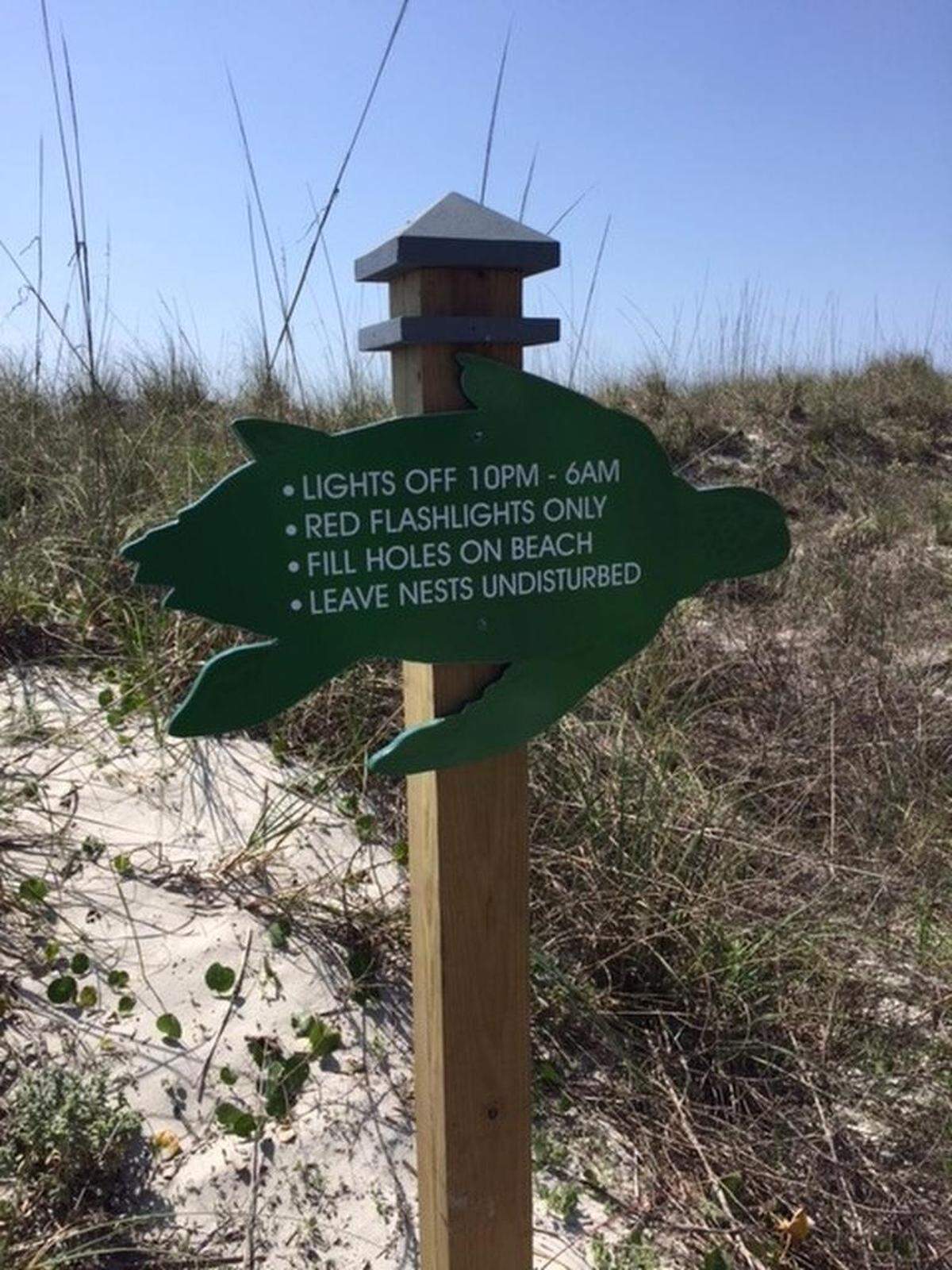
Kuehn says she and her a group of “turtle tracker” volunteers go patrol for light violators once a week.
Last year, Hurricane Matthew took out the dunes that would typically block artificial light from the turtles.
Kuehn has 12 people on her sea turtle protection project staff, and she holds a permit for them to mark and monitor turtle nests, perform nest relocations and hatched nest inventories. They also pick up trash and tell visitors about the lights ordinance.
Michelle Pate, SCDNR's Sea Turtle Program Coordinator, was not available for comment Thursday because she is doing field research.
To report hurt or dead turtles, call 1-800-922-5431.
This story was originally published May 31, 2018 at 5:00 PM with the headline "How Beaufort County volunteers are making life easier for nesting sea turtles."