Erosion eats away at this South Carolina island, residents are forced to retreat
Katie and Tammy Helmuth sat on the remote stretch of Daufuskie Island beach for four days. Derelict houses, disconnected plastic pipes and jagged pieces of metal stuck out of the sand, keeping tourists at bay. For those four days in the June sun, the beeping and grumbling of construction equipment joined the din of the ocean waves.
The mother and daughter weren’t there to relax — they were on the beach to say goodbye. Workers had been trying for days to cut a bright purple house off its tall pilings, lower it to the ground and move it across the beach to a nearby lot. The project was the culmination of months of preparations and permitting.
Katie and Tammy Helmuth never owned the seaside home on the remote barrier island. But like many others on Daufuskie Island, a tight-knit community accessible only by boat, it was their home away from home. There was a time when the front door was always open. Their friend and the house’s former owner Susan Card — or “SuSu,” as Tammy Helmuth called her — would welcome anyone who stepped through with open arms.
The stairs to that door washed away long ago.
“The last piling fell and it was like …” Tammy Helmuth grabbed her chest. “It won’t be our home anymore.”
For around 30 years, Card owned the house facing the Calibogue Sound, the southern tip of Hilton Head in the distance. By her count, the house witnessed scores of kids’ sleepovers, four weddings, a divorce, at least one affair and numerous honeymoons, among other things. It was the place where sea turtle patrol volunteers started early each morning and visitors played golf in their nightgowns come evening. It was also the place they spread ashes.
It was that place until erosion crept up to the foundation and drove her to sell the home at a steep discount in 2020. The new owners entered the deal knowing the erosion risk. They eventually made a plan to move the house, a plan that had, with some complications, culminated in the last week of June.
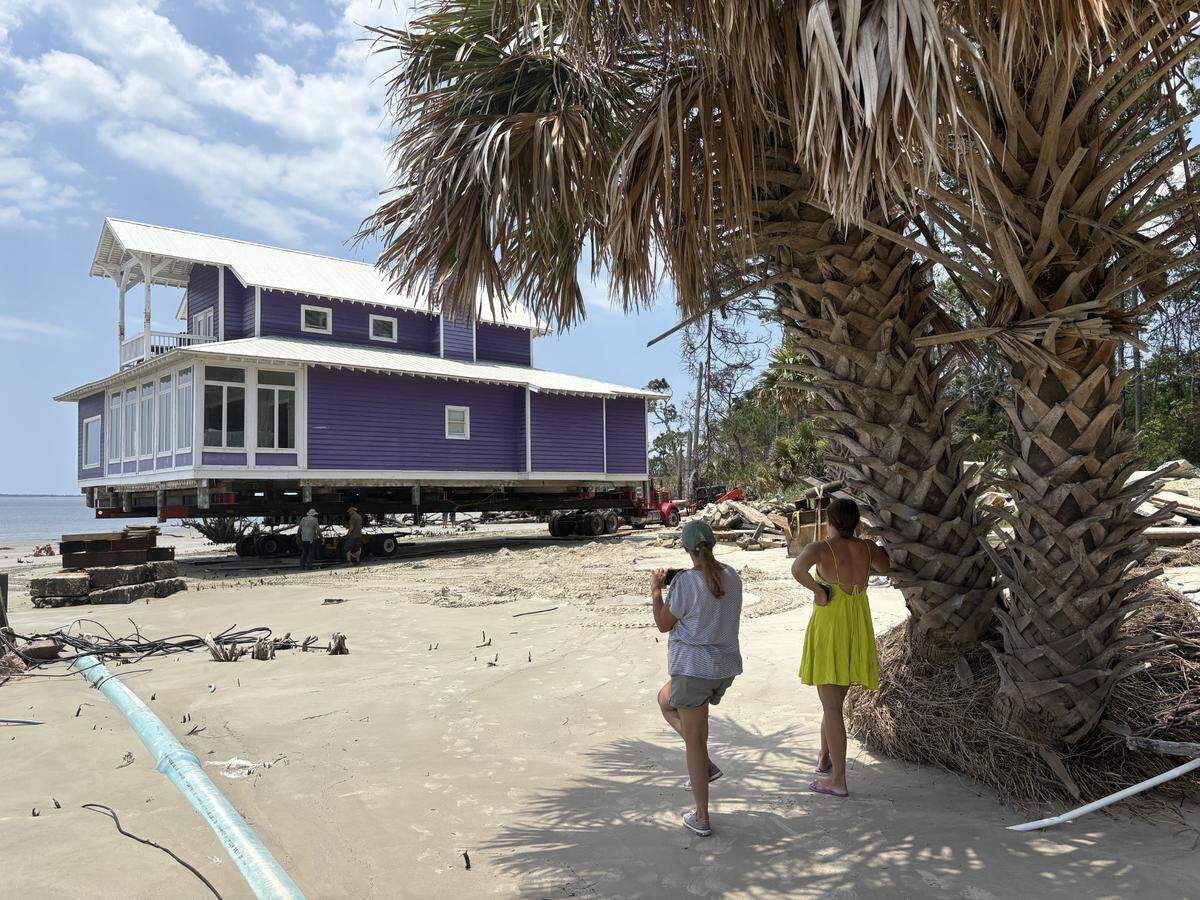
The “purple house,” as many called it, is the second of three houses to be moved off the quarter-mile stretch of beach within the last two years.
After the third home is moved this summer, there will still be three more abandoned, candy-colored houses on the beach sitting on pilings that are inundated at high tide. One home remains perched behind a sea wall that juts into the ocean. Behind another home further back from the beach, a neglected golf course lake fills up during high tides.
There was a point when this move would have been part of a larger plan. A state law directs coastal municipalities to create rules that provide guidance on managing houses, lots and other structures before the ocean can encroach on the property.
The state owns its beaches for the benefit of the public. Despite language in state law that requires planning for these issues, the lack of an organized approach from county and state agencies has left communities with little guidance on how to manage deteriorating homes and the eroding beaches beneath them, Ben Cunningham, a lawyer with the South Carolina Environmental Law Project, said.
So on Driftwood Cottage Lane, solutions and planning never arrived, but the ocean did.
An island on its own
These Daufuskie houses dot a stretch of beach on the barrier island situated between Hilton Head Island and Savannah. Unlike its neighbors, there is no bridge, so the unincorporated community remains sparsely populated and isolated. Everything and everyone that comes and goes does so by ferry or boat, making large construction projects endlessly complicated.
“If we go over to Hilton Head, it’s called going to America,” Geoff Brunning, a local resident and contractor who helped secure permits for the move, said.
The island was long a thriving, isolated Gullah Geechee enclave, where descendants of enslaved people worked harvesting and shucking oysters before pollution from the Savannah River killed the industry. By 1969, the island was sparsely populated when the young teacher Pat Conroy arrived to teach Gullah children in the one room schoolhouse, an experience that would become his famous memoir “The Water is Wide.”
A decade after Conroy’s stint on the isolated island, developers began purchasing large tracts of oceanfront property.
One of these properties would become Melrose Resort. Card was one of the first members when her then-husband gifted her the purple house, at first a subdued cream color, for Mother’s Day in 1989.
When the house was first built, it was hundreds of yards from the ocean, Card said. A half-mile down the coastline sat the Melrose Inn, a luxurious oceanfront getaway that included an equestrian center, swimming pool and golf course with views of the Atlantic.
Mitchell and Victoria Evans will be the third to move their home from Driftwood Cottage Lane. The couple recalls a time when men would don a jacket and tie when heading for dinner at the inn. Emma Kelly, the “Lady of 6,000 Songs” who appeared in “Midnight in the Garden of Good and Evil,” serenaded them over dinner, Victoria Evans said.
Today, Melrose is nearly abandoned, as are most other resorts attempted on the island. Local legend says the failures are a result of a curse that Dr. Buzzard, a famous voodoo practitioner, put on the island.
Curse or no curse, the Melrose’s owners first went bankrupt in 2009, and again in 2017. The resort was then in serious disrepair, when in 2021 the then-owners who planned to “revitalize” the project pled guilty in federal court to wire and tax fraud. The resort is now owned by Whitestone Holdings. The group’s proposals to develop Bay Point Island, a sensitive barrier island at the mouth of the Port Royal Sound, have generated pushback from local environmental groups.
Curse of the rising tides
It was early in Melrose’s existence that effects of erosion came to roost. When the Evanses secured a mortgage for their home in the late 90s, the approval was rescinded after surveyors noted the erosion rate. The couple were eventually able to secure financing from the previous owner of the home, according to Mitchell.
The Daufuskie’s beach was ultimately renourished in 1998, at a cost of $6 million, $11.7 million in today’s dollars. The privately funded project put 1.4 million cubic yards of sand along much of the island’s beachfront. Because portions of the beach didn’t have public access, state and federal funds were not available for the project.
But by the time renourishment was about to start in the late 1990s, erosion had hit the whole stretch of Driftwood Cottage Lane. The process had reduced the value of the land of another house, 33 Driftwood Cottage Lane, to $500 and left the house uninhabitable. Beach renourishment restored the land, and the property later sold for $1 million in 2005, according to county records.
Six years later, that same home and its neighbor were the subject of enforcement by the then-Department of Health and Environmental Control. The owners installed sand bags to ward off erosion that was rapidly claiming their lots, despite the fact that state law prohibited erosion control devices seaward of the department’s established jurisdictional lines.
Today, the resort is boarded up and dilapidated, though some buildings on the property are still operational. A number of hurricanes destroyed a sea wall along the resort, and its remains are still poking out of the sand. The oceanfront portion of the once-famous golf course is eroding into the ocean as well.
A whole row of lots in front of the Driftwood Cottage Lane houses is now underwater. One such lot was sold for $2.95 million in 1989 but never built out. The road that ran in front of the homes is gone as well. All that’s left of the street are the manhole covers that sit at hip height above the sand and disconnected stormwater drains.
The bright coral house on 33 Driftwood Cottage Lane was sold at a steep discount, given that its foundation is inundated at high tide. Like two other homes on the street, it’s been sold within the last five years to a buyer who knew it would need to be moved.
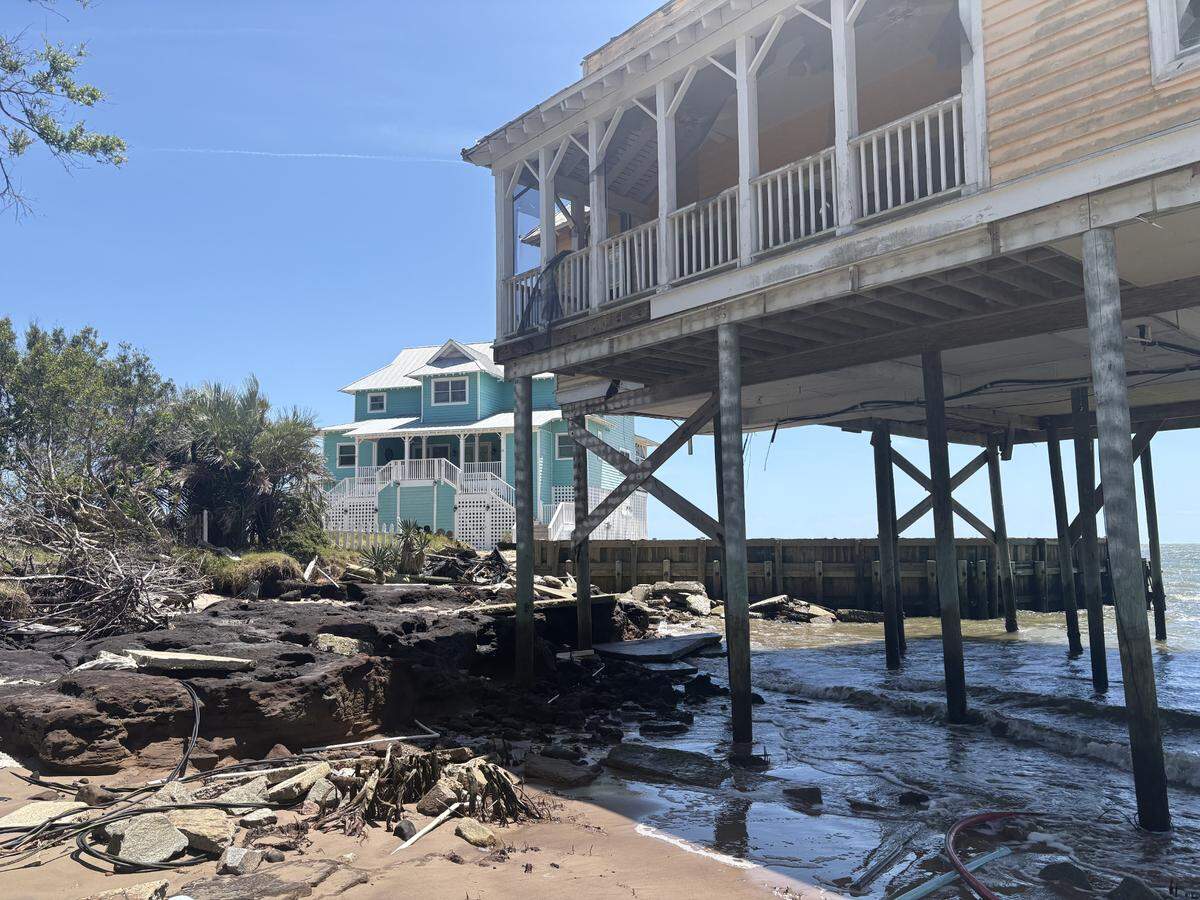
While eight homes on the street are or were in the state’s jurisdictional area, only three will be moved in the foreseeable future, according to the Department of Environmental Services. For now, three homes remain elevated above the sand, deteriorating, their once vibrant siding fading in the sun.
The big move
Moving a house is no small effort, but the progress certainly came in small increments. On June 23, workers with Tugaloo House Movers cut the house from its elevated pilings and lowered it to the trailer. The tide came in faster and complicated the process, and neighbors could hear the workers hammering well past midnight.
Given the challenges of accessing the island, doing much of anything on Daufuskie is complicated. Owners tasked Tugaloo to move three houses from the same stretch of beach and the company left much of their equipment on the island following the first move last summer, a process that took 18 days.
But under the bright sun and a heat advisory, workers shuffled pallets around, placing them in front of the wheels and driving the house a few feet at a time. At one point, the truck pulling the house got stuck in the sand. Workers used a forklift to get it out.
As construction equipment growled and beeped, residents of the island rotated through to watch the house move inch by inch up the beach and reminisce. A family of tourists on a day trip from Hilton Head saw the news on TikTok and came by to take a look. A group of swimmers set up their cooler and chairs nearby before sloshing into the tepid ocean, keeping an eye on the production.
The Helmuths were there the whole day, rotating between watching under the hot sun and seeking shade under other threatened houses or trees felled by erosion.
They exchanged stories with each other and others who came to say goodbye to the house, or the version of it they knew. By many accounts, the purple house was the island’s party house, the “every emotional thing ever house,” said Monica Ferguson, a member of the island’s sea turtle patrol who stopped to watch.
They talked of the time Katie Helmuth learned to drive the Jeep on the beach, a practice that is now illegal but allowed at the time. Or the legendary Christmas when Card surprised all the island kids with a moped, electric scooter or big wheel. Katie Helmuth recalled all the kids walking up the drive to see the 24 gifts lined up along the street, each with a big bow.
It was Card’s favorite place, and she wanted everyone to experience it. When she wasn’t home, she let anyone who asked stay. When she was there, the door was always open and “SuSu” would welcome anyone with open arms.
While the purple house witnessed the big, small, sad and joyful moments, it also witnessed the ever steady creep of erosion.
Seawalls and sea level rise come for homes
“The problem is twofold,” Rob Young, director of the Program for the Study of Developed Shorelines at Western Carolina University, said. “The shoreline is receding and it’s also being impacted by the hard structures.”
The high rate of erosion can largely be attributed to a nearby seawall surrounding a big blue house, Young said. While a hurricane destroyed the seawall along the Melrose Resort and golf course, the owners continued maintaining the section surrounding their home.
Like many places along the coast, sea level rise has been eating away at the beach. Researchers have known for decades that the South Carolina coast is on average losing land. But the stretch of coastline the purple house sits on erodes at a very high rate, about 8 feet a year, according to the Department of Environmental Services.
Tammy Helmuth said she would sit on the porch of the purple house and watch the waves crash into the sea wall and scour the sand next to it out to sea.
The 1988 Beachfront Management Act banned new seawalls along the oceanfront. When humans manipulate the shoreline, they can temporarily protect one section of beach while condemning another further down the shore. Experts found seawalls and other hard structures provide property owners a false sense of security and prevent the normal movement of sediment down the shoreline, a process called longshore transport.
Seawalls can also speed the rate of erosion in front of them, eating away at the beach until water reaches the wall and there is nowhere to walk on the sand.
State law doesn’t permit the building or rebuilding of seawalls between a set of jurisdictional lines, but it does allow existing structures to be repaired if enough is intact.
After years of watching the ocean creep closer, Hurricanes Matthew and Irma took out the utilities and the road behind the houses. So in 2020, Card made the decision to sell.
Its new owner, Nikki Snow, found the house on Mother’s Day, just as Card did. In 2020 her family wanted a short vacation, so they rented the house, having never seen Daufuskie before. When Snow bought the home, she did so knowing that it would need to be moved.
The “whim of the ocean”
Buying beachfront property has always been a risky move. A state Supreme Court decision found that essentially, anyone who takes possession of a house close to the beach does so at the “whim of the ocean.”
“It’s a risky proposition,” Cuningham said. “Everyone likes the idea of living on the beach until you’re living on the beach.”
The 1988 Beachfront Management Act established a 40-year policy of retreat from the beachfront, and directed local municipalities to plan for that retreat in the local ordinances and beachfront management plans.
That retreat was never really realized, Emily Cedzo, who works on beachfront management issues at the Coastal Conservation League, said. In many ways, it was abandoned in 2018 when the state legislature changed the word “retreat” to “preserve.”
In large part, beach renourishment has offset the need for retreat, according to a report on the state’s shoreline management policy. The practice has been an extremely helpful tool for communities that can secure consistent funding for the projects, which often need to be repeated every eight or so years. For example, Hilton Head is able to regularly renourish its beaches because of an accommodation tax on hotels and lodging that funds their projects. But for others, it’s simply out of reach.
Private communities, like Melrose, are not eligible for state or federal funding unless they provide public access to the beach. On a sparsely populated island like Daufuskie, the cost versus benefit analysis doesn’t add up, Young said. Given the cost of a single project, much less the repeated cost over years, it would be difficult for the community to afford renourishment, especially as a long-term solution.
If anything, moving houses away from a rapidly eroding oceanfront would work best in a place like Daufuskie, which has ample space, Young said. Other areas of the densely populated South Carolina coast don’t have that luxury.
The state beaches belong to the people of South Carolina. The root of the issue on Daufuskie is there are abandoned homes sitting on public trust land, the remains of their utilities jutting from the sand, and no organized mechanism for dealing with it, Young said.
In a perfect world, homeowners could anticipate the point at which their home would no longer be habitable and make plans to manage the situation accordingly, Cunningham said. Then, homeowners wouldn’t need to wait for their water to get cut off unexpectedly, which happened to the Evans’ family, or for a big tide to take their porch.
While the retreat policy is in some ways abandoned, Cunningham said there are still parts of the law that require local governments to plan for the removal of abandoned structures from the setback zone. According to the law, there should be rules that help abandon lots and building codes that require buildings to be built so they can be removed from their pilings
.
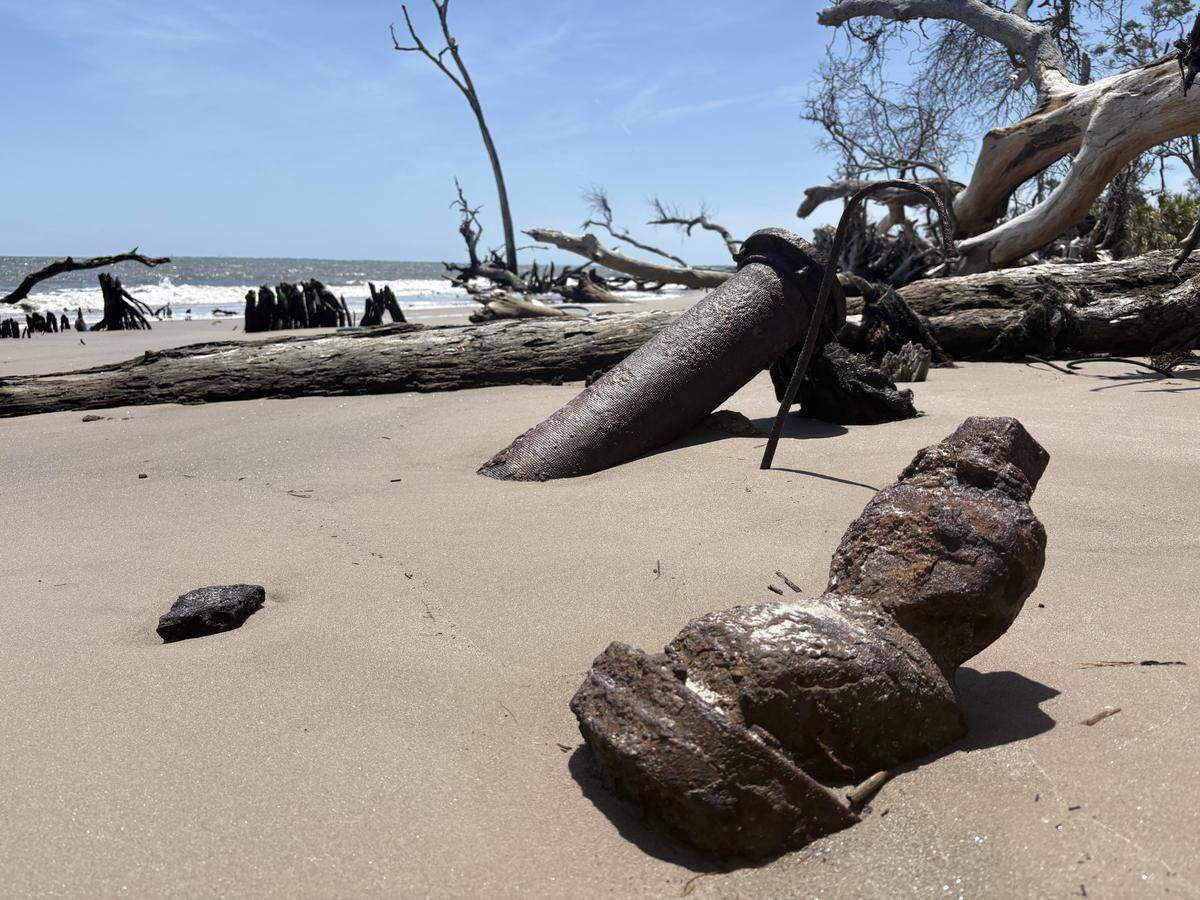
There are two private communities in South Carolina where beach renourishment is not a viable solution and erosion forced the condemnation of homes along the beach, according to Young and Cunningham. One such site is Harbor Island, the site of a yearslong legal battle between the homeowners association and property owners over the responsibility of moving houses from the beach. The other is Driftwood Cottage Lane on Daufuskie Island. Both are private communities in unincorporated Beaufort County.
Some of this planning was supposed to come in the form of local beachfront management plans. The state directs local municipalities to review their plans every five years and update them every 10. Beaufort County wrote their plan in 1993 and hasn’t updated it since.
Since the county wrote its beachfront management plan, the sea level has risen almost half a foot in the region, Young said.
“When the beachfront plan was first done, I don’t know that this might have been such an obvious problem,” Cunningham said. “But as the years have passed and erosion has continued, this is a problem.”
The Island Packet reached out to Beaufort County spokesperson Hannah Nichols for comment. Due to the July 4 holiday and staff availability, the county is unable to provide a response at this time.
A new chapter
After leaving her purple house, Card didn’t return to Daufuskie for two years. When she finally did go back, Card didn’t visit the house. It was just too hard.
“It was like a death,” Card said. “That community grabs your heart. They’re family. That’s all I can say, it’s just pure unconditional love there.”
Katie Helmuth waited until she could watch the purple house move off the beach. She didn’t think it would take that long, but when the house finally crested the hill off the beach, she said, it was bittersweet.
Now that it’s off the sand, it doesn’t feel like the purple house everyone knew, Katie Helmuth said, but she hopes the new owner will have just as much fun there as she did.
As people gathered on the beach to say goodbye throughout the day, they wondered what the house’s next life would look like. The paint had faded after years in the Lowcountry sun, so if the new owners repaint it, will the purple house still be purple?
When the first house on Driftwood Cottage Lane moved across the golf course last year to its new home, the owners estimated that the move bought the structure 10-30 years. The purple house wasn’t moving nearly as far back. So as the sun moved across the sky and the tide receded, some wondered if the house would, after all that work, be spared tides.
Perhaps, the location and the family may change, but on Driftwood Cottage Lane the constant will remain the ever encroaching sea.
This story was originally published July 6, 2025 at 5:00 AM.