
‘Utter nonsense’: In final act, Beaufort Co. school board majority OKs $6M for school addition
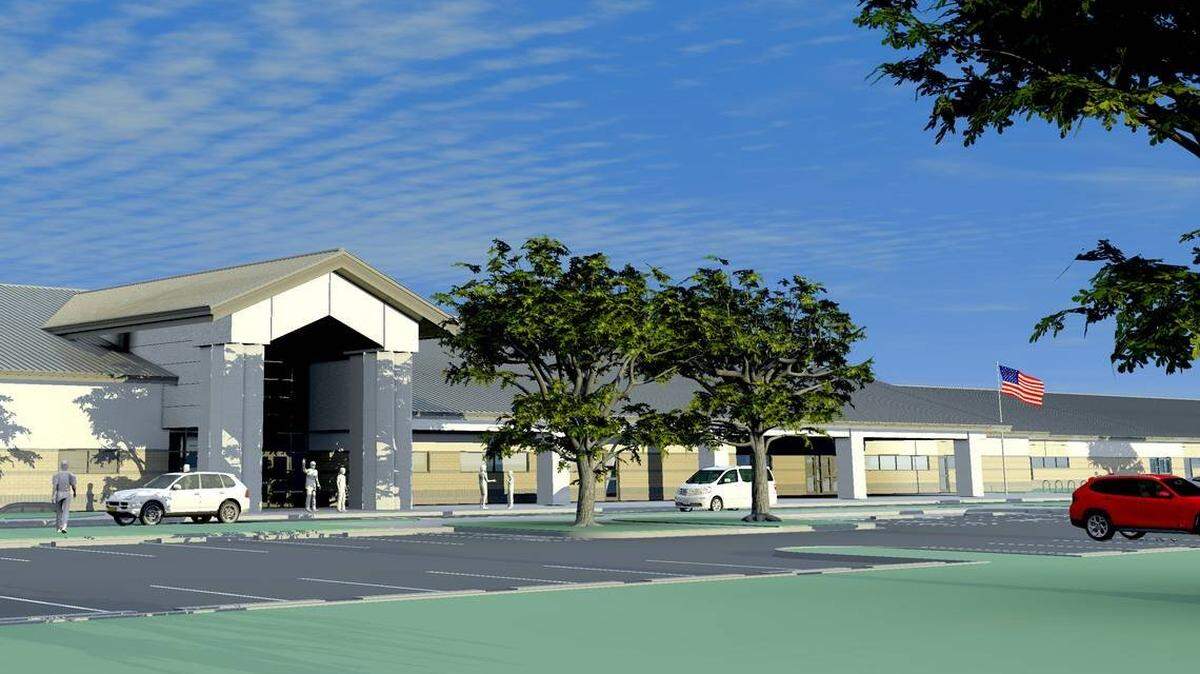
Despite overwhelming voter opposition earlier this year to the school district receiving millions of dollars for construction, Beaufort County Board of Education members approved $6.3 million Tuesday to expand an overcrowded Bluffton school linked to an ongoing FBI investigation into building costs.
At Tuesday night’s meeting — the last of the term for six of the 11 board members — outgoing board member Evva Anderson made the motion to design and build a 16-classroom addition onto River Ridge Academy using about a fourth the district’s “8 percent” borrowing capacity — money the district is allowed to borrow for school capital projects without voter approval.
Five of the seven board members who voted for the motion Tuesday will not be on the board come January. Six of the seven are part of a majority on the board that has consistently stood behind former superintendent Jeff Moss, who is under investigation by the FBI for financial transactions related to construction projects he oversaw during his five-year tenure with the district.
In November, voters elected six new school board members. Only one of the four incumbents who ran for re-election was able to keep his seat.
Those board members, who will be sworn in at the next meeting in January, will not only be charged with finding a long-term solution to the overcrowding in Bluffton schools, but choosing a new superintendent in an attempt to regain public trust lost during Moss’ and the previous board’s tenure.
After two failed referendums in the past two years, the majority said Tuesday night’s vote was their way of guaranteeing funding for the River Ridge project, in case the new board was not able to craft a successful referendum next year.
“What if they (minority board members) have put too much negative bologna out there? What are we going to do when people start moving out in droves to where their children can get a decent education without 29 or 30 other kids in their class,” Anderson said.
Minority board members Joseph Dunkle, JoAnn Orischak, John Dowling and Christina Gwozdz voted against the motion, not because they didn’t see a need for it, they said, but because they did not support the methods used to obtain the funding, something that has been an ongoing issue for the deeply divided board.
The “8 percent” borrowing capacity is typically reserved for routine maintenance needs, such as HVAC upgrades and roof replacement, according to Robert Oetting, chief operations officer for the school district.
Diverting money from maintenance items to fund large-scale construction projects, which was done for the construction of May River High School and Whale Branch Early College High School’s auditorium and gymnasium, could potentially push off upgrades needed on some aging facilities.
At a work session last month, the district’s bond attorney, Frannie Heizer, also advised the board that referendum money should be used to pay for new construction and longer-term projects, not “8 percent” funds.
Dowling said Tuesday night’s vote signaled “taxation without representation” and was a repeat of the very behavior from the board that caused the public to reject April’s $76 million referendum in a landslide.
“The last referendum didn’t just fail because (voters) didn’t trust Moss,” he said. “They didn’t trust the board. And then last night you had five members of the board basically bypass the decision of the taxpayers of Beaufort County.”
The district itself had not asked the board for the $6.3 million to expand River Ridge.
Discussion about using the “8 percent” money first came up at a work session last month when Oetting asked the board to consider using $1.6 million for architectural designs for the additions on River Ridge Academy and May River High School.
Oetting’s original proposal was to use the “8 percent funds” for the design work and then include the construction costs in a November 2019 referendum. If voters approved the referendum, the additions could be finished for the start of the 2020-21 school year.
The board’s decision Tuesday to take it one step further and use the “8 percent” money not only for the architectural designs for the two school additions but also the full construction cost for the River Ridge addition is likely not the final word on the matter.
Minority board member David Striebinger said he voted in support of the motion Tuesday so he could call for a revote once the new board members begin their term in January. In order to call for a revote, a board member must have voted with the winning side of a motion.
Striebinger called the decision “utter nonsense” and a “last hurray for the lame ducks.”
“The first step in the process is the design phase, so why authorize money to build it before we do the design? It doesn’t make any sense,” he said.
Earlier this year, the school district was subpoenaed in an ongoing FBI investigation for documents relating to the construction of River Ridge Academy and May River High School, which were both built during former superintendent Moss’ tenure.
Both the May River and River Ridge projects have been criticized because they cost tens of millions of dollars more than initial estimates from Moss. And four years after the completion of both schools, they are both at or above 97 percent capacity.
After the two failed referendums left the district unable to build a new school, overcrowding at Bluffton schools has caused schools to increase class sizes, add mobile units and the district consider a new rezoning plan.
A handful of parents and teachers stood before the board Tuesday night urging them to approve the funding for the River Ridge addition as a step toward alleviating overcrowding and “doing what is right for our kids,” one parent said.
“... We’ve been punishing students who live here in the Bluffton cluster for two years and you’ve sat and made excuses,” said Phil Walrad, a parent with students in the district, to the board.
After hearing those stories from concerned parents and teachers Tuesday night, however, Anderson — the same member of the board who proposed pushing through the school’s expansion while citing the school’s overwhelming overcrowding — moved to strike a more immediate solution to that overcrowding.
For the past four months, the board has been working on a rezoning plan for the 2019-20 school year. At Tuesday’s meeting, Anderson made a last-minute motion, minutes after a minority board member left for the night, not to rezone schools after all. The motion failed.
“We’re tight, but we’ll always be tight,” she said when asked why she wanted to eliminate the rezoning option.
The capacity at River Ridge, including with the mobile units, is at 105 percent, according to the district’s data on the 45th day of this school year. By next year, its capacity is projected to jump to 111 percent.
One of the rezoning plans brought before the board Tuesday night would bring the school’s capacity down below 90 percent next year, according to district projections.
Oetting said that rezoning is needed now. But since the board has yet to accept any of his team’s rezoning plans, they are now looking into other options, including adding more mobiles to Bluffton schools, he said Wednesday.
This story was originally published December 12, 2018 at 6:17 PM.