Jail strip search ruling finds Beaufort County can be liable. What that means
A federal judge found that Beaufort County was legally responsible for five years of strip searches that disproportionately affected female inmates at its jail, a practice currently being challenged as unconstitutional in a class-action lawsuit that could cost taxpayers millions.
David Norton, a U.S. District judge for South Carolina, ruled March 31 that the county could be held liable in the lawsuit because former Col. Quandara Grant — who implemented the strip search policy in 2015 as director of the Beaufort County Detention Center — had been the “final policymaker” over the jail’s operations.
A trial will determine whether the strip searches were unconstitutional and what the county may be required to pay in damages. Trial proceedings have not yet been scheduled. Beaufort County Council chose to proceed to a federal trial in early 2025 after failing to reach a settlement with about 5,000 women represented in the lawsuit, which was filed in 2020 and certified as a class action in 2022.
A potential settlement could be costly for the county. Similar class-action suits in Boston and New York City yielded respective settlements of $10 and $33 million.
Rob Metro, a trial lawyer based in the Hilton Head Island area and one of several attorneys representing the plaintiffs in the class action, declined to give specific details about his team’s yearslong efforts to mediate with the county. But he described county officials as playing fast and loose with taxpayer dollars.
“I had read the county’s position (on going to trial) ... and I think that is a very risky approach, given the court’s rulings up until this point,” he told The Island Packet and Beaufort Gazette on Tuesday.
News of Judge Norton’s ruling was first reported by The Post & Courier.

Lawsuit alleges gender discrimination
Women in the class-action lawsuit allege they were forced to strip naked in front of guards after being booked into the county jail, undergoing full-body pat-downs and “degrading and unnecessary” body cavity searches.
Grant’s 2015 policy required all inmates to be strip searched before moving into “general population” areas of the facility. But unlike new male detainees, women awaiting bond hearings were housed in a cell within the general population area.
Thus, all female detainees were subject to strip searches at booking, while men were not. The lawsuit claims this violated the 14th Amendment’s Equal Protection Clause.
The plaintiffs consist of female inmates who were strip searched at the Beaufort County jail between Feb. 27, 2015, and May 5, 2020 — when the jail also moved its housing for new male inmates into general population and began strip searching all men upon booking as well.
A 2016 evaluation of the jail ordered by Beaufort County Council pointed out the detention center’s lack of space for new female inmates, saying there was “not enough room/areas” for women and those in other inmate classifications like murderers, gang members, suicide watches and people with mental illness.
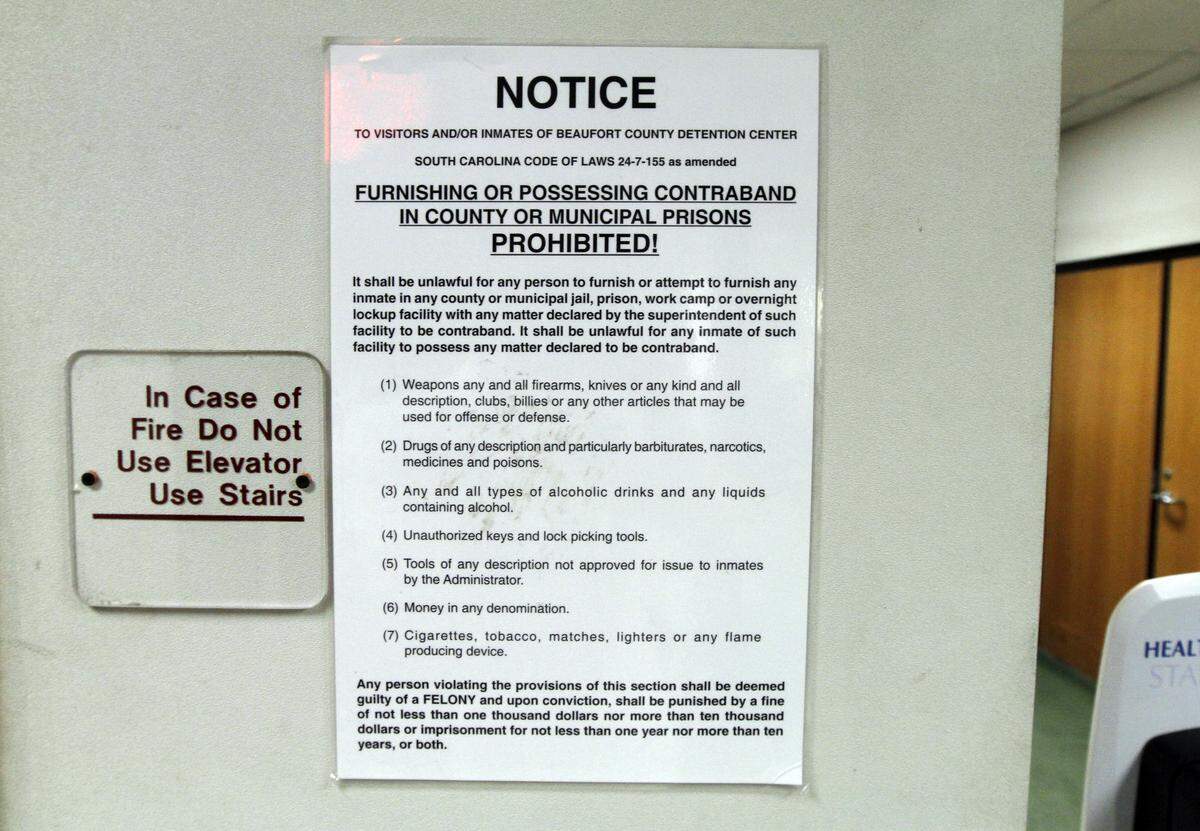
Answering questions from the plaintiffs’ attorneys in an August proceeding, Grant said the strip searches were performed to prevent the spread of contraband among different classifications of female inmates. The only thing separating new female detainees from the general population was a metal door with a small gap near the floor — an opening “big enough to pass contraband” through, she testified.
Between 2015 and 2020, Grant said, male inmates were strip searched upon booking only if there was reasonable suspicion they were concealing contraband.
Beaufort County challenges judge’s ruling
Lawyers for Beaufort County last week motioned for Norton to reconsider his March 31 ruling, claiming the county should not be considered legally responsible for the strip searches because County Council, rather than Grant, was the “final policymaker.” They claim council members at the time were unaware of the strip search practice.
Additionally, the county’s lawyers argue the plaintiffs cannot prove the strip searches were performed with “deliberate indifference” to inmates’ constitutional rights, a common legal hurdle in cases involving alleged violations of the Eighth and 14th amendments.
Grant retired earlier this year after 31 years with the county. She was recognized at a County Council meeting in February, with attendees chanting “colonel” as she walked up to accept her plaque.
This story was originally published May 5, 2026 at 9:56 AM.