Beaufort County jail understaffed, violated state rules, report finds
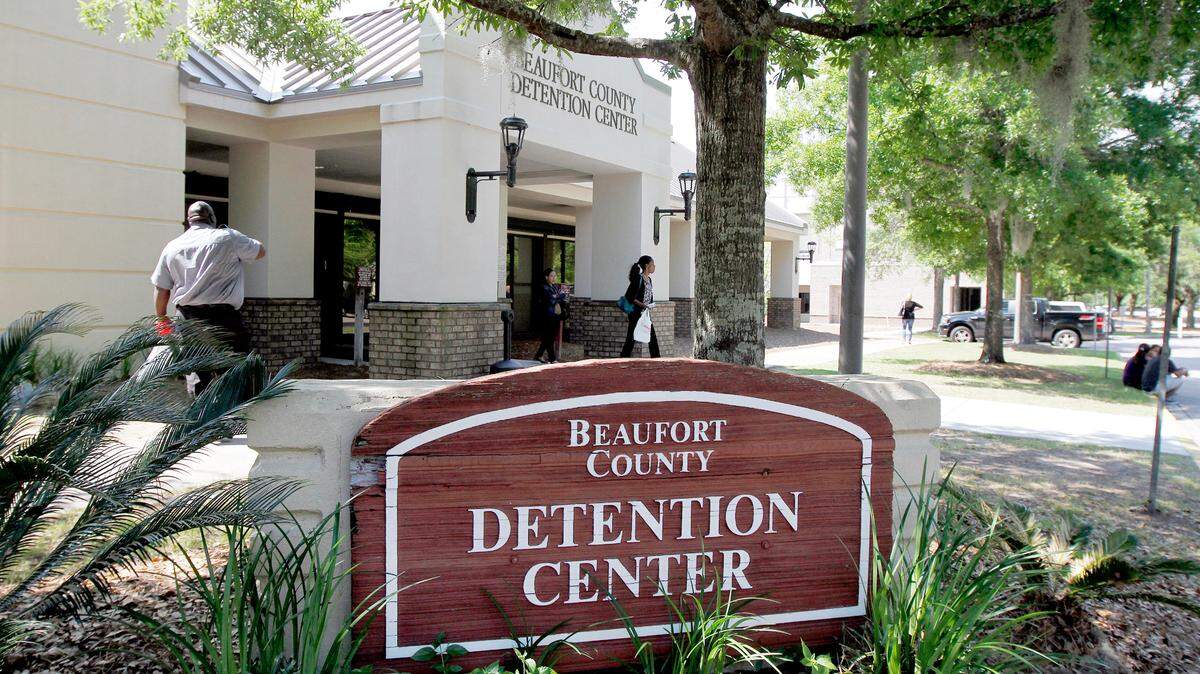
The Beaufort County jail failed to meet state corrections standards this year, adding to ongoing questions about how the taxpayer-funded facility is run.
State inspectors with the South Carolina Department of Corrections alerted top county officials and the jail directors in July that the facility had multiple violations, according to a report recently obtained by The Island Packet through a public records request.
Chief among them was that pre-trial and sentenced female inmates were being housed together, a practice that violates state rules requiring jails to separate inmates into “categories,” by gender, age, offense type and sentence status. The same was not said for men in the jail.
Inspectors also found the jail was understaffed and the fire alarm was overdue for an annual inspection. Heating and cooling was uneven across housing units and the jail’s required multipurpose room was out of service, the report said.
Although staff have discussed converting the space into additional housing units, the jail hasn’t provided the state with information needed to move that project forward. This is a gap that dates back to 2022, according to the report.
The jail also failed to meet health requirements. State rules require that within two weeks, inmates receive a comprehensive health appraisal, including physical, dental and mental health evaluations, as well as screening for contagious diseases. The report found that the facility did not follow this rule, though it did not specify which aspects were violated.
Inspector’s analysis of the jail’s security was almost entirely redacted from the report, meaning it is unclear whether the Beaufort County jail was in compliance. The state agency cited that security plans and devices are excluded from the term “public record.”
Ongoing issues
The jail has drawn increased public attention in recent months after a county councilman was allowed to enter with two cell phones, walk freely through low-security areas and meet privately with an inmate in a room reserved for attorney-client visits.
The incident, which led to a weeks-long investigation, revealed “disturbing and concerning” policy violations in the jail, Beaufort County Sheriff P.J. Tanner previously said. Jail employees maintained their jobs and no policy changes have been made since the incident. The county did put “additional” measures in place to ensure compliance, but could not specify what those were.
The county’s response
The county was given until the end of October to submit a corrective action plan to the state outlining how it would address the violations. In its response, obtained by The Island Packet through the state’s department of corrections, the county said inmate physicals are now up-to-date, efforts are underway to improve staff retention and officials plan to address uneven heating and cooling throughout the facility.
The response also noted that the jail, built in 1991, was not designed to house multiple classifications of female inmates, unlike the men’s housing areas. The response did not include a specific plan for resolving that violation.
This gender gap, in part, was the subject of a class action lawsuit filed in 2020 that alleged the county’s jail used “humiliating” strip searches only on female inmates. The county cited the housing distinction in a trial brief, which said men were only strip searched upon booking if there was “reasonable suspicion,” since they were housed separately from general population.
A statewide issue
Jail deficiencies across South Carolina have been widely reported.
In 2022, none of the state’s county jails met the state’s minimum standards, according to The Post & Courier. That year, the Beaufort County jail recorded six violations, one of the lowest number of violations among the state’s 46 counties.
State law, however, limits the state department of corrections’ ability to compel counties to solve the problems at their jails, other than shutting them down. While the state department can send warning letters to county leaders, as they did in Beaufort County, its oversight role is to provide direction and assistance, not to fine or pull licenses, reporters found.