What are the penalties for gator mistreatment in Beaufort Co? Here’s what state law says
Wildlife authorities continue to investigate after two individuals were caught on video catching an alligator and hauling it into their car outside Beaufort County last month. Like many past cases, the suspects could face criminal charges for harassing the Palmetto State’s apex predator.
Here’s a rundown of what South Carolina criminal law says about the mistreatment of gators.
Feeding alligators
Biologists say feeding an alligator can cause the reptiles to lose their natural fear of humans. That’s one reason why it’s a misdemeanor to “feed or entice” a gator without a proper permit in South Carolina.
Violations could result in a maximum jail sentence of 30 days or a fine of up to $200, according to state law.
Touching or taking alligators
Added to state law in 2014, the Alligator Management Program also made it a misdemeanor to “molest” an alligator, which can be interpreted to mean touching or otherwise harassing the animals. In 2021, the South Carolina Department of Natural Resources said it planned to charge a man with the offense after he was photographed grabbing a large gator by the tail on Fripp Island.
Molesting an alligator is also considered a misdemeanor and carries similar punishments to feeding a gator: a maximum fine of $150 or up to 30 days in jail.
Penalties are slightly harsher for hunting or taking an alligator, as well as unlawfully possessing or disposing of alligator parts. While the maximum jail sentence for the misdemeanor is still 30 days, fines for the misdemeanor range from $500 to $2,500 — along with any court-ordered restitution for the gator that was unlawfully taken or killed.
Hunting restrictions
Wildlife experts say the American alligator population is healthy in South Carolina, enough so that DNR began a yearly hunting season in 2008. About 300-400 gators are harvested annually across the state.
Even for the 1,000 or so residents who receive alligator hunting permits as part of South Carolina’s yearly lottery, DNR heavily regulates how the animals can be hunted and how they can be used afterward. Hunters can only hunt alligators longer than 4 feet, cannot use shotguns or rifles and must report all harvested gators within five days of the hunt.
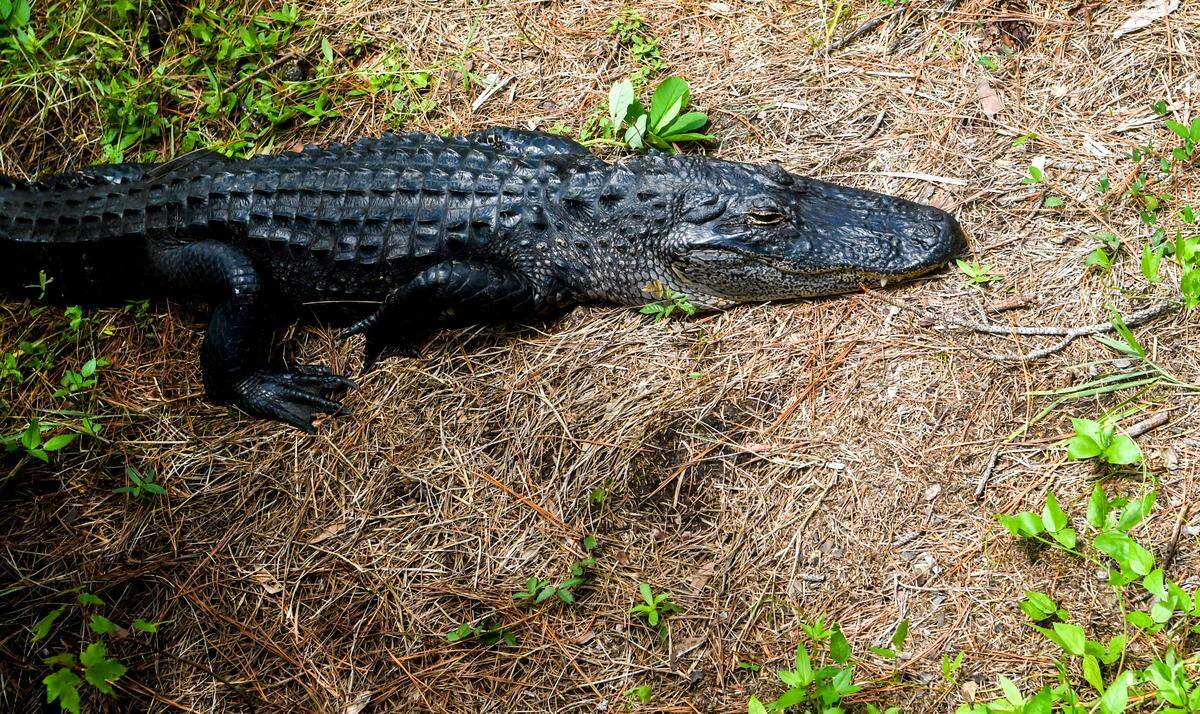
Any gator skins shipped within state lines must be properly tagged, according to state law. If not, residents could face a misdemeanor charge, jail time and up to $500 in fines.
A host of other violations related to the alligator industry — including taking gator eggs without a permit, restaurants failing to record their purchase of alligator parts and the improper management of an alligator farm — are also labeled misdemeanors punishable by fines between $500 and $5,000.
Could alligator laws get stricter?
Following a 2020 incident on a Hilton Head Island golf course when animal control personnel allowed residents to sit on the back of a large bound alligator, South Carolina lawmakers considered increasing fines for alligator-related crimes.
Introduced by state Rep. Jeff Bradley (R-Beaufort) in 2022, the bill proposed changing the maximum penalty for feeding and harassing alligators from $150 to $1,000, also suggesting a new minimum of $500 over the previous $100. For the offense of unlawfully hunting or taking a gator, the legislation sought to increase maximum jail time from 30 to 90 days.
Bradley’s proposal also outlined stricter rules for disposing of alligator carcasses. It did not include elevating gator mistreatment offenses to the felony level.
The bill passed in the state house but floundered in the senate after being referred to the Committee on Fish, Game and Forestry. No similar proposals were made in the 2023-24 legislative session.
This story was originally published December 2, 2024 at 12:22 PM.