‘Our system is broken.’ SC Supreme Court justice assails death sentence in Upstate case
READ MORE
Death by Firing Squad
In March, the S.C. Department of Corrections announced it was ready to execute people by firing squad in Columbia. Two people were scheduled to die shortly afterwards, then their executions were put on hold. No other outlet is covering the historic time like The State.
Expand All
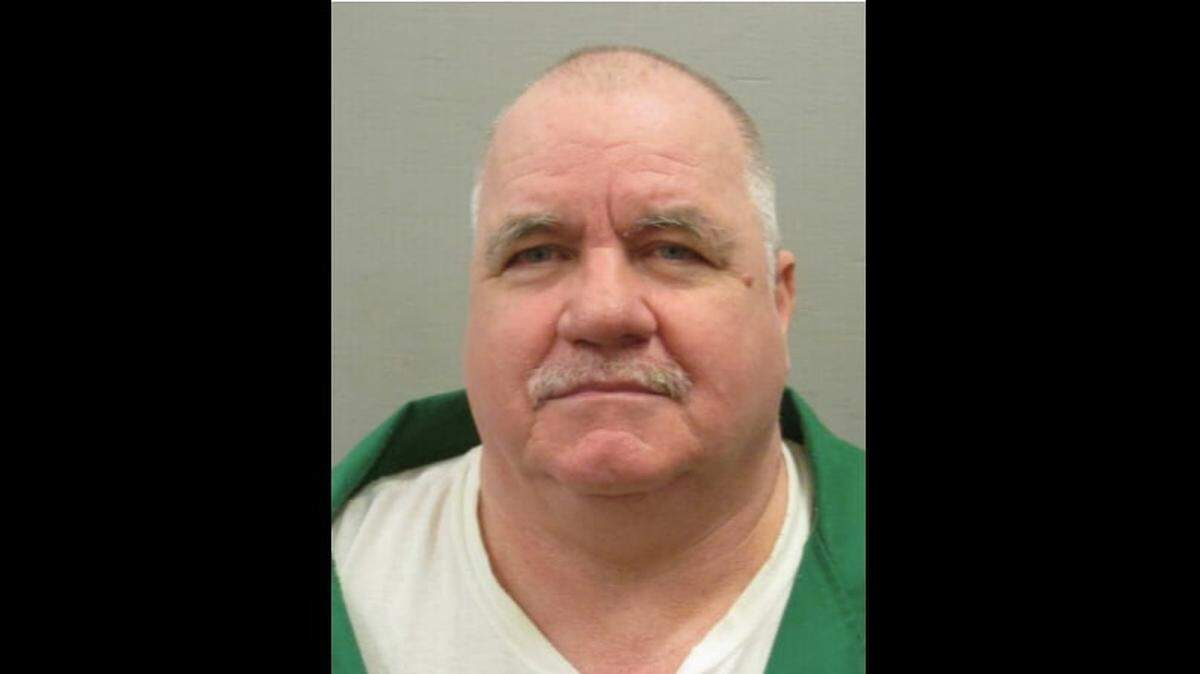
An associate justice of the South Carolina Supreme Court issued a rare and blunt dissent Wednesday in an Upstate death penalty case about a 1999 convenience store robbery that four of the five justices agreed to uphold.
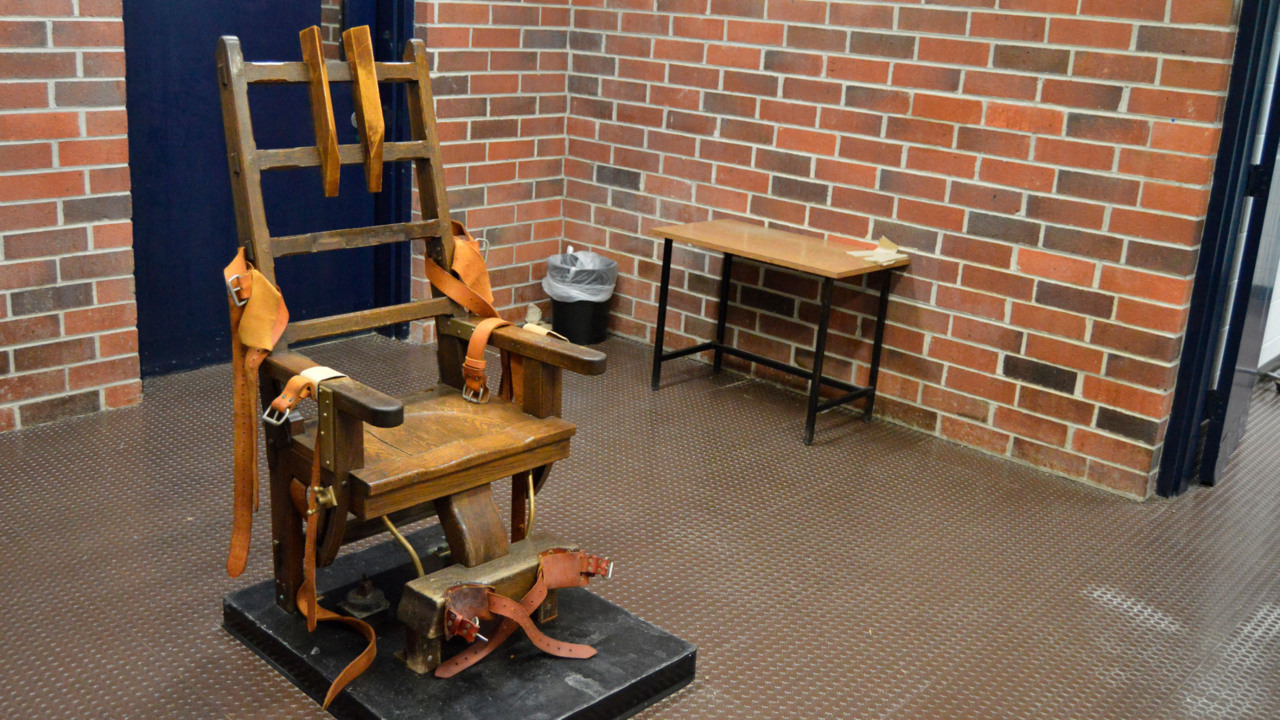
That dissent came hours before the Supreme Court issued an execution date for Moore on April 29. The state says it is can currently kill people with the state’s 110-year-old electric chair or the firing squad, a method that the South Carolina Department of Corrections announced was ready March 18.
By state law, Moore must choose his method of execution 14 days before his execution date.
His lawyers have filed a motion with the state’s high court to stay his execution.
“In the nearly 13 years I have served on this Court, I have voted to affirm eleven death sentences on direct appeal and have never dissented,” Associate Justice Kaye Hearn wrote in her 14-page dissent.
But the spur-of-the moment killing committed by Richard Moore in 1999 during a convenience store robbery in Spartanburg County is so different from the usual brutal premeditated slayings for which South Carolina juries give out the death penalty that condemning Moore to death is disproportional, or so far out of line, as not to be lawful, Hearn wrote.
“The death penalty should be reserved for those who commit the most heinous crimes in our society, and I do not believe Moore’s crimes rise to that level,” Hearn wrote, calling South Carolina’s system “broken.”
In Wednesday’s majority opinion, four Supreme Court justices upheld Moore’s death sentence in a case that centered on the issue of whether the sentence was proportional, or roughly the same as, other death sentences for similar crimes.
The majority, in an opinion written by Chief Justice Donald Beatty, wrote that Moore’s crime had the aggravating factors set out in the law — such as killing during an armed robbery — that qualified a person for the death penalty,
Moore, now 57, has been on South Carolina’s death row 21 years.
1999 Upstate store robbery ends in one dead
On Sept. 16, 1999, Moore entered Nikki’s Speedy Mart in Spartanburg County, unarmed, intending to make the clerk hand over money to buy cocaine.
But after the clerk, James Mahoney, pulled a gun, the two scuffled and the gun fired, killing Mahoney. Moore, who had gained control of the gun, fired a shot at a bystander but missed. Leaving the crime scene, Moore was involved in a traffic accident. A police officer arrived, and Moore got out of his truck, lay down on the road, and said, “I did it.”
A blood-soaked Nikki’s Speedy Mart cash bag containing $1,408 was recovered from the truck.
At a 2001 trial presided over by former state Judge Gary Clary, then-prosecutor Trey Gowdy sought and won the death penalty. Moore did not dispute his guilt. The jury convicted Moore of murder, armed robbery, possession of a firearm during the commission of a violent crime and assault with intent to kill — all aggravating circumstances under S.C. law that qualify a defendant for a death penalty trial.
The jury found Moore guilty and sentenced him to death.
But, Hearn wrote in her dissent, the death penalty is reserved for the “worst of the worst,” indicating she believed it was for people like Dylann Roof, who killed nine worshippers at Charleston’s Mother Emanuel AME Church and Lexington County’s Tim Jones, convicted of killing his five children.
“While tragic and heinous to the victim and his family, Moore’s crime does not represent the ‘worst of the worst’ in terms of those murders reserved for the death penalty,” she wrote.
In cases when there is only one victim, South Carolina killers who get the death penalty usually are armed, have planned their crimes and have acted with obvious excessive cruelty, Hearn wrote.
Moore did not have a gun when he entered the store, and the killing was the result of a “robbery gone bad,” Hearn wrote.
“Entering a convenience store unarmed falls well short of engaging in a cold, calculated, and premeditated murder,” she wrote.
Hearn also cited numerous decisions by other states’ appellate courts that have overturned death penalty convictions where the killer was unarmed or had no intention of killing anyone.
“By improperly focusing on whether the crime committed by Moore meets the legal definition of armed robbery, the majority completely loses sight of the vast difference between a ‘robbery gone bad’ and a planned and premeditated murder,” Hearn continued. “Our analysis must be more meaningful, and cannot simply default to determining whether evidence supported the jury’s verdict.”
In their nine-page appeal to stay Moore’s execution, Moore’s lawyers argued that his death sentence for the botched deadly robbery is disproportionate to sentences in other similar cases. And they said the state’s new firing squad method and the electric chair violate the state constitution.
His lawyers also cited Hearn’s dissent.
Since 2013, 13 states and the federal government have carried out 223 executions, Moore’s lawyers said.
“The electric chair and the firing squad are antiquated, barbaric methods of execution that virtually all American jurisdictions have left behind in favor of lethal injection,” his lawyers said.
“Moore should not be forced to die by either of these methods without, at a minimum, a reasonable showing that SCDC (the state Department of Corrections) is unable to obtain lethal injection drugs, despite a demonstrable and good faith effort,” they continued.
Moore’s lawyers said they intend to appeal the “disproportionate” issue to the U.S. Supreme Court in an appeal called a writ of certiorari. They need until June to do so, they said.
They also have filed a lawsuit in state court in Richland County challenging the state’s methods of execution.
Was race a factor in Moore’s trial?
Moore’s case also has a troubling racial dimension, Hearn wrote.
Not only is Moore Black and the victim was white, but there were no Black jurors, she wrote. Moore’s jury contained 11 white people and one person who was Hispanic, Hearn wrote.
That jury makeup, Hearn wrote, makes Moore’s sentence “a relic of a bygone era,” referring to a time when Blacks were barred from jury service and white juries sentencing Black defendants to death was routine.
“Alarming statistics also surface when reviewing the race of the victim,” Hearn wrote. “From 1985 to 2001, there were twenty-one cases in Spartanburg County where a death notice was filed, and in all but one the victim was white.”
Moreover, the way South Carolina has been unable to carry out death sentences because of the lack of lethal drugs shows serious flaws in the system, she wrote.
Moore was initially scheduled for execution on Dec. 4, 2020, but was granted a stay of execution in November 2020 because the Department of Corrections didn’t have access to lethal injection drugs. Moore is in the final stages of appeals.
“Of the 35 inmates currently on death row, three were sentenced to death in the 1980s, eight during the 1990s, and 24 during the 2000s,” she wrote. “Thus, almost one-third of the individuals have spent over 20 years on death row, and some more than 35 years. ... It could be persuasively argued ... that our system of capital punishment is broken.“
Hearn wrote she has no problem with the death penalty if the facts are right.
“Today (April 6), I voted to affirm the death sentence of Jerome Jenkins, (an Horry County man) who brutally murdered a store clerk during an armed robbery,” Hearn wrote.
”Unlike Moore, Jenkins and two others collectively scouted a convenience store, subsequently entered it wearing masks, and armed themselves with pistols before Jenkins shot and killed the clerk. During sentencing, the State introduced evidence that three weeks after the armed robbery, Jenkins carried out two more robberies within hours of each other using the same modus operandi, which left another clerk dead,” Hearn wrote.
John Blume, a Cornell Law School professor and nationally-known attorney who fights capital punishment cases, was one of the lawyers who worked on Moore’s case.
“We’re disappointed, and we think Justice Hearn clearly got it right,” Blume said.
Moore’s other lawyers were Lindsey Sterling Vann, Hannah L. Freeman, Whitney Boykin Harrison and state Sen. Gerald Malloy, D-Darlington. State Attorney General Alan Wilson’s office represented the state, and Wilson’s lawyers included Don Zelenka, Melody Jane Brown and W. Edgar Salter III..
This story was originally published April 7, 2022 at 9:40 AM with the headline "‘Our system is broken.’ SC Supreme Court justice assails death sentence in Upstate case."