Beaufort County prosecutor’s plan to fight COVID backlog isn’t working, judge says
A Lowcountry judge, frustrated by the delay in criminal cases getting to trial in the 14th circuit, last month criticized a plan by Beaufort County’s top prosecutor to reduce the seven-year backlog. It shouldn’t take years to go to trial, the judge said.
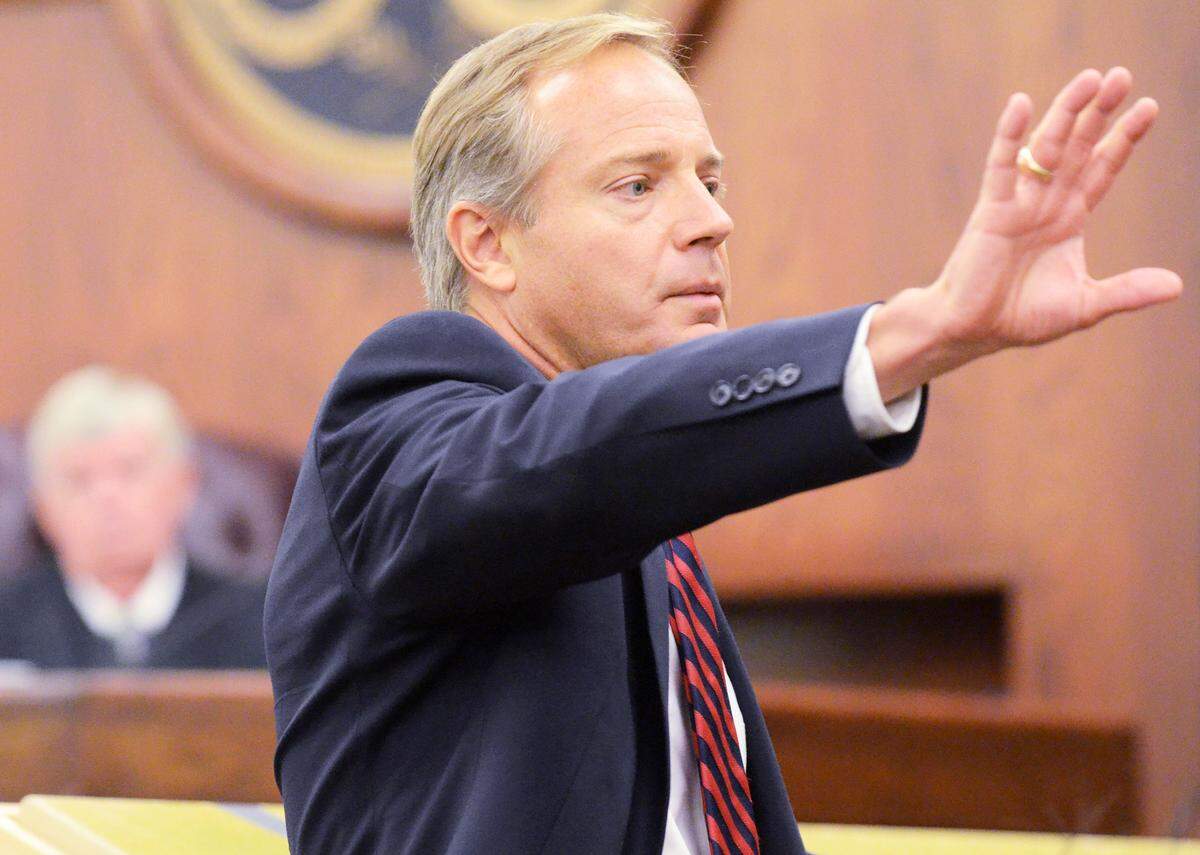
Circuit Judge Carmen Mullen specifically took issue with Solicitor Duffie Stone’s plan to take on the backlog of nearly 6,000 cases by eliminating plea deals.
“I don’t think anything the solicitor’s office is saying or doing has helped in any way as far as your announcement to move cases,” Mullen said to a deputy solicitor at a June 24 bond hearing, according to a transcript obtained by the Island Packet and Beaufort Gazette newspapers.
“We all know that that didn’t work: Not negotiating,” she said.
In an interview on Monday, Solicitor Stone said his agency’s plan on plea deals has been misconstrued. He said the no-deal policy is to reassure the public that his prosecutors won’t agree to plea arrangements just to reduce an unprecedented backlog.
“What’s important for us is to get the right results on every one of these cases,” Stone said. “It’s not to reduce the backlog by offering plea deals.”
The backlog ballooned to 5,896 pending cases as of June 2021, up from 3,823 in January 2020, just before the pandemic. South Carolina courts were mostly shuttered for more than a year because of the COVID-19 lockdown. It made the backlog significantly worse, while police continued to add to the number of cases by arresting and charging people as new crimes were committed.
Solicitor Stone’s plan to reduce the backlog included ending plea deals, hiring four new lawyers, and releasing monthly statistics on the backlog. The agency said the plan also streamlines what prosecutors are doing: having them contact police within 24 hours of a crime and fast-tracking complex cases by directly indicting those accused of crimes and skipping over “protracted” hearings.
More than half of all criminal cases in the five-county circuit come from Beaufort County.
The thousands of pending cases — charges that range from driving under the influence to sexual assault to murder — must go through the courts to be closed, whether through plea agreement, trial, or dismissal by the Solicitor’s Office.
A long backlog means it can be years before cases are closed, which can mean delays for victims and family members, as well as for suspects, some of whom sit in jail for years waiting for trial.
“Time very rarely helps the prosecutor,” Stone said. “Our witnesses have to remember. More time passes, memories fade. People relocate, people die.”
“Trying to get rid of this backlog, that’s why it’s so important to prosecutors,” he said.
‘Not acceptable’
Around 7:45 p.m. on March 2, 2020, Esteban Rosa-Mendez was driving fast on Hilton Head Island, trying to get away from Beaufort County Sheriff’s deputies instead of submitting to a traffic stop.
Mendez drove 81 mph in a 45-mph zone, according to his arrest warrant. The Sheriff’s Office called off the chase because of the danger posed by a high-speed pursuit.
Mendez then ran a red light on Gum Tree Road and crashed into a sedan on U.S. 278 heading off island, according to court documents. The crash pinned the sedan and its driver into another car. The driver, 22-year-old Colton Tanner Poirot of Hilton Head, was pronounced dead on the scene.
Mendez had spent more than a year in jail awaiting trial on charges of reckless homicide and failure to stop for blue lights resulting in death. Last month, his public defender argued that because of the backlog, he’s liable to spend more time in jail.
“I have major concerns about when this case will get to be tried because of the solicitor’s office’s new policy to not make offers,” Claire Schulmeister, then-public defender for Mendez, said at the June 24 bond hearing.
Schulmeister asked Judge Mullen to consider reducing Mendez’s bond from $150,000. His family was unable to pay that to free him from jail.
“There are a lot of people in that jail, [and] there are a lot of old cases that need to be tried,” she said. “There’s only one of you, Your Honor.”
Judge Mullen asked Deputy Solicitor Sean Thornton and Assistant Public Defender Courtney Gibbes how soon they could schedule a trial for Mendez. They were booked until next April, the lawyers said, which is more than two years after the crash actually happened.
“I’m just saying it’s not acceptable that you all tell me that this case cannot be tried until April of 2022,” Mullen said. “It’s not fair to the defendant. It’s not fair to the victim[’s family] who keep driving down here.”
Mullen also asked Thornton to clarify the plea deal policy.
Thornton said prosecutors are going to make only one recommendation on the length of a prison sentence, regardless of whether the defendant goes to trial or pleads guilty.
Typically, prosecutors can negotiate if it means they can reach agreement with a defense attorney for a guilty plea rather than a lengthy trial.
Mullen said the no-deal rule isn’t helping with the backlog at all.
Prosecutors and public defenders must become more efficient with their time and hold more than one trial per month per county, she said.
“We need to try some cases,” Mullen said, “That’s what we have to do to move it.”
‘Boots on the ground’
Stone, the solicitor, said the backlog won’t start diminishing until about the first week of November.
His agency received $265,000 from the state to hire four new attorneys, three of whom just finished law school and must pass the bar exam, which is being administered this week. Stone said those new hires will work in his office learning the ropes until they get exam results in three months. Then, he said, they can start taking cases.
Stone said the new attorneys will take on the dozens of lower-level felony and misdemeanor cases that come in every month — anything from first offense DUIs to assault and battery third degree — and free up more experienced prosecutors to tackle more complex felony cases.
“More boots on the ground,” he said. “That’s the only thing that’s ever reduced a backlog.”
Stone said he expects more trials — and more pleas — after they start.
As for Mendez’s case, Judge Mullen reached a tentative agreement for a trial in August, according to the transcript — if the schedule holds.