Watch dolphins team up to corral fish on Bluffton’s May River. ‘This is beautiful’
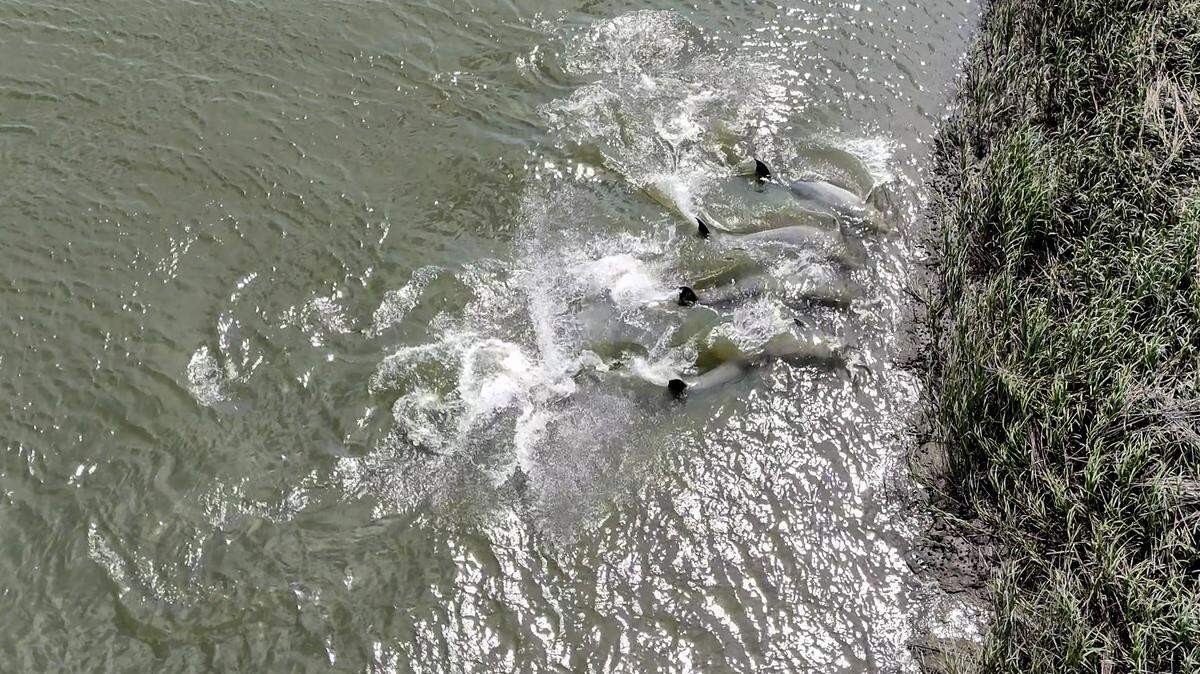
Tiny fish fly out of the water in a flurry of action along the shoreline before flopping onto the land. Four bottlenose dolphins were right on their tails. Soon, lunch was served on a Bluffton marsh bank for the crafty dolphins, who had teamed up to execute a complex and fascinating feeding tactic known as strand feeding that is peculiar to local salt marsh dolphins.
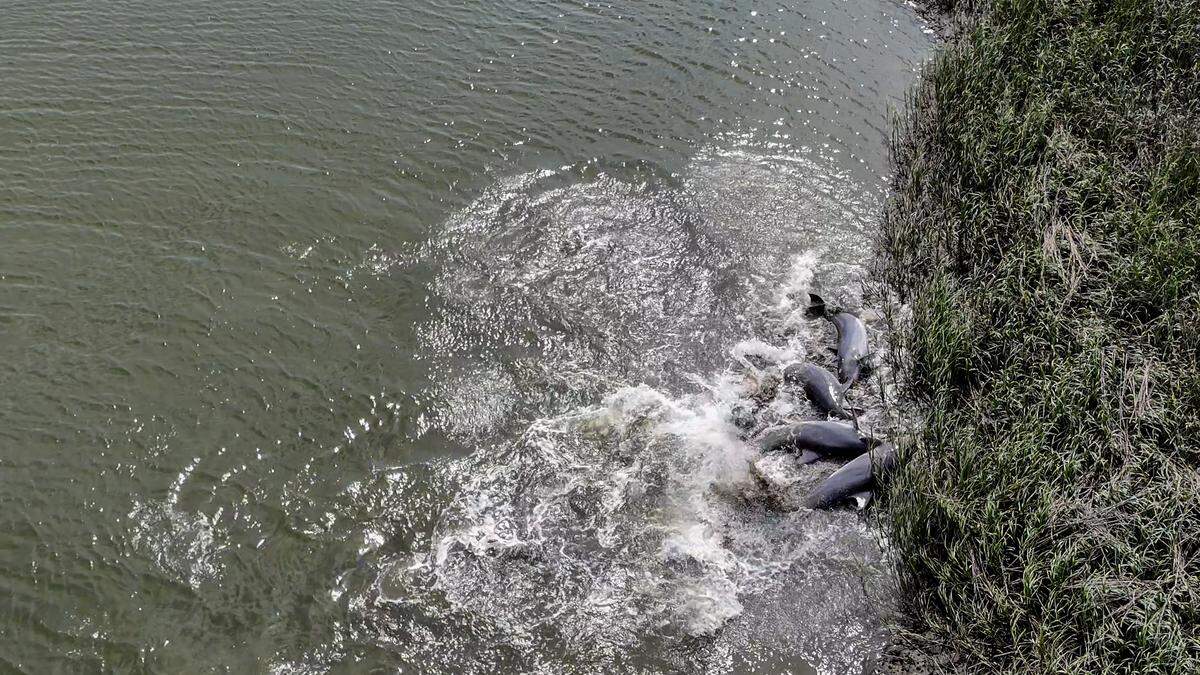
In an amazing piece of footage, Bluffton drone pilot Jason All captured the entire scene of the four dolphins corralling the mullet and herding them ashore. The dolphins swam side-by-side, then heaved themselves onto the land, briefly stranding themselves and their prey before wiggling back into the water with dinner in their jaws.
Seeing strand feeding in action is rare. All captured the four dolphins carrying out the hunting scheme multiple times beginning at 3:40 p.m. Friday. At the time, he was flying his drone near a creek close to the mouth of the May River near the Old South Golf Links, not far from his backyard.
The drone was flying very high when All noticed a disturbance in the water. He switched to a drone with a better lens so he could watch the feeding show from a safe distance that would not disturb the dolphins.
“I’ve never seen four of them doing it at once,” All said of the strand feeding. “I thought, ‘This is beautiful.’”
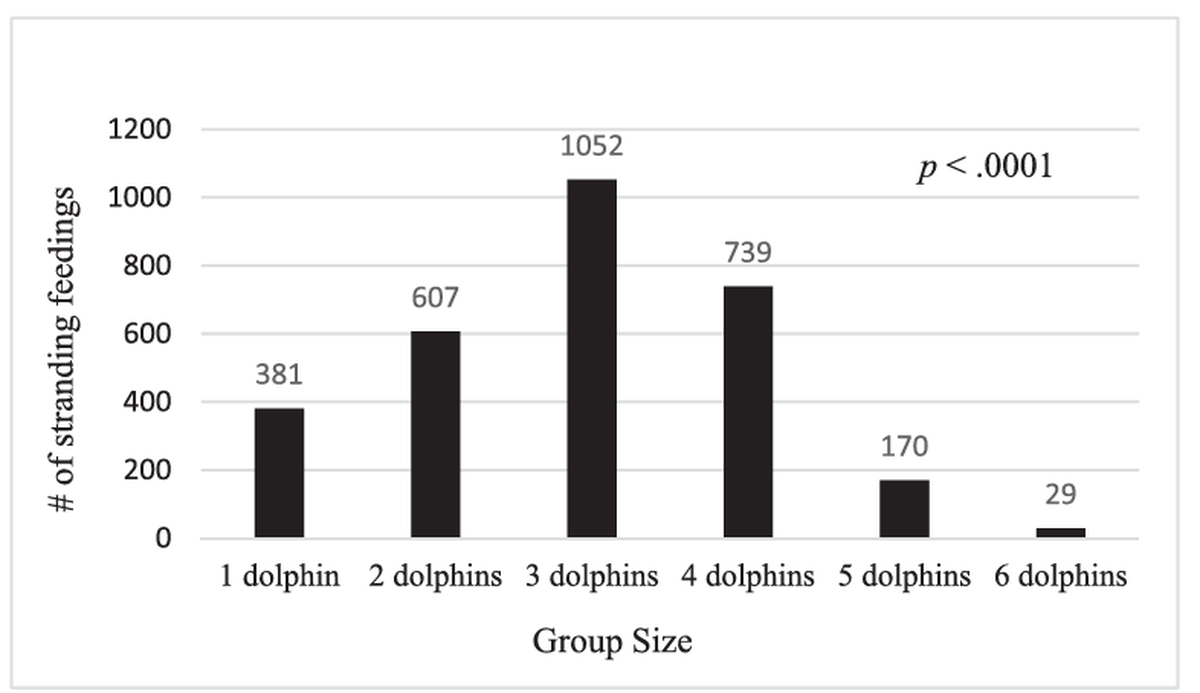
Wayne McFee, who heads the Coastal Marine Mammal Assessments Program for NOAA’s National Ocean Service in Charleston, said a recent study of dolphins in Captain Sams Inlet in South Carolina showed the most common group size during strand feeding is three.
But groups of four are not unusual, McFee added. Sometimes as many as six dolphins get in on the action.
Strand feeding is a feeding behavior first documented in the salt marshes of South Carolina in 1971, according to McFee, who described the May River scene shot by All as “awesome.”
What is strand feeding?
During strand feeding, dolphins corral schools of fish close to the banks of the marsh, followed by a surge of activity toward an exposed bank that results in a wave of water that pushes the fish onto the shoreline. With fish stranded on the shore, the dolphins lunge out of the water in a head forward position and select a fish before retreating into the water.
Locally, strand feeding tends to occur in creeks and rivers that wind through mudflats or near beaches but they must be sloped, McFee says. It can’t happen on a flat surface because the dolphins would beach themselves.
The entire process, while exciting, may last only about 10 seconds, but it may be preceded by several minutes of corralling.
Complex fishing scheme
In using the complex tactic, which involves an approach, setup, charge, landing and exit, local dolphins demonstrate how adapted they are to the muddy, sloped banks of the salt marsh, which allows them to slide back into the water after driving the fish onto the land.
South Carolina and Georgia are the only two locations along the Atlantic coast where the fishing method has been documented in the U.S.
The behavior has also been observed in Portugal, Ecuador, Australia and Mexico, and among orca whales in the Crozet Islands.
In 2022, researchers with NOAA and the University of Miami determined that bottlenose dolphins found close to the shore off South Carolina and much of the east coast were actually a different species than those living in deeper water. The new species, dubbed Tamanend’s bottlenose dolphin, are smaller than their offshore common bottlenose counterparts and have spines adapted to navigating the tight spaces of rivers and estuaries like those found in Beaufort County.
A ‘perfect union’
All posted the May River footage he shot to his Facebook page, with the post drawing more than 300 reactions.
All frequently shares drone footage of Lowcountry wildlife and shares it on TikTok, Instagram or Facebook.
Days later, All was still amazed as he recalled how the dolphins seemed to be in “perfect union” as they pushed the fish on shore. “I’m like, ‘Man, that is crazy.’”
Viewing dolphins
South Carolina is home to an estimated several hundred bottlenose dolphins, which grow up to 12 feet and 400-600 pounds.
One of the threats to dolphins, a protected species, comes from people disrupting their behaviors, says NOAA’s McFee. If people get too close while they are feeding, for example, the dolphins can be chased away from a food source.
Drones must be at least a 1,000 feet from dolphins, according to guidelines from NOAA’s National Marine Fisheries Service (NMFS). Anything closer than that is considered illegal.
Guidelines have not been set by NMFS on viewing dolphins from shore yet, McFee said. NOAA recommends at least 40 feet. Boats must stay at least 50 yards away from dolphins, according to the South Carolina Department of Natural Resources.
Plastic are another threat. One recent study of four stranded dolphins in Charleston Harbor revealed each one had about 1,400 microplastic items inside their gastrointestinal tracts, according to a group of researchers supported by the National Oceanic and Atmospheric Administration’s National Centers for Coastal Ocean Science.
This story was originally published June 3, 2026 at 1:28 PM.