Cane Island developer pledges to stabilize erosion. Will it work?
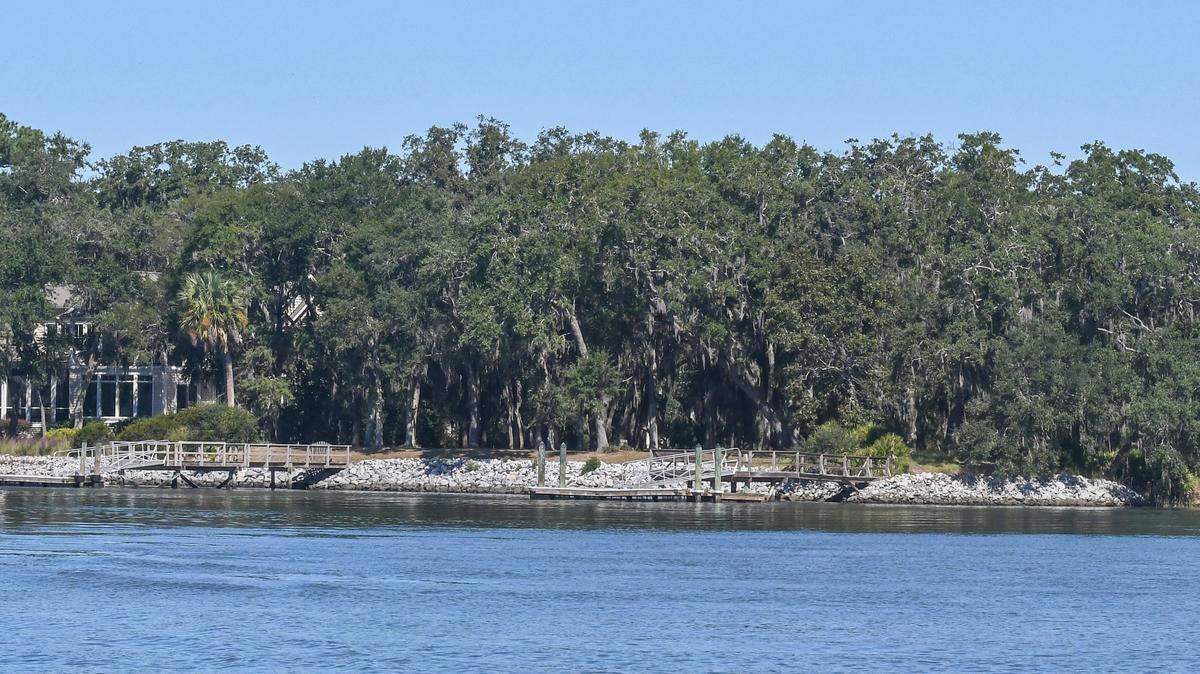
As work begins on the first of hundreds of homes that could be coming to Upper and Lower Cane islands, along with a hotel, neighbors said they’re worried efforts designed to preserve the island’s shoreline will actually make things worse.
Developers are proposing to build nearly 700 homes in separate projects totaling about 400 acres on Upper and Lower Cane islands, two largely-untouched islands about 5 miles from downtown Beaufort and Port Royal. Work has started on phase one of the Upper island project, called “Kane Island.” At Lower Cane, which has yet to receive final approval, 217 houses are planned by 2028.
Because the sites were solidified through “planned unit developments” about 30 years ago, public input isn’t required, and developers don’t have to adhere to current zoning standards.
Neighbors, resigned to the fact that they can’t stop this from happening, are focused on minimizing traffic and environmental impacts. But some say that the methods proposed by the developer will actually worsen environmental issues.
Proposed solutions
To prevent erosion, the developer of the Upper Kane project originally asked the South Carolina Department of Environmental Services for permission to build 1.1 miles of stone riprap, accounting for about a third of the site’s entire shoreline. Developers also sought an 8.5-foot-tall wooden wall or bulkhead stretching longer than a football field.
Opponents are arguing the bulkhead and riprap will actually speed up the loss of marsh habitat and alter the natural transport of sediment.
Grant McClure, who heads the south coast office of the Coastal Conservation League, said using hard surfaces to try to control erosion accelerates the loss of marshlands, because it prevents the natural process of marshes moving inland when the sea level rises. Battery Creek is an example of an area where living shoreline work is being done to control erosion.
McClure addressed the Beaufort City Council on Nov. 18 when the council considered a resolution brought to them by the residents opposing the riprap and bulkhead.
He read from the city’s own comprehensive plan, which said the city has no greater priority than acknowledging and addressing the impacts of rising tides, increased flooding and major storms on quality of life.
“I think you can see how trying to encourage more green infrastructure in the city fits in that vision,” McClure said to the council.
Dave Stack, a Cat Island resident, says 1.1 miles of riprap is about 5.6 million pounds and is the equivalent to the entire length of Bay Street, from Carteret to Ribaut Road.
In Upper Cane Island, developers also plan to build nine individual private docks on Distant Island Creek. The South Carolina Environmental Law Project opposes this move, and is urging the South Carolina Department of Environmental Services to deny the proposal.
The docks, the law group said, should not be considered in isolation because collectively they could be harmful to the natural flow of the water and cause erosion and shoaling of the channels.
“The applicant should be required to utilize joint-use and community docks rather than seeking the proliferation of individual docks for every waterfront lot,” wrote Jessie White, an attorney for the Law Project.
Refining the riprap request
After additional review, Troy Lucas, of Kane Island Development Co., LLC, said the shoreline proposals have been refined, with the length of the riprap included in the application reduced by a half mile. The adjustment, he added, reflects a commitment to a measured approach.
But erosion already is occurring along Upper Cane Island, he said. Without stabilization, he adds, many of the mature life oak trees are at risk. Hand-placed riprap will stabilize the shoreline and preserve the existing oak canopy, he said
“Given the ongoing erosion, choosing to do nothing would ultimately cause greater environmental harm,” he said.
He says the island has more than enough shoreline to accommodate additional docks as well, but the 14 being requested in the additional phase is lower than the maximum allowed and consistent with numbers on nearby islands.