For Beaufort’s largest blackberry grower, farming is about saving land and legacy
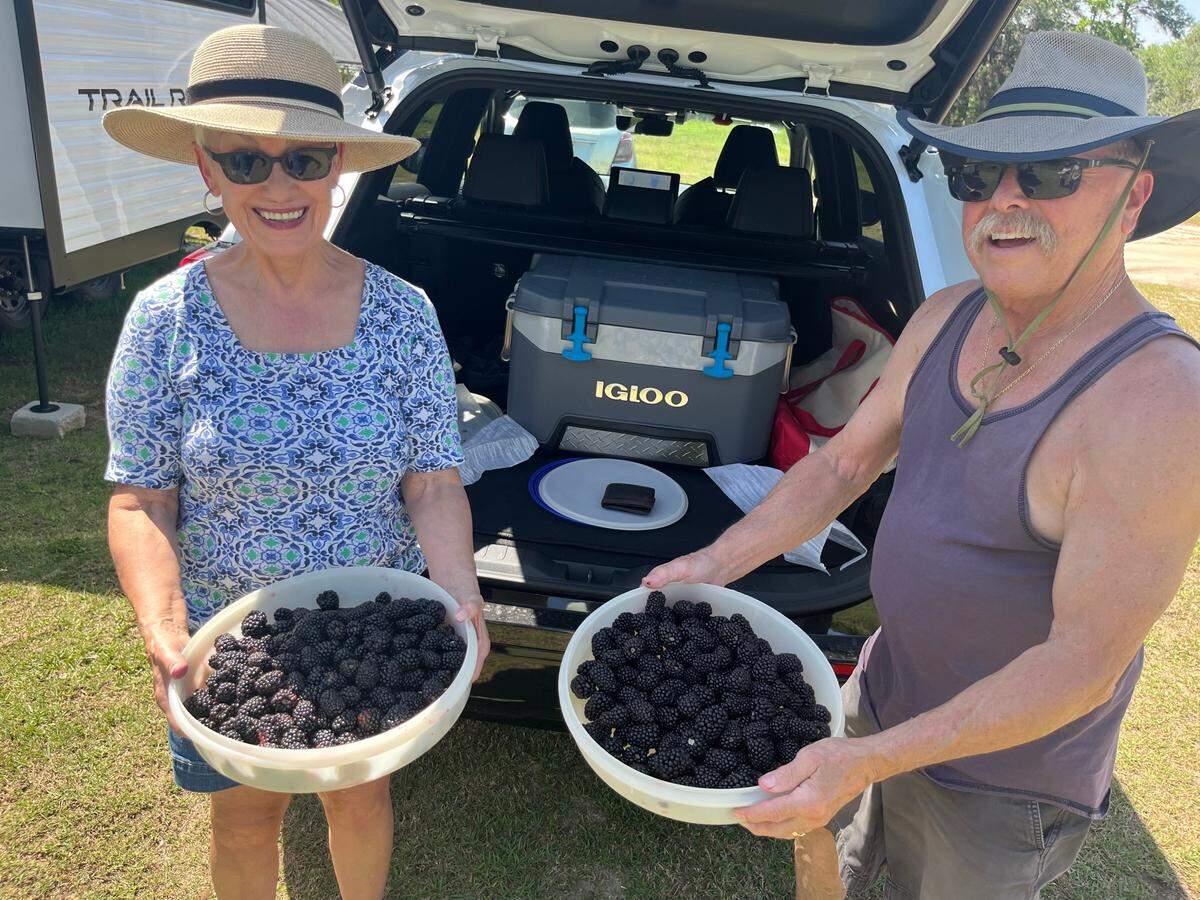
The sun was blistering on a 90-plus-degree day and broad-rimmed hats shielded the faces of Bobbie and Lynn Olinger as they plucked fat blackberries at Simply Green Farm in the unincorporated area of Seabrook north of Beaufort. The Olingers, who endured the heat and a 40-mile drive from their home in the 55-plus community of Latitude Margaritaville in Hardeeville, left with stained fingers and 12 pounds of blackberries.
The size of their haul and the weight of each piece of fruit amazed them.
“I’m going to make blackberry cobbler,” smiled Bobbie, referring to the dessert topped with crumbs.
Customers travel to this slice of rural heaven in an area known by locals as Stuart Point to pick the highly prized berries grown at Roy Green’s aptly-name Simply Green Farm.
Green, the 5-acre farm’s owner, is the biggest blackberry grower in the Beaufort region where the harvest is in full swing.
But Green’s vision for his plot a few hundred yards from the Whale Branch River is much bigger than the sweet and tart blackberries he grows, which draw fans from across the region. The 4,000 pounds of blackberries he will produce in 2025 is just one crop that is helping Green to preserve the farming legacy of his parents while saving his land today. He’s also sharing his experience in areas schools in hopes that others might follow his example.
‘Have to love it’
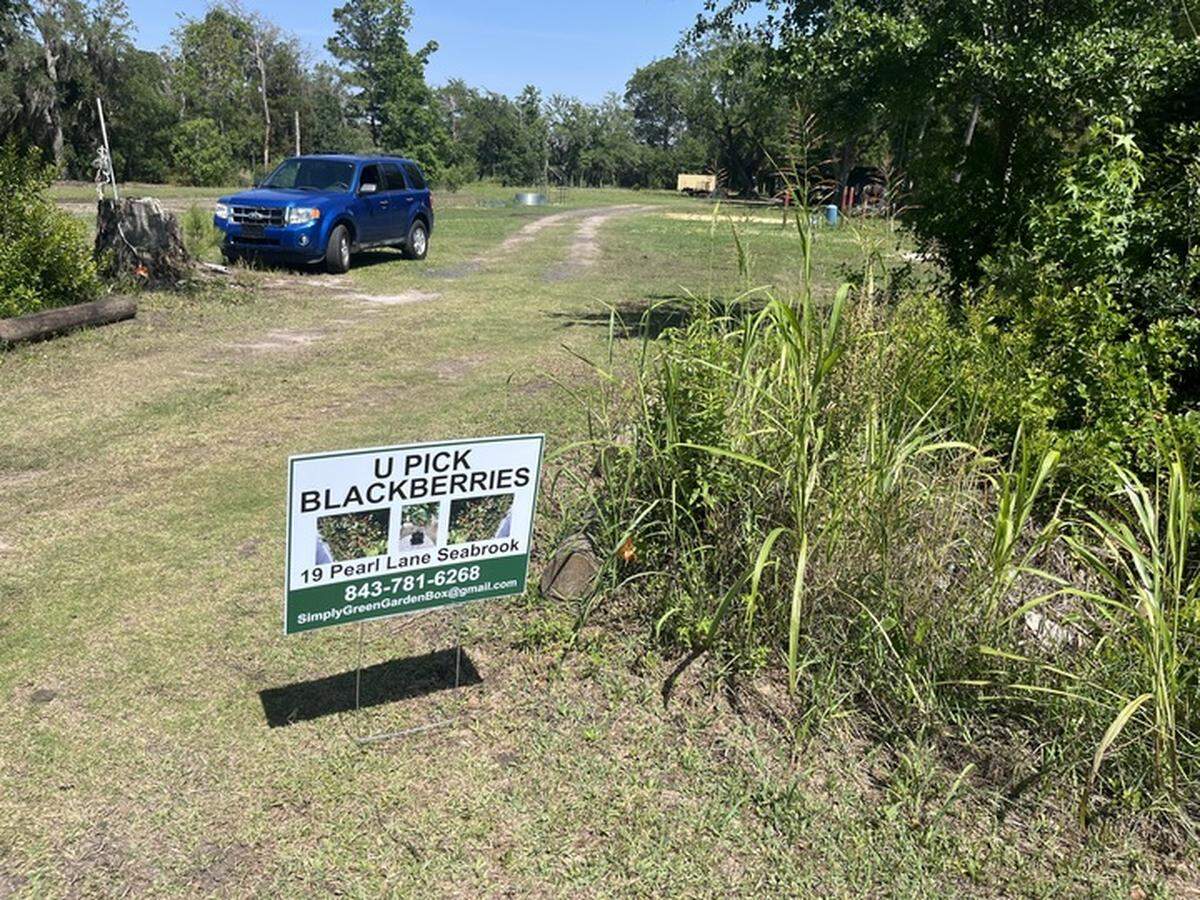
Considering its location just a stone’s throw from busy U.S. Highway 21, Green’s farm is surprisingly off the beaten path forcing customers like the Olingers to follow signs like bread crumbs to reach the fields where they find some of the biggest blackberries around.
Green’s winter crops are lettuce and broccoli. Come fall, its okra and peas.
But three years ago, Green decided he wanted to grow blackberries in the spring and summer even though they require extensive pruning and bug and fungus protection. Strawberries and blueberries are more popular choices but he selected blackberries over the two other crops.
Today, blackberries account for half of his profits.
“You have to love it,” says Green, “in order to want to do it.”
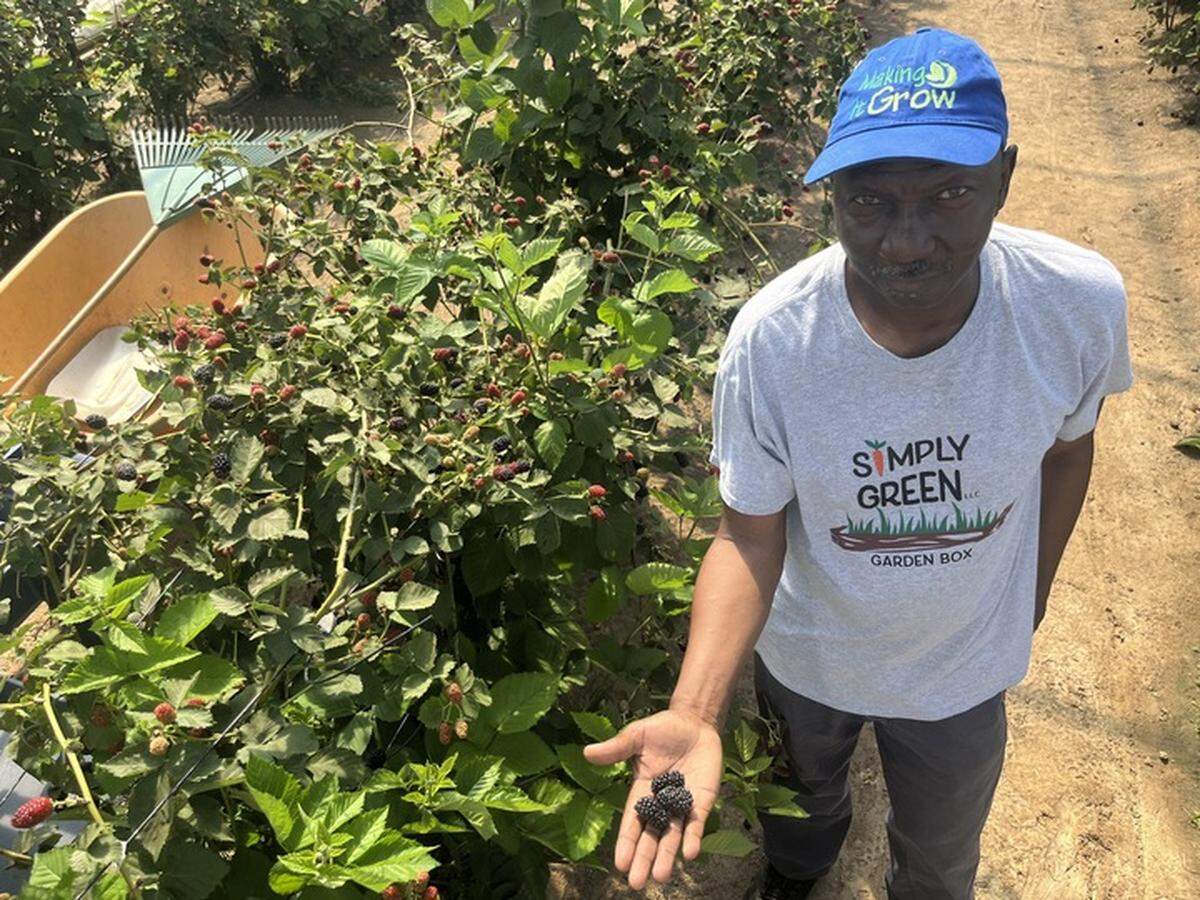
The short-lived harvest will last for a few more weeks. A second crop will follow in July.
‘He transcends time’
Many of the small farms in Beaufort county grow a mix of produce and usually have a small patch of blackberries, says Zach Snipes, Clemson University area horticulture agent for Beaufort and Charleston counties.
He thinks there’s potential for more production but blackberries, while they are easy to grow, also come with a lot of hard work and markets are stronger for strawberries and blueberries. Green has upped his production from 2,000 pounds in 2023, to 3,000 pounds in 2024 to this year’s anticipated 4,000 pounds.
Green is the largest blackberry grower in the area, but what impresses Snipes most about the farmer is his bigger vision of preserving the land with the crops as a means to an end. Growing blackberries, for example, is one way to help pay property taxes. At the same time, Green sees farming as a way to preserve his family’s roots in agriculture. Green is also deeply invested in the community, Snipes says, and works with schools teaching kids about farming, the land and the history.
“He kind of transcends time,” Snipes says of Green.
Worth the trouble
The extra effort required in growing blackberries has been worth it for Green.
“I make good money off of blackberries,” Green said one day earlier this week when the temperature topped 90, perfect conditions to ripen the berries.
Customers seeking to pick Green’s blackberries, who come calling from 3 p.m. to 7 p.m. daily this time of year, pay $5 for a pound. Green’s parents sold fresh produce at a local farmers market and Green is carrying on the family tradition at the Port Royal Farmers’ Market, where he and his produce including blackberries are Saturday regulars.
St. Helena Island’s Gullah Farmers Cooperative, a collection of Black farmers who market and sell fresh food grown on the Sea Islands, is another customer.
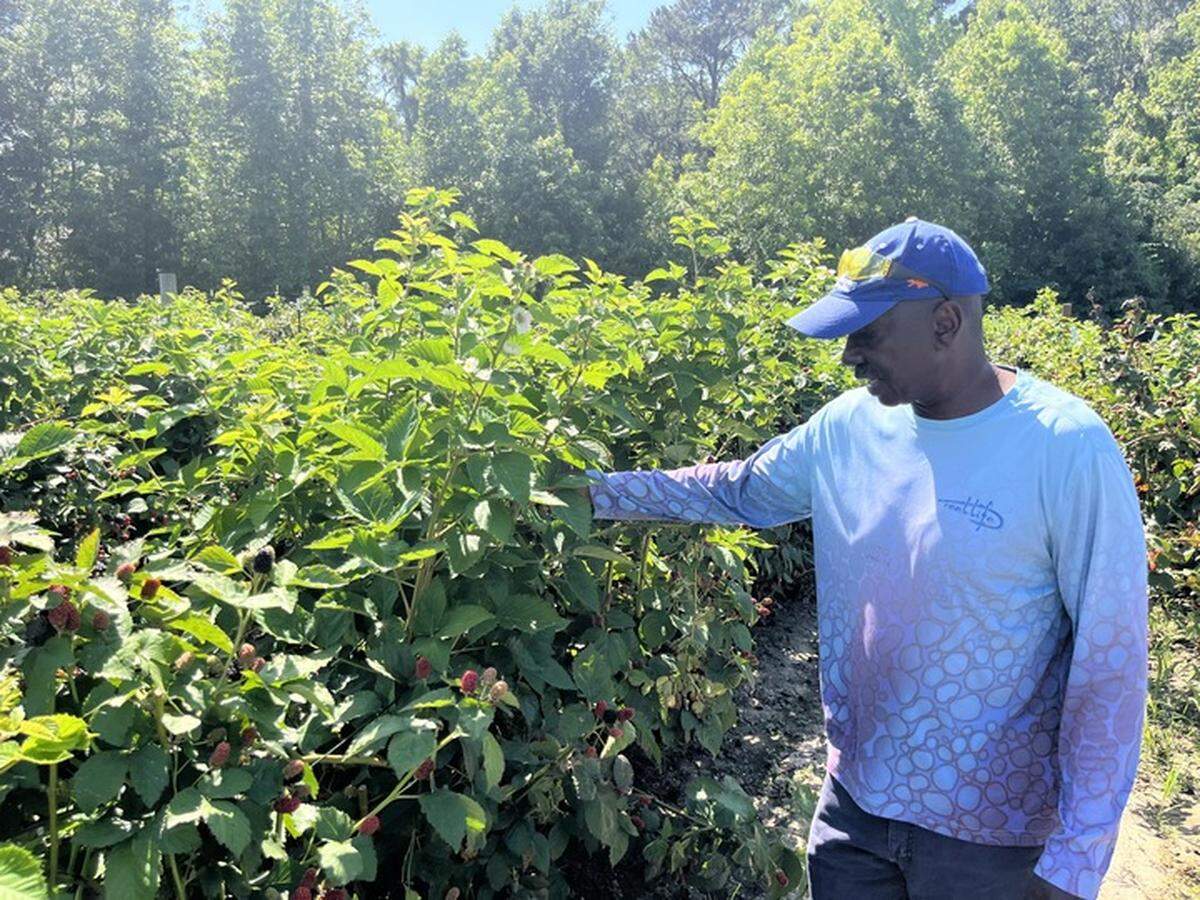
Green is proud of what he’s able to coax from the rich soil north of Beaufort. But he knows he’s standing on the shoulders of his parents, who bought 10 acres for $100 in 1946 to grow tomatoes, cucumbers, beans, squash and zucchini. While Dad held down a 9-to-5 job, Mom managed the farm, which helped to feed the family and supplement their income.
He gestures with his arms as he reflects on the history of agriculture in the Stuart Point area of Seabrook.
“All of this used to be farmland,” he says.
This is the history of the area that Green shares in area schools.
“It’s bigger than me growing blackberries,” Green says. “It’s more of a legacy, to show how farming was. Where all these schools were was all farming. That was a way of life.”
Green knows that time can’t be reversed. But land is still available and that makes it possible for young people to get into some aspect of agriculture if they choose, he says.
Grew up farming
The 63-year-old Green, the 11th of 14 brothers and sisters, began farming alongside his mother and father when he was 5. As a young man, he left home to experience city life in New York and stayed for 12 years but returned in the 1993. He encouraged his parents to start farming again, on a smaller scale. Green bought his own 5 acres near the family farm seven years ago where he is keeping the family’s farming tradition alive at Simply Green Farm.
Wife Jacqui helps with ideas and moral support. During the u pick ‘em blackberry season, she can be found weighing the blackberries on the metal scale and collecting money and selling tasty blackberry lemonade she concocted herself. “It’s a labor of love,” Jacqui says.
Daughter Shavone handles the website and marketing and helps her father with grants. She is developing a new product of her own: blackberry tea.
Besides the fresh produce he grows at the farm, Green teaches customers how they can grow their own food.
Making blackberries grow
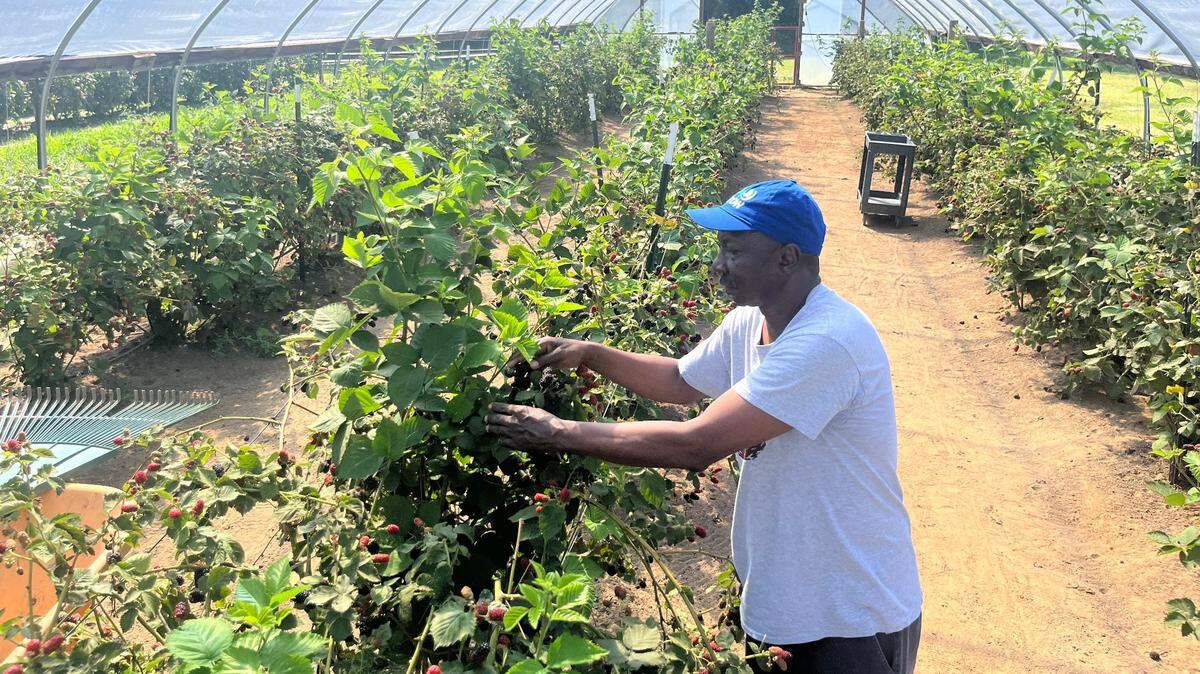
Wearing a blue ball cap with “Making it Grow” written on the front, Green, the master gardener, strolls into a plastic-covered building with a rounded roof called a “high tunnel.” About half of his blackberry crop is grown in these structures, which are as steamy as a sauna on a 90-degree day. A huge fan blows to make it more bearable.
While the building looks like a greenhouse, it simply provides protection from the elements allowing Green to better control the growing conditions. But the elements got the better of one of the tube-shaped huts this past winter. In January, after the Lowcountry woke up to snow for the first time in seven years, a high tunnel collapsed under the weight.
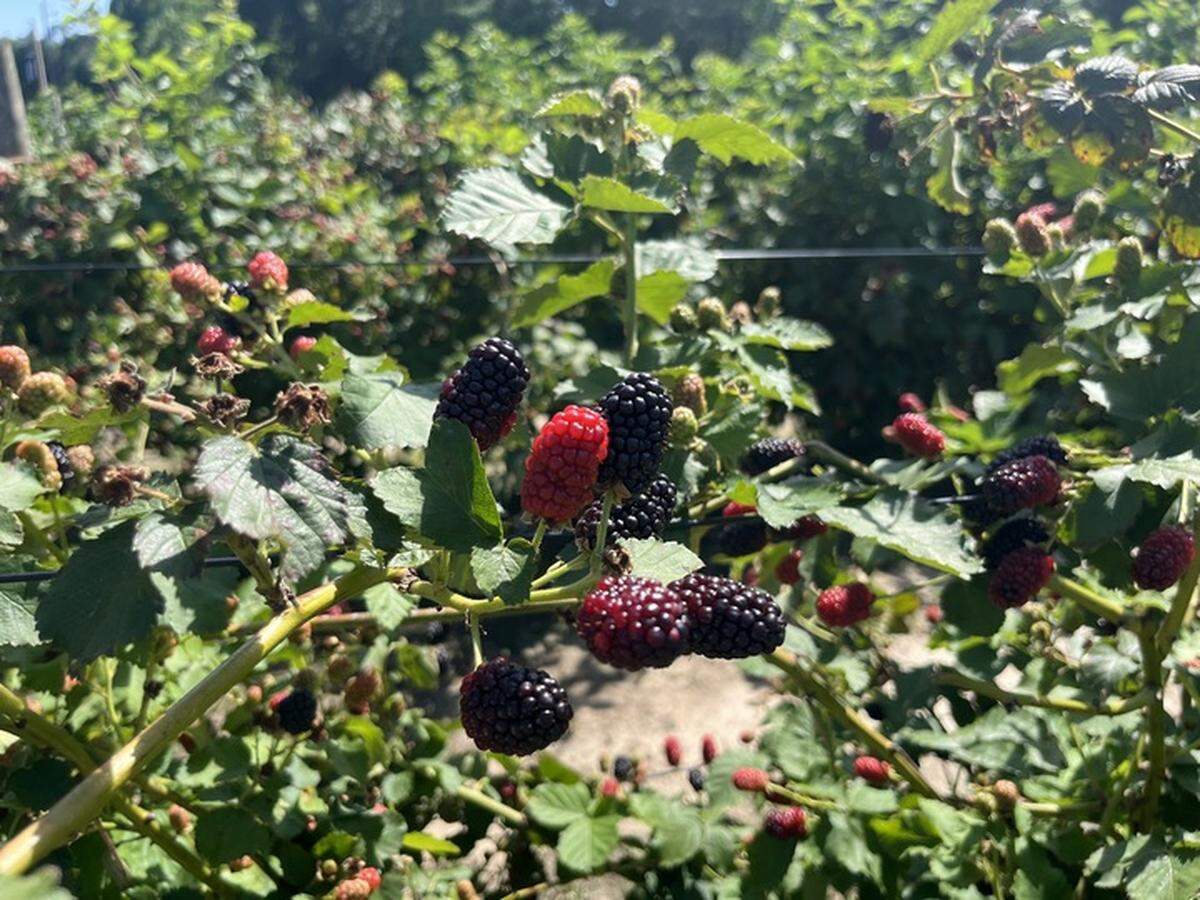
Rows of blackberries also grow outside and Green walks down one proudly pointing out pruning techniques and other measures he uses to keep his crop tidy and producing the fruit his customers have come to expect. Green, red and black berries dot the vines. The berries turn different colors as they mature. Customers, says Green, are often amazed by the size. The flavor, he says, falls in between sweet and tart.
“You can pick it to your taste,” Green says.
Those with a shiny complexion, he notes, are a bit tart. Those with a duller look are sweeter. It’s helpful to know the difference before picking, he notes.
What the future holds
Green recognizes he can’t farm forever and he’s been thinking about opening the farm to agri-tourists who visit for a few days enjoying the rural life.
Tariffs put in place by the Trump administration, he said, could affect his bottom line in the future. The cost of fertilizer, he notes, has risen but, to date, he hasn’t felt any impacts. That’s because his stock of supplies already had been purchased before the tariffs went into place. But grant funding that was available previously to minority farmers, he adds, has “dried up.”
“They call it DEI,” Green says of the Diversity, Equity and Inclusion programs that have been targeted by the Trump administration. “You can’t use that terminology of a minority farmer. That box is not a good box to check now.”
But Green isn’t deterred even though, as a farmer, particularly a minority farmer, he considers himself something of a dinosaur these days. The U.S. Department of Agriculture estimates there are roughly 40,000 Black farmers in the country, owning less than 1% percent of the farmland.
With more and more houses sprouting in the Lowcountry, Green notes, he could make more money if he sold his land to housing developers. As it stands, he makes about $25,000 a year.
“But I like doing this,” Green says says simply as he stands next to his blackberry plants. “And it keeps the land in the family.”
He still finds satisfaction in being outdoors and growing healthy food and satisfying customers like the Olinders, who brought the blackberries they picked to a table under a camper awning where Jacqui Green weighed them.
With the Olinders’ blackberry harvest safely loaded in the car, Bobbie marveled, “They’re the biggest ones I’ve seen.”
This story was originally published May 21, 2025 at 5:00 AM.