The St. Helena watermelon harvest is months away but for a young farmer: the time is now
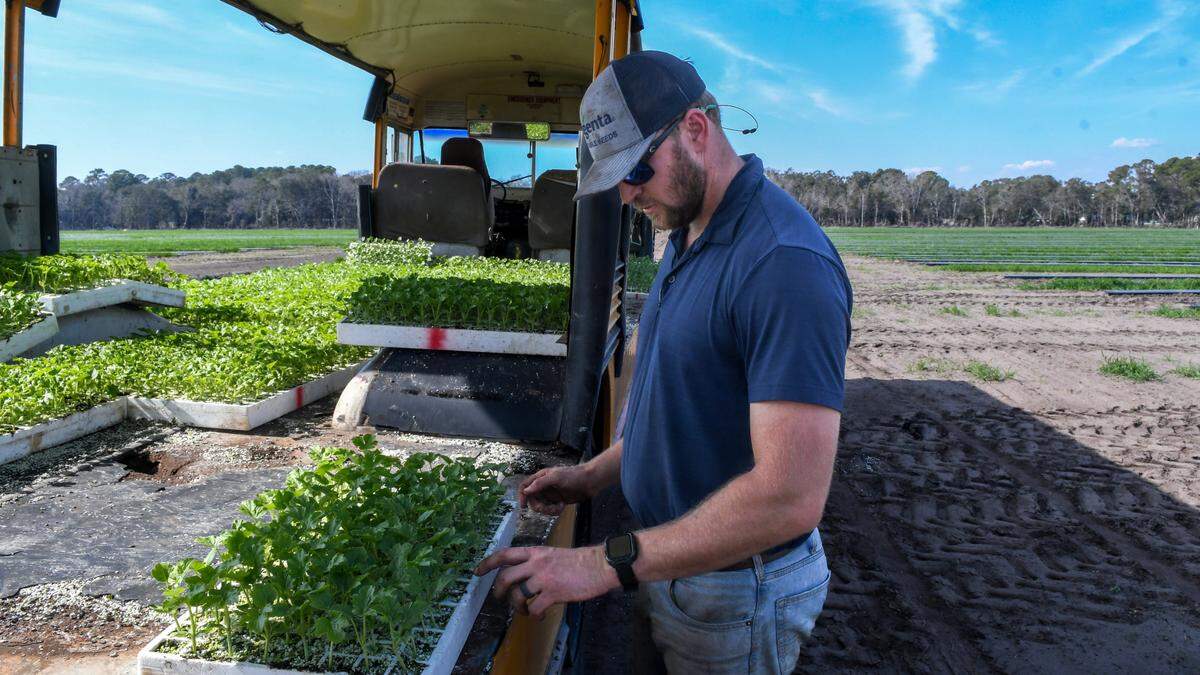
The boots of Cal Hucks kick up dust as he walks through the powdery soil on a patch of farmland five football fields long awaiting nearly 300,000 watermelon seedlings to be planted in the coming hours and days.
He’s the young 25-year-old growing and operations manager at Coosaw Farms. The more-than 40 year-old company is a major player in the production of South Carolina watermelons. Alongside other fields in Florida and Georgia, Beaufort County is one of the nation’s top producers of this crop that is synonymous with fireworks, barbecues and Independence Day.
To deliver platters full of the sweet fruit for everyone’s picnics, Hucks and his colleagues at Coosaw need to get seedlings in the ground in February and March, months before anyone is buying red, white and blue paper plates and plastic forks for outdoor family gatherings.
This is the planting season and after countless hours of preparation it is time for the growing team to get hands and boots dirty and let the soil and weather deliver a big crop that will be enjoyed from Savannah to Myrtle Beach and as far away as New York and Miami.
Old tools and new growing techniques
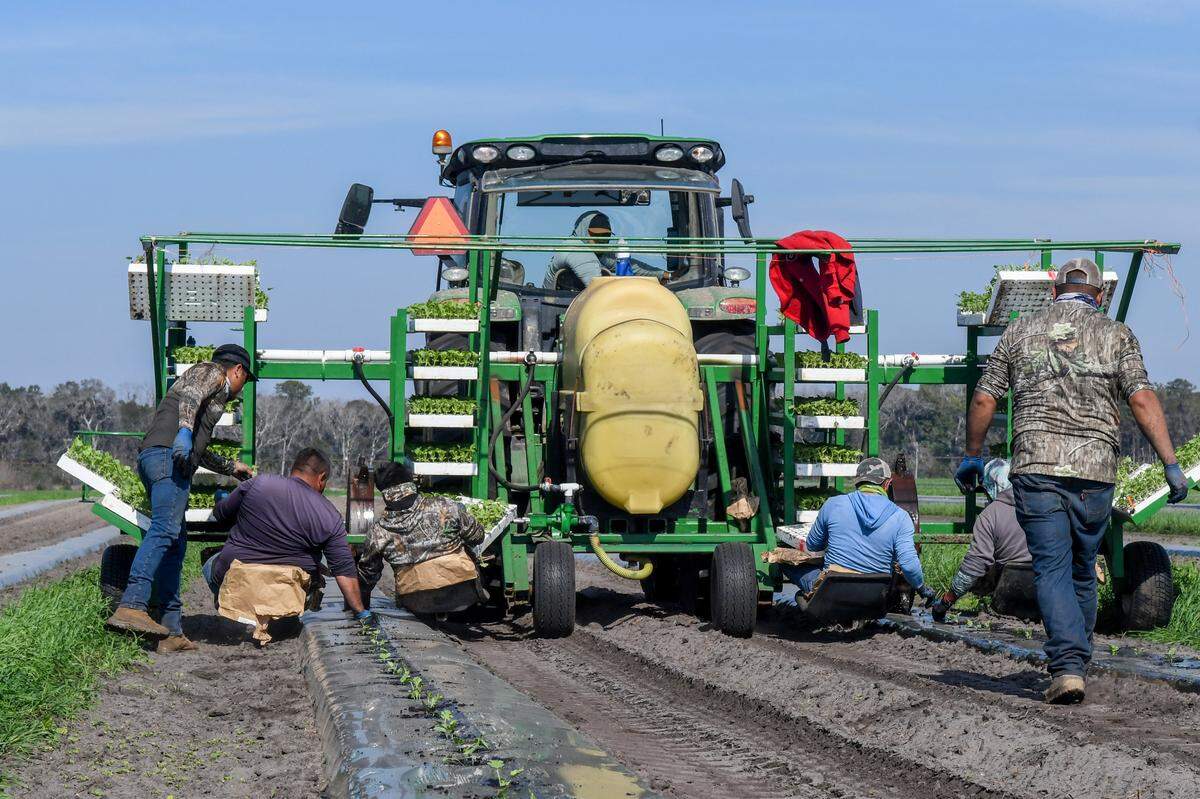
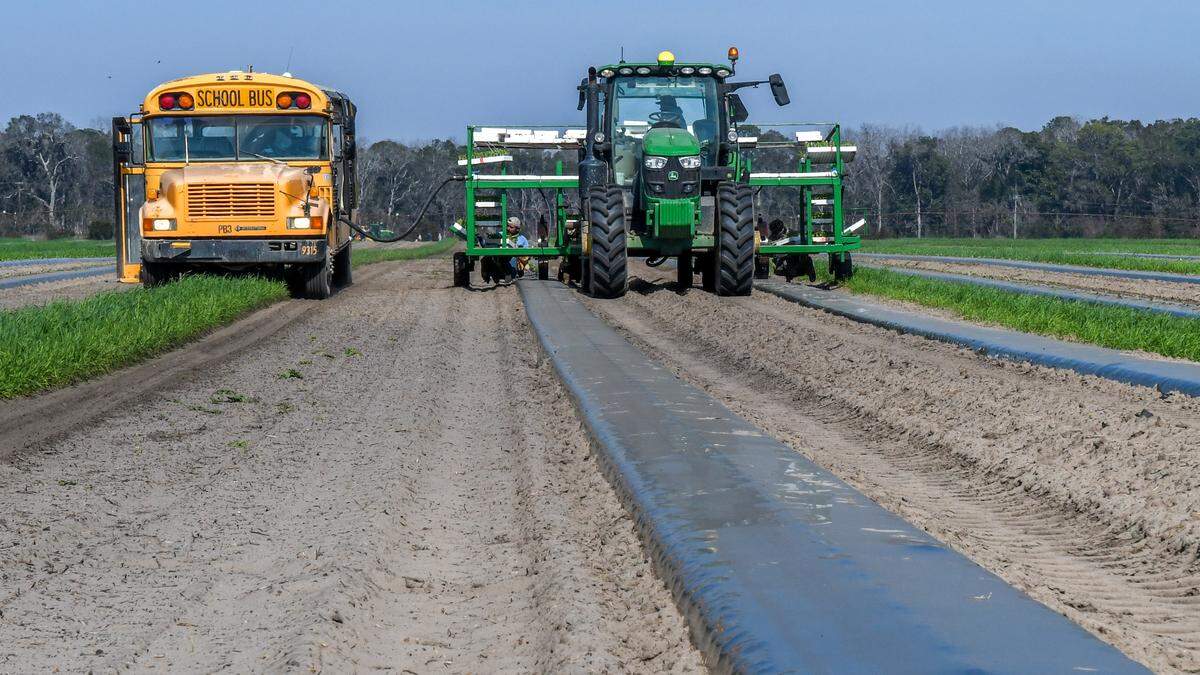
Old school buses that spent a lifetime ferrying young students to classes each day have been retrofitted for use as agricultural trailers to gently move the delicate seedlings to the field’s edge. This ingenious repurposing of old technology is paired with much newer and more powerful planting tractors that slowly move up and down the rows at 1 mph, each one carrying experienced farm hands from Mexico and high-tech equipment. Man and machine work seamlessly, leaving a trail of spindly plants that the sea island’s powerful sun and suitable soils will eventually transform into bold-tasting 20-pound melons.
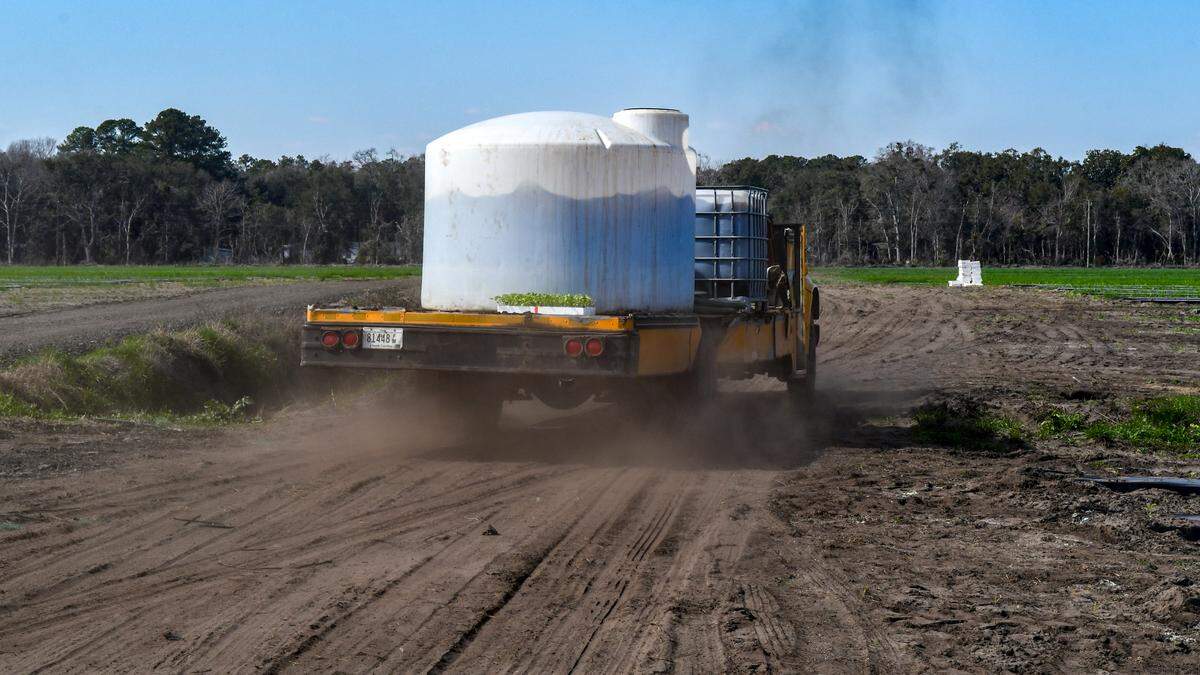
“The tractors are slow,” notes Hucks, “but this process is a well-oiled machine.”
Like clockwork, another watermelon season has begun on South Carolina’s St. Helena Island.
Over three days of planting last week, Huck’s crew of 18 manning three planting tractors inserted 290,000 watermelon plants in two fields totaling 116 acres off of Lands End Road. In 90 days, if all goes as planned, these fields will produce just under 7 million pounds of watermelons over 5 weeks. Those melons will wind up in bins at Walmart, Publix, Harris Teeter and Food Lion stores from New York to Miami, just in time for Memorial Day and July 4th celebrations or excursions to the beach when the market for cool slices of watermelon is hottest.
Spring planting begins
The South Carolina watermelon season typically begins with planting in March and April and lasts until June in some areas, with around 3,100 acres planted annually, according to Clemson University.
And with roughly 500 acres planted with watermelons, Coosaw Farms is one of the state’s biggest growers with its 116 acres on St. Helena a key contributor to the output. The coastal island’s higher temperatures and sandy soils, which drain well — a key factor in reducing disease — allows Coosaw to extend its watermelon growing season when top growers in Florida and Georgia also are producing.
With the temperature reaching 70 degrees, conditions were perfect Tuesday to begin planting. Watermelons, Hucks notes, won’t ripen as fast in cooler temperatures.
Expertise from far away help keep the traditions
Many of Huck’s team who care for the plants’ growth are from Mexico and have returned to the area to work for Coosaw Farms for more than 15 years, under a program that grants 10-month federal and state agricultural visas.
“These guys are good,” said Hucks, noting he underwent a crash course in Spanish when he joined Coosaw Farms so he could converse with the experienced crew members, whom he now considers friends.
The scene Tuesday was a testament to the technology, ingenuity, experience and hard work needed to successfully cultivate a crop of watermelons on a large scale.
With scarves and hoodies covering their heads and faces from the sun, farm workers unloaded stacks of Styrofoam crates holding seedlings from one of the old buses onto a tractor.
How the planting works: ‘Like refueling in mid-air’
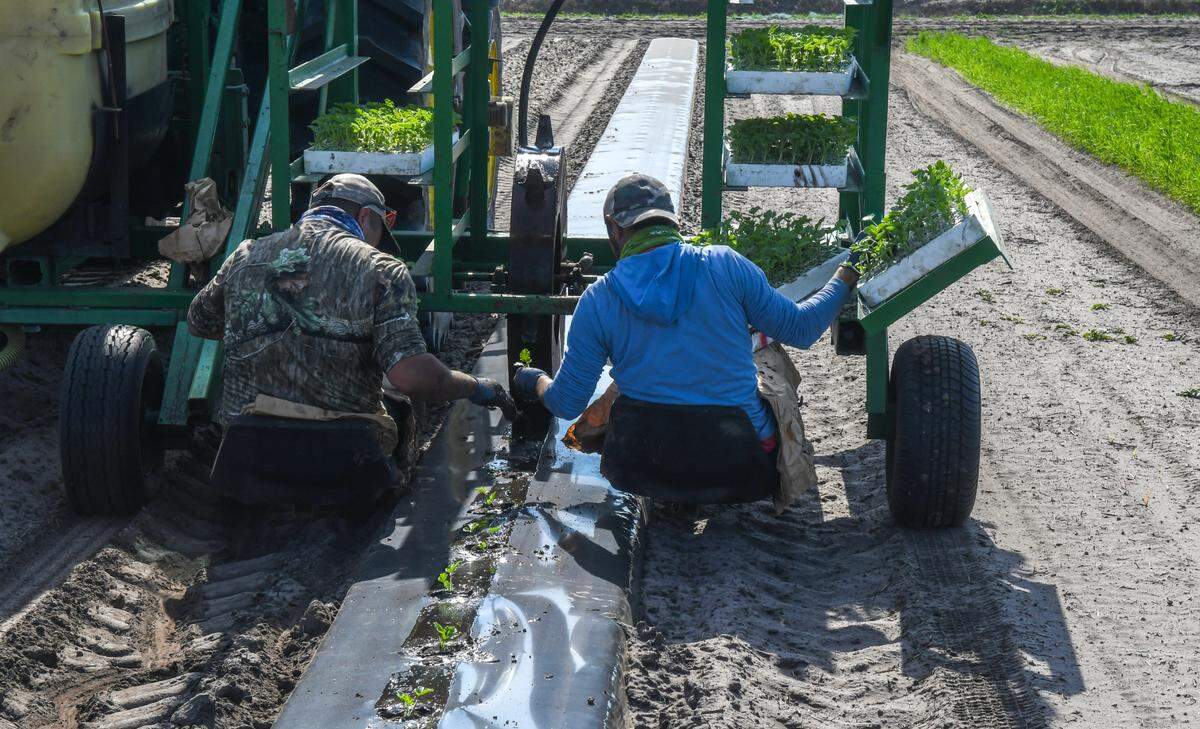
Tractors guided by GPS technology pull a special planting wheel with spikes that, as it turns, punches holes in the soil at intervals. “Settle water” mixed with fertilizer is hydraulically pumped and deposited in each hole.
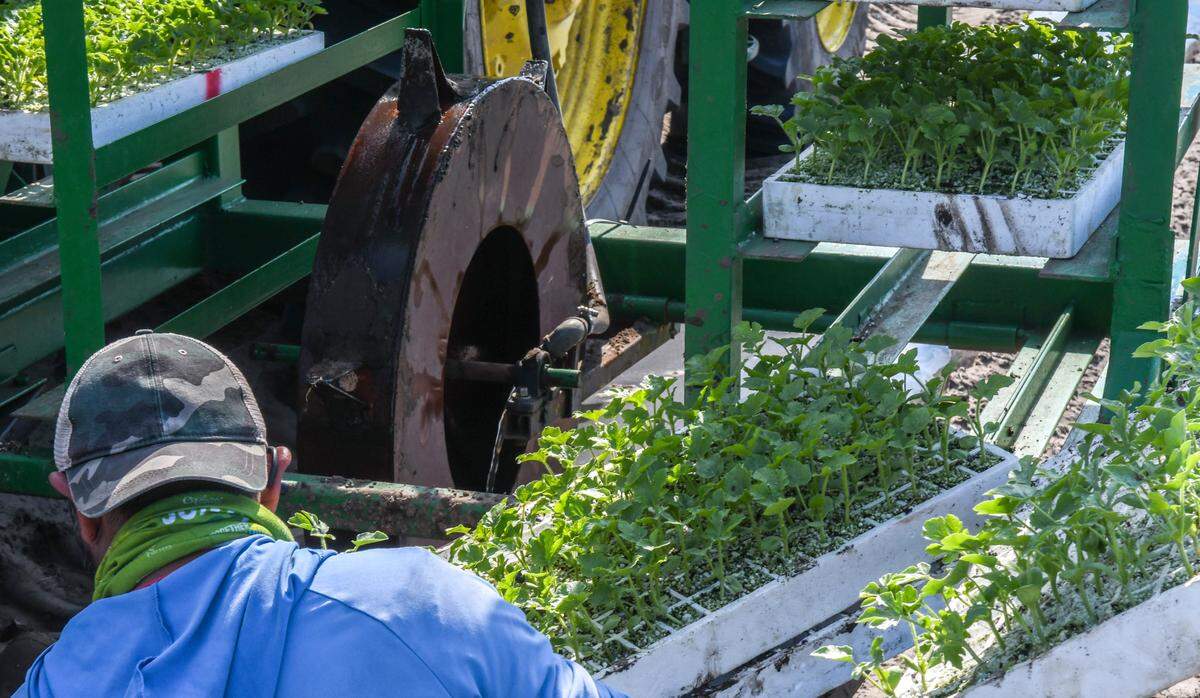
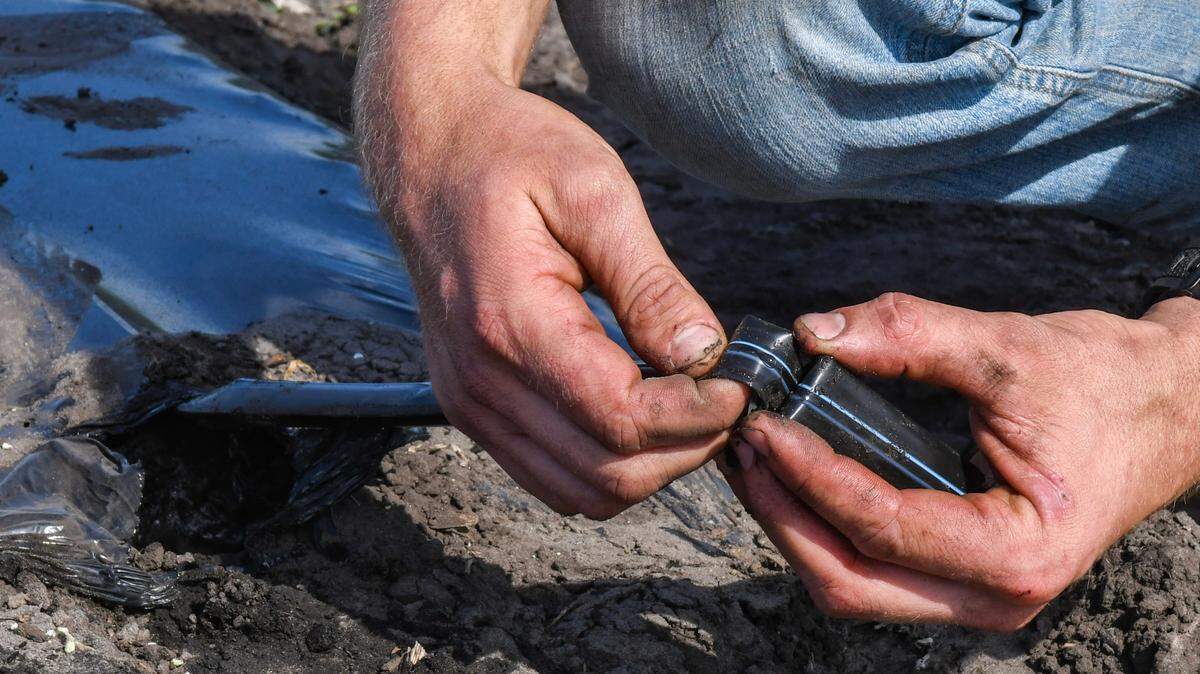
Four workers seated side-by-side in chairs that extend from the back of the tractor then insert the watermelon plants into those holes by hand, squeezing the muddy soil around the roots to ensure they are properly “set.”
There’s no need to stop to refill the water and fertilizer tank on the tractor. One of the school buses carrying a 1,500-gallon container of the mixture pulls alongside and a hose is attached. The tractor and the planting never stops during the transfer of settle water.
“It’s like a plane refueling in mid-air,” Hucks says.
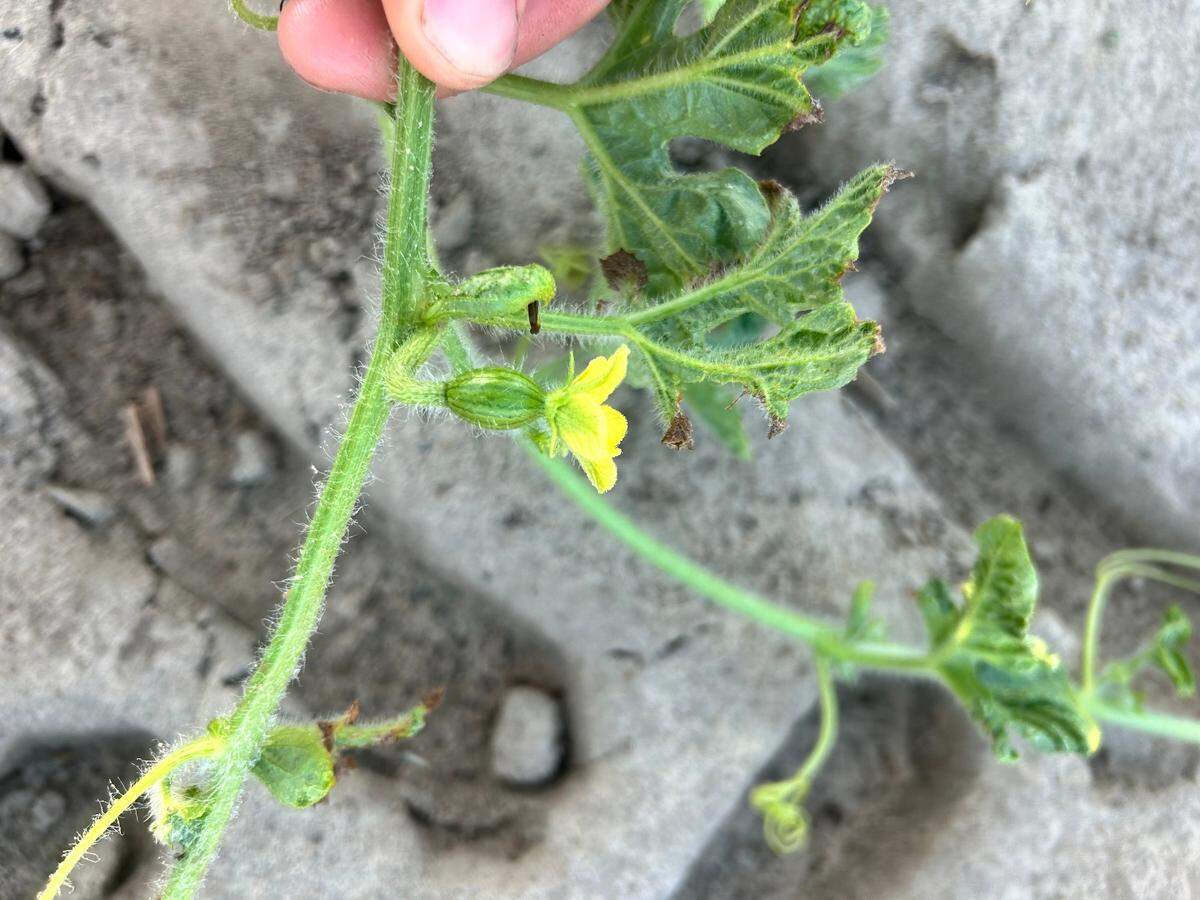
In the beginning of the growing process, the plants will produce a white-yellowish flower. Then peanut-sized watermelons will appear. At the time of the harvest in late May or early June, each acre will produce 80,000 pounds of 12- to 22-pound melons.
“It will be a solid green mat of watermelons,” Hucks says.
Innovative use of technology
The mission of Coosaw Farms, which was founded by Bradley O’Neal in 1983 and named after Coosawatchie River, includes aggressively using technology to make farm operations more efficient. O’Neal’s son, Brad, carries on that cutting-edge tradition today.
GPS is used to help the fields shed water more quickly, for example. Field drainage plans are created on the computer and, with the push of a button, sent to the tractors that grade the fields.
Soil probes check the moisture and salinity and nutrient levels in the “root zone.”
The 25-year-old Hucks, who lives in Beaufort, is a perfect fit with the company’s philosophy.
“I grew up with technology,” he says. “It’s easy for me to adapt.”
A young farmer learns the job
The Columbia-area native and Clemson graduate, who studied agriculture, interned at Coosaw Farms and drove straight to the farm the day he graduated. While his first days on the job were “like drinking out of a fire hose,” he’s since found farming to be as fulfilling as it is difficult and a lifestyle as opposed to a job.
Hucks already has concluded he will retire from Coosaw Farms because he considers it a place where he can grow as a person and in his career. While South Carolina can boast many unique smaller farms, Hucks adds, not too many are growing crops on larger scale while remaining a family operation like Coosaw.
“We go to church with the people around here,” Hucks says. “We’re everyday people. Just because you produce a lot doesn’t make you big ag.”
Like an old hand, he checks the weather forecast as often as most people check their social media accounts.
With the number of people working in agriculture dwindling over time, Hucks views the lack of public understanding of how and where food is grown as one of farming’s biggest challenges. That’s why he considers being a farming ambassador as much a part his job as planting and harvesting.
“What we do is very unique,” he says.
Straight out of a Mad Max film
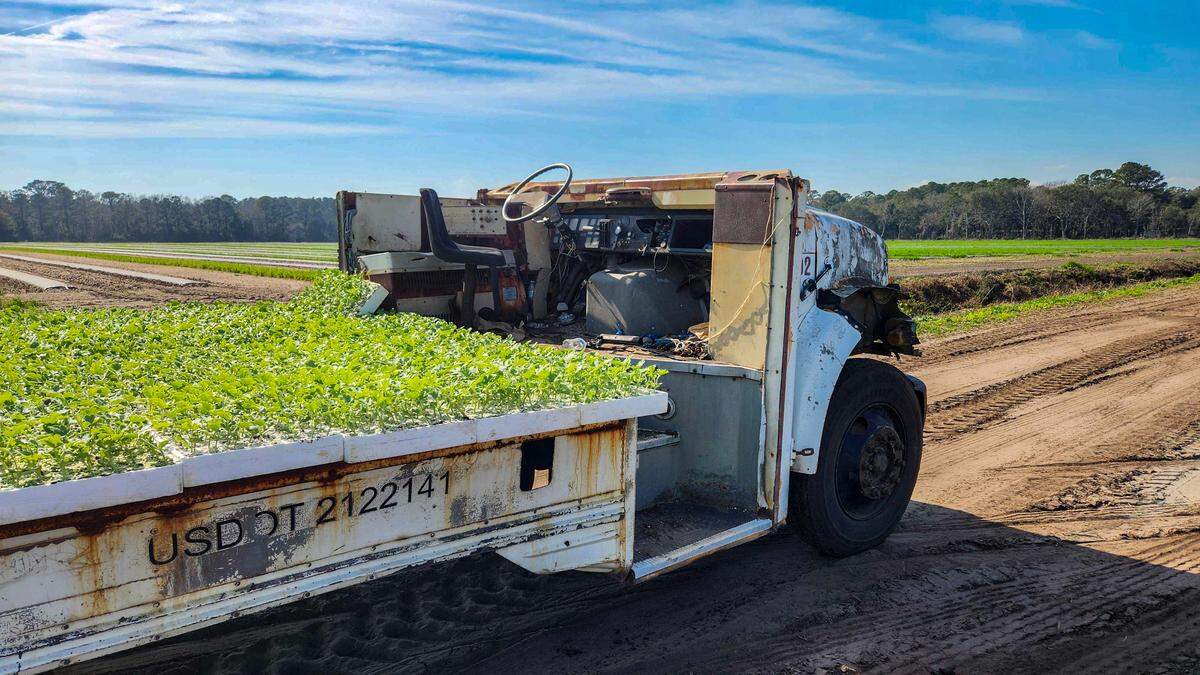
Despite the emphasis on technology, a premium is still placed on good old fashioned horse sense and a prime example is the retrofitted school buses, which still have something to give after decades of carrying kids.
With their roofs and sides removed, the born-again buses, looking like something out of a Mad Max movie, have found a new purpose as flatbeds in the farm sector transporting massive amounts of water and watermelons.
“The engines are great,” says Hucks, who views the buses as trailers that can drive themselves.
Coosaw Farms buys the buses at auctions for $5,000 which Hucks says is a steal compared to spending $250,000 on a new tractor.
Customer reaction fuels his passion
Hucks stops and scans the expanse of the brown fields, which are intermittently striped with rows of green ryegrass to protect the young crop from the wind. Bees eventually will be placed in the fields to pollinate the plants, which include one row of pollinated plants for every three rows of seedless varieties that are planted.
While he’s no watermelon whisperer, says Hucks, being in tune with the needs of the plants and their environment comes with experience.
“I’m learning,” Hucks says. “The more you’re in the field, they tell you what they need.”
Once the harvest begins, trucks carrying 40,000 pounds of watermelons will transport them to a packing house in Fairfax to be cleaned and sorted by an optical sorting machine that takes pictures of each melon and calculates the volume.
Most will end up in East Coast grocery store chains but some will be shipped as far away as California and Canada.
“They’re delicious,” Hucks says with a grin. “They’re as sweet as can be.”
Just as satisfying, he says, is receiving an email or sometimes a hand-written letter from a satisfied customer, maybe from Alabama, who purchased one of the South Carolina-grown watermelons and thought it was the best they ever tasted. Those notes, Hucks says, make the miserably hot days in the fields in July worthwhile.
This story was originally published March 2, 2025 at 5:00 AM.