‘Can we survive?’ Lowcountry population boom stirs concern. Beaufort gets expert help
Beaufort faces a daunting future due to a growing population and associated problems like increasing housing costs and traffic congestion, in addition to rising seas that could inundate parts of the city, said Victor Dover, a nationally recognized leader in city planning.
Beaufort leaders are holding a two-day retreat this week at St. Helena Island Library to talk about the future development challenges facing the city and how it might best prepare through strategic planning and development codes. Dover, of Miami-based Dover, Kohl & Partners, will assist them.
The city, he said, could head for the bunker and try to stop the dramatic population growth, but he said that won’t work. Instead, he’s advising its leaders and residents to view the growth as a “wave of prosperity,” seizing the moment to plan for the kind of community they really want.
And residents, Dover noted, will not get the city they want from the Easter Bunny or Santa Claus.
“They get it from drawing lines on a map and showing it to their neighbors and their fellow leaders and saying, ‘How about like this?” Dover said. “Actually deciding what they want the future to be like.”
Beaufort’s growth isn’t new. It’s been fueled in part by positive notice in national publications like Southern Living and Architectural Digest. But between 2010 and 2020, Beaufort County’s population grew by more than 15%, making relentless extension of development a real threat to the Lowcountry including Beaufort, he added.
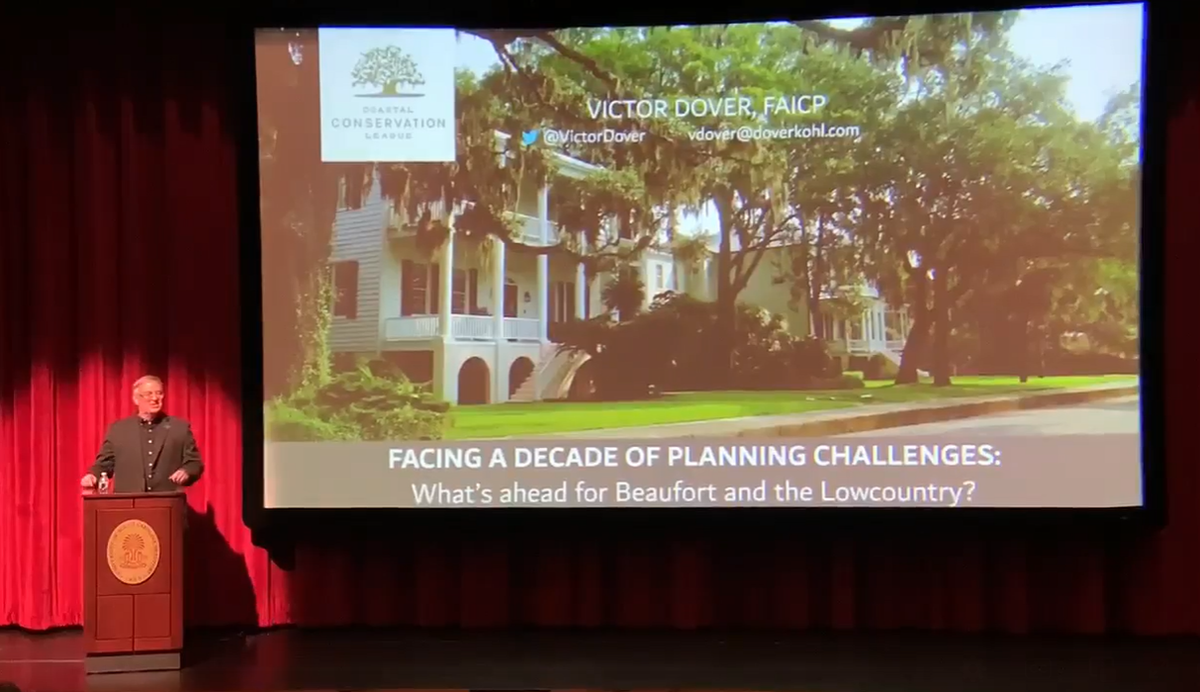
As opposed to national coverage of the city, local headlines and stories about development, Dover said, reflect “kind of a fear factor.”
“Can we handle it? Can we direct it? Can we survive it?”
Mayor Stephen Murray said the city is seeing real impacts. Housing is becoming increasingly unaffordable. There are not enough jobs that pay a living wage. Rural areas are being clear-cut to make way for the next suburban development.
Protecting a special place
Murray called Beaufort “one of the most special places on the planet” because of its quality of life, natural resources and historic structures.
At the same time, “I also think we’re right to be nervous about the future,” he said.
Dover is assisting the city in “place-making” during the retreat, which began Wednesday and concludes Thursday. The focus is polishing the Beaufort Code, which guides development, and strategic planning. The meetings will be livestreamed on the city’s Facebook page.
“The future will be different for sure,” Murray said, “but working together it’s possible our region is even more remarkable than it is today.”
During a talk Tuesday evening at the University of South Carolina Beaufort, sponsored by the Coastal Conservation League, and USCB Center for the Arts and the city, Dover spoke about the increasing development pressures facing the Lowcountry.
“First of all,” he said, when asked how residents should view the city’s development rules and development as it prepares for the continued growth, “calm down.”
Issues involving city code and land development are emotional and residents can get as mad as a hornet but consider that residents come from different points of view, he said. One person, for example, might be defending a neighborhood, he said, while another may be concerned about private property rights.
Dover advised working as a team and loving each other in the process. Yes, loving each other. “I’m not kidding,” he said. “That’s really the answer.”
Eternal vigilance needed
Ensuring that the city’s planning decisions and vision are implemented requires “eternal vigilance,” Dover said, adding that residents will get the town they deserve but only if they stick up for it.
Effective planning in the future also will require that the city’s elected officials to stick to the code, and that members of the planning staff accurately interpret the rules, Dover added.
Developers, he said, can be friends as opposed to foes but they need to get the message quickly that the city won’t back down from its standards. Some may threaten to walk away.
“Then say, ‘Walk,’ because if the local government blinks every time a developer says boo, you’re never going to get the quality you want,” Dover said.
But he encouraged the city to be business friendly, too, selling its approach to getting quality development.
“Be proud of it,” Dover said. “This is Beaufort, we built Newpoint and Habersham.”
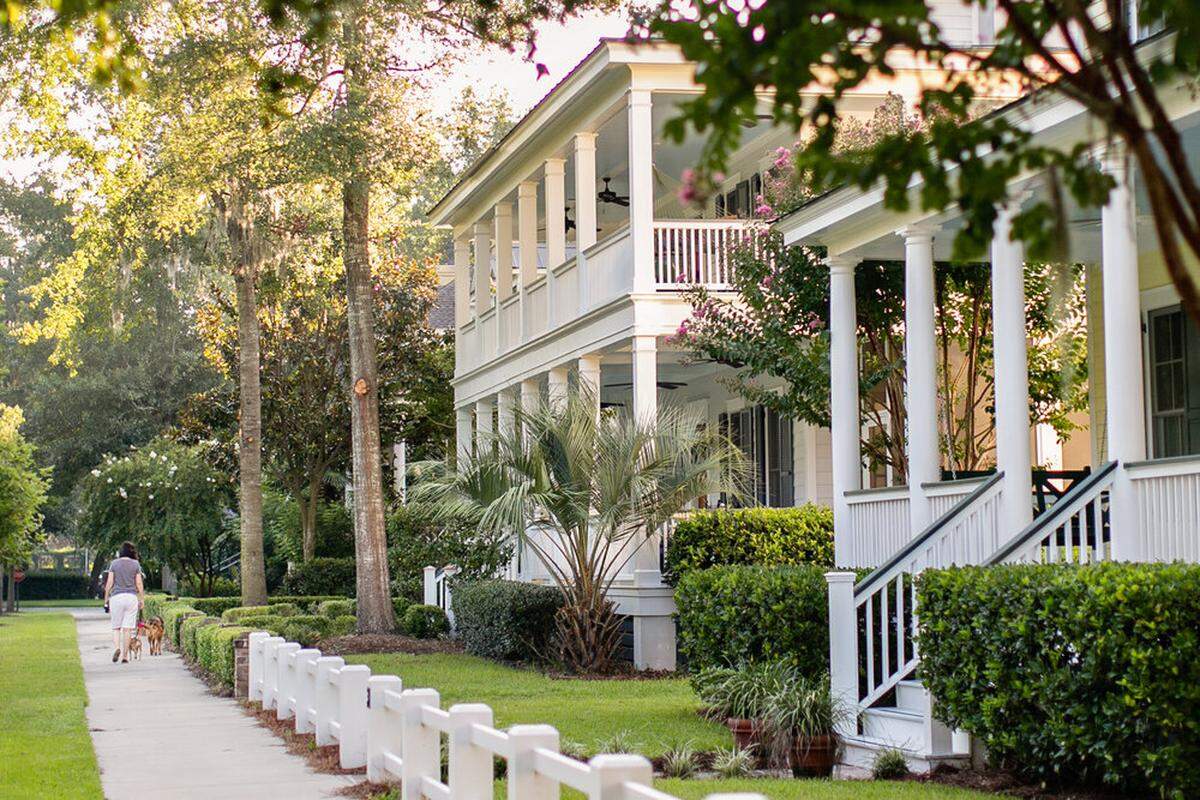
The Newpoint development on Lady’s Island is a traditional residential neighborhood with front porches and walking paths and lots of trees that foster a community and a sense of place. It was developed in the 1990s by Vince Graham and Bob Turner.
The Habersham community, just west of Beaufort, another mixed-use development with a range of housing styles, has been ranked one of the best coastal communities in the country. It boasts several restaurants.
“The solutions are staring you right in your face,” said Dover, referring to the ideas implemented in those developments.
And Dover noted the city’s civic master plan, one of the city’s most important documents, already encourages mixed-use urban neighborhoods where people can get around by foot and bicycle if they want. “That’s your textbook.”
Building place
Habersham and Newpoint, he said, took the DNA of the historic homes and neighborhoods in Beaufort — such as porches, narrow lots facing the streets and interconnected streets — and “reused it.” Having more people, he adds, supports commerce.
“It’s not the density that determines whether a place is really appealing and feels like good human habitat,” Dover said. “It’s the design.”
Large lot development with the purported goal of minimizing impacts to the land just makes those impacts worse, Dover said, with each house sitting on a lot too large to mow and not large enough to plow.
“Don’t do this,” said Dover, pointing to a design showing three-acre lot after three-acre lot that he called a kind of “social zoning” accessible only to those with means.
Beaufort must also consider sea level rise in its planning, the planner said.
Inundation maps have good and bad news for Beaufort. Besides serious storms, he said the number of days of flooding will increase. Some very historic places in the city are vulnerable and protecting them will require intervention.
“It has to be part of how you plan here,” Dover said. “And I know that’s a matter of constant concern among your leaders.”
Slow down
As for transportation, Dover said “speed kills.” The slower the speed of the moving vehicles, the more people will survive. Moreover, he added, people just tend to avoid crosswalks on busy roads with high speed limits, but he noted that neighborhoods and public squares can be designed in ways where traffic and pedestrians safely coexist.
Dover previously authored the town of Port Royal revitalization plan and Beaufort’s Boundary Street plan. He co-authored the book, “Street Design: The Secret to Great Cities and Towns.”
Going forward, one of the Beaufort’s biggest challenges is that rents are rising faster than incomes, he said. That’s a problem, especially for those who are working hard to make the Lowcountry a nice place such as those who work in the service industry.
“To simply say you should just live somewhere else where it’s cheaper is not the answer,” he said.
For the most part, the housing industry has stopped producing units for the “missing middle,” Dover said. The city should work to reawaken it, he said, by making the rule book more friendly to small developers instead of recruiting larger builders.
Beaufort’s preparations for population increases don’t just have local consequences.
In his work around the country assisting communities in their planning efforts, Dover notes, he shows pictures of Beaufort’s neighborhoods and streets — and Port Royal and Charleston. The photographs help leaders visualize landscape changes before land is converted.
“If you wonder why I think it’s so important that you get it right in the Lowcountry,” Dover said, “it’s because the whole world is watching how you deal with these interrelated challenges.”
If you go
The Beaufort City Council is conducting a retreat from 9 a.m. to 5 p.m. Thursday at St. Helena Public Library, 6355 Jonathan Francis Senior Road, St. Helena.
The public is invited and the meeting will be livestreamed on the City’s Facebook page. The agenda includes discussion of strategic and capital improvement plans and the Beaufort Development Code.
This story was originally published April 27, 2022 at 11:55 AM.