A 500-unit apartment complex is proposed in Beaufort. What’s all the fuss about?
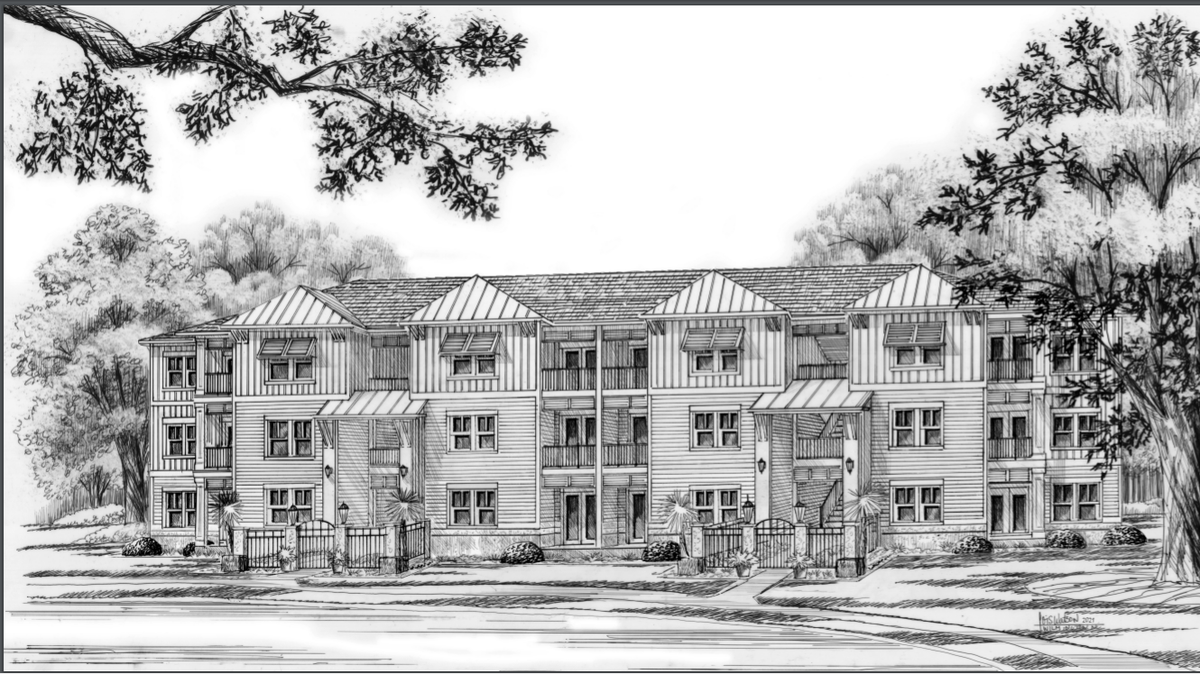
A 504-unit apartment complex proposed for Beaufort has received mixed signals: Critics are raising concerns about eye appeal, the loss of trees, traffic and walkability, while city planners and the developer point out that it meets city code and is conceptual, not a blueprint.
City planners have recommended conceptual approval of Water Crest Apartments, but the Design Review Board held off on taking action Thursday.
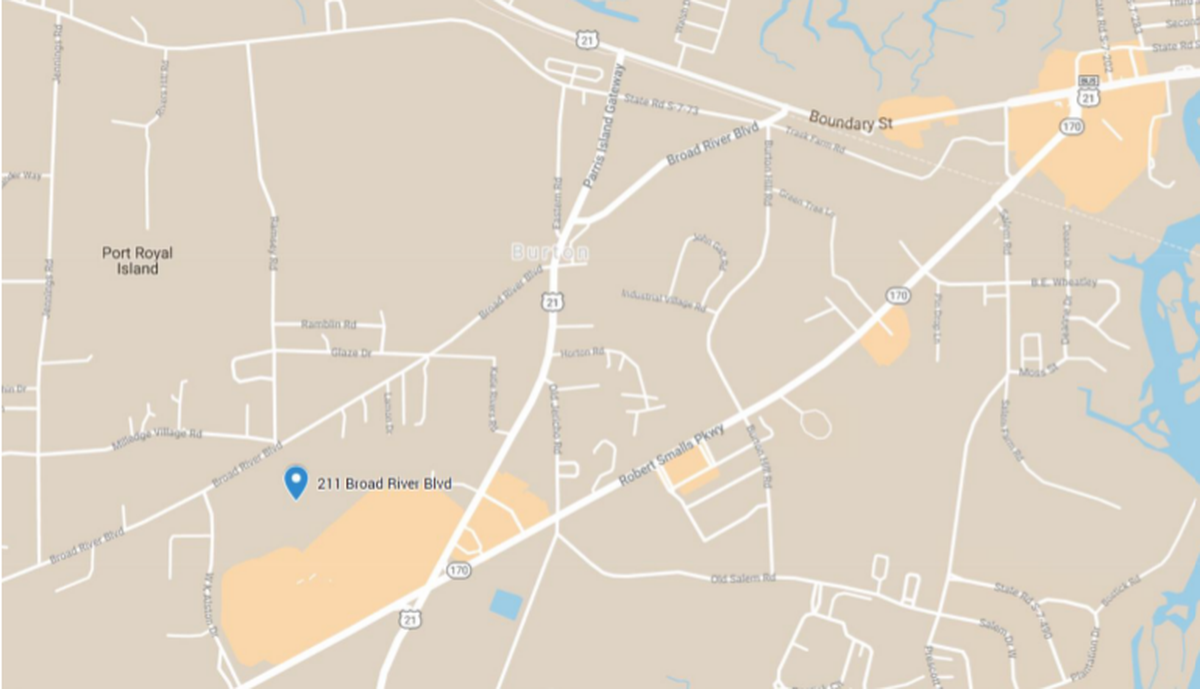
The DRB’s decision to defer a vote followed a discussion that raised concerns about the large apartment complex. Among the concerns: the uniform look and design of the buildings planned on the 38-acre site at 211 Broad River Blvd., which is immediately north of the Walmart Supercenter and Cross Creek Plaza on Robert Smalls Parkway.
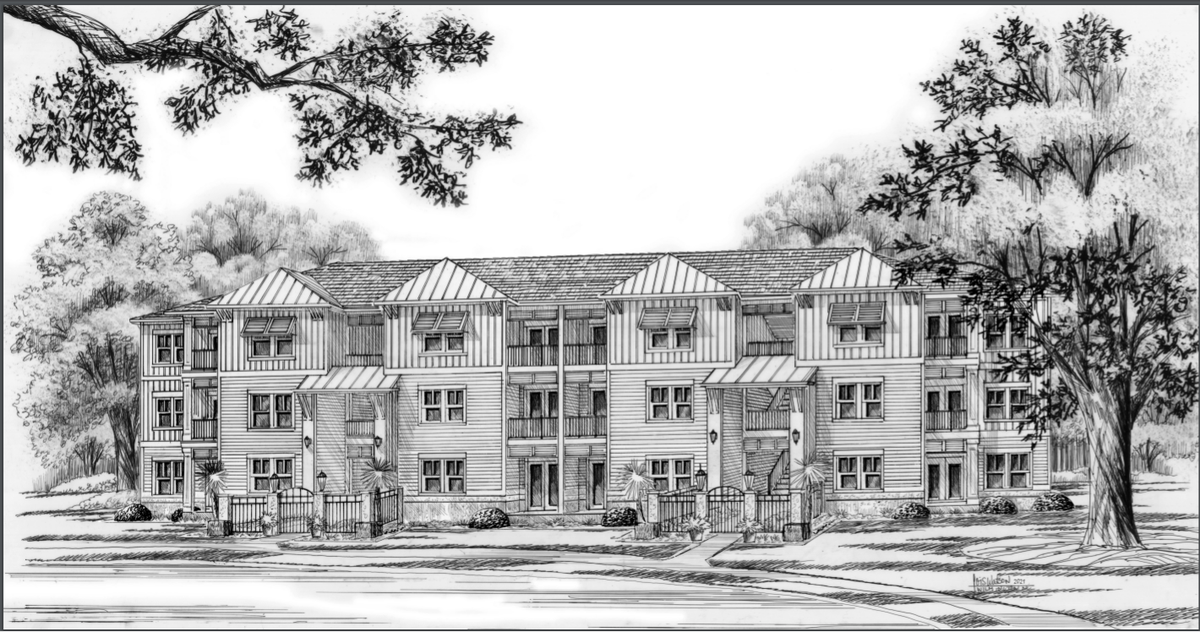
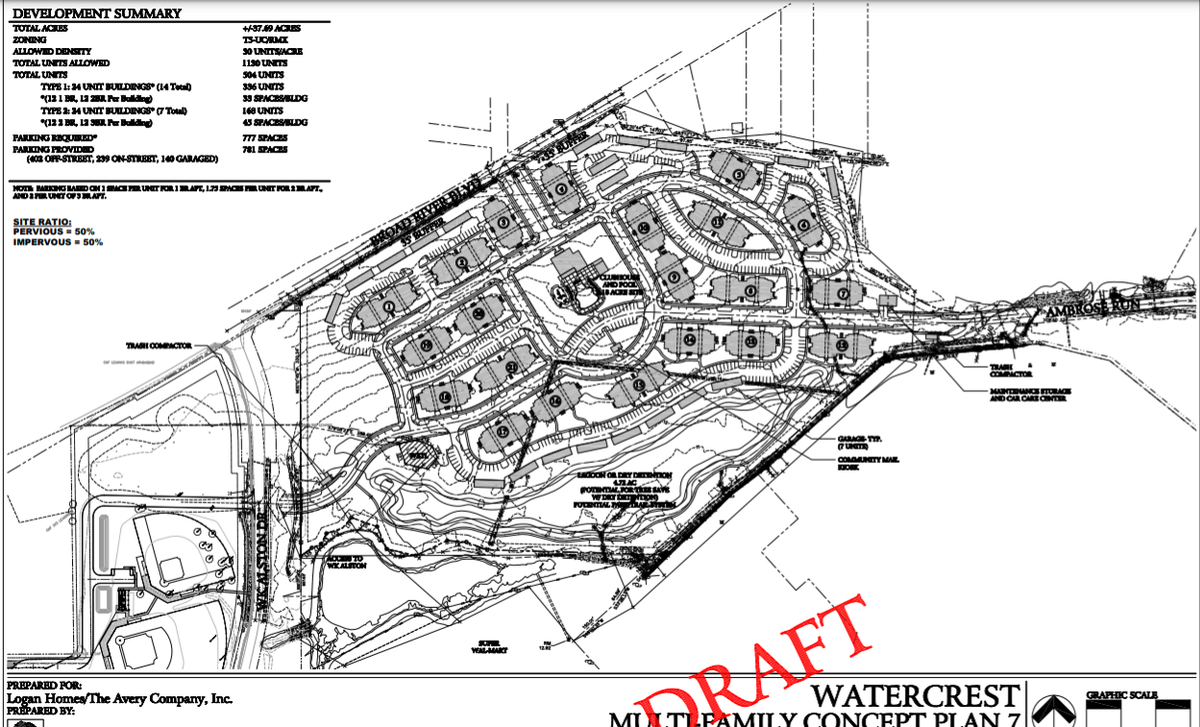
The complex would feature 1- to 3-bedroom apartments in 21 three-story buildings fronting internal streets, with estimated rents ranging from $1,500 to $2,000 for 1,000-plus residents. In addition, 20 garage buildings and a clubhouse with a pool are part of the plans.
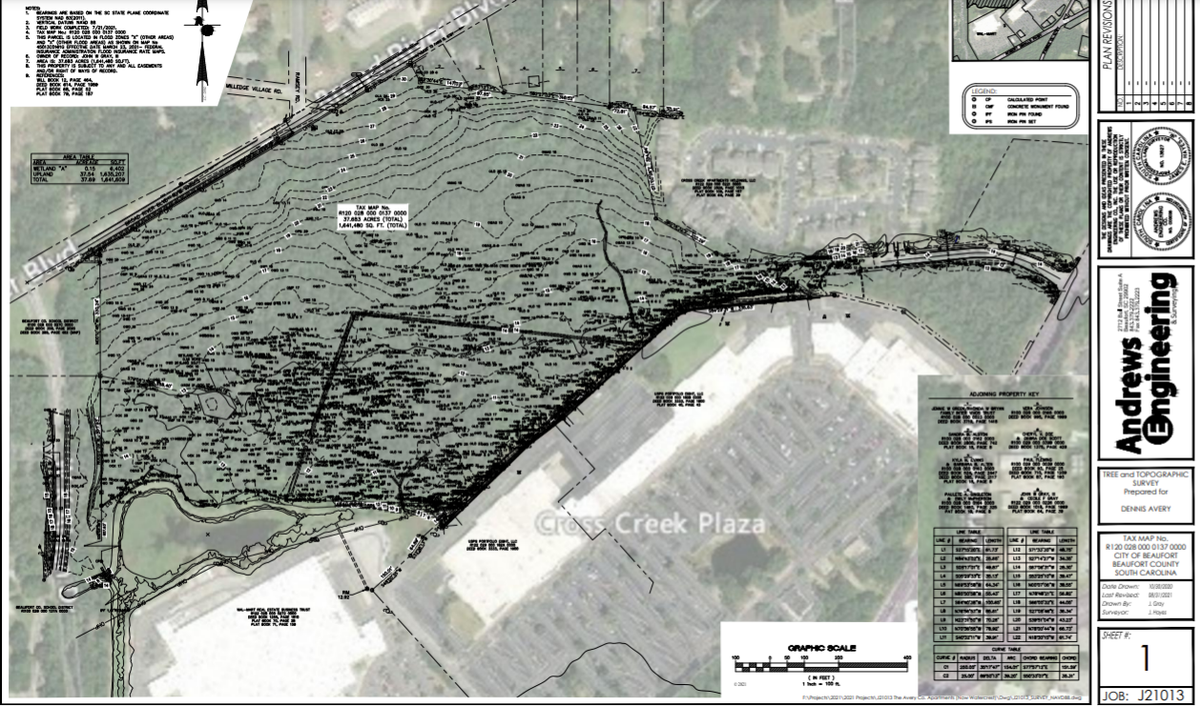
The wooded land is owned by John W. Gray and Cecile F. Gray life estate, according to Beaufort County tax records. Logan Homes/The Avery Co. Inc. is listed on city application documents as the developer.
City staff recommended conceptual approval, with 12 conditions.
But board members voted 2-1 to defer action. That leaves the door open for the developer to return with the same plan with modifications.
“It’s just so monotone,” Chairman Benjie Morillo said of the project. “It’s not encouraging diversity. It’s not encouraging walkability.”
It would, he added, encourage “a lot of vehicular traffic.”
It would require 777 parking spaces.
Morillo and others called for more diversity in the size and style of the buildings, along with more green space and tree preservation. Pedestrian and biking trails that would better connect the apartments with the neighborhood also were suggested.
Mayor Stephen Murray, who is not on the board, testified that he was disappointed in city staff for its recommendation that the project concept be approved. While the project may technically meet a strict interpretation of the city code, Murray said, in his view it does not meet the spirit of the city’s civic master or strategic plans. Those plans, he said, call for walkable, mixed-use and traditional neighborhoods. Murray urged the board to deny the project and to require developer to return with different plan.
But Steve Andrews of Andrews Engineering, the developer’s civil engineer, said the developer must depend on rules spelled out in city code. City staff also pointed out that the city code is the “binding document.”
The project has been designed in accordance with city code in that the buildings are located to “break up the site into a series of smaller blocks defined by streets and pedestrian walkway,” city staff wrote in its report.
The initial plans, Andrews acknowledged, lack detail, but the purpose of submitting conceptual plans is to get reaction to the overall plans, he said. Additional details, he said, would be presented as the project progresses. He noted, for example, that tree and traffic surveys are in progress. There would be two different styles of buildings used, and sidewalks are planned that would connect to the shopping center and W.K. Alston Drive, he said. Green space would be around the clubhouse site, he said.
A motion by Morillo to deny the conceptual plans was defeated because neither Kimberly McFann or Witt Cox would second it.
People don’t like large apartment buildings to have uniform-looking buildings, board member McFann said, but there is a need for apartment housing in Beaufort.
She proposed deferring action, which Cox supported. Morillo, who preferred denial, voted no. The developer, McFann noted, is willing to make an investment, and changes can be made.
“I think there’s a lot you can do,” McFann said. “It has a lot of potential.”
A 2018 housing study commissioned by Beaufort County found a need for over 3,100 additional rental units in the county over the next five years. While the greatest need is for the lowest-income households, there is also a significant need for moderate-income and high-income households, the study said.
The main entrance into Water Crest would be along Broad River Boulevard opposite the intersection with Ramsey Road. A second entrance would be provided by extending Ambrose Run.