Port Royal ousting old shrimp boats from dock. ‘We all want to see a working waterfront’
Port Royal is moving ahead with a plan to demolish the town-owned dock, build a new one and, eventually, partner with a third party to build and run a facility that would process seafood caught by the owners of working shrimp boats.
The town’s effort to restore one of the few publicly owned commercial fishing docks remaining in South Carolina, with the help of almost $1 million from the state, is occurring as Safe Harbor Marinas begins its initial work in a major redevelopment that will transform the town’s waterfront.
“I think we all want to see a working waterfront,” Town Manager Van Willis says of the effort. “We’re hoping with a new dock and state-of-art processing facility we’ll become a location to offload.”
Owners of the old boats tied up at the dock have been given until April 15 to move. The town, however, will be responsible for moving abandoned boats or those that have sunk.
The outline of shrimp boats against the backdrop of an orange sunset in Port Royal makes for nice photographs to post on Instagram. But it’s an illusion. Most of the boats never leave the dock.
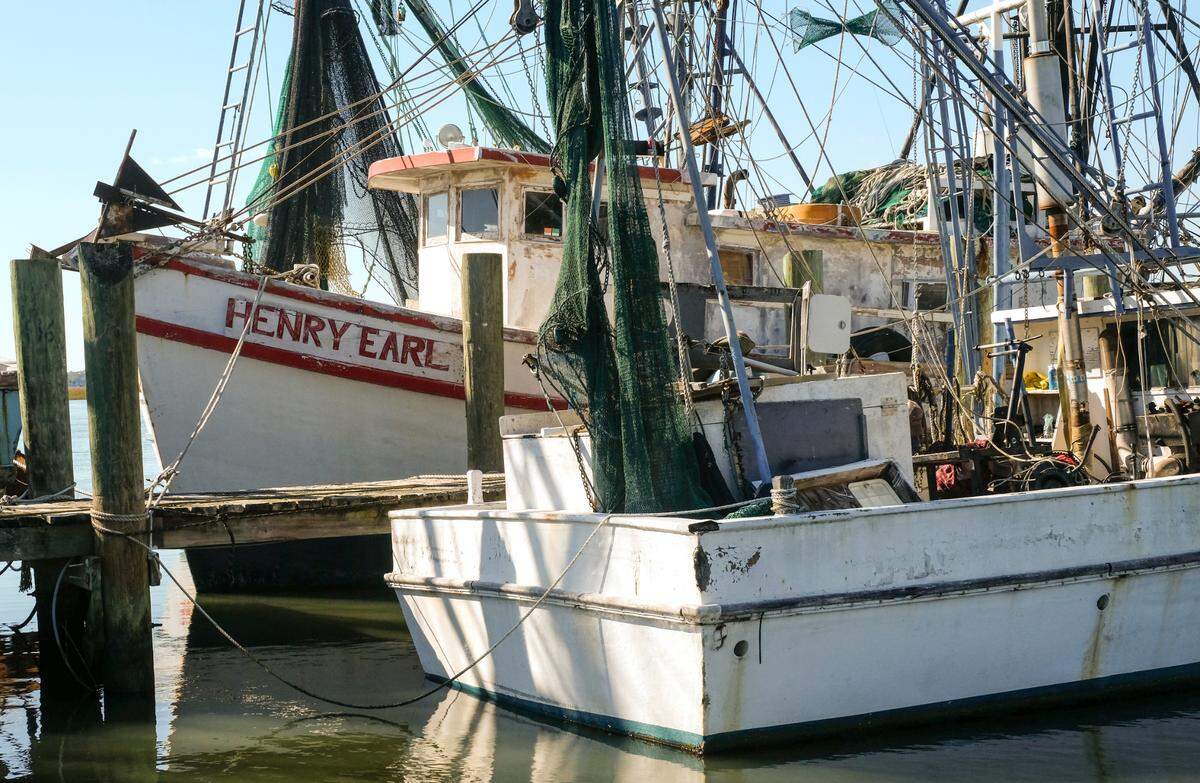
“Unfortunately, almost every single one doesn’t actually shrimp,” Willis says of the shrimp boats, some of them barely seaworthy, that are tied to an equally dilapidated dock.
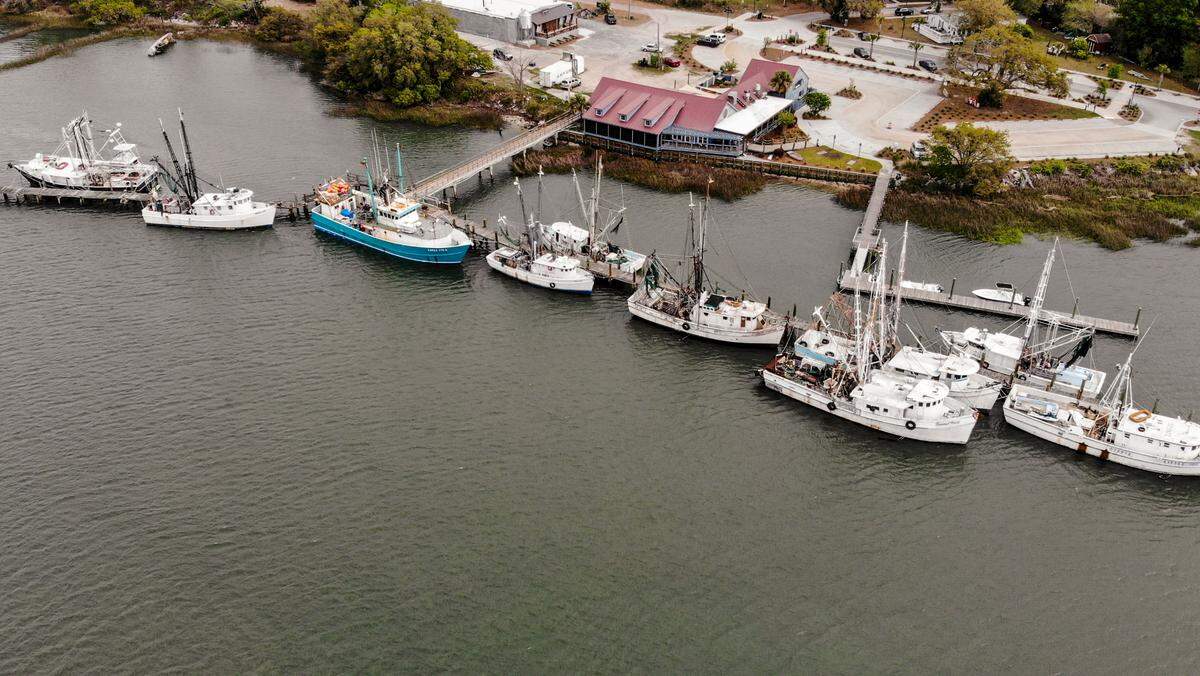
To build a new dock, and attract working boats, the old dock and old boats need to be moved, and that’s been a complicated and expensive process involving maritime laws, Willis says. The boats have varying histories and ownership. The dock has been around for at least 40 years, Willis says, and some of the boats have been tied to that dock for years.
Two of the run-down boats, for example, have been abandoned by derelict captains, Willis said. And cost of scuttling those vessels alone will cost $120,000. The town has asked other owners to move their boats voluntarily.
Plans call for completely rebuilding the dock once the boats are gone, Mayor Joe DeVito says, then partnering with a yet-to-be-determined private entity to construct and operate a seafood processing building.
Historically, Port Royal has been an important center for seafood production and distribution and, adds DeVito, “shrimping is embedded in our history.” Besides the ambiance that the shrimp dock brings to the local waterfront, DeVito says, “we want to maintain our history.”
“This is what Port Royal is,” says DeVito of the seaport town.
The town, which had leased the dock, took ownership when Safe Harbor Marinas purchased land and a development project from Grey Ghost Properties LLC for $20 million in November. The transfer of ownership of the dock to the town was made part of the development agreement. That provision, Willis says, is evidence of Port Royal’s vested interest in keeping the dock public and its support of the shrimping industry.
However, town officials say they’d like other entities, both private and public, to contribute to future efforts to sustain shrimping, and they want a third party to manage the seafood processing facility.
“We don’t want to run a shrimp processing facility in any way,” DeVito said.
The town, Willis noted, has lost $2 million in the past 15 years underwriting shrimping operations, and with a small budget, it can’t continue to prop up the industry, particularly when it suffers low market prices and high diesel costs. Success, Willis said, will require a commitment from local restaurants and vendors to use locally processed seafood.
Moving forward, DeVito says, the shrimping operations will be positioned in way so they will no longer be a burden to the community.
State chips in
Seafood at the dock is iced, packed and sold to restaurants and wholesalers by several long-time town contractors — or it was until last April, when the town, citing financial losses, suspended shrimp processing operations for a year.
The town received financial help from the state in July when lawmakers designated $900,000 for repairs and redevelopment of the shrimp dock.
“The boats being tied up,” Willis said of the condition of the dock, ”may be the only things that are holding it up.”
The town has an additional $600,000 in escrow from an insurance settlement after a 2015 fire destroyed a seafood market and shrimp-packing equipment.
It plans to use that $1.5 million to replace the dock and get started on the seafood processing facility. The town wants to join forces with a third party on the processing facility, Willis said. Safe Harbor is one possibility, says Willis, but DeVito says he doesn’t know whether the company would be interested.
In the deal with Grey Ghost, Safe Harbor bought 317 acres, including a dry stack business, the old state ports authority building. The development plan calls for a marina, waterfront housing, improvements to existing buildings, commercial businesses and a public promenade.
A response from Safe Harbor was not immediately available.
Nine boats tied to dock
Before a new dock or a seafood processing facility can be built, nine boats with names such as “Carolina Girl, “Buccaneer” and “Havin’ Faith” need to be moved from the existing dock.
“Nobody is being allowed to stay while we rebuild the dock,” Willis said, “because there will be no dock.”
Two additional boats have sunk. How much remains of those boats isn’t clear.
Three or four boats have been abandoned, Willis said, which has forced the town to file paperwork to “arrest those boats.”
Ship arrest refers to civil law procedure whereby a marine vessel may be arrested by judicial process and held pending the determination of future claims relating to the vessel.
Some boats will be temporarily relocated until the new dock is finished.
Getting rid of the boats isn’t as simple as issuing an eviction notice, says Willis, noting that maritime law is a very involved process.
Town hires help
The town has hired a marine surveyor to assist in assessing the boats and a maritime lawyer to work on the legalities.
The town has a permit in hand to build a new dock, Willis said, as soon the boats are gone.
“I’d love to start within the next six months,” Willis says of construction. “I have to get the boats out of there before I can do any of that.”
In the past, the town has been criticized for its financial oversight and other issues related to shrimping operations, but Willis says it’s shouldered the cost by itself until the recent $900,000 allocation from the state.
“Not a single dime has come from anybody else,” Willis says, “period.”
Other entities, Willis said, talk about how important the shrimping industry is to the area culturally but the town hasn’t seen any financial contributions. “I’d be happy for them to step up,” he said.
The new dock, Willis said, will likely cost more than $1 million to build. The sea processing facility would be located on the first floor of a multi-use building, he said.
This story was originally published April 7, 2022 at 2:51 PM.