Beaufort argues hotel, parking projects can proceed in historic district. Here’s why
The city of Beaufort says two developers have the right to complete controversial hotel and parking garage projects in the Historic District. The plans have prompted a lawsuit and a proposed study by the federal agency that oversees national historic districts.
The City of Beaufort, along with two businesses, have recently fired back in the lawsuit brought against them by West Street Farms LLC and Mix Farms LLC regarding hotel, parking and apartment projects in downtown Beaufort.
“The plaintiffs have known for years of the development plans of the defendants, and plaintiffs have had multiple discussions with the defendants regarding the development plan,” the city said in papers filed Monday in response to the lawsuit. “Plaintiffs did nothing at the time to voice objections or to take any action regarding the projects. Hence, the plaintiffs are now equitably estopped from claiming that the project plans may not go forward.”
West Street Farms LLC and Mix Farms LLC filed a lawsuit in April accusing the city, developer 303 Associates LLC, and developer Beaufort Inn LLC, of not following the city’s zoning requirements when approving the downtown project.
At the center of the lawsuit are three large-scale developments proposed in Beaufort’s downtown — a hotel at the corner of Scott and Port Republic streets; a three-story parking garage on the block bordered by Charles, Craven and West streets; and, a three-story apartment complex on Charles Street.
The lawsuit disputes the type and size of developments allowed in the city’s historic district, which includes the downtown. Some argue the developments are changing the city’s historic character.
In the lawsuit, West Street Farms LLC and Mix Farms LLC — two limited liability companies owned by Graham Trask, a real estate investor and developer who lives in Geneva, Switzerland — claim that the developers have not received special exception permits from Beaufort’s Zoning Board of Appeals, a requirement under city code for large buildings in the historic district.
The city says the Beaufort Development Code, which was adopted on June 27, 2017, defines large footprint buildings as exceeding 100 linear feet in width. The code requires a special exception approval for large footprint buildings in the Historic District.
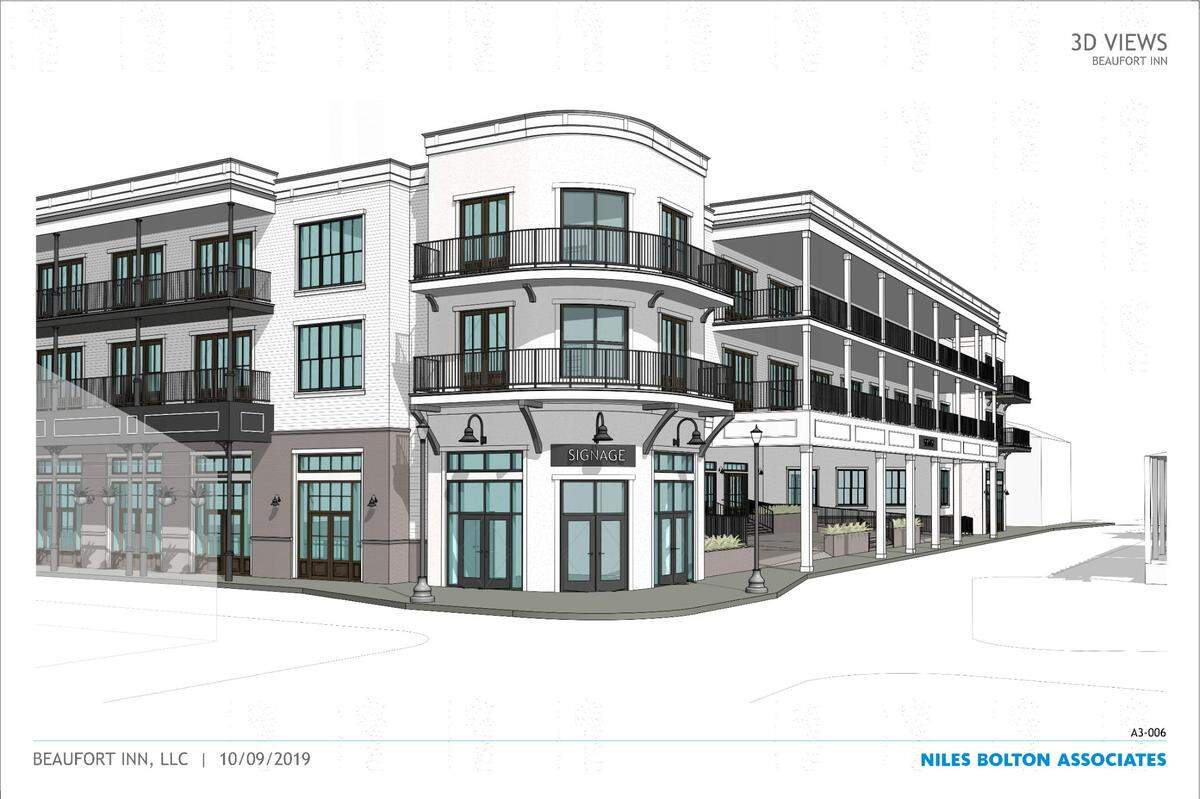
City says two projects can proceed
Since the Charles Street apartment project was not submitted to the City until recently, Beaufort City Council believes that that project must receive special exception zoning approval by the Zoning Board of Adjustment, if the plans for the apartment building meet the definition of a large footprint building, the city said.

However, the applications for both the hotel and parking projects were submitted to the city and the Historic District Review Board in 2016 and 2017, when the city operated under the Unified Development Ordinance (UDO). The UDO did not require that the Zoning Board of Appeals issue a special exception zoning approval for large footprint buildings in the Historic District, the city argues.
“Taking into consideration the timeline of the applications, approvals, and agreements, City Council believes that Beaufort Inn LLC and 303 Associates LLC have acquired “vested rights” to continue and complete the hotel project and the parking structure project under the guidelines and restrictions of the Unified Development Ordinance,” the city said in a statement.
Under the UDO, when the proposed use is allowed by existing zoning, the only approval required for projects in the Historic District is by the City’s Historic Development Review Board (HDRB).
The HDRB gave various approvals for the hotel and parking structure projects under the UDO.
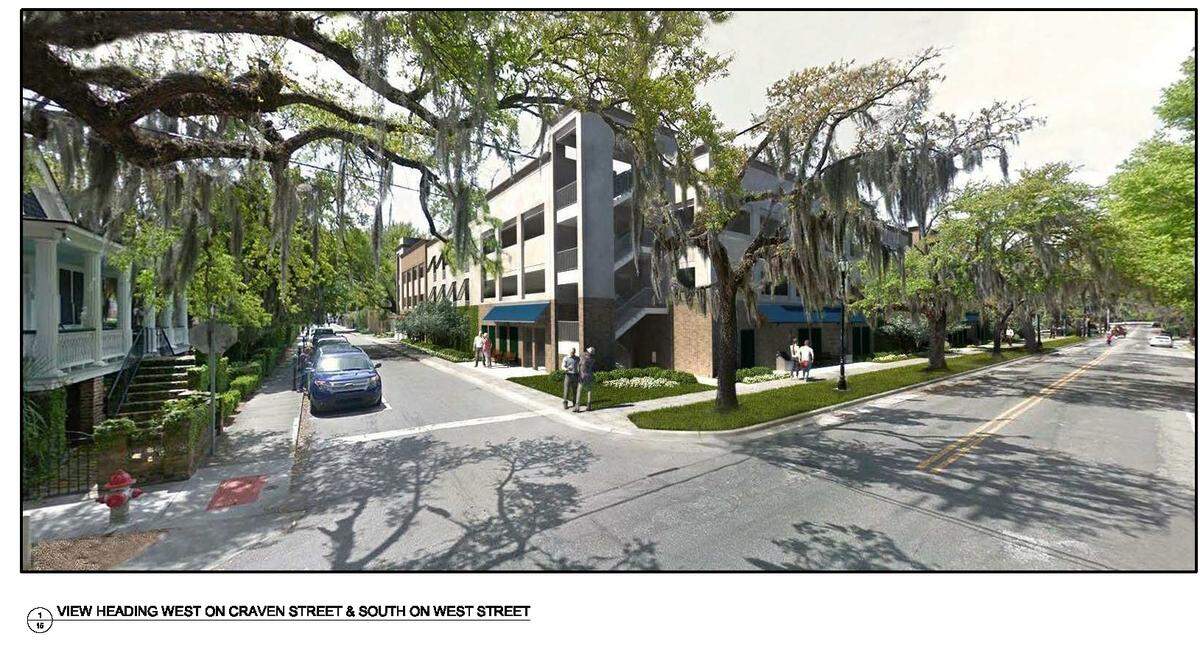
Demolition permits were issued by the City in connection with these projects as well. 303 Associates relied on these approvals and permits as it spent funds to proceed with the demolitions and relocation, the city said.
“This recognizes the rights of a developer to continue and complete these projects under the guidelines and restrictions in place when these rights were acquired.,” City Attorney William Harvey said.
Beaufort Inn LLC and 303 Associates LLC previously filed a separate defense in the lawsuit.
Their brief contains a chronological timeline they contend shows their projects have been in the works for years prior to the new city zoning, and therefore don’t need special exemptions as the Trask lawsuit claims.
“My clients expect that they and the city will prevail and look forward to their day in court,” said Ned Nicholson, legal counsel for Beaufort Inn LLC and 303 Associates LLC
Critics, including Trask, previously said the projects are piecemeal proposals that will significantly alter Beaufort’s downtown.
Developer Dick Stewart of 303 Associates, however, said some of the concerns about the projects are misplaced, and that critics have “embarked on a campaign of misinformation and deceit” about the projects.
In 1969, the 304-acre area comprising the original town of Beaufort was listed in the National Register of Historic Places. The district was designated a National Historic Landmark in 1973. It’s bounded by the Beaufort River on the south and the east, Hamar and Bladen streets on the west and to the north by Boundary Street.
The National Park Service’s (NPS) National Historic Landmark monitoring program recently told the city in a letter that it is recommending a comprehensive study for the district after learning about “potential threats to the historic character of the Beaufort National Historic Landmark District” form Trask and Will Cook, an attorney with Cultural Heritage Partners.
This story was originally published May 24, 2021 at 12:00 AM.