How would Beaufort spend its share of a 1% sales tax? And how much would it raise?
A resolution spelling out how the city of Beaufort would spend its share of a 1% local option sales tax if county voters approve it Nov. 2 was adopted Tuesday by the Beaufort City Council.
An additional 1% in sales tax would raise an estimated $1.5 million annually in Beaufort, City Manager Bill Prokop said after the meeting.
In backing the proposal, city officials emphasized that the sales tax would shift the burden of paying for city services from property owners to visitors and give the city more money for capital projects such as road and storm sewer improvements.
Tuesday’s meeting was the first time the council had met in in council chambers, rather than electronically, since March 2020 due to COVID-19 concerns. Members welcomed the public to the chambers; a handful of people attended.
Mayor Stephen Murray noted that the council still plans to continue providing public access to the meetings via Facebook live. Comments from the public, however, can be made only in person or Zoom. The council does not respond to Facebook comments.
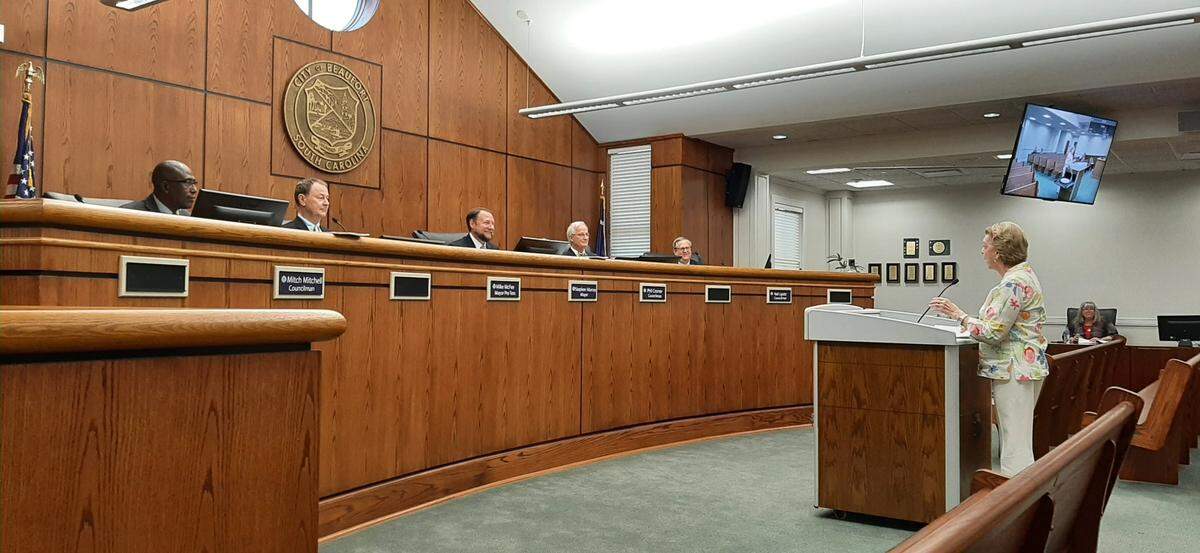
The city, Murray said, is trying to be “extraordinarily transparent” in allowing both in-person and on-line participation. The Beaufort County Council and Bluffton Town Council, by contrast, are no longer streaming meetings on Facebook since they returned to meeting in person, and Bluffton does not allow the public to attend its meetings in person.
When a local option sales tax is approved in Beaufort County in 2021, the city’s resolution states, the city will apply 71% to property tax credits.
Beaufort County Council set the allocation percentages for the sales tax revenue when it voted Monday to place the tax question on the ballot this fall.
The local-option sales tax would be a 1% tax on the gross proceeds of sales within the county. Unlike the penny sales tax voters approved in 2018, the LOST would have no set end date and no specific use.
Instead, 71% of the tax proceeds would be distributed to the property tax credit fund, and the remaining 29% would go to county and municipal revenue funds.
How Beaufort would use its share
The city would use the 29% it gets for capital projects, not day-to-day operations, Prokop said.
“This would be a way for the city to be able to have a new revenue source that will help recover capital needs we have in the long term,” Prokop said.
The city’s resolution states that a disproportionate share of local revenues used to pay for government services come from property owners, which it says is unfair.
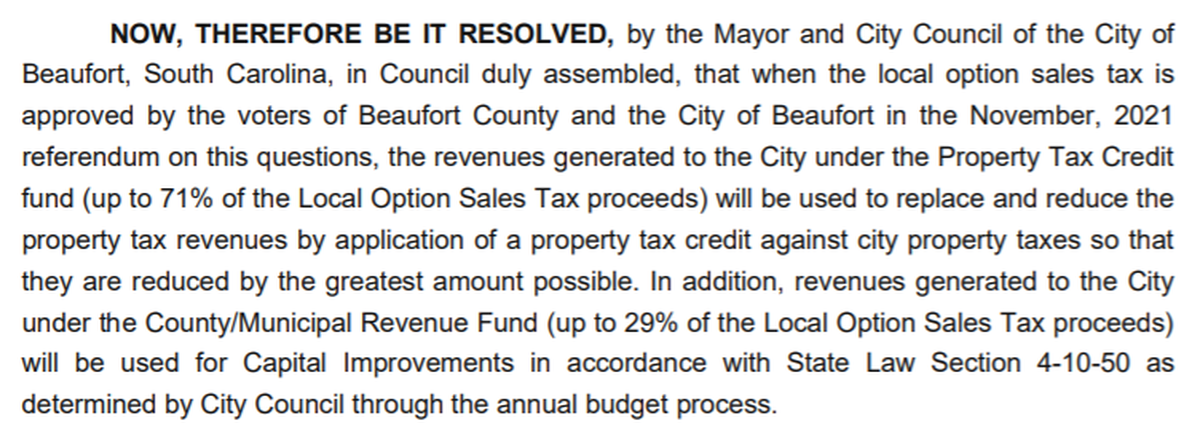
At the same time, the resolution says, many visitors who benefit from city services don’t contribute.
“The City of Beaufort is committed not only to minimizing the cost of public services, but also to seeking alternative revenue sources which can be used to replace property taxes,” the resolution says.
About 50% of the 1 % tax would be paid by tourists because that’s about the percentage they pay now in current sales taxes, Prokop said.
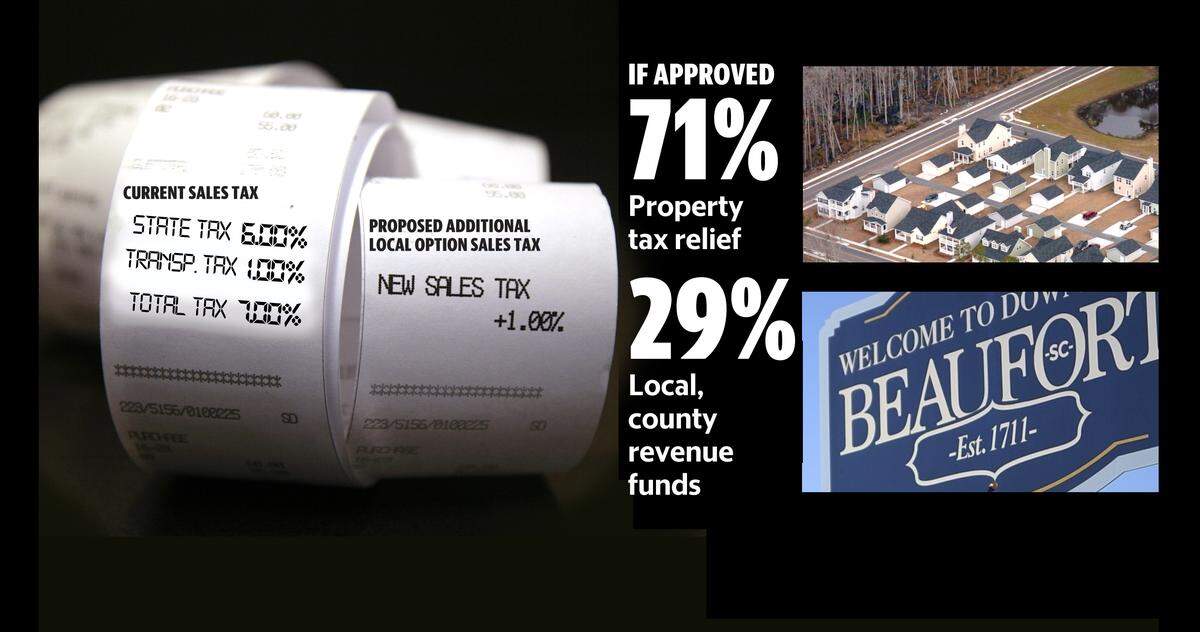
Owners of both real estate and personal property would see credits if the sales tax is approved, Prokop said.
Mayor Murray called the tax a creative tool to give residents property tax relief.
Prokop said a local option sales tax has been discussed in the city for at least five years and noted a number of area cities have put forth similar resolutions, including Port Royal, Hilton Head, Bluffton, Hardeeville and Yemassee. Port Royal was scheduled to discuss the sales tax Wednesday night.
This story was originally published May 12, 2021 at 12:00 AM.