State to take over Hilton Head traffic circle project. What does that mean?
A key Hilton Head transportation project is likely going to change hands soon.
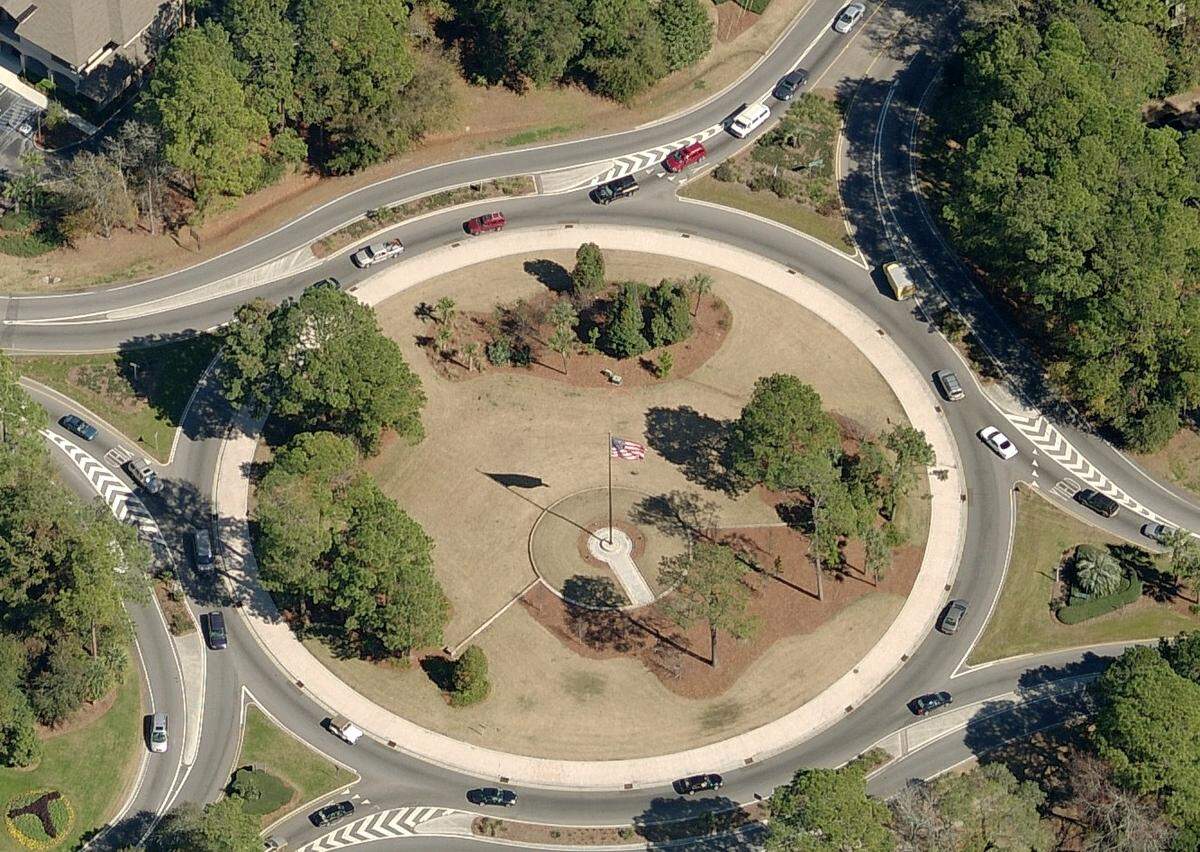
The South Carolina Department of Transportation is expected to take control of initial efforts to redesign Sea Pines Circle, a major traffic circle on Hilton Head Island that’s prone to backups and collisions.
Under a new agreement with the town, the state will take over the project until designs are roughly 30% complete. After that point, the SCDOT will come back to the town and present initial design drawings along with their estimated construction costs.
The agreement was reviewed by the town’s Finance and Administrative Committee at a May 11 meeting. It will still need to be approved by the full Town Council before taking effect.
The move comes after the town has poured more than a decade of research into the project of significant concern to Hilton Head residents and tourists. Engineers hired by the town previously proposed initial designs for the traffic circle in October 2024.
At the meeting, Ward 5 Council Member Steve Alfred said it would “make sense” for SCDOT to hire the same engineering firm and pick up where they left off. However, SCDOT could hire a different firm, according to the agreement.
Regardless, the agreement is far from handing over complete control to the state. Any designs will need town approval, and the current contract is only for the first 30% of design. The town will have the opportunity to decide how to finish and fund the project after the state presents its ideas.
“There will be no plans that the town doesn’t fully agree with,” Alfred said.
Sea Pines Circle is one of several junctions the town is hoping to address in the coming years. As the state moves forward on the U.S. 278 bridge replacement project, the town is looking to spend $122 million to improve sections of William Hilton Parkway just past the bridge touchpoint.
Why is Hilton Head proposing this?
Assistant Town Manager Shawn Gillen, who joined the town in December 2025, said at the meeting that SCDOT’s involvement in the project’s early stages would make the process more “efficient.”
Even if the town consultants led design efforts, SCDOT would still need to approve the project, Gillen explained.
“Rather than having our team and our consultant do the design work [and] go to DOT for approvals, we would just hand it to them to take it to that 30% design,” Gillen said.
Gillen declined to be interviewed by The Packet, stating that the newspaper “may be better served” by reaching out to SCDOT.
When will new designs be ready?
A staff report attached to the agreement says SCDOT will solicit for an engineering consultant, who will begin work by fall 2026 and produce designs in spring 2027.
At the meeting, Alfred said that if the state goes with Kimley-Horn, that could speed up the process.
“It’s entirely possible that much of this could be done within a matter of a couple of months,” Alfred said.
How will the project be funded?
Under the new agreement, the town is providing SCDOT with $300,000 of its own funds for initial design and analysis up to that 30% threshold.
If the project runs over budget, SCDOT is required to notify the town and agree on any changes.

After initial design work is done, the town will still need to find funding to finish designs and construction.
Will the state work with the same firm?
Town officials are hopeful that the state will hire Kimley-Horn, the engineering firm that has been working with the town on the project for the past few years. Kimley-Horn previously studied the intersection and proposed short-term and long-term solutions for the traffic circle.
At an October 2024 workshop, the firm suggested replacing the large single-lane traffic circle with a smaller, multi-lane roundabout.
According to Jonathan Guy, an engineer with Kimley-Horn who worked on the project, modern roundabouts are more “efficient” and “safer.”
“You could essentially construct an improved circle within the diameter of the existing one, which would have saved cost and time,” Guy told The Packet.
The circle’s current large diameter and its unevenly spaced entry points makes it harder for drivers to see other vehicles traveling through, leading to more congestion, Guy said.
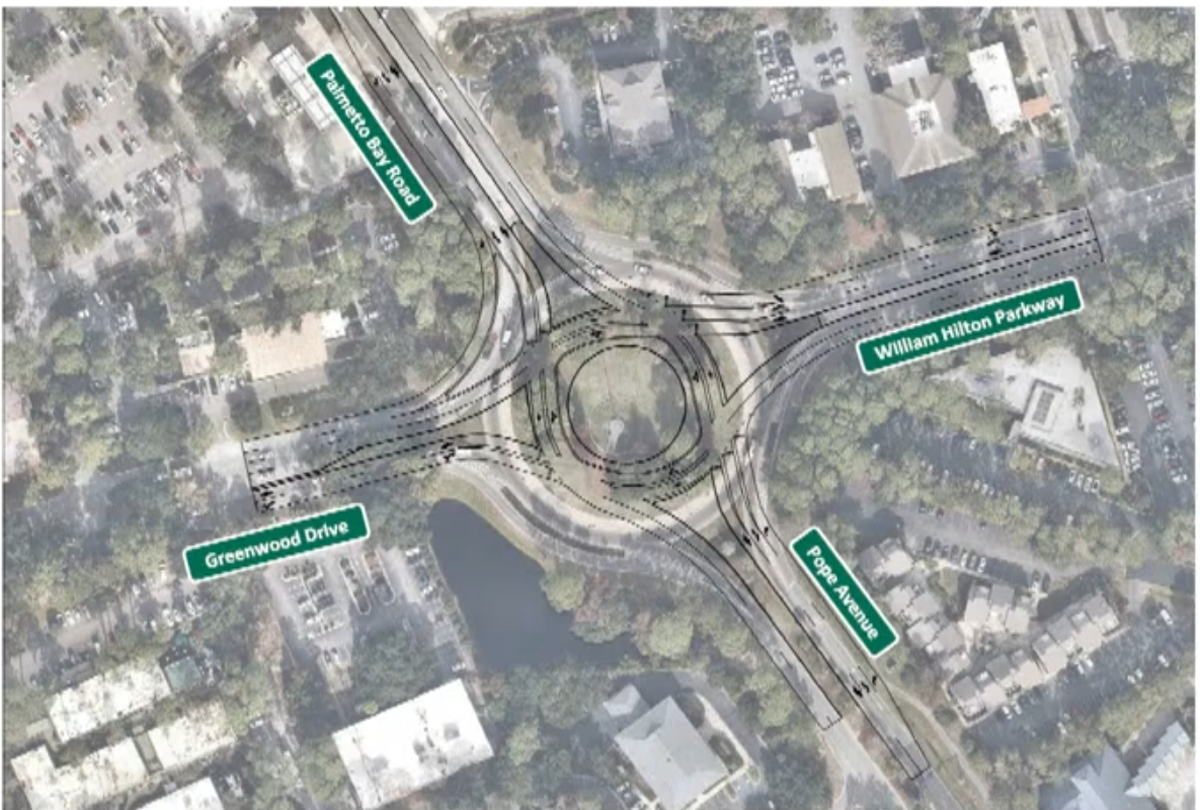
At the May 11 meeting, Council Member Alfred acknowledged the previous work done on the project.
He said the proposed circle “was considerably smaller than I would anticipate the town would be happy with,” and that the proposed design had a level of service rating much higher than any other roads on the island.
A road’s level of service rating, according to Guy, is like a “report card” that measures how efficiently and safely drivers can pass through.
Alfred said he’d asked the firm to come back with plans that made the circle “somewhat larger,” and shoot for a lower service rating. “That’s where the matter was left,” Alfred said.
Under the new agreement, SCDOT has the freedom to select its own engineering firm at its discretion. Guy told The Packet that he’s “not sure at this time” whether SCDOT will choose Kimley-Horn or a different firm.
“We would be more than happy to continue the work, given our extensive knowledge we’ve got on that, but we also respect the decision of the department if they choose to go in a different direction,” Guy said.
Kelly Moore, a spokesperson for SCDOT, told The Packet via email that the department will “request proposals from interested engineering firms.” The department “will review previous design proposals but will complete its own analysis as well,” Moore added.
This story was originally published May 19, 2026 at 11:59 AM.