Red flags fly on Hilton Head beaches for high risk of ‘dangerous’ rip currents
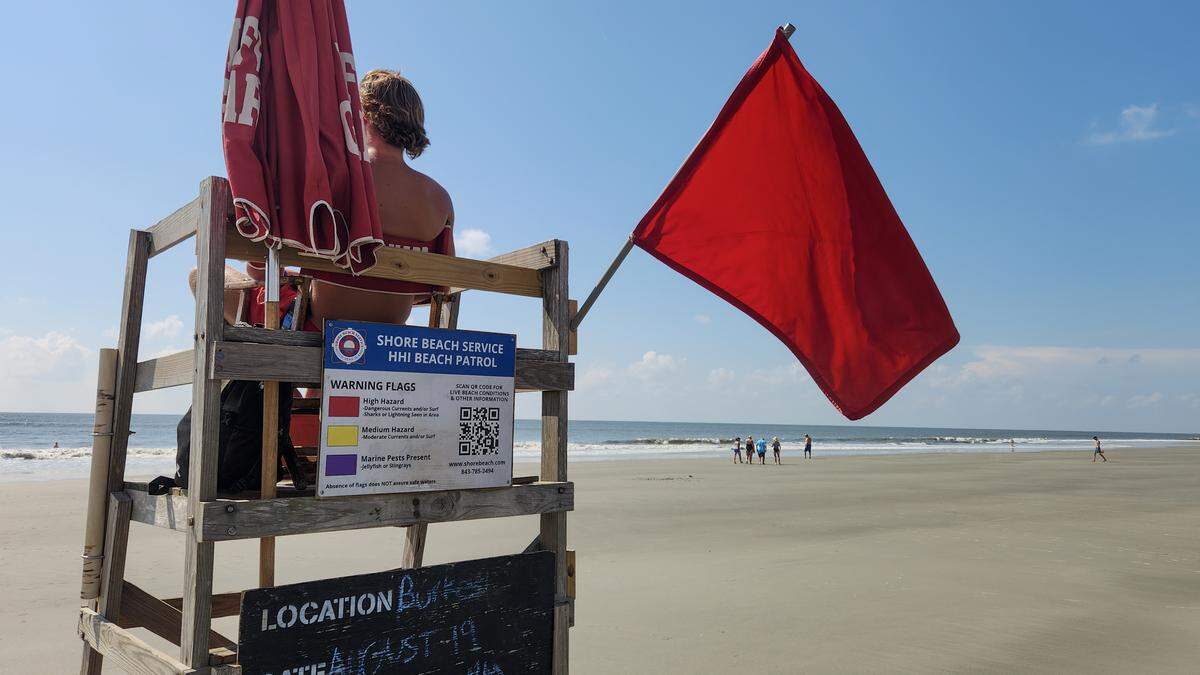
Hilton Head Island’s beach patrol is flying red flags on Tuesday after meteorologists warned of a high risk of strong waves and rip currents.
Red flags indicate dangerously strong currents and other hazardous conditions. Lifeguards with Shore Beach Service recommended beachgoers stay out of the water during the warning, especially inexperienced swimmers.
Beaufort County and nearby coastal areas are under a high risk advisory for “dangerous” rip currents, which was issued shortly after 7 a.m. Tuesday and is scheduled to end Wednesday evening, according to the National Weather Service’s Charleston office.
The same region will be under a high surf advisory from 8 a.m. Wednesday to 8 p.m. Thursday. Swimmers should expect “large breaking waves” of 5 to 7 feet, the NWS says.
As of 2:30 p.m. Tuesday, waves at Hilton Head beaches reached an average of 3.2 feet high, according to live data from safebeachday.com.
What are rip currents?
Rip currents are narrow, fast-moving channels of water that flow away from the shore, through the surf zone and beyond the line of breaking waves.
Contrary to popular belief, rip currents don’t pull people underwater. Instead, they drag swimmers away from the shore, which can lead to exhaustion and an elevated risk of drowning.
They typically form at breaks in sandbars and near structures like jetties or piers. The currents can reach speeds up to 8 feet per second — faster than an Olympic swimmer — and they vary in size and duration.
The Lowcountry’s unique coastal structure, particularly its barrier islands, makes these areas prime spots for rip current activity, particularly during and after storms.
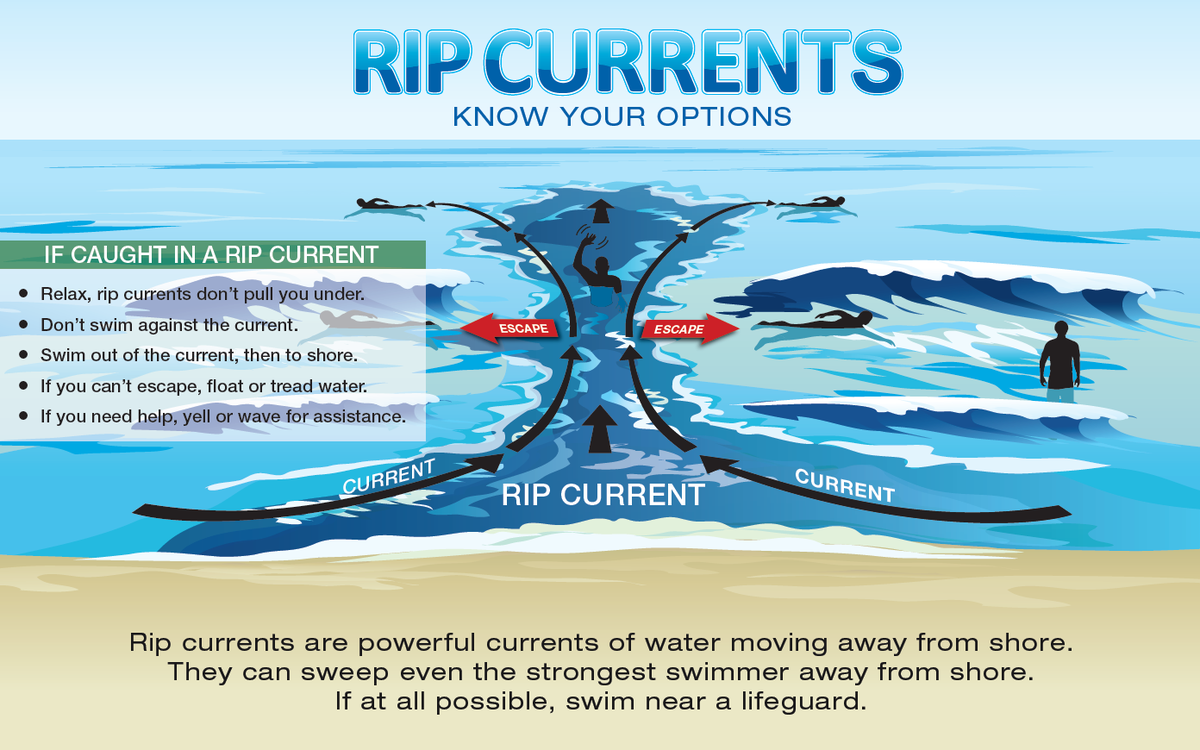
If you find yourself stuck in a rip current, here’s what the NWS recommends:
- Don’t panic. Keep calm to conserve energy.
- Relax and float. The current won’t pull you under, just away from the shore.
- Don’t swim against the current; you’ll exhaust yourself.
- Swim parallel to the shore. This gets you out of the narrow current.
- If you can’t escape, face the shore and call or wave for help. Use the international distress signal: raise both arms and wave them in an “X” repeatedly.
Experts also recommend always swimming near a lifeguard, never swimming alone or while intoxicated and never letting children swim unattended.
This story was originally published April 7, 2026 at 12:20 PM.