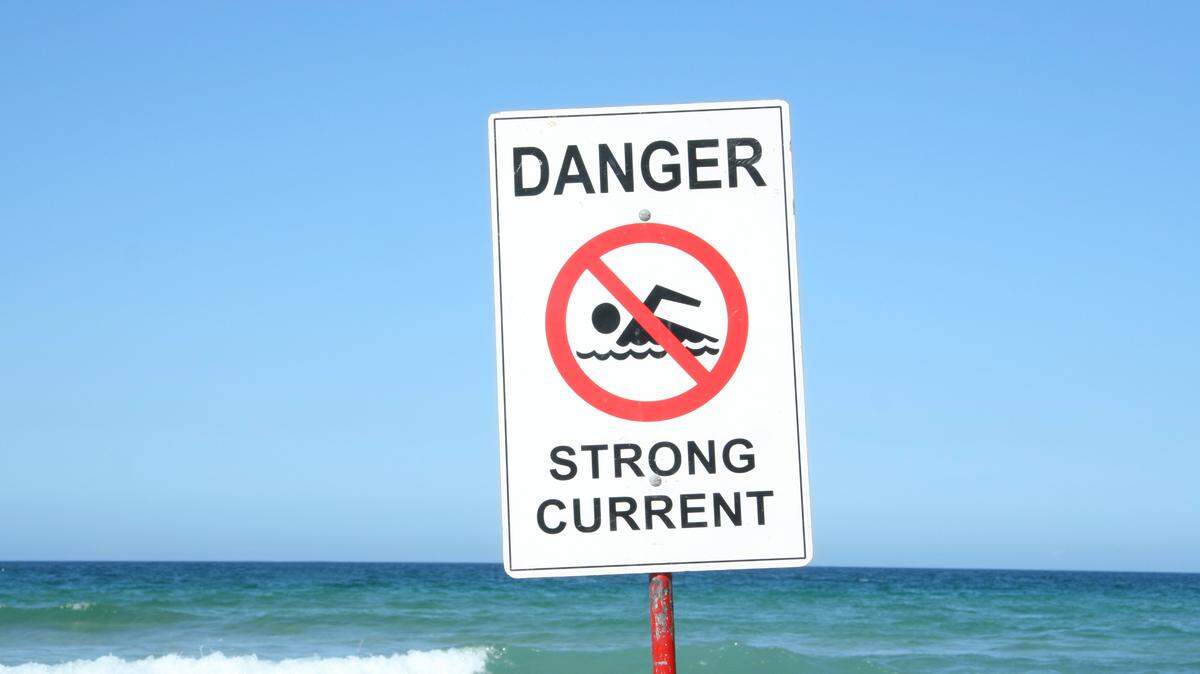
Warning Sign “Danger Strong Current” at the beach.
Getty Images/iStockphoto
The Lowcountry’s coastlines are known for their natural beauty, beaches and family-friendly atmosphere. But beneath the scenic waves, one of the ocean’s most dangerous hazards can quickly turn a beach day into a life-threatening situation: rip currents.
Rip current awareness and safety are especially important in coastal regions like the Lowcountry, where weather and geography make them an unfortunately frequent threat.
According to the National Weather Service, rip currents are the number one weather-related killer in the coastal Carolinas. In Beaufort County alone, three drowning incidents occurred over the last week, with one directly caused by rip currents.
The United States Lifesaving Association estimates rip currents are responsible for about 100 drownings each year in the United States and are the reason for over 80% of lifeguard rescues.
Here’s everything to know about rip currents and how to stay safe, no matter if you’re a seasoned swimmer or a first-time beach visitor.
What are rip currents?
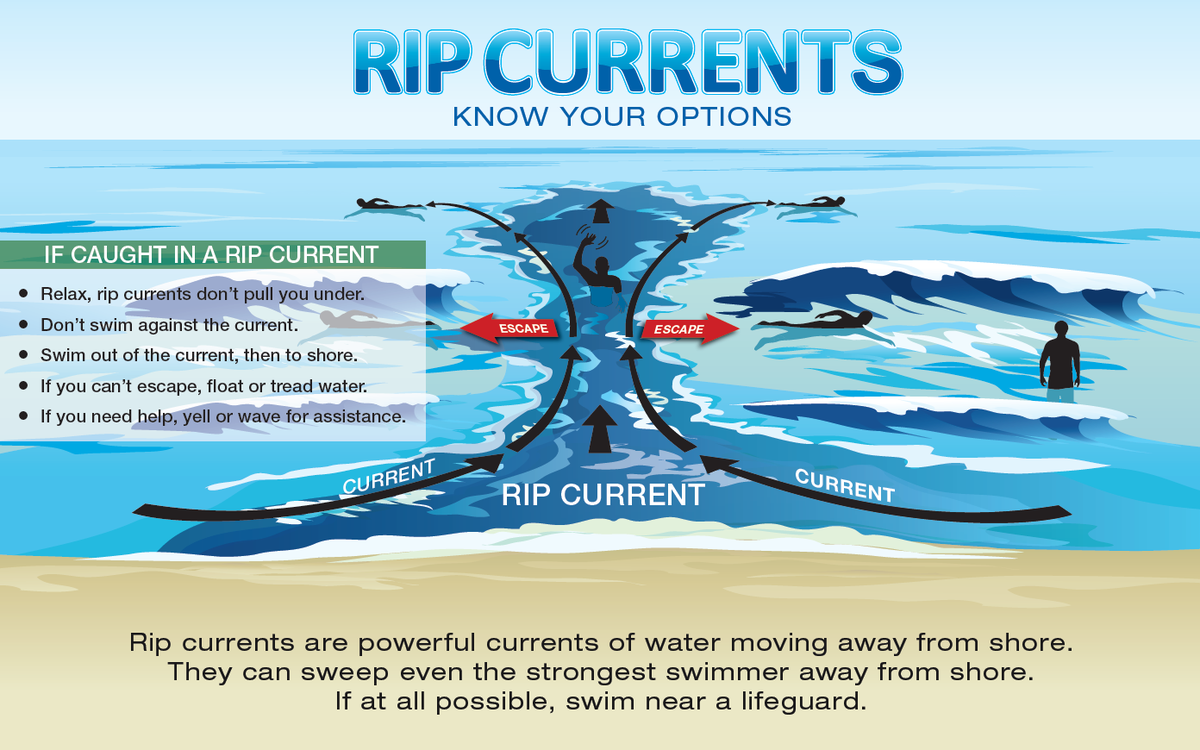
Rip currents are narrow, fast-moving channels of water that flow away from the shore, through the surf zone and beyond the line of breaking waves.
Contrary to popular belief, they don’t pull swimmers under the water, but rather, they pull them away from the shore.
They typically form at breaks in sandbars and near structures like jetties or piers. The currents can reach speeds up to 8 feet per second, faster than an Olympic swimmer and vary in both size and duration.
The Lowcountry’s unique coastal structure, particularly on barrier islands, makes these areas prime spots for rip current activity, particularly during and after storms.
When under certain conditions, the currents reach dangerous speeds and pose a threat to swimmers if they’re pulled offshore and unable to keep themselves afloat.
Even though stormy weather can heighten the risk, sometimes the worst rip current events occur with the best weather.
How do they form?
Rip currents form when waves break near the shoreline, piling up water between the breaking waves and the beach.
One of the ways this water returns to sea is to form a rip current, a narrow stream of water moving swiftly away from shore, often perpendicular to the shoreline.
Rip currents The National Weather Service
The most favorable formation for rip currents is when the incoming wave direction is perpendicular to the shore and when there are larger wave heights and periods. Even with these more prime conditions, rip currents can still form in the surf of only 1 to 2 feet.
Rip currents are most common within a few hours of low tide, but can still form during all hours of the day.
How to spot a rip current
Rip currents can be difficult to see from the beach. However, there are some visual clues according to the NWS:
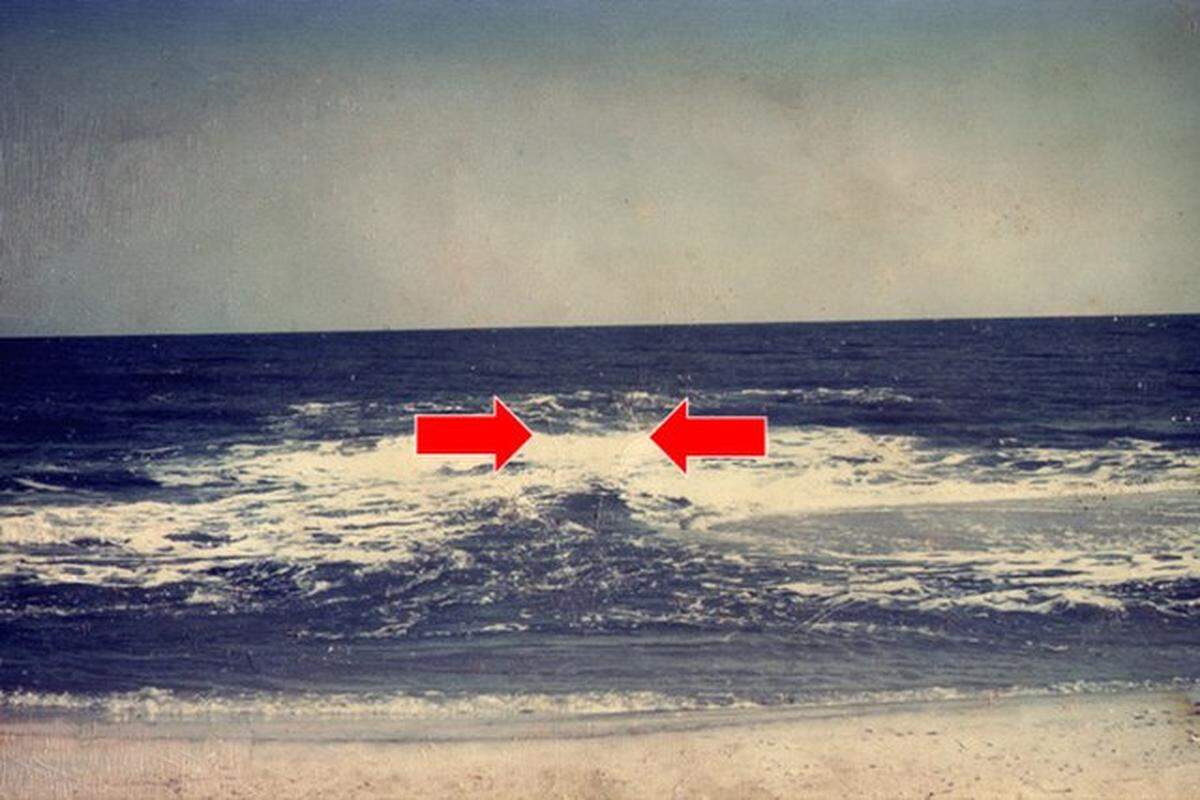
A gap in breaking waves or a stretch of calmer, darker water between whitewater.
A channel of churning or choppy water.
A noticeable difference in watercolor.
Lines of foam, seaweed or debris are moving steadily out to sea.
Some types of rips appear as narrow sections of turbulent whitewater heading away from the beach.
Rip currents are easiest to spot from an elevated position like a dune, pier or lifeguard stand. Since water conditions also change frequently, it’s recommended to watch the water for several minutes as ocean conditions and characteristics vary.
If unsure, always ask a lifeguard about current beach conditions.
Rip currents are channeled currents of water flowing away from shore. Wikimedia Commons
What to do if caught in a rip current
Before taking a dip into the ocean, always ensure to check water conditions and weather conditions and pay attention to any flags.
Red beach flags indicate dangerous surf or hazardous conditions.
If you find yourself stuck in a rip current, here’s what the NWS recommends:
Don’t panic. Keep calm to conserve energy.
Relax and float. The current won’t pull you under, just away from shore.
Don’t swim against the current. You’ll exhaust yourself.
Swim parallel to the shore. This gets you out of the narrow current.
If you can’t escape, face the shore and call or wave for help. Use the international distress signal: raise both arms and wave them in an “X” repeatedly.
Other tips to remember when swimming in the ocean include:
Always swim near a lifeguard.
Do not overestimate your swimming abilities.
Do not enter the water if you cannot swim.
Never swim alone; always use the buddy system.
Never swim while intoxicated.
Never let children swim alone or unattended.
If you experience or notice dangerous conditions, report it to a lifeguard or rental attendant.
Channelized Rips: This is the most common kind of rip current. These are persistent and often form between sandbars.
Boundary Rips: Form near solid structures like piers and jetties.
Flash Rips: Sudden and short-lived. Highly unpredictable and dangerous.
Rip current vs Undertows
Rip currents and undertows are different phenomena.
An undertow is an offshore movement of water located close to the sea floor that moves water out from the shoreline. These types of currents are often found in areas with very steep beaches.
While they have similar effects, they don’t often rise to the same level of severity as rip currents.