The fight to preserve Gullah culture on Daufuskie Island: Meet Yolanda Bryant
On Daufuskie Island, a sea island steeped in history just across the Calibogue Sound from Hilton Head, time seems to stand still. Yet, the deep-rooted Gullah culture is dwindling and living with the worry of being forgotten by the world.
With only an estimated dozen or so Gullah residents still living on the island, the growing pressure from environmental erosion and cultural displacement presents the urgency to preserve Daufuskie’s legacy.
That’s why Dr. Yolanda Bryant, a fourth-generation Gullah descendant with deep family ties to the island, is determined to protect and uplift what remains.
“We can’t afford to forget the people,” Bryant said. “The land, the waterways — those are our cultural lifelines. If we lose those, we lose everything.”
Roots that run deep
Bryant grew up in Dorchester County, but her heart was always anchored in Daufuskie. Her father, the late Rev. Andrew Lee Bryant, made sure of that.
From early childhood, Bryant and her siblings were regularly taken across the Calibogue Sound to visit their ancestral home and the relatives who still lived there. The language they heard at home, once misunderstood as “broken English,” was Gullah, and it was sacred.
“My father spoke Gullah in the house,” Bryant said. “As an adult, I came to understand its beauty, resilience and historical importance.”
That sacredness of language carries through a lifetime.
Bryant recalls when her aunt was sick in a nursing home, that she was not invited in to visit until speaking in Gullah. It was only then that her aunt would respond, “You are my family. Have a seat.”
A legacy rediscovered
Bryant’s personal connection to Gullah history took on even deeper meaning through research into her own genealogy and lineage, the Bryans of Daufuskie.
As a natural history buff, Bryant remembers searching through local archives, where she uncovered her ancestor, Paul Bryan, who had likely lived in Mitchelville (the nation’s first self-governed town of freed people during the Civil War) before settling on Daufuskie Island, where he is buried today.
“It gave me chills,” she said. “Discovering that connection changed everything for me. It shows how deep and extensive Gullah culture reaches.”
With that realization came responsibility.
In 2020, she founded the Gullah Roots Historical Foundation to preserve, protect and promote Gullah culture in often-forgotten spaces of the Lowcountry.
To do so, one of the main efforts of the foundation is to educate through living history: honoring historical figures while they are still alive to share their stories firsthand.
“We tie our events to the younger generation because our culture won’t survive unless they’re part of it,” Bryant said.
GullahFEST: A first for Daufuskie’s Gullah heritage
Despite Daufuskie Island’s historical and cultural importance in the Gullah Geechee Corridor, it had never had its own dedicated festival, something Bryant felt compelled to change.
After years of planning and setbacks, the end result provided something serendipitous for Bryant and the local Gullah descendants.
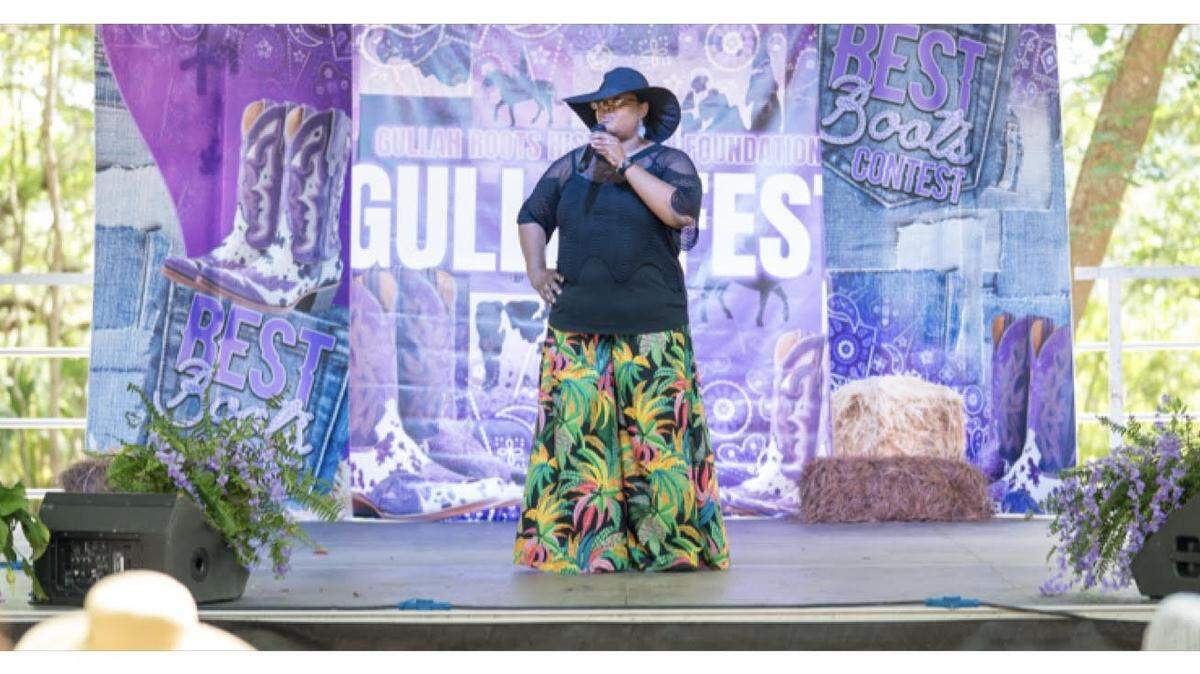
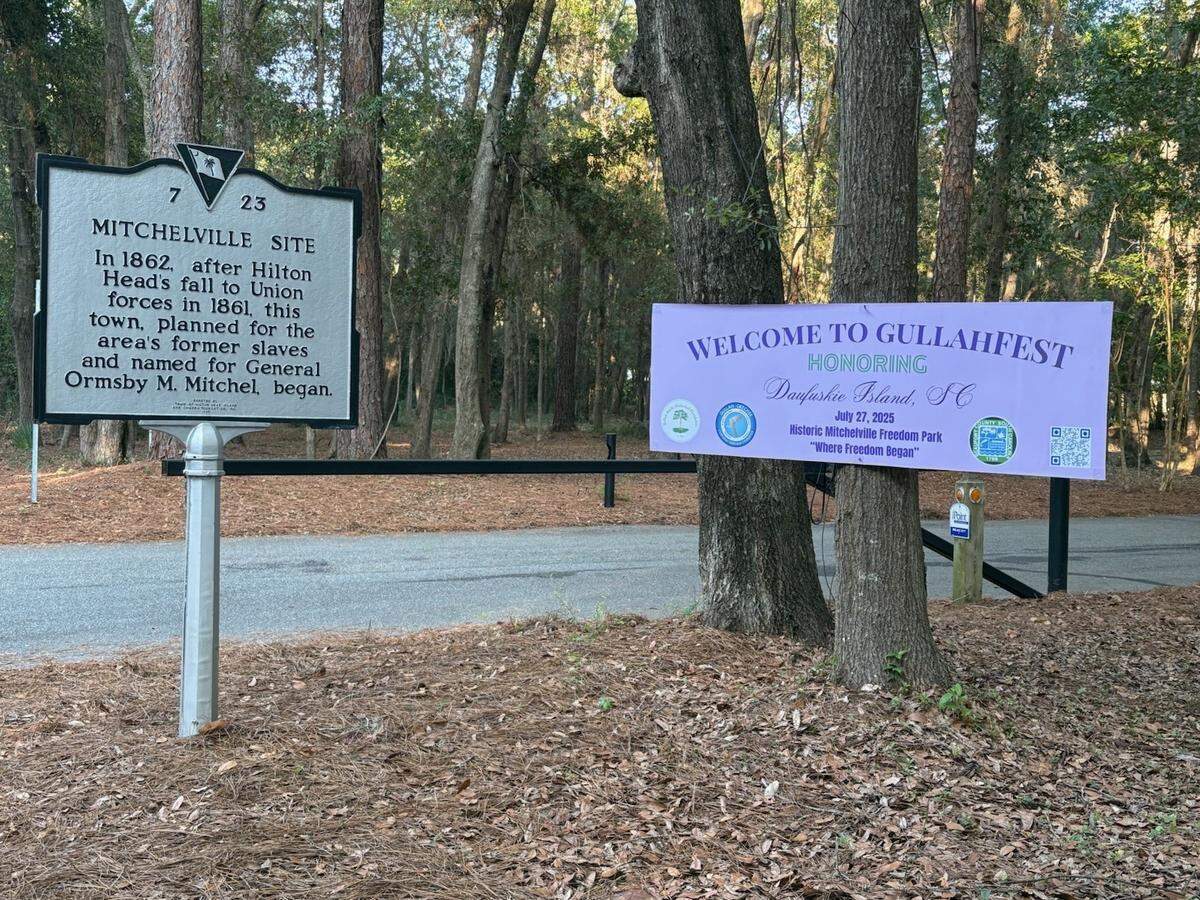
GullahFEST, held its inaugural celebration on July 27, at Hilton Head’s Historic Mitchelville Freedom Park in honor of the Gullah culture.
Though not physically on Daufuskie Island, the event was created entirely in its honor — and for its people.
“It wasn’t just about food and music,” Bryant said. “It was about saving something that should never be forgotten.”
Music, storytelling, basket-weaving demonstrations, horses, food trucks, face painting and even a school supply drive for Daufuskie Island Elementary and Middle Schools all took place at this inaugural event. Guests came from across the Southeast — and even as far as Ohio, Mississippi and California — to take part.
“It was about honoring our ancestors, reconnecting descendants and ensuring our culture has a future,” she said. “It felt like a family reunion.”
The importance of preserving culture in a changing world
Bryant, a board-certified family medicine physician now living in New Mexico, balances her medical practice with her role as executive director of Gullah Roots.
Even with the distance, she remains deeply involved in every detail of her foundation’s efforts, including coordinating logistics for the festival from across the country.
But more than anything, GullahFEST was a symbol, Bryant said. A declaration that Gullah culture, especially Daufuskie’s, deserves recognition, space and celebration.
Bryant has already set her sights on a return in 2027, but in the meantime, she finds that this event was a first bite at success for Gullah culture and preservation in the Lowcountry.
“Success is impact,” she said. “It’s how many lives you’ve touched. How many people feel seen, heard and valued because of what you did.”
To learn more about this organization and future events, visit www.gullahroots.org.