Saharan dust will collide with Canadian wildfire smoke in SC soon. Here are tips to stay healthy
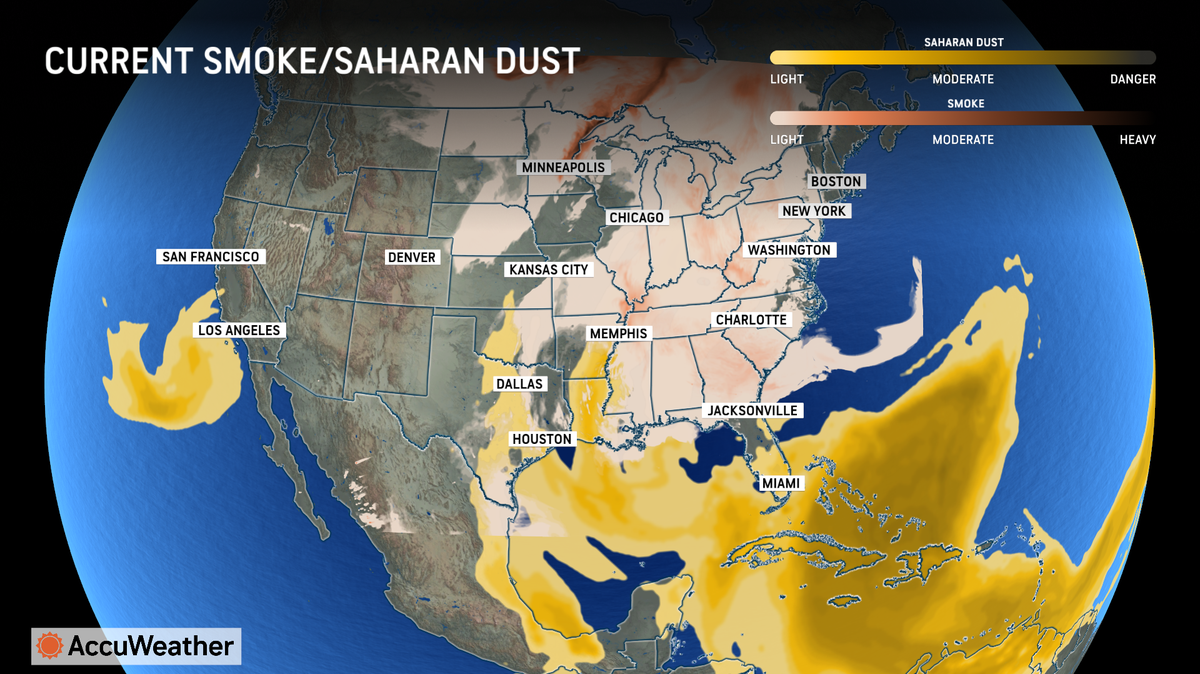
If you are noticing a smoky haze in the air this week, there’s a reason.
Smoke from Canadian wildfires and the Saharan dust storm are expected to bring hazy skies across South Carolina this week.
Folks can anticipate bright sunsets and some slight temperature changes, but the largest concern for some groups is the change in air quality due to the influx of particles in the air.
The U.S. Air Quality Index lists most areas of South Carolina as having “moderate” air quality as of Wednesday.
While this reading is generally acceptable, members of sensitive groups and those who are sensitive to air pollution are encouraged to consider reducing their activity or shortening their time outdoors.
With this week bringing some different sights in the sky, here’s how to stay safe when air quality changes.
Who are the vulnerable groups?
While the smoky haze in the sky may have a slight impact on many, these are the most vulnerable or at-risk groups according to the U.S. Air Quality Index.
People with lung disease
People with heart disease
Children and teenagers
Older adults, generally of the age of 65
Outdoor workers
Those who are pregnant
People sensitive to air pollution
In addition to these groups, the American College of Allergy, Asthma & Immunology states that dust particles can trigger symptoms similar to springtime allergies or cause respiratory irritation for people with conditions like asthma or emphysema.
The U.S. Air Quality Index states that most healthy adults and children will experience relatively minor effects, such as respiratory irritation, and often recover quickly.
No matter if you are in a vulnerable group or not, making sure the air you breathe is clean is always important.
Here are a few ways to stay healthy if you’re worried about this week’s smoke and haze:
Masks
If you are concerned about how the combination of smoke and dust can impact your breathing, respirator masks are one of the best ways to protect yourself, according to the U.S. Environmental Protection Agency.
Respirator masks are often sold at many hardware and home repair stores and pharmacies.
Some of the top recommended masks from the EPA are masks that have been tested and approved by the National Institute of Occupational Safety and Health.
It will have the words “NIOSH” and either “N95” or “P100” printed on it. Some of these kinds of masks include:
A good rule of thumb is to opt for masks with a double strap.
Surgical masks, cloth masks and masks with one strap are not effective for protecting your breathing from smoke and other particles, according to the National Institutes of Health.
Eye safety
If the air quality is significantly impacted, some may want to use added protection for their eyes.
The American Optometric Association recommends taking these steps and precautions for your vision health in the case of poor air quality:
Wear wraparound sunglasses or eye protection when outdoors to protect your eyes from exposure.
Avoid rubbing your eyes as it may cause more irritation and burning sensations.
Practice good eye hygiene: Wash your hands and use a clean cloth.
Using eye drops regularly aids in maintaining the health of one’s eyes. Consult with your doctor to determine which drops are best for you.
Other options your doctor may suggest include ointments, artificial tears, cold compresses and gently cleaning your eyelids.
Smoke and fine particulate matter can become trapped beneath a contact lens, so be sure to use proper contact lens hygiene.
Discontinue wearing your contact lenses if you have any eye irritation, pain or discomfort.
What else can I do?
Other practical tips from the South Carolina Department of Environmental Services that may help South Carolina residents when poorer air quality is a concern include:
Keep windows and doors closed.
If running an air conditioner, keep the fresh-air intake closed and the filter clean to prevent outdoor smoke from getting inside.
As the dust and smoke move into South Carolina this week, folks can track the air quality in their area through the U.S. Air Quality Index.