She’s about to turn 110. He’s going to be 103. How did these Port Royal residents do it?

Eutelle Nix’s hearing isn’t what it used to be, but there’s nothing wrong with her voice.
“They say I’ll be 110,” Nix says in a clear, smooth Georgia accent, when asked how old she is.
Miss Nix, as she’s known, will celebrate her 110th birthday on Friday.
But Nix is not the only centenarian at Port Royal’s Helena Place Senior Living, and she’s not the only one with a birthday coming up.
On Tuesday, Bill Stultz, another Helena Place resident, turns 103.
“Everybody loves both of them,” says Alan Kaplan, Helena Place’s executive director.
Centenarians, or people 100 or older, are rare, with about 90,000 in the United States, according to the U.S. Census Bureau.
Port Royal has two living under the same roof, and both Nix and Stultz continue to participate in activities at the facility for seniors. “It’s not,” says Kaplan, “like they stay in their rooms all the time.”
Nix is in especially rare company. She’s a supercentenarian. That’s a person who is at least 110 — they occur about 1 per 5 million, according to a centenarian study by Boston University School of Medicine, which says 90 percent of the supercentenarians are women.
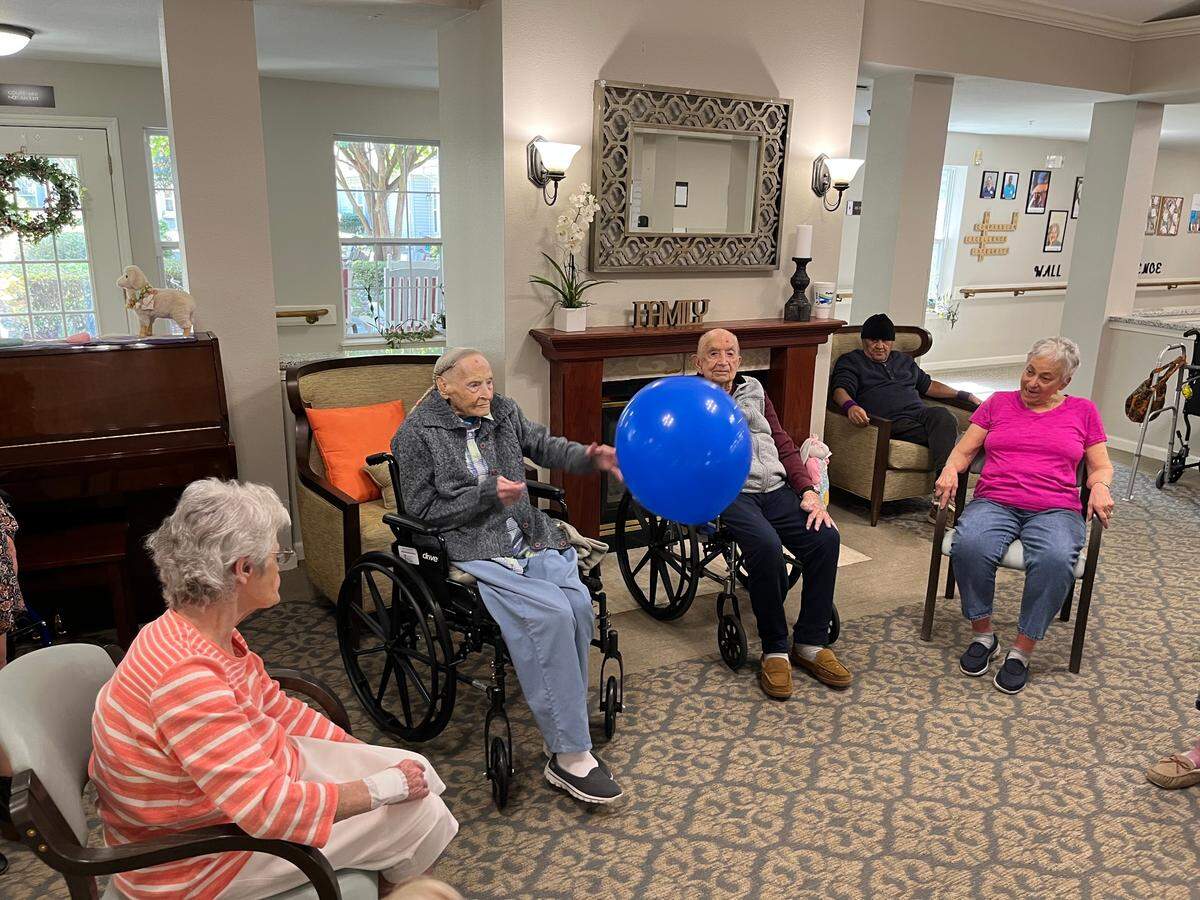
Miss Nix, Kaplan says, is the oldest person at 11 Enlivant facilities in South Carolina. Envlivant is the parent company of Helena Place.
Nix says she doesn’t know why she is among the less than 1 percent of the nation’s residents who live past 100.
“You just live,” says Nix, who has lived through two global pandemics and two world wars. “That’s all.”
Nix says she grew up on a farm in Jackson County, Georgia, where her family grew cotton, corn and peanuts. She married and had three children of her own. Some of her siblings, she says, have lived long lives, too.
The Boston University study said longevity does run in families, but also noted that centenarians don’t tend to have a history with smoking and obesity, and they handle stress well.
Up until she was 100 years old, her family says, Nix was still living at home and bush-hogging her yard.
“She’s fiery,” says Natalie Edens, life enrichment coordinator at Helena Place, “and cute as a button.”
Naturally, Nix and Stultz are slowing down. Stultz doesn’t see as well anymore. Nix’s hearing in one ear is gone.
‘’It fell out I reckon,” Nix says with a smile.
But one day earlier this week, both Stultz — Mr. Bill — and Nix, seated in wheelchairs, were participating in morning exercises that included batting a plastic ball in the air and stretching routines with younger residents in their 80s and 90s. In fact, Stultz was leading the exercises, calling out the routines and movements by memory — speaking just before the program’s narrator — as the music rotated between toe-tapping beats to slower arrangements.
“Sway to the side,” says Stultz, his arms raised, as he moved his upper body from side-to-side. “Back and forth. Feel the pull.”
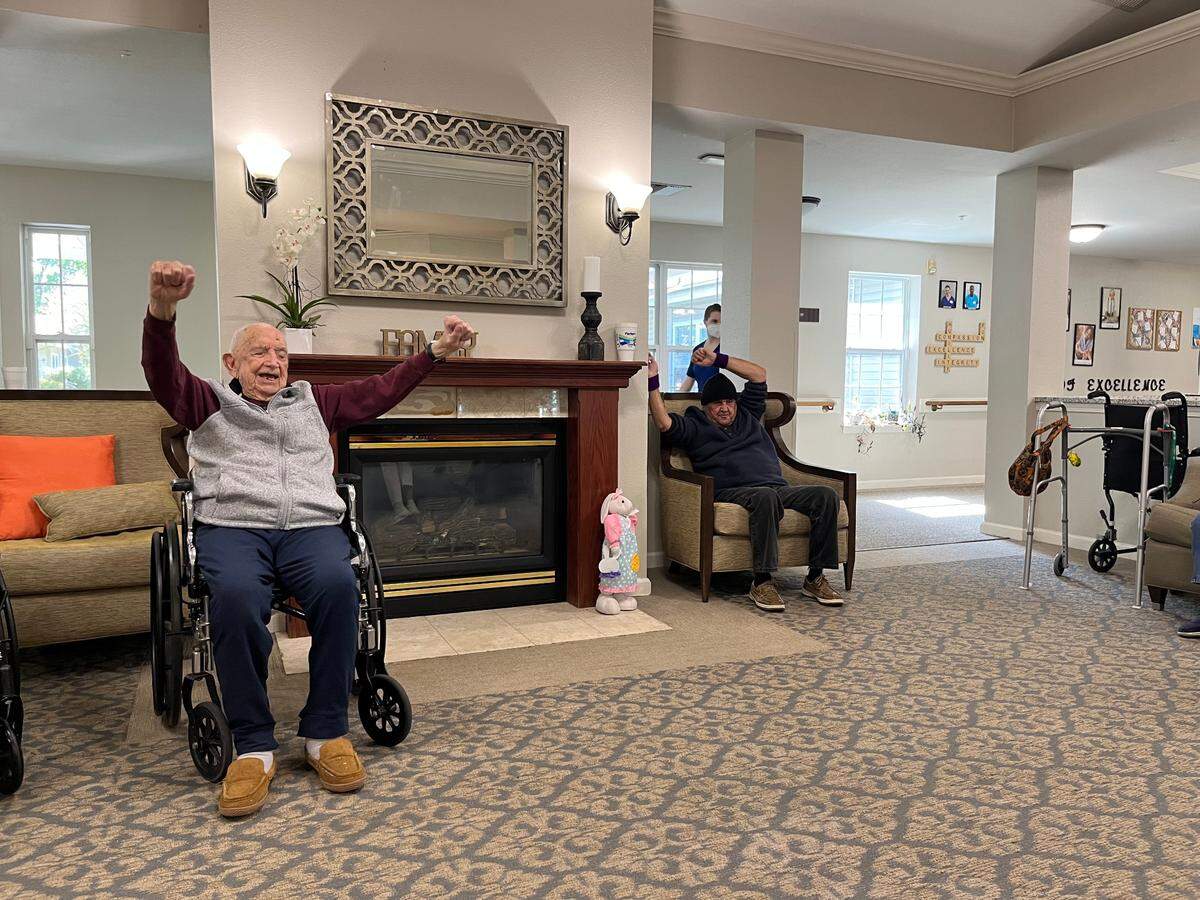
Stultz, whose wife, Virginia, was 88 when she died, is from Trenton, New Jersey, where he was running back on the football team and point guard in basketball at a Catholic high school. He served in the U.S. Air Corps during World War II.
He was an insurance investigator and spent many years living in Pennsylvania.
“I never planned it and never did anything to prolong it,” he says of living as long as he has. “I just let it go by, day-by-day.”
His father, he said, died at 79; his mother was 98.
These days, Stultz says, he can’t remember or move around as well as he used to, “and things begin to break.
“But that’s alright,” Stultz adds, “you keep living.”
Nix was walking on her own up until a year ago, Edens says.
“They’re going to give me a birthday party,” Miss Nix says. “You’ll get to eat some ice cream, I guess.”