How would new 1% sales tax impact Hilton Head? Here’s a look at the numbers
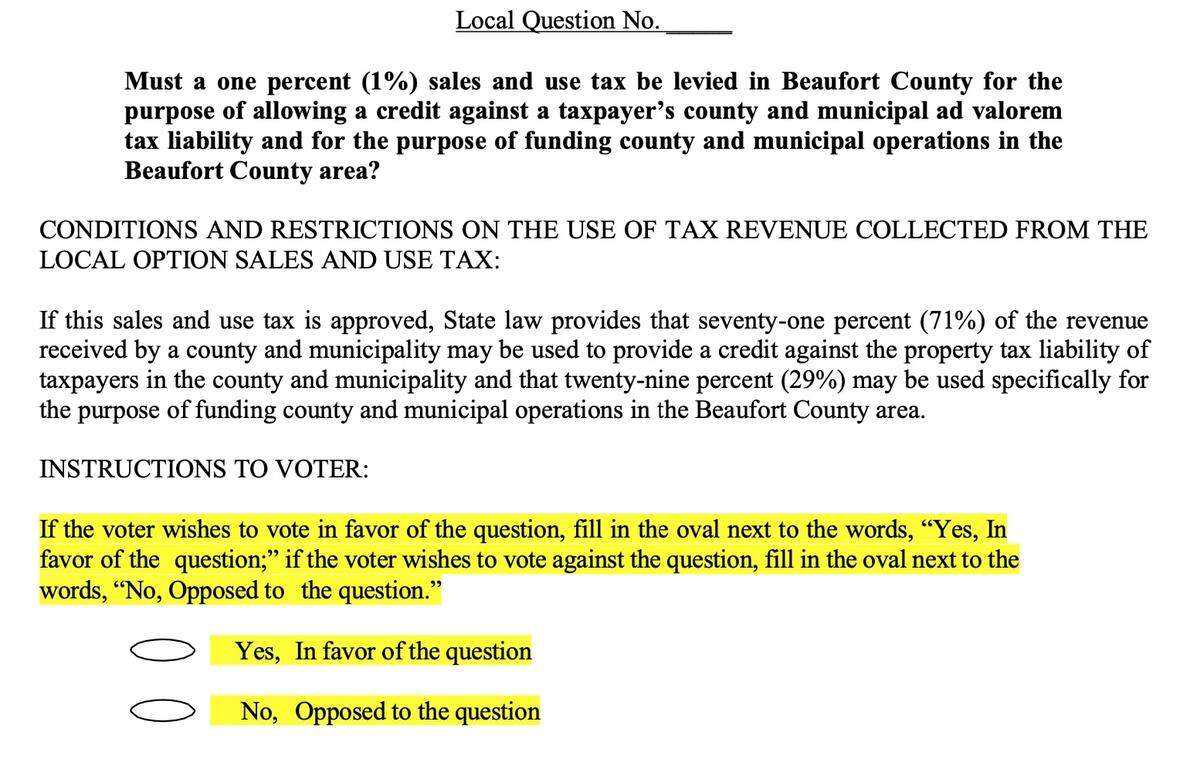
A newly proposed 1% local-option sales tax on taxable purchases in Beaufort County will be on the ballot this year.
The issue will go before voters Nov. 2, meaning the county will hold an off-election year referendum on whether to implement the tax.
Supporters have argued that the local-option sales tax, or LOST, would shift some of the county’s tax burden from property owners to tourists. Millions of dollars in collections would be used for local property tax relief.
But how would the LOST, if approved, affect Hilton Head Island?
The island’s Town Council was briefed on the referendum during a Monday meeting. John Troyer, the town’s finance director, presented estimates on how the countywide tax would work.
The LOST, Troyer said, would be a 1% tax on the gross proceeds of sales within the county. Unlike the penny sales tax that voters approved in 2018, the LOST would have no set end date.
The S.C. Department of Revenue, which would collect the tax on behalf of Beaufort County, has estimated that annual LOST collections in the county would total about $48.5 million, Troyer said.
Of that $48.5 million, the state would take 5%, or about $2.4 million, as part of a “Robin Hood” provision, allocating that money to jurisdictions elsewhere in South Carolina, Troyer said.
So, annually, an estimated $46.1 million in LOST collections would be split up among Beaufort County governments, Troyer said.
State law would require that 71% of that $46.1 million, or roughly $32.7 million, be used for property tax relief.
That would help offset both county and town property taxes each year on Hilton Head, Troyer said.
Based on a state formula, and accounting for Hilton Head’s $19.6 billion in appraised property values, the island would receive an estimated $9 million in annual relief for county property taxes.
On top of that, Hilton Head would get roughly $5.4 million in annual relief for town property taxes, said Troyer, who cited state estimates.
What would that mean for individual property owners on Hilton Head?
Consider, for example, a resident who owns a primary home that’s appraised at $350,000. That resident, Troyer said, currently pays a total of $1,292.20 in county and town property taxes.
If the LOST is approved, Troyer said that resident would get an estimated, total tax credit of $533.27, meaning the property owner would pay only $758.93 in county and town property taxes.
A property owner with a primary home that’s appraised at $471,000, meanwhile, would get an estimated, total tax credit of $717.63. That resident’s annual town and county property taxes would drop from $1,738.93 to $1,021.30, Troyer said.
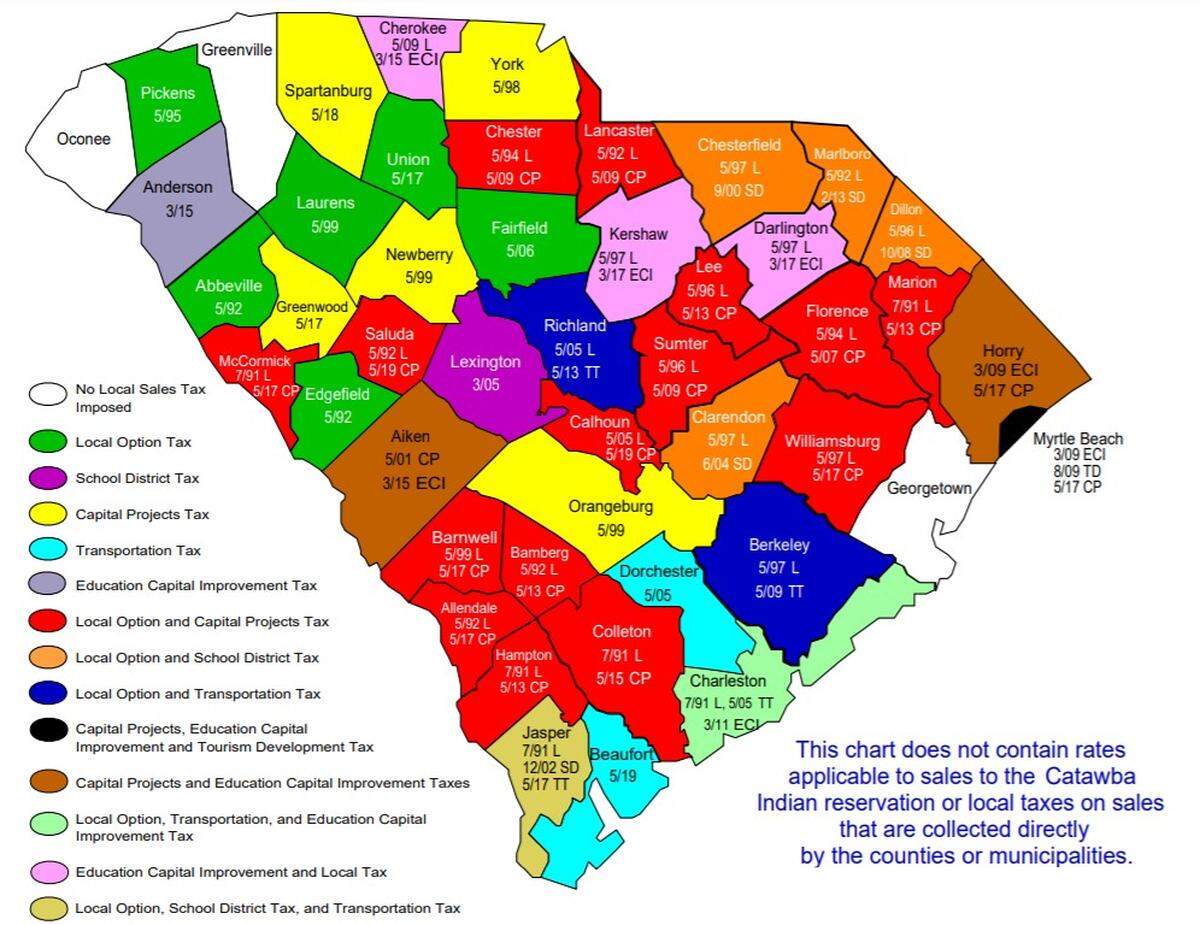
The majority of counties in the state have already implemented a LOST, Troyer added.
The S.C. Department of Revenue classifies a LOST as “a general sales and use tax on all sales at retail (with a few exceptions) taxable under the state sales and use tax.”
Critics of Beaufort County’s proposed LOST have argued that it’s a regressive tax that favors high-income property owners and landlords over renters and low-income residents, according to previous reporting from The Island Packet and Beaufort Gazette.
The tax, if approved, would go into effect on July 1, 2022, records show.
What about the other money?
State law would dictate that 71% of the estimated $46.1 million in available, annual LOST collections go toward local property tax relief in Beaufort County.
But what about the remaining 29% of collections?
Municipalities could use that money as a source of revenue to fund operations or various projects, Troyer said.
Hilton Head would receive an estimated $3.6 million through the LOST that would not have to be used for property tax relief on an annual basis, he said.
The island’s Town Council would get to decide what to do with that money.
Town staff members proposed that, if the tax is approved by voters, the town should use 100% of its LOST revenue for property tax relief during the first four years after the tax is adopted.
Council members, though, on Monday expressed misgivings about that idea.
David Ames, the Ward 3 representative, said he does not support the four-year “sweetener” proposal.
“That just doesn’t feel right to me,” Ames said.
And Glenn Stanford, of Ward 6, said that he’s “always looking for alternative revenue sources for the town.”
“A critical need for us now, obviously, is ‘What are we going to do about workforce housing?’” Stanford said. “It seems to me that we should not tie down the remaining 29% to property tax relief.”
The Town Council on Monday ultimately decided to revisit the issue during an Oct. 5 meeting.
Elected officials said they want to hear more from residents before taking an official position on the referendum.
How does Hilton Head compare to other towns?
About $18 million, or roughly 38% of the county’s estimated, annual LOST collections, would come from Hilton Head, Troyer said. That’s the highest percentage of collections among the county’s municipalities.
Property owners with homes appraised at $350,000 on Hilton Head, though, would receive a lower total tax credit via LOST than their counterparts in all other local jurisdictions except unincorporated Beaufort County, Troyer said.
That’s because Hilton Head’s $19.6 billion in appraised property values (which factor into the tax credit calculations) are higher than the appraised property values in unincorporated Beaufort County and the other municipalities.