2020 Census: Port Royal grows larger than Beaufort. What’s happened in the last 10 years?
Port Royal markets itself as cool, coastal and far from ordinary. It’s now the population king of northern Beaufort County, too, supplanting its neighbor, Beaufort, based on the recently released 2020 U.S. Census figures.
The town and city have a history of working together because of their proximity to one another, and are often grouped as one, especially by people who don’t live north of the Broad River.
Both municipalities are grappling with providing affordable housing, preserving the history of their area while balancing growth, and working to maintain the pristine Lowcountry environment. They share some services, including a fire department.
But there are also differences. They have separate elected councils and police departments.
The 2020 Census results show both are growing, whether the area is ready for it or not.
Port Royal population increased 33.2% in the past 10 years, jumping from 10,678 residents in 2010 to 14,220 in 2020, while Beaufort grew 10.1%, from 13,170 to 13,607.
While Port Royal’s population has steadily increased in the past couple of decades, with a 5.42% population hike between 2000 and 2010, Beaufort has wavered, losing 6.14% of its population between 2000 and 2010 but regaining those numbers and then some.
‘More recognition’ for Port Royal
Port Royal’s town manager, Van Willis, said the population growth indicates people are beginning to recognize that Port Royal offers an exceptional lifestyle and landscape.
“We just have a different speed that more people are coming to appreciate,” Willis said Friday.
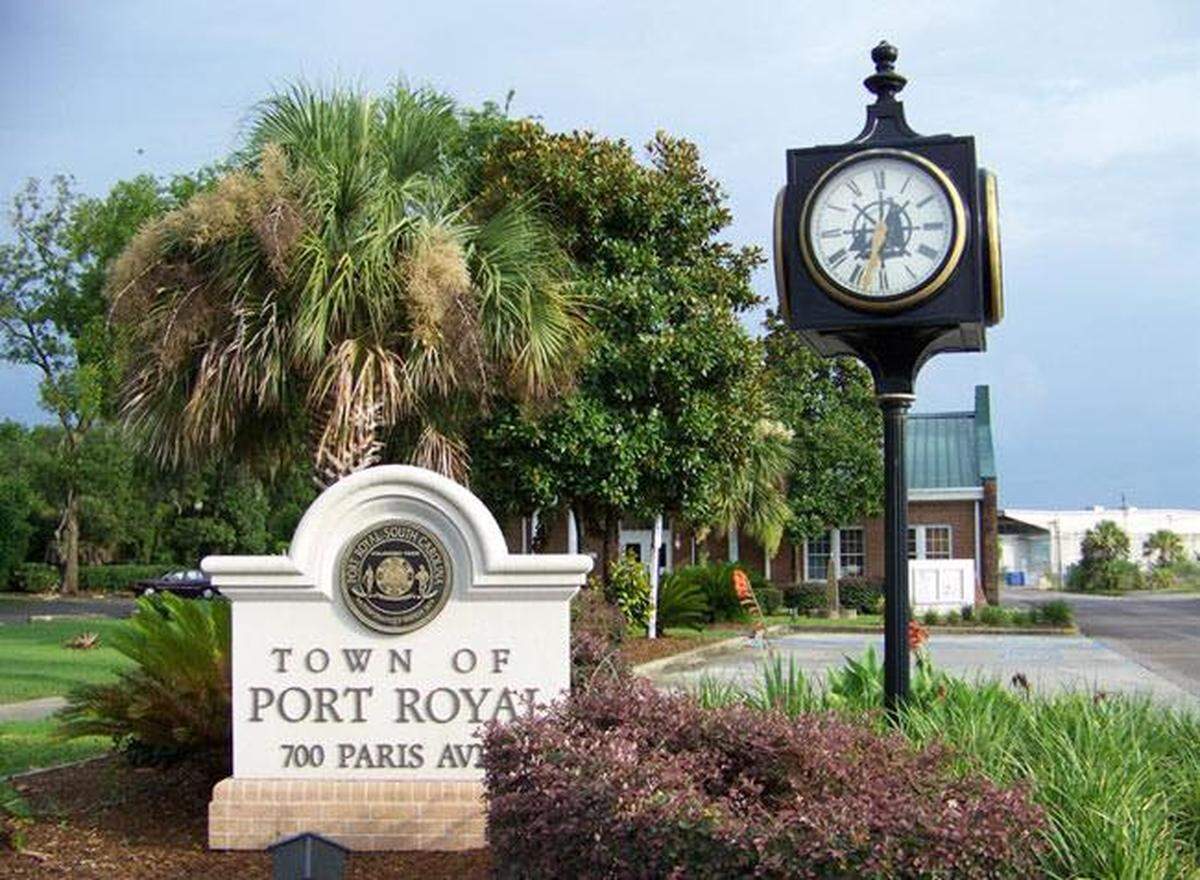
It is difficult to quantify whether the town’s marketing is drawing more residents, Willis says, but the slogan accurately reflects the town. “I think we have an authenticity people like,” said Willis, adding that neighboring Beaufort can say the same.
But the growth is significant to the town Port Royal, Willis said. That’s because Port Royal and Beaufort are routinely lumped together, with people incorrectly identifying locations as being in Beaufort when actually they are in Port Royal.
“We love our sister city next door, but we certainly would appreciate more recognition of the town as a stand-alone municipality,” Willis said.
Willis said he anticipated the town would likely outpace Beaufort in population, based on the growing number of multi-family and single-family homes in the past 10 years. One example: The booming number of apartment complexes and homes in the Shadow Moss and Shell Point Farms area off S.C. 170.
Residential growth is not slowing down, but Port Royal continues to lag behind Beaufort in commercial development. Town officials would like to see that change. Willis noted that Beaufort takes in about $8 million in sales tax revenue yearly compared to $1 million for Port Royal.
Across all races, the population in Port Royal grew, and that did not surprise Willis, who said the town has traditionally had a diverse population.
Beaufort manager questions numbers
Beaufort City Manager Bill Prokop said Port Royal’s robust growth makes sense because of the number of apartments being constructed, but he suspects the census figures don’t accurately reflect Beaufort’s population gain.
Over the past five years alone, he noted, the city has added 450 single-family homes and 230 multi-family homes, based on building permits.

“I believe our population is greater than what the census is showing,” Prokop said.
The city’s white population grew by 846, while the Black population declined by 385. The city is known as a retirement community, and the growth in white residents is likely attributable to incoming retirees, Prokop said. The loss of Black residents, Prokop said, could be attributable to high rents and job loss. Prokop doesn’t suspect there is a “big trend difference,” but the city has not had an opportunity to take a deep dive into the numbers, either.
From 2000 to 2014, Beaufort lost one-quarter of its residents between the ages of 20 and 44. The loss was pinned on the lack of good-paying jobs, which is one demographic Prokop said he wants to study in the latest census figures.
“Has that started to change?” Prokop asked. “What’s the average wage for people here today versus the state or the county?”
2020 Census data
The U.S. Census Bureau released the first of its demographic figures on Thursday afternoon for use in state redistricting processes. The counts dictate where $1.5 trillion in federal funds flow each year and carry key implications for the balance of political power in many jurisdictions. The census is a count of each municipality’s population as of April 2020.
It’s important to note that the northern part of the county has many unincorporated communities nearby that aren’t reflected in the municipalities’ numbers, including St. Helena Island, Lady’s Island, Sheldon, Burton, Seabrook, Gray’s Hill, Lobeco and Dale. More information on population counts in those areas is expected to be available soon.
Beaufort by the numbers:
▪ 2010 total population: 12,361
▪ 2020 total population: 13,607 (+10.1%)
▪ Change in white population: +846 (+10.2)
▪ Change in Black population: -385 (-12.1%)
▪ Change in Indian population: -2 (-5.6%)
▪ Change in Asian population: +79 (+44.6%)
▪ Change in Pacific Islander population: +8 (+47.1%)
▪ Change in other population: -46 (-14%)
▪ Change in multi-racial population: +746 (+228.1%)
▪ Change in Hispanic population: +321 (+38.7%)
▪ Change in non-Hispanic population: +925 (+8%)
Port Royal by the numbers:
▪ 2010 total population: 10,678
▪ 2020 total population: 14,220 (+33.2%)
▪ Change in white population: +1,529 (+20.8%)
▪ Change in Black population: +667 (+30.2%)
▪ Change in Indian population: +2 (+3.2%)
▪ Change in Asian population: +77 (+29.3%)
▪ Change in Pacific Island population: +5 (+41.7%)
▪ Change in other population: +31 (+7.9%)
▪ Change in multi-racial population: +1,231 (+311.6%)
▪ Change in Hispanic population: +672 (+47.3%)
▪ Change in non-Hispanic population: +2,870 (+31%)