Hilton Head area groups call out beach forts, wedding chairs that threaten wildlife
When everybody leaves the party, it’s time to put the chairs, tents and forts away.
At least that’s what beach advocates want to happen on Hilton Head Island’s beaches during sea turtle nesting season.
A rash of bad beach behavior has caused local groups to post on social media about objects that represent threats to the animals that nest on the island’s beaches from May 1 to Oct. 31.
Groups have seen wedding decorations left up for several days, drawings around sea turtles nests, circles of driftwood and wooden forts they say should stop.
Here’s what to know about what to avoid on the beach:
Wedding decorations
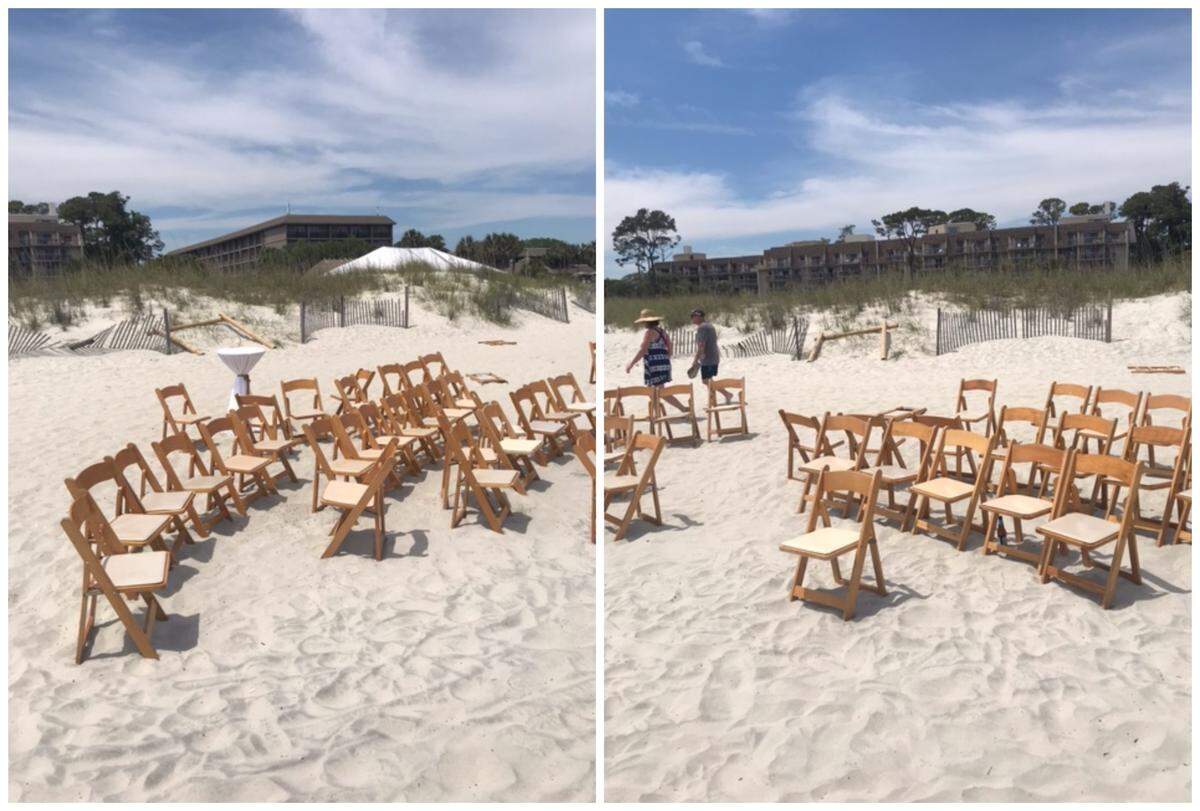
Chuck Pruitt, who owns a condo on South Forest Beach, noticed Monday afternoon that more than 50 chairs set up for a wedding on Saturday were still sitting on the sand.
A pergola was placed in the dunes outside The Beach House Resort on Coligny Beach.
“Why do we ask tourists and locals to clear things from the beach, while resorts can apparently leave objects on the beach and dunes for days?” he asked.
Reached Thursday, resort director of sales Lisa Stackhouse told The Island Packet that the chairs were removed Tuesday and that her staff had a conversation with the Sea Turtle Patrol.
She said the chairs and tables were left up because the resort didn’t have enough staff available to break down the ceremony decorations.
“We take (the chairs and tables) down that day. Usually right after the wedding,” she said. “This situation was a major staffing issue.”
Drawings or nest markings
On Saturday, Sea Turtle Patrol Hilton Head Island shared photos of beachgoers marking sea turtle nests.
In one photo, the word “TURTLE” was scrawled over 10 yards of sand on Hilton Head, where it announced the presence of a sea turtle nest further into the dunes.
An arrow pointed to the narrow hole where a female sea turtle had dropped its clutch.
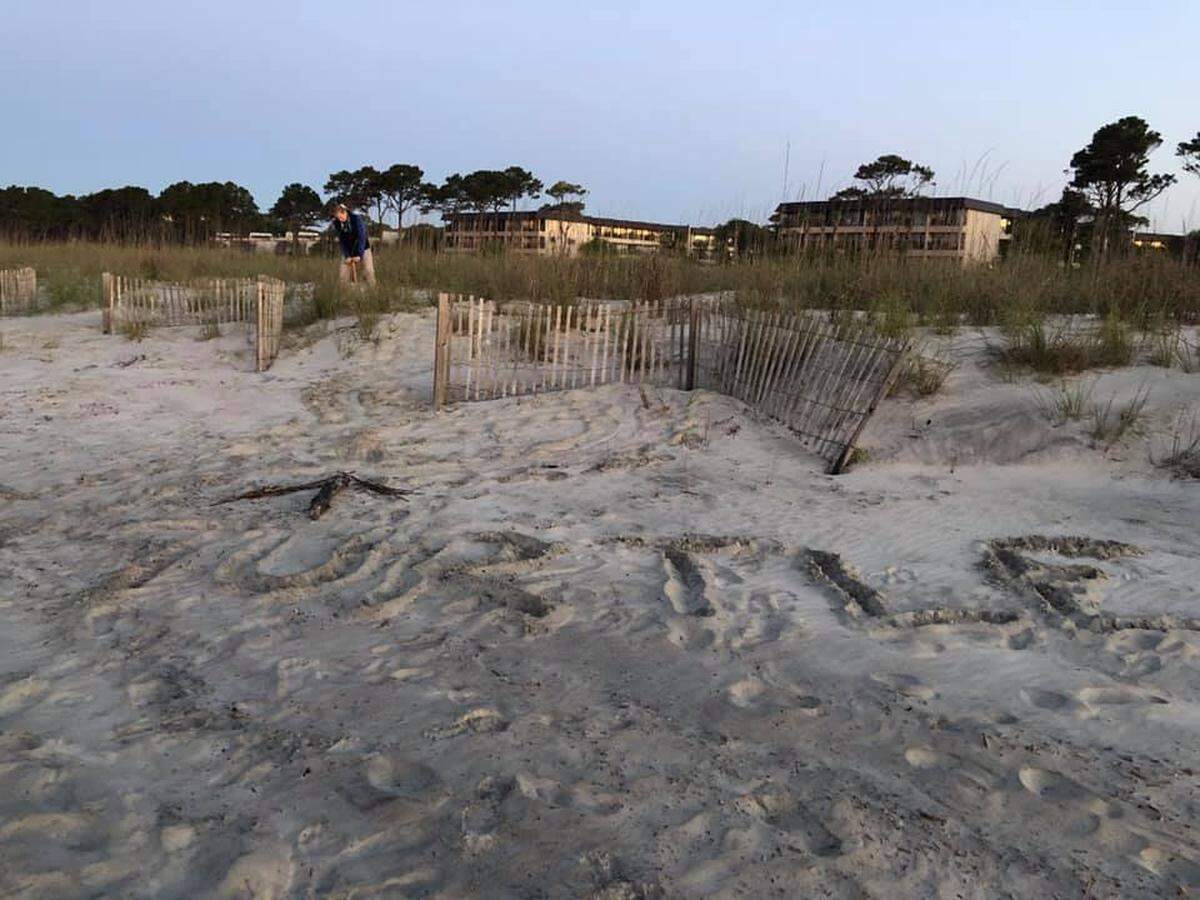
The announcement, while well intentioned, left sea turtle advocates on edge.
“We need some help from our observers on the beach. You can all help Sea Turtle Patrol by doing NOTHING when you see tracks on the beach or a nest site on the beach,” Sea Turtle Patrol Hilton Head Island wrote on May 15.
“By drawing diagrams in the sand, or by placing sticks all over the perimeter of the nest, you probably don’t realize that this hinders us from finding and studying the tracks and making determinations about the nest.”
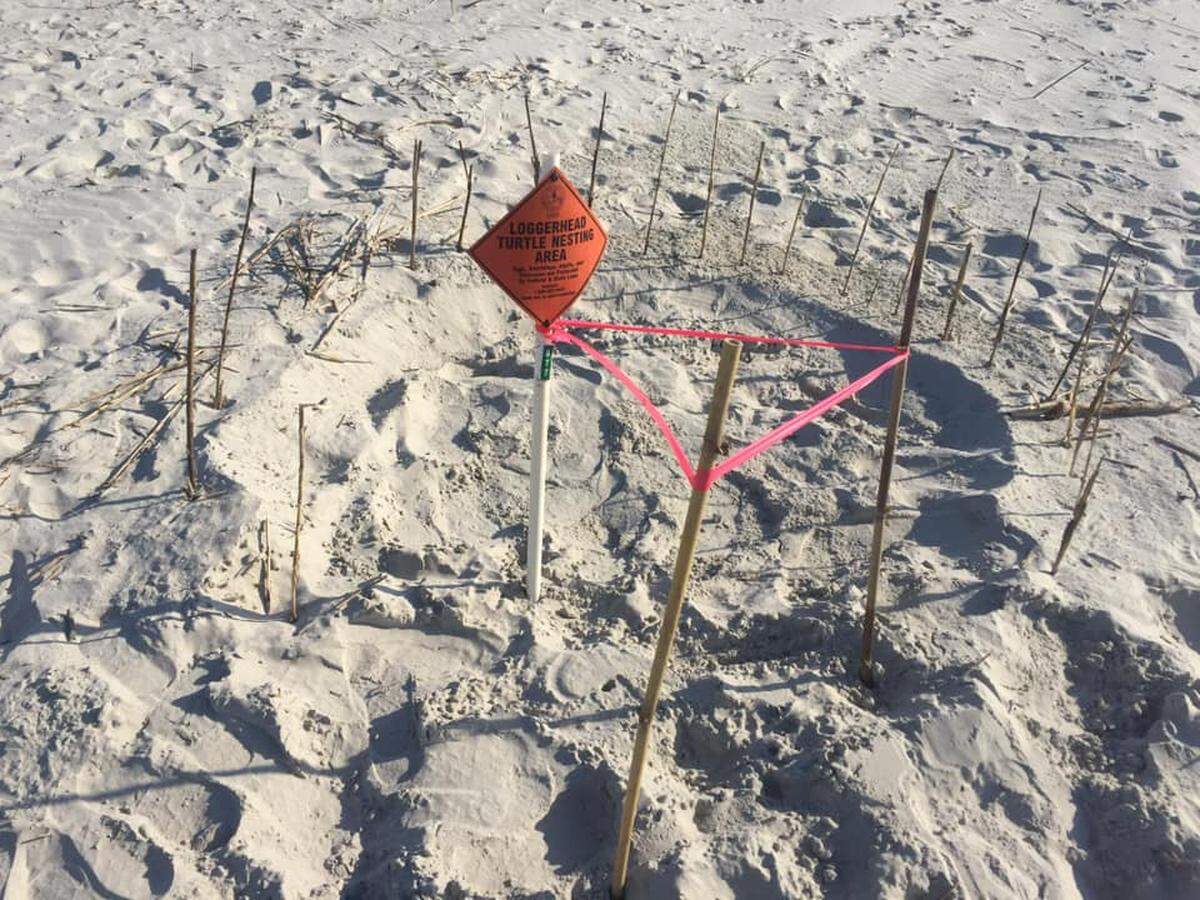
Other photos showed circles of sticks around the existing sea turtle nest markers and circles of driftwood marking a potential nest.
Forts on Hunting Island
Friends of Hunting Island State Park also shared a warning to creative beachgoers.
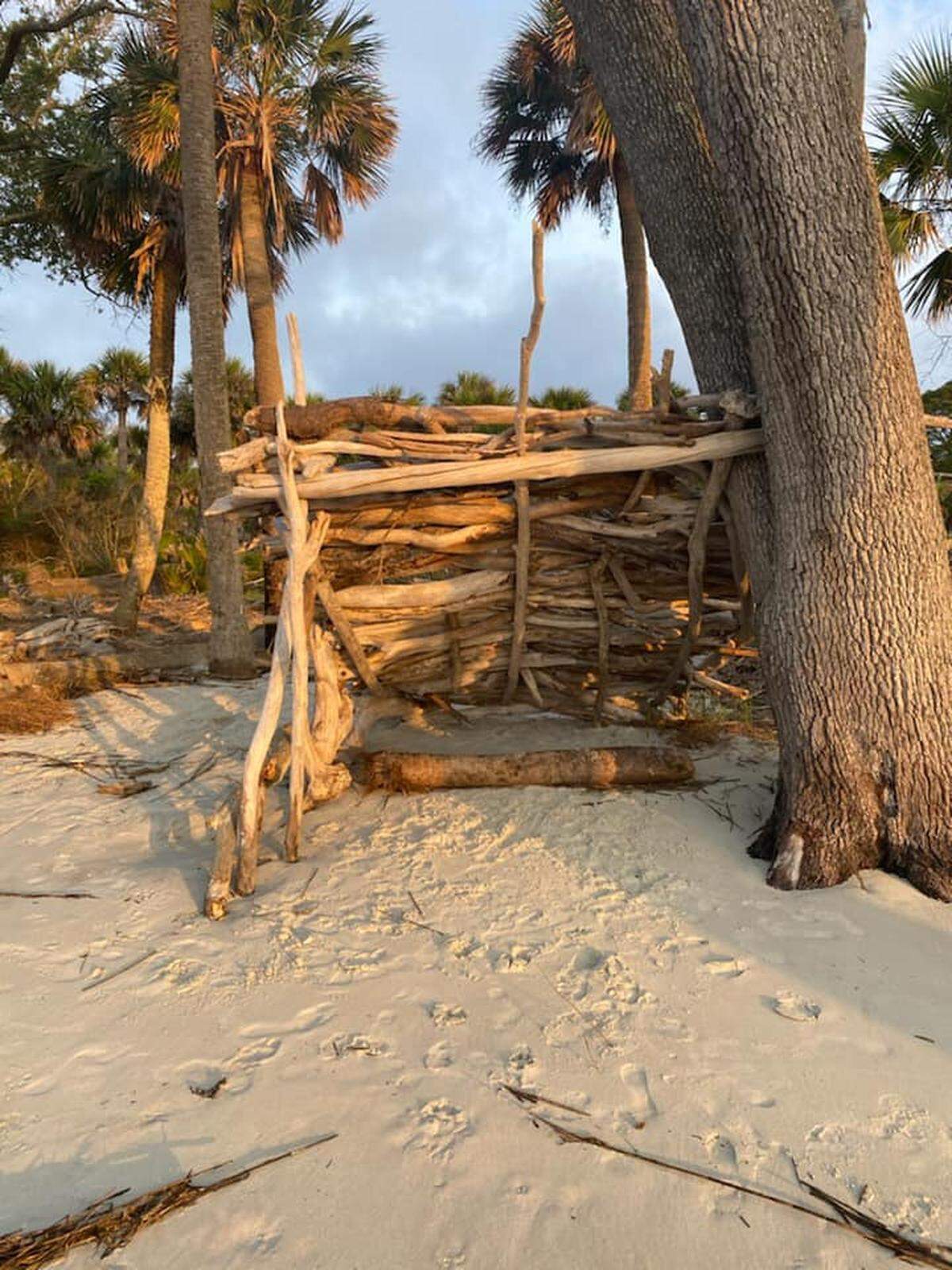
On Wednesday, the group wrote “To whomever is building these structures in the southern bone yard on Hunting Island, you are very talented, so talented that you should be able to take it down before you leave the beach.”
The group shared that the forts are dangerous for sea turtles looking to nest because they could “crawl into the structure and become trapped since sea turtles are unable to crawl backwards.”
The unstable fort, although impressive, the group said, could also be dangerous to people who climb on top of it or inside.
“So take pictures, leave footprints, and return the beach to the way you found it,” the post said. “And Indiana Jones — y’all done good but time to stop building.”
Hilton Head beach rules
In November 2019, Hilton Head leaders adopted new beach rules to help keep the beach clear of trash and more hospitable for nesting sea turtles.
The ordinance prohibits leaving personal property, such as chairs and tents, on the beach overnight and also requires beachgoers to fill in holes and knock down sandcastles 30 minutes before sunset.
It goes further to require that the beach be “restor(ed) to its natural condition” before people leave for the day.
The point of the ordinance is to clear the beach of obstacles to nesting loggerhead and green sea turtles, which leave clutches of eggs on the beach during nesting season. In July, eggs hatch, and the baby sea turtles make their way to the ocean.
The ordinance banning personal property, holes and sandcastles left overnight is a year-round rule.
The requirement for beachgoers to restore the sand to its natural state differs from the seasonal beach lighting rules, which say that light on homes and businesses be shaded or pointed downward during sea turtle season.
Individual beachgoers can help, too.
“It’s really helpful for turtles if, when you’re on the beach, you use red flashlights because the turtles can see the red light, but it’s much less disturbing ... to the mothers,” she told The Island Packet on a recent patrol shift.
Island Packet reporter Kate Hidalgo Bellows contributed to this report.