Many Beaufort County homeowners will see their flood insurance rates drop. What happened?
Many property owners across coastal Beaufort County may see their flood insurance rates decrease this year with the release of new flood maps.
Local governments across the nation, including in Beaufort County, updated their Federal Emergency Management Agency flood maps this year to better reflect current flooding conditions in the area. After a lengthy process that began in 2005 and suffered years of delays, the maps have finally been updated for the first time since the 1980s.
The new maps, according to local officials, show that fewer Beaufort County homes will be located within high-risk flood zones — where flood insurance is required. That also means flood insurance rates may drop this year for many property owners.
But, some studies indicate these savings could be shortlived. FEMA is working to update the way it calculates flood risks nationwide through a new program called Risk Rating 2.0. Data released in February by New York-based research group First Street Foundation suggests millions of homeowners nationwide, including in Beaufort County, could face hikes in their premiums due to this remodeling of the nation’s flood insurance program.
This new program, a phased approach, is expected to start in October.
Beaufort County residents may have recently received letters from their mortgage company or local municipality saying their insurance rates have changed — letters that have created confusion and misinformation on social media. To help property owners understand how the current flood maps may affect their insurance rates, The Island Packet and Beaufort Gazette compiled information you need to know.
What is a flood map?
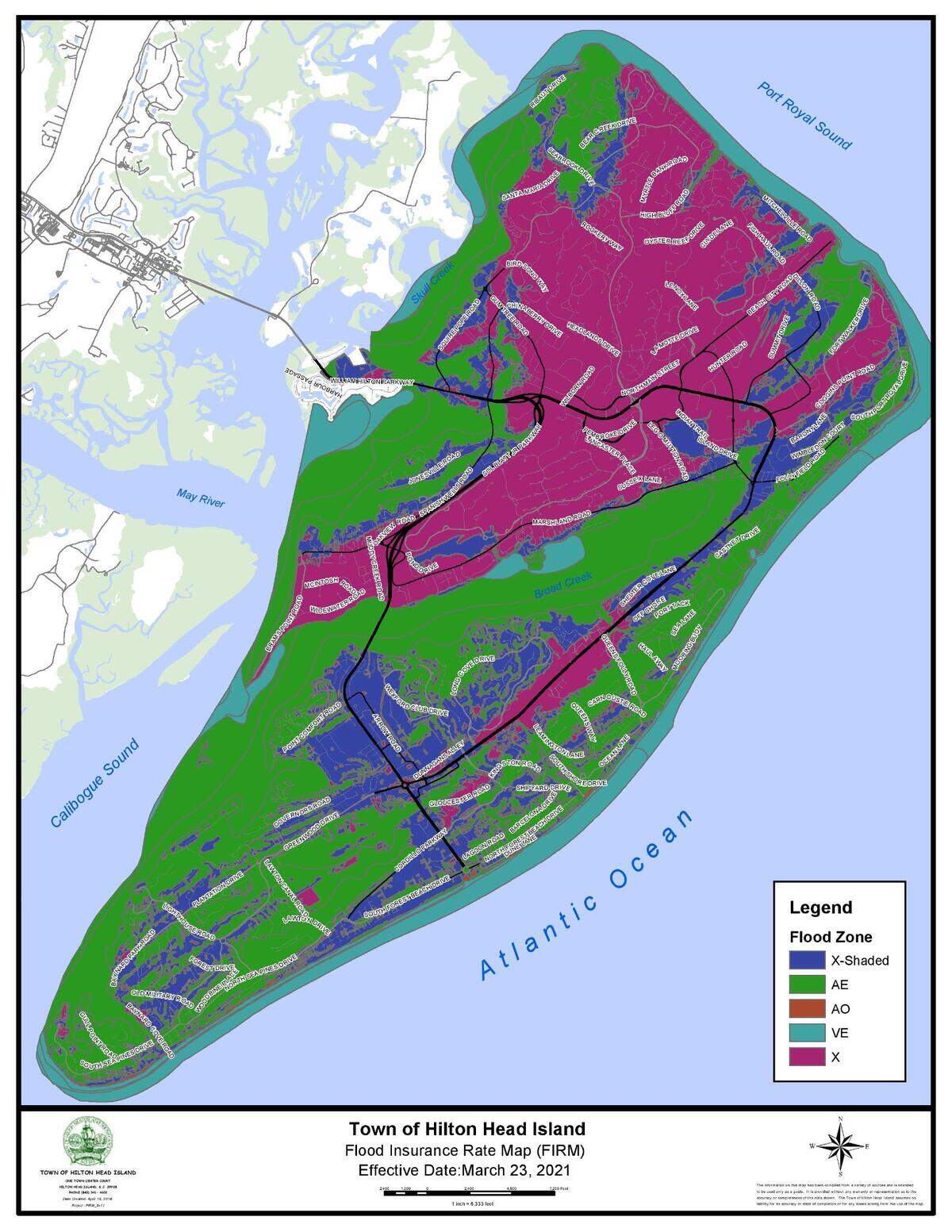
The Federal Emergency Management Agency (FEMA) maps identify flood hazards and ways to reduce their impact on communities. They show a property’s overall risk of flooding.
Properties on flood maps are broken down into different flood zones. Moderate- to low-risk areas are labeled Zone X. Areas at high risk of flooding begin with the letters A or V.
High-risk zones, or Special Flood Hazard Areas, (A or V) are spots that have at least a 1% chance of flooding each year.
Who uses flood maps?
A host of groups use FEMA’s maps to determine flood risks, including:
▪ Local governments, which use the maps to create building and development requirements;
▪ Insurance providers, which use the maps to determine flood insurance costs based on risk;
▪ Mortgage lenders, which use them to decide whether to require flood insurance for a loan;
▪ Residents and property/business owners, who use flood maps when deciding where to purchase property and whether to buy flood insurance.
Is flood insurance required for my home?
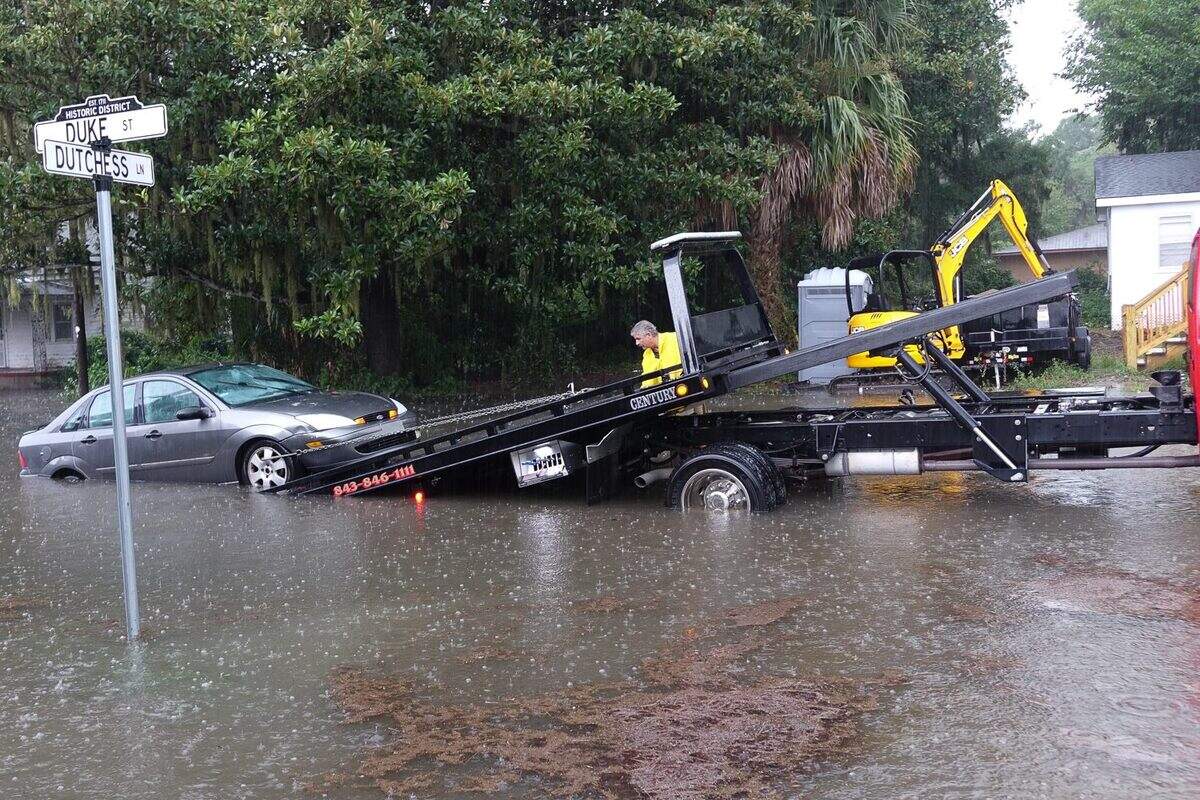
Flood insurance is required for mortgages on homes located within a high-risk zone or Special Flood Hazard Area.
However, local officials and insurance companies still recommend getting flood insurance throughout all of coastal Beaufort County.
Terry Tadlock, president of Correll Insurance Group on Hilton Head Island, said homeowners still need to protect themselves from flood damage.
“Everyone in Beaufort County is in a flood zone,” he said. “A lot of people are seeing letters from their mortgage companies saying they don’t need insurance ... but they need to take it seriously.”
How do I find out if my home is in a Special Flood Hazard Area?
To find out if your home is located within a Special Flood Hazard Area, visit FEMA’s flood map search tool: https://msc.fema.gov/portal/home.
On this site, you can search for a specific address, place or by coordinates.
Why did my flood hazard designation change?
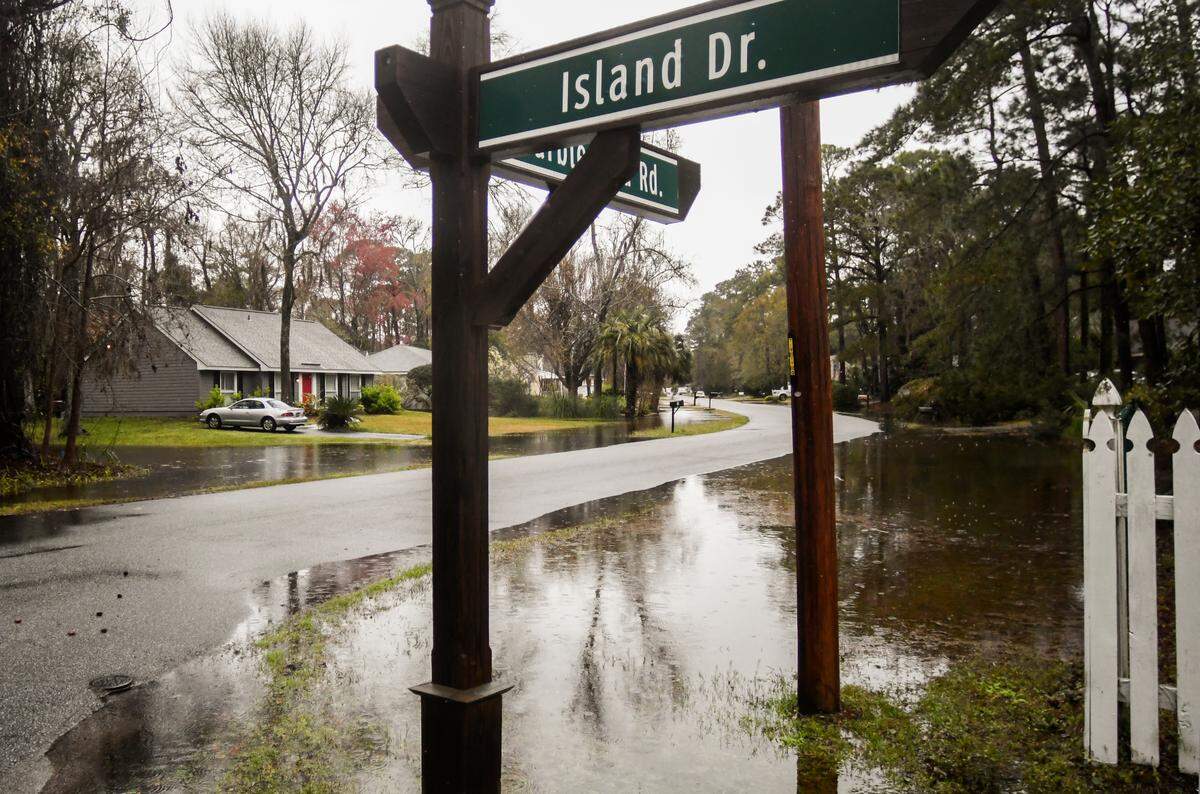
FEMA updated its flood maps effective March 23, 2021. The new maps reflect current flood risk conditions based on the agency’s latest technology. Under the new maps, the Base Flood Elevation (BFE) levels for Beaufort County were significantly reduced. Flood elevations measure the lowest height that floodwaters are expected to reach during a major flood.
Hilton Head Island saw the biggest change in flood zone designations in the county. Previously about 75% of the island’s land was located within a high-risk area. Now, only about 25% is in a high-risk zone — a drop from 15,362 homes to about 5,000 homes.
In unincorporated Beaufort County, the number of homes within Special Flood Hazard Areas dropped to just under 24,000 homes from about 26,000, interim Assistant County Administrator Chuck Atkinson said.
The City of Beaufort, according to Chief Building Official Bruce Skipper, saw almost 300 homes drop out of a Special Flood Hazard Area — to 1,245 from 1,511.
In Bluffton, the number of homes located within a high-risk flood area decreased from 5% to 3%.
Tadlock said this is likely because FEMA is putting more emphasis on inland flooding than coastal flooding. But, he said, even though inland flooding happens more often, coastal flooding is often worse when it occurs.
Skipper said it’s hard to understand why the FEMA maps would show less flood risk in a coastal area such as Beaufort County. He said it’s likely because the data was pulled from a period when storms were less prevalent (Local municipalities received the preliminary maps in 2017, he said).
I received a letter in the mail saying I no longer need flood insurance. Why?
Mortgage companies are required by law to send letters to property owners who are no longer required to pay for flood insurance. This means your home, according to the FEMA flood maps, is no longer considered to be in a Special Flood Hazard Area.
Tadlock said his biggest worry is that property owners will take this to mean they shouldn’t get flood insurance.
“Nothing could be further from the truth,” he said. “Hilton Head is a barrier island. This was a huge mistake and [FEMA] never should’ve changed these zones.”
Will my flood insurance increase/decrease with this new designation?
The flood zone of your home is a major indicator of how much money you will have to pay in flood insurance. Those whose homes moved out of a Special Flood Hazard Area will likely pay less.
On Hilton Head, for example, the north shore of the island was rezoned from a “V” zone to a “X” zone in most places. This change, according to Premier Island Properties, will result in reduced costs for homeowners.
In the event your home moved from a low- or moderate-risk area to a high-risk area, FEMA says your rates will increase no more than 18% each year. Buildings newly mapped into an SFHA may be eligible for a lower premium in the first year after a map change, according to FEMA.
A future spike in insurance rates?
Although the new maps likely will offer good news to some property owners’ wallets, future hurricanes and rising sea levels aren’t factored into the making of the maps — a point some experts say understates the risks of living in a low-lying coastal community.
Starting in October, FEMA plans to remodel the way it calculates flood risks through a new program called Risk Rating 2.0.
Local municipalities are still learning how this new policy will affect insurance rates across Beaufort County, but some studies say the program will cause premiums in coastal areas to skyrocket.
According to FEMA’s website, current National Flood Insurance Program policyholders can contact their insurance company or insurance agent starting Aug. 1 to learn more about Risk Rating 2.0.
The agency’s current flood map procedure focuses heavily on property elevations within flood zones. This process, according to FEMA, does not account for different types of flooding or a property’s distance from a body of water.
Risk Rating 2.0, according to FEMA, will focus on a property’s flood frequency, flood types — river overflow, storm surge, erosion and heavy rainfall — and distance to a water source. This process would also factor a building’s elevation and cost to rebuild.
For more information about how Risk Rating 2.0 could affect South Carolina, visit FEMA’s website.