Bluffton’s ‘Secession Oak,’ where the Confederacy took root, is no more. What happened?
A historic Bluffton oak tree, where the early seeds of South Carolina’s secession movement took root, has fallen.
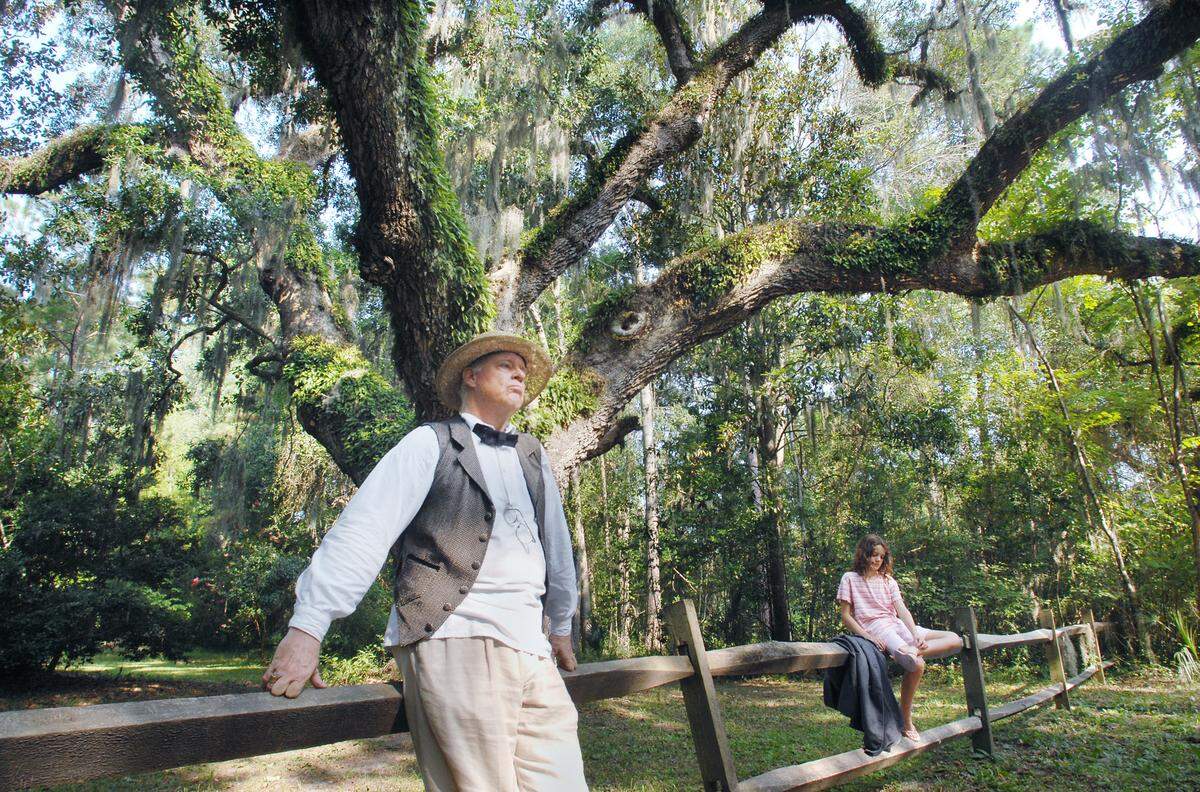
Commonly called the “Secession Oak,” the more than 300-year-old tree is viewed by many historians as the birthplace of the “Bluffton Movement,” which sparked the state’s decision to secede from the Union. It was under this tree in 1844 where radical “fire-eater” Robert Barnwell Rhett, in front of an exuberant crowd, declared it was time to secede.
Tucked away in Bluffton’s private Stock Farm neighborhood, the 75-foot oak tree, with its sprawling branches and hanging Spanish moss, was difficult to find but hard to miss. For years, the tree attracted travel writers and historians, intrigued by both its historical significance and natural beauty.
Earlier this month, the oak, weathered by age, collapsed during a heavy storm — leaving its large trunk split down the middle. Four of its fern-covered branches still hang low over the ground.
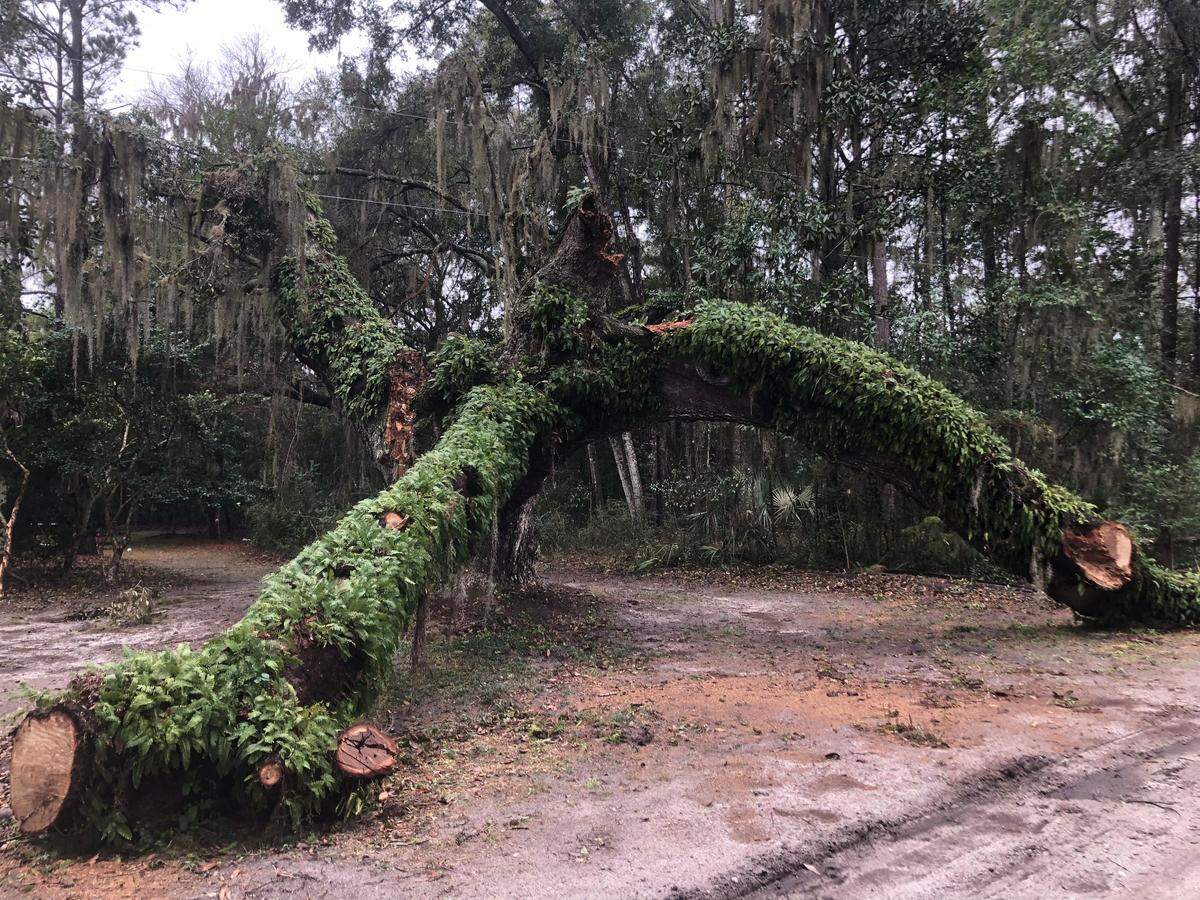
Kelly Graham, executive director of the Historic Bluffton Foundation, said he’s still waiting on experts to say exactly what happened, but its likely the tree “got tired.” The force of its massive branches caused the trunk to split during the storm.
“It shook the whole house,” said neighbor Korey Ahrens, who heard the massive tree fall.
As news of the tree’s collapse spread throughout Bluffton, residents took to social media, mourning the loss and sharing the oak’s notorious history.
“It’s sad to see the old oak fall, but its legacy will live on,” wrote Jeff Fulgham, a local historian and author of “The Bluffton Expedition.”
Former Bluffton Mayor and County Council Chair Emmett McCracken even penned a heartfelt “obit-tree-ary” for the historic oak, writing that although many people visited the tree for its history, that interest was quickly replaced by “admiration of her special beauty and majesty.”
“Neighbors and those that saw her almost daily are saddened by this event,” he wrote. “But reality prevails and we are thankful to have shared this little corner of Bluffton with her and witnessed this singular wonder of God’s creative might and gift.”
Still, Graham said, the tree’s main trunk has a feasible root, and it “could survive.” The trunk will remain in place.
And some of its infamous history will be preserved — in a unique way.
Billy Watterson, the owner of Bluffton’s new Burnt Church Distillery, secured one of the oak tree’s large branches after its collapse. In exchange for the branch, Watterson donated $10,000 to the Bluffton Historic Foundation.
Watterson plans to build a large table for the distillery’s main hall using the wood from the branch. The table will be named “The Witness,” carved with historical iconography and “used as a voice for the Black men and women in the community,” he said.
The irony of taking a tree known for its Confederate and secessionist past and using it to recognize Black history is not lost on Watterson.
“We know about the Secession Oak, and we know the history of the ‘fire-breathers’ that led to the [Bluffton] Movement,” he said. “We’re aware of those things, but we never got to hear the other side of that.”
Watterson said he was struck by the fact that on National Freedom Day, Feb. 1, a day that celebrates the outlaw of slavery in America, a tree “with so many negative connotations” collapsed.
“That tree has fallen, and what it stood for is no more,” he said.
Watterson said he hopes to change the narrative of the tree and use it to “speak the truth.” He plans to work with The Bluffton MLK Observance Committee next week on the design of the table because “it’s not our story to tell.”
“Its going to be quite an intricate piece,” he said. “This is an extraordinarily emotional project with a lot of awakening.”
Bridgette Frazier, a Bluffton Town Council member and president of the MLK Observance Committee, said she sees the project as an opportunity to foster dialogue that “we usually stay away from.”
“It’s a reminder to people that we can acknowledge history, but we don’t have to revision it in a way that is disrespectful or in a way that disenfranchises other people,” she said.
Frazier said there’s always a fear of romanticizing “horrible” parts of America’s history, but she hopes this project can become a symbol of “the strength of this community and the resiliency of those who have been invisible, but have persevered in spite of the adversity they faced.”
“I hope that things are changing in Bluffton,” she said. “Bluffton has a lot of things that should be celebrated, but also things that have been buried and things that people try not to remember.”
This story was originally published February 13, 2021 at 12:29 PM.