‘Inexcusable’: 100K gallons of sewage spilled into Bluffton’s May River. What happened?
Last month, a leak in the sewage system sent 105,000 gallons of waste into the May River, briefly contaminating one of Beaufort County’s most important bodies of water.
The leak was discovered on Oct. 26 near Drayson Circle behind the Bluffton library. A sanitary sewer manhole overflowed with wastewater and traveled down a drainage ditch to the river, according to a report from Beaufort Jasper Water and Sewer Authority.
Though BJWSA was notified of the spill the day it happened, it took crews until the next day to stop it.
“I wasn’t satisfied with the response time,” Bluffton Town Council member Larry Toomer said Tuesday. “That is not their protocol. The person who received the report did not exercise the protocol. They were stretched thin, but it’s still inexcusable.”
After the spill, the S.C. Department of Environmental Health and Control closed oyster fishing beds in the area — from Crane Island to Myrtle Island — for 21 days to test the river for bacteria. The agency issued a swimming advisory on Oct. 28. Three days later, DHEC had BJWSA remove signs notifying residents of the swimming advisory.
The spill “temporarily increased fecal coliform levels in a portion of the May River,” said Kim Jones, Bluffton’s watershed management division manager. “With tidal cycles, exposure to the sun and to salt water, bacteria levels returned to pre-spill levels within approximately a week.”
Toomer, who makes his living harvesting oysters from the May River, said he and his crew were forced to fish further up the river due to the sewage spill. Nearly a month later, he says he’s “back to business as normal.”
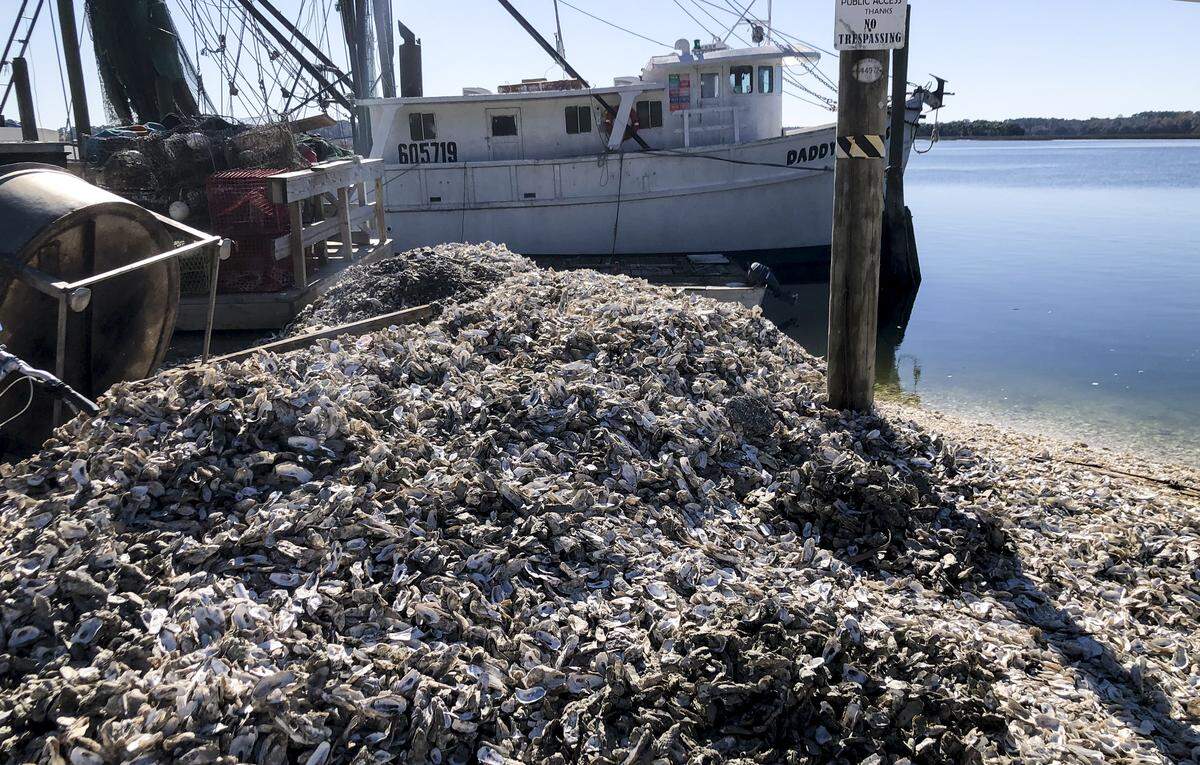
“There are no issues with the water quality in the areas that are approved [for oyster fishing] and we’ve been eating oysters with no issues,” he said.
But the spill of sewage in such an important body of water has reignited a decades-old debate about what needs to be done to save the river from further pollution.
The Town of Bluffton has paid millions to move homes from septic to public sewer, arguing that the old systems lead to increased bacteria in the river. Debbie Szpanka, Bluffton’s spokesperson, previously told The Island Packet and Beaufort Gazette that the town’s total investment in the May River watershed is “most likely near $10 million.”
However, others, including a local scientist, say the town’s rampant development — over 20,000 dwelling units have been approved in the town over the last 20 years due to development agreements — is the main cause of the problem.
‘Data doesn’t lie’
Last year, a study conducted by the University of South Carolina-Beaufort found that fecal coliform bacteria levels have been rising in the May River for the past two decades and, in some parts, are above what is considered safe for shellfish harvesting.
The study found that Bluffton’s building and population boom over the past 20 years has led to increased stormwater runoff, lowering the salinity in the May River and allowing fecal coliform to thrive. One DHEC monitoring station found that bacteria levels had increased 3,150% since 1999.
The source of the bacteria has been a hotly debated issue over the last two decades. And the 2019 study, commissioned by Bluffton and Beaufort County and led by Eric Montie, an associate professor of biology at USCB, and graduate student Jamileh Soueidan, seemed to bolster both sides.
Toomer and many involved with the Town of Bluffton argue that the antiquated use of septic tanks has led to the rise of bacteria in nearby watersheds.
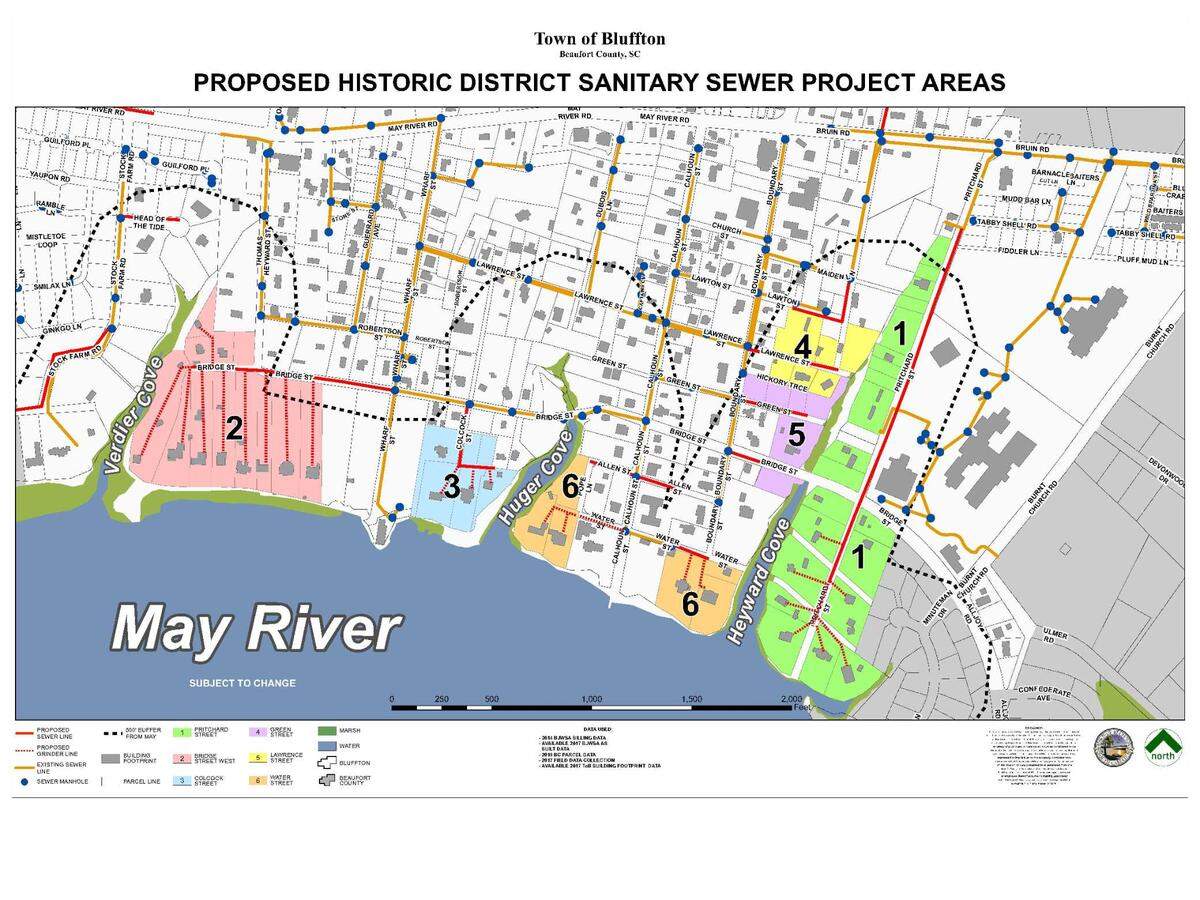
This summer, Bluffton approved a $2.6 million project to move the majority of properties in Old Town Bluffton to public sewer from septic.
“The ongoing project, trying to get the septic systems out of the watershed, is still our main priority,” Toomer said.
When it rains, he said, septic tanks, with drain fields, are sending large amounts of bacteria flowing into the river.
“There are new septic systems being permitted every year in our area,” he said. “If the human fecal coliform is showing up in places in the river, where’s it coming from? Where else could it possibly come from other than a septic system or breach in sanitary sewer?”
As proof, Toomer cited examples where grass is greener near where a septic tank releases water into a person’s yard.
“Why is the grass greener? What’s the difference in building a 2,000-square-feet rooftop and a 1,000-square-feet rooftop?” he said.
While Montie and others have said the use of septic tanks needs to be fixed, they say it’s not the root of the problem.
Years of increased development, impervious surfaces and deforestation of wetlands are the problem, they say.
“I partly think the Town of Bluffton has developed a lot of their land, and they have made little effort to create any areas that are protected,” said Montie, who added that he is not speaking on behalf of USCB. “To try to convert everything from septic to sewer, I don’t think that’ll fix the problem. We don’t protect enough land in watersheds.”
Montie, who stepped down from Bluffton’s May River Watershed Action Plan Advisory Committee shortly after the release of his study, said he’s tired of telling local leaders the same information and seeing nothing done.
His new study, which will be funded by the nonprofit Spring Island Trust, independent from Bluffton, will analyze land-use patterns and salinity levels from the Port Royal Sound to Broad Creek.
Local governments, he reiterated, don’t protect enough land near watersheds and that leads to decreased salinity in the headwaters, which can fuel bacteria growth.
Implementing stricter zoning laws, not clearing trees and buying land to be used for nature preserves instead of development could help stem the problem, he said.
“I don’t mind speaking the truth,” he said. “What are you going to do, be afraid of the reality? For some reason we’re in an area now where people don’t believe in data and science and it’s very scary. Data doesn’t lie.”
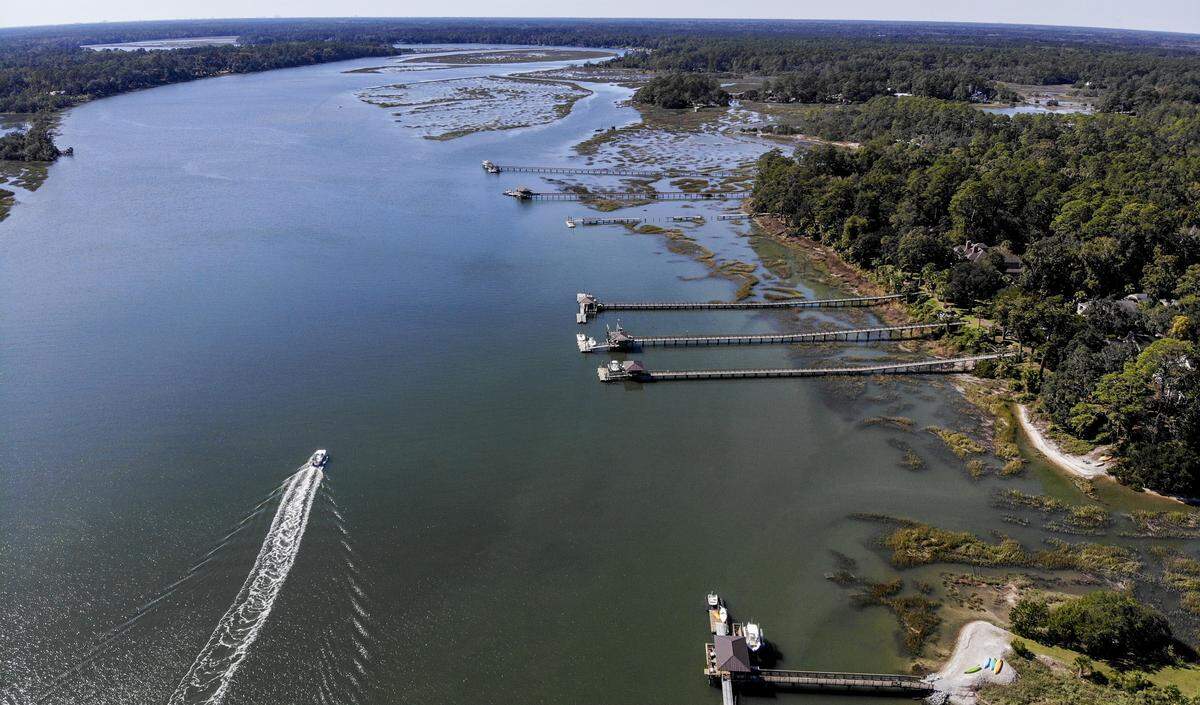
Jeff Urell, who owns a Bluffton marketing firm, operates SaveTheMayRiver.com, a website that seeks to “educate and inform people about the science of water quality.”
He agrees that moving homes from septic to sewer is a good thing, but said local leaders need to take a “holistic” approach to saving the May River.
Bluffton, he said, has helpful planning documents like the May River Watershed Action Plan and rules for developers, but “they don’t enforce their own rules.”
“Mechanisms exist to fix these problems,” he said. “All new driveways are supposed to be pervious. They’re not doing that. We need to focus on the reality of the science. We need a holistic solution. If they want to focus on sewers for the next 20 years, they’re going to miss the opportunity to save the river.”
‘Affects a lot of people’
Don Murphy, who lives on Drayson Circle in Bluffton, previously told The Island Packet and Beaufort Gazette that he and his neighbors started smelling sewage on Oct. 24. He investigated the following day and found the overflow.
He said he called BJWSA on Oct. 26, and staff started to address the issue the next day.
Murphy said he worries about all that time in between, when the water was being contaminated.
“I do a lot of fishing and have a lot of friends who do fishing, shrimping, crabbing. ... It affects a lot of people,” he said. “There’s a lot of seafood that’s eaten out of these creeks.”
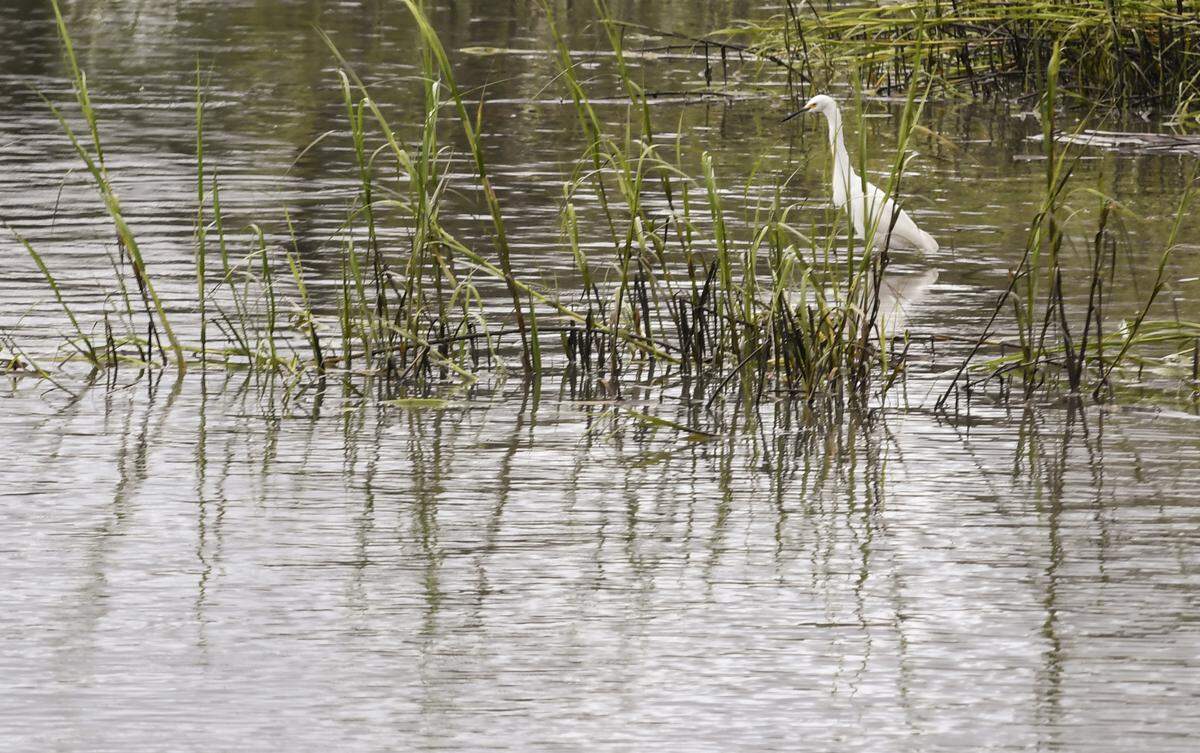
Sarah Linkimer, deputy general manager for BJWSA, said Tuesday that the spill was first reported on Oct. 26 at 4:50 p.m. A field operator arrived to the scene at 5:19 p.m. and “searched the area,” but did not notice the sewage spill.
The next day, Linkimer said, the operator returned to the scene around 9 a.m. and spotted the overflow. More crews arrived and “cleared the mainline blockage” around 11 a.m., she said.
The spill was caused by a corrosion in a ductile iron pipe, which created a blockage in the gravity sewer mainline, she said.
After testing the water, crews initially found “elevated levels” of fecal coliform bacteria, she said. The sampling results met DHEC approval on Oct. 30, and swimming advisory signs were removed, she said.
To prevent a spill from happening again, she said, BJWSA will perform “extensive cleaning and lining of metal sewer mainlines” and “raise the finish elevation of out-of-sight manholes.”
Still, Toomer said the response time was not quick enough.
“They have acknowledged that, and they’re going to be putting more safety nets in place,” he said. “If anyone ever sees anything like this — I don’t care if it’s Saturday night — if someone smells sewer, call me. I’ll ring enough phone numbers or beat on doors. The sooner you find it, the sooner we can get it fixed.”
This story was originally published November 30, 2020 at 4:30 AM.