“We lose the land, we lose the people”: A farmer’s quest to save St. Helena’s Gullah land
As Beaufort County’s delinquent tax sale inches closer, Gullah Geechee leaders on St. Helena Island are rallying to save the land owned and occupied by their ancestors for hundreds of years.
Sara’ Reynolds Green, a farmer and community leader, is at the center of those efforts.
Using her farm’s Facebook page and website as a platform, Green is raising funds for the Pan-African Family Empowerment and Land Preservation Network, an organization that works to reduce Gullah land loss by paying delinquent property taxes for others and educating property owners on ways to reduce taxes. She’s also planning an in-person fundraiser immediately before the delinquent tax sale to make one last push to save the historic land.
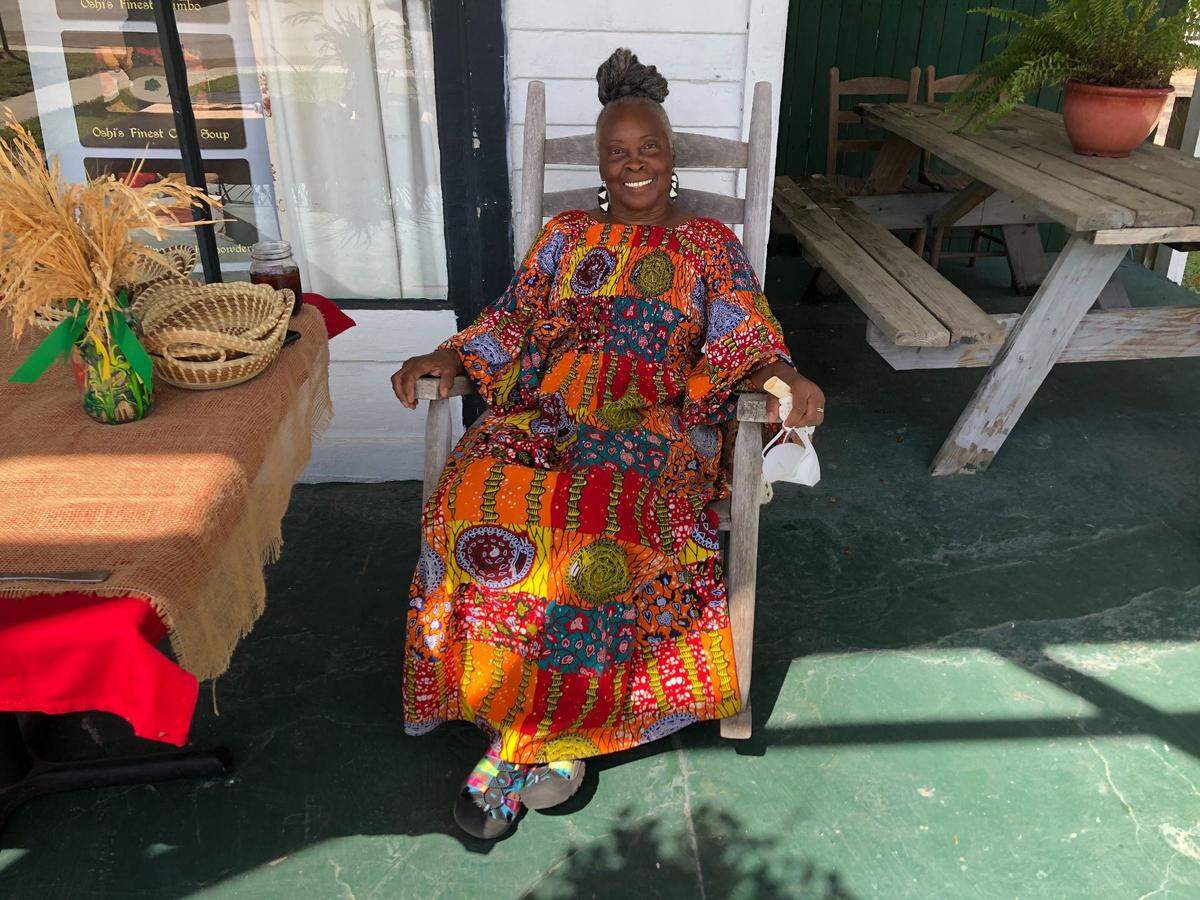
“Those are our ancestors and those are the ones who tilled the soil, who built this country to what it is,” said Green, who identifies as Gullah. “So they have paid their dues, and the only thing they could do, could leave for us, was to keep the land.”
Numbers released by Beaufort County Wednesday indicate that the owners of 831 properties across Beaufort County, including 173 on St. Helena Island, are delinquent on property taxes that have been due for over a year. Property owners owe a total of $1.489 million in back taxes across the county, including roughly $215,000 in St. Helena.
If back taxes aren’t paid by Oct. 2, these properties will go for sale at an in-person auction Oct. 5.
Members of the public can bid to pay owed taxes. The winning bidder receives the deed to the property a year after the auction, unless the original owner pays the outstanding taxes to the county to get the property back during a 366-day-long “redemption period.” The bidder gets their bid money back, as well as interest on the property.
Those whose property was sold at last year’s auction may have an extra year to pay taxes and interest, thanks to legislation proposed by Sen. Tom Davis (R-Beaufort), amended by Rep. Weston Newton (R-Bluffton) and passed by the legislature this week. The legislation now awaits signature from Gov. Henry McMaster.
“It had come to my attention that there were families who were scrambling,” Davis said. “It seemed reasonable given the pandemic.”
Davis noted that the legislature was not making any attempt to delay the impending sale, and County Treasurer Maria Walls confirmed the county tax sale would not be delayed. In early September, PAFEN called on the governor to suspend the tax sale.
Coming up with the funds — ranging from as little as $149 to as much as $14,000 on St. Helena — can be a challenge for some residents of the remote island. Although the delinquent taxes were due more than a year ago, the COVID-19 pandemic’s effects on wages and employment make it harder for many to pay, Green said.
“Most of our parents are making 10, 12, 13 dollars an hour, families of 4 and 5,” she said. “That’s one of the reasons that the economic downturn of the pandemic is affecting our families so hard ... because they had little in the beginning and now they have less.”
In addition to providing landowners with temporary financial support to help them stay on their land, Green and PAFEN are trying to make it more affordable in the long run. They are encouraging landowners to apply for agricultural tax exemptions and explore ways they can profit from their land. And they are pushing policies that will benefit Gullah landowners, such as setting a lower tax base rate for farmers who have lived on their land for a certain number of years.
“If we lose the land, we lose the people,” Green said. “We lose the people, we lose the culture.”
As the elder Gullah people die out, Green said, with them goes the knowledge of the history of St. Helena and the closeness to the land.
She wants to make sure the land passes through the generations — just as, years ago, it passed to her.
“When they hurt, I hurt”
Sara’ Reynolds Green is a Green by marriage, Reynolds by birth.
Her great-grandfather, Robert Green, was the original proprietor of the land on which Green’s Marshview Community Organic Farm sits now. In 1863 — the same year the Emancipation Proclamation was read to enslaved people in Beaufort County — Robert Green bought 10 acres on St. Helena Island.
“The first thing he wanted to do is have land, to make sure he had a piece of land, to build a house and to farm and to have it in his name and pass it on to his heirs,” Green said.
Like water sinking into the ground and nourishing the roots of a live oak tree, the land passed through the generations and into a small group of Robert Green’s heirs.
“We have a bank account that is set aside to put your money in on a monthly basis to pay the taxes,” Green said. “Now we are in the process of separating the parcels that we have to give to the next generation.”
That is where it gets complicated for many families.
“Heirs’ properties” — a term that reflects properties shared by heirs of the original owner(s) and generally refers to Gullah landowners — are usually passed through families without clear titles or wills. That can create confusion among heirs when it comes to determining who is responsible for taking care of the land and paying its taxes. The properties often end up on tax delinquency lists because no one pays up.
“Most of the people on this island are living on heirs’ property which has been purchased after Civil War Reconstruction in that area because the ancestors who were formerly enslaved were the ones who purchased the land,” Green said.
That’s when organizations like PAFEN and Charleston’s Center for Heirs’ Property Preservation step in, helping to clear title and assist families in making their land profitable so they do not have to sell it.
Josh Walden, chief operating officer of the Center for Heirs’ Property Preservation, said St. Helena’s problems are similar to those in other areas with heirs’ property. He noted that most of the Center’s clients are older and underserved.
“It’s a beautiful area of the state, which makes it extremely desirable, so, from the center’s perspective .. it is a vulnerable place when you have heirs property and it is a highly desirable area,” Walden said.
Based on Gullah Geechee family names she recognized from the tax delinquency list, Green estimated that two-thirds of the property owners on the list are Gullah Geechee. Many people, she said, own multiple properties on the list.
She considers many of the Gullah Geechee people she knows on the island cousins, part of an expansive family tree borne out of slavery.
“If you do a family tree of the island, you will see how the connections come in, because they didn’t have no place to go,” Green said. “So they married the next person on the next plantation, or the next person on the same plantation. We are family, so when they hurt, I hurt.”
According to the tax delinquency list, at least three Green(e)s could lose their land Oct. 5 unless their property taxes get paid.
Dr. Najmah Thomas, an African American studies professor at the University of South Carolina Beaufort, is a member of the Gullah Geechee community on St. Helena Island, living on a property that her family has owned for generations.
She’s seen the notices posted on St. Helena residents’ doors warning their properties will go to tax sale if they do not pay up.
Land is a “power source,” Thomas said, for the Gullah community, stripped of financial and political capital for centuries. That so many Gullah families should lose their land, she said, lays bare the lack of equity in Gullah communities.
“The importance of the land really cannot be overstated. Beyond them being able to hold family members together and draw on collective strength during times of crises, the land also is really tied to maintain(ing) and sustaining the culture because the culture is so tied to our land use practices — like agriculture but also spiritual practices,” she said. “Being able to maintain the culture in that way is really heavily dependent on being able to maintain the land in Gullah Geechee families.”
Grub and go
As the cap to her virtual fundraiser, Green is planning a drive-thru event in which guests get a Gullah-style dinner prepared at her husband’s restaurant, Gullah Grub, in exchange for a donation. Local musicians including Mahoganëë and the RKs will perform, and people who are at risk of losing their land will speak about their experience.
The event is scheduled from 3 p.m. to 5 p.m. Sunday, Sept. 27, at 10 De Gullah Way on St. Helena Island, behind the Gullah Grub restaurant.
In recent months, the restaurant has been refashioned to serve hot meals cooked by students of Chef Bill Green to St. Helena’s hungry. They feed about 400 people every Thursday and have made roughly 10,000 meals since mid-April.
“So much is needed,” Green said. “We can’t do it all, but we do what little we can do.”
This story was originally published September 24, 2020 at 2:06 PM.