Hilton Head woman comes ‘back to the life she started’ on the island after brain bleed
You see Millie first.
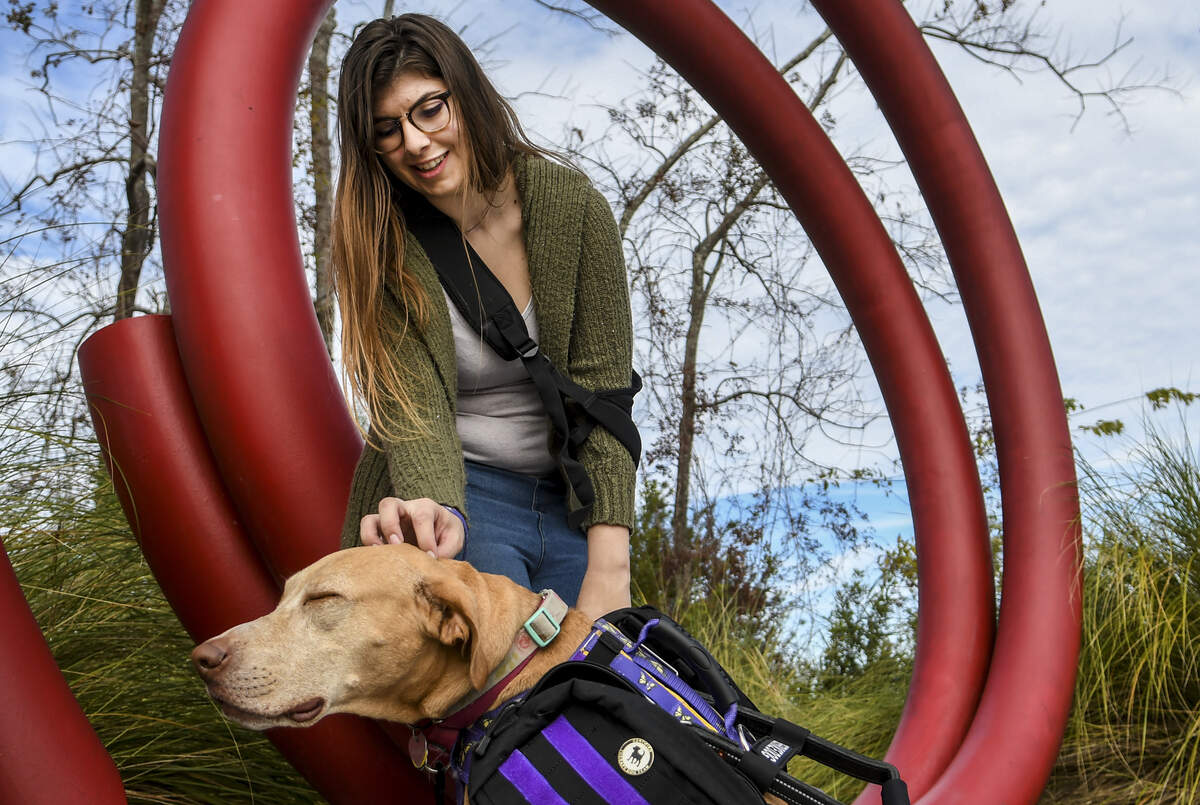
The massive dog’s eyes survey the world at waist level for Serena Grumbine, for whom Millie is trained as a service dog.
Millie, 3 1/2, trots in front to scope out a path for Grumbine. The 22-year-old uses a cane to keep herself steady and holds her still-paralyzed left arm in a sling. It’s awkward to maneuver around crowded restaurants, but as a unit, the two manage.
Grumbine, a Californian who adopted Hilton Head as her hometown five years ago, has returned after a harrowing health scare that has afflicted three of the four people in her immediate family. The diagnosis: cavernomas — clusters of abnormal blood vessels that show up like raspberries on an MRI scan — which can cause life-threatening bleeds in the brain.
Over the course of one year, Grumbine had five brain surgeries. As she recovered, she moved from Savannah Memorial Health Center to Shepherd Center for Spinal Cord and Brain Injury Rehabilitation in Atlanta, then to Team PT, a physical therapy center in California near where her parents live.
Grumbine had adopted Millie, a light brown “shelter mutt” (Grumbine’s words), when the dog was 10 weeks old. As Grumbine healed, she used her experience training animals at the Hilton Head Humane Association to train and certify Millie as a service animal. Millie now stabilizes Grumbine when she walks. She carries items such as groceries when her owner can’t.
Millie — part pit bull, part Great Dane, and part hound — is an unlikely candidate for a service dog. The goofy pooch smiles all the time, and behaves like a rookie K-9 officer might: dedicated to her task, but still tempted to lick a nearby stranger’s ankle.
Now, the pair is back home on Hilton Head.
After a trying year relearning to walk, speak and adjust to life with only one functioning arm, Grumbine packed her belongings in California and drove with her mom across the country on Nov. 15 — the five-year anniversary of her first move to South Carolina.
How it started
One year ago, Grumbine went to the hospital with intense migraines. She discovered she had a cavernoma in her brain.
Cavernomas can be benign, or they can ruin a patient’s life. The brain bleeds can cause headaches, seizures, weakness in arms or legs, and balance problems. They also can lead to brain hemorrhages or spinal cord injuries, according to Mount Sinai Cerebrovascular Center in New York City.
In Grumbine’s case, they caused three separate bleeds near the base of her brain, which left her with no movement on the left side of her body. She couldn’t speak for several weeks as she recovered from multiple brain surgeries.
Grumbine’s family arrived at the hospital unable to hear her voice or do anything for her other than be nearby when doctors had news.
Sadly, the signs of cavernomas were too familiar.
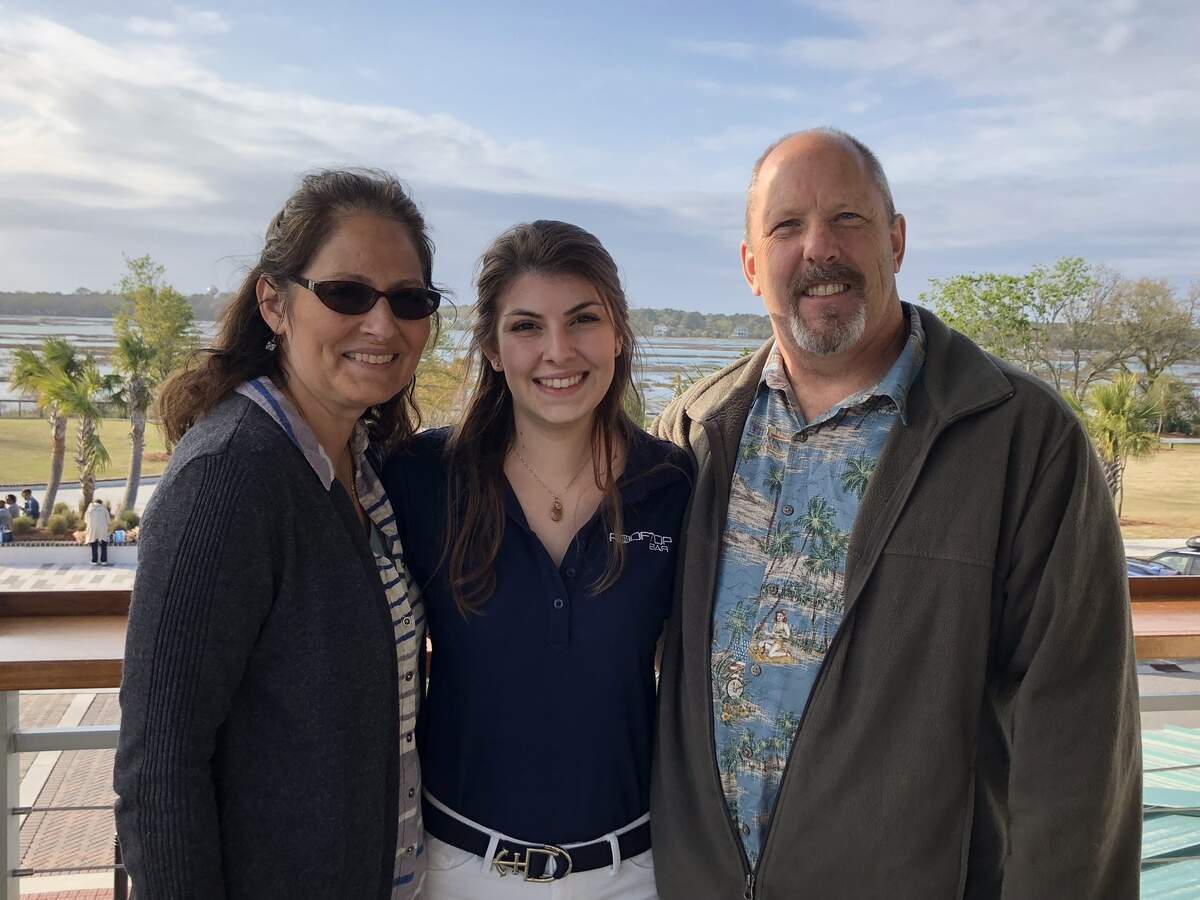
Fifteen members of Grumbine’s family, starting with her mother, have the bleeding condition. The clusters of blood vessels aren’t exceedingly rare. One in 200 people in the U.S. have at least one cavernoma, the cerebrovascular center says.
Cavernomas don’t necessarily have symptoms but are typically diagnosed after loss of function or a seizure, as was the case with Grumbine’s only sibling, Simon, when he was a child. Sixteen years ago, he had a seizure at home. After a trip to the hospital, the 3-year-old was diagnosed with a brain tumor similar to a cavernoma and underwent surgery to remove it.
When Grumbine’s mother, Stephanie, started to think about her own history, she realized she and her cousin had experiences as children similar to Simon’s.
She saw a neurologist and, after an MRI, she discovered she had 10 cavernomas in her skull. The doctor confirmed her fears that the condition was genetic.
Patients with the inherited form of cavernomas have a 50 percent chance of passing it on to their children, according to the cerebrovascular center.
Unfortunately, cavernomas tend to come back even after they’re removed.
Simon had a second, cavernoma-related brain bleed when he was a teenager, and a third in June, when he underwent another round of surgeries to remove the blood vessels.
Grumbine expected she would recover from her brain bleeds just as her brother did. But she said that expectation may have been a mistake. Her bleed was in a different part of her brain.
“I thought I was going to heal quickly, but everyone is so different,” she said in April. “The part of the brain where my bleed was caused a lot more damage, so there’s a few more obstacles for me.”
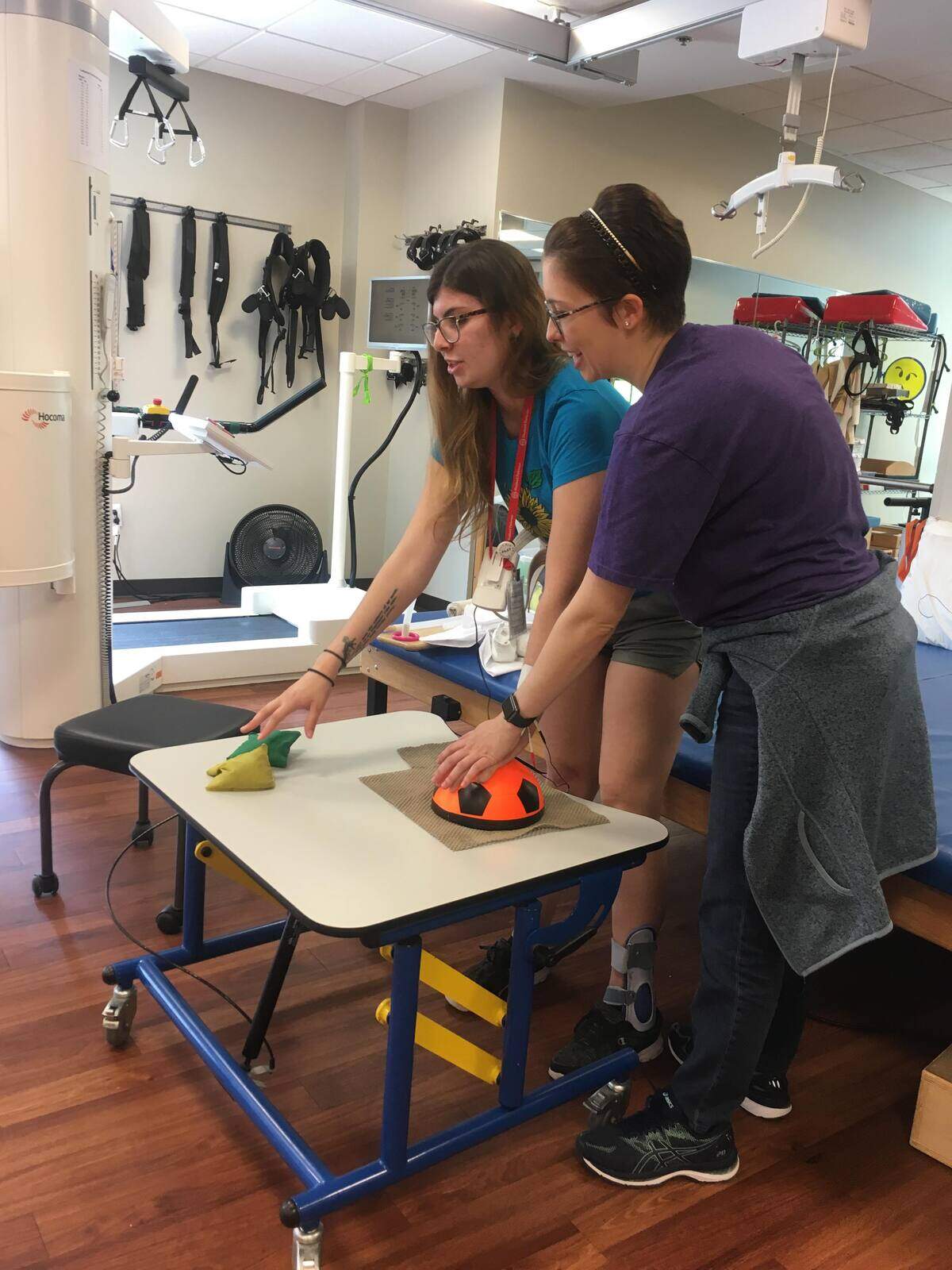
At Christmas time last year, Grumbine’s family hadn’t heard her voice in three weeks. She was sedated and undergoing rounds of surgery in Savannah. The only way she communicated with the outside world was through American Sign Language.
Sunflower girl
Friends from Hilton Head came to visit and support her recovery.
They held a fundraiser, and called it “Sunflowers for Serena” to represent her favorite flower.
As her condition improved, Grumbine transferred to inpatient care in Atlanta in the spring. Before leaving Atlanta for long-term recovery in California, she came back to Hilton Head for a weekend in April.
Dozens of friends stopped by, and many celebrated with a cookout for her at a friend’s house April 13.
Back then, Grumbine was using a motorized wheelchair, and Millie was just her silly sidekick.
Now, the young woman walks with a cane and has been cleared to drive. Millie, her trusted aide (and too big for shotgun) rides behind her as they wind down the Hilton Head roads they know so well.
Two weeks ago, four days after returning to Hilton Head, Grumbine began easing back into work at Poseidon Coastal Cuisine as a bartender, where she worked before she became ill.
Her left arm — her dominant hand — is still immobile after the brain bleeds, but Grumbine said she hopes to regain use of it within a year.
“I’ve already come way further than they thought I ever would,” she said.
Grumbine purchased a keyboard optimized for users with one hand and has nearly perfected writing with her non-dominant right hand.
“Once I got used to being one-handed, I can do literally everything,” she said. “It just adapted.”
Hilton Head home
Although she grew up in California, Grumbine moved to Hilton Head Island by herself in 2015 for the hospitality program at USCB.
As her mother recalled, “she decided to stay in South Carolina because she loved it so much. She felt like it was home.”
Throughout the time she was away, Grumbine — and her parents — focused on getting her healthy and back to the South Carolina coast.
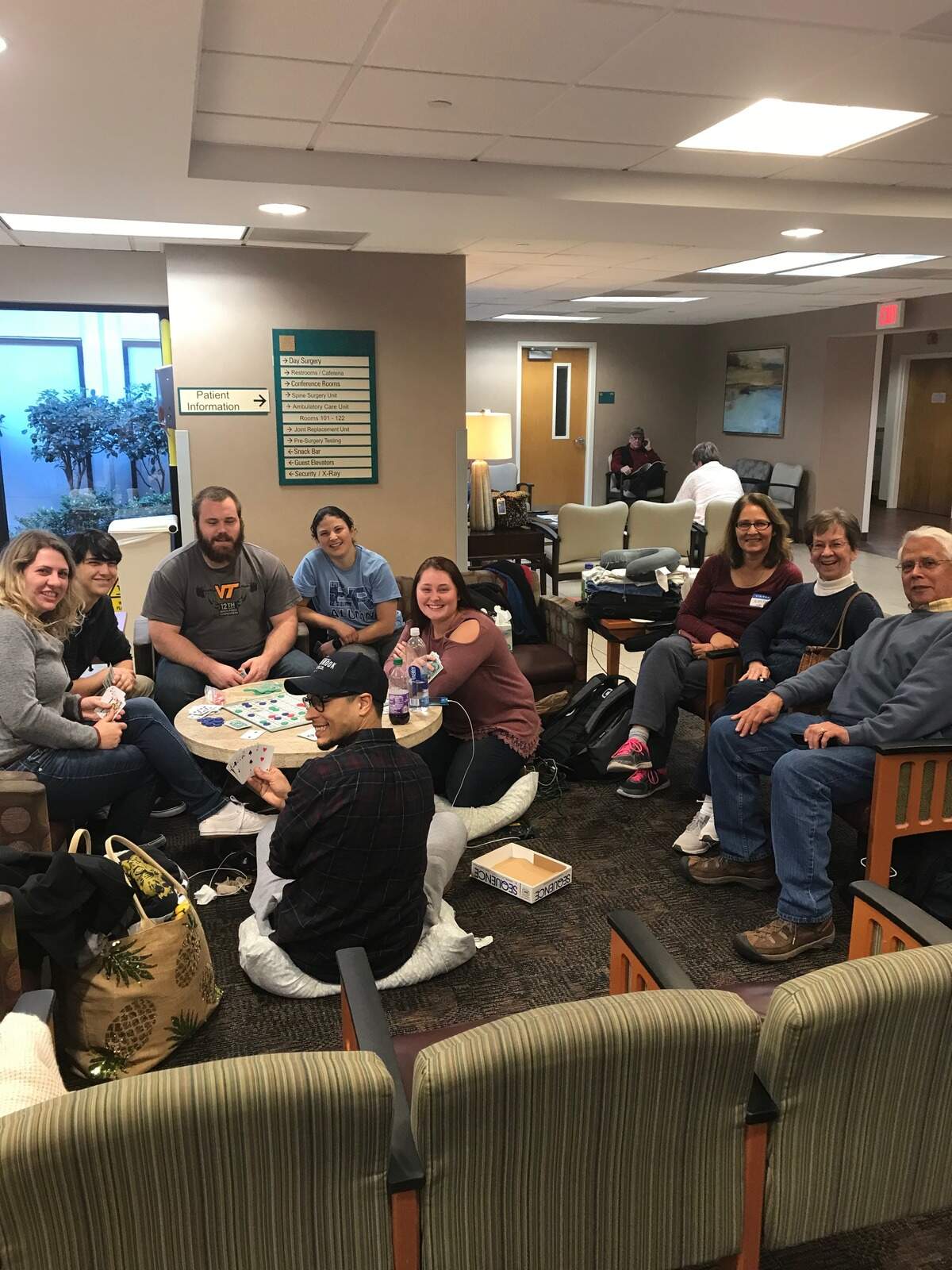
“It actually was very heartwarming to know she has a different type of family out here,” Stephanie told The Island Packet after meeting her daughter’s friends in the hospital waiting room during the first round of surgeries. “It definitely puts your heart to rest knowing she is so loved.”
Grumbine said she and Millie were welcomed back to their Hilton Head home.
“Being back is so amazing,” she said. “Everyone has been so welcoming and helpful if I need anything.”
She still has regular therapy sessions to work through and a long road ahead, but she and Millie are adjusting to their new life together.
They are determined and smiling. Unstoppable.
This story was originally published November 27, 2019 at 4:30 AM.