COVID-19 testing has plummeted in SC, but experts say it’s still important. Here’s why
The average number of daily COVID-19 tests conducted in South Carolina has plummeted roughly 35% since early January, according to a new analysis of state data.
The decline coincides with a 69% decrease in the state’s average positivity rate.
“If testing drops, but there’s no increase in the percent positive, then that’s a baseline metric you can use to see that things really aren’t getting worse,” said Lior Rennert, a biostatistician at Clemson University.
The state’s testing downturn, in other words, has not masked a major upswing in COVID-19 cases. The pathogen’s spread is slowing as vaccinations continue.
Coronavirus testing, however, remains an important part of an effective COVID-19 mitigation strategy, experts say.
About 66.1% of South Carolina’s population has yet to be inoculated, according to the S.C. Department of Health and Environmental Control.
Regardless of prior infections, that likely means a significant share of S.C. residents are vulnerable to the virus.
Michael Schmidt, a microbiology and immunology professor at the Medical University of South Carolina in Charleston, stressed that coronavirus testing can help protect those at high risk of COVID-19 complications.
“You must worry about your fellow human,” Schmidt said.
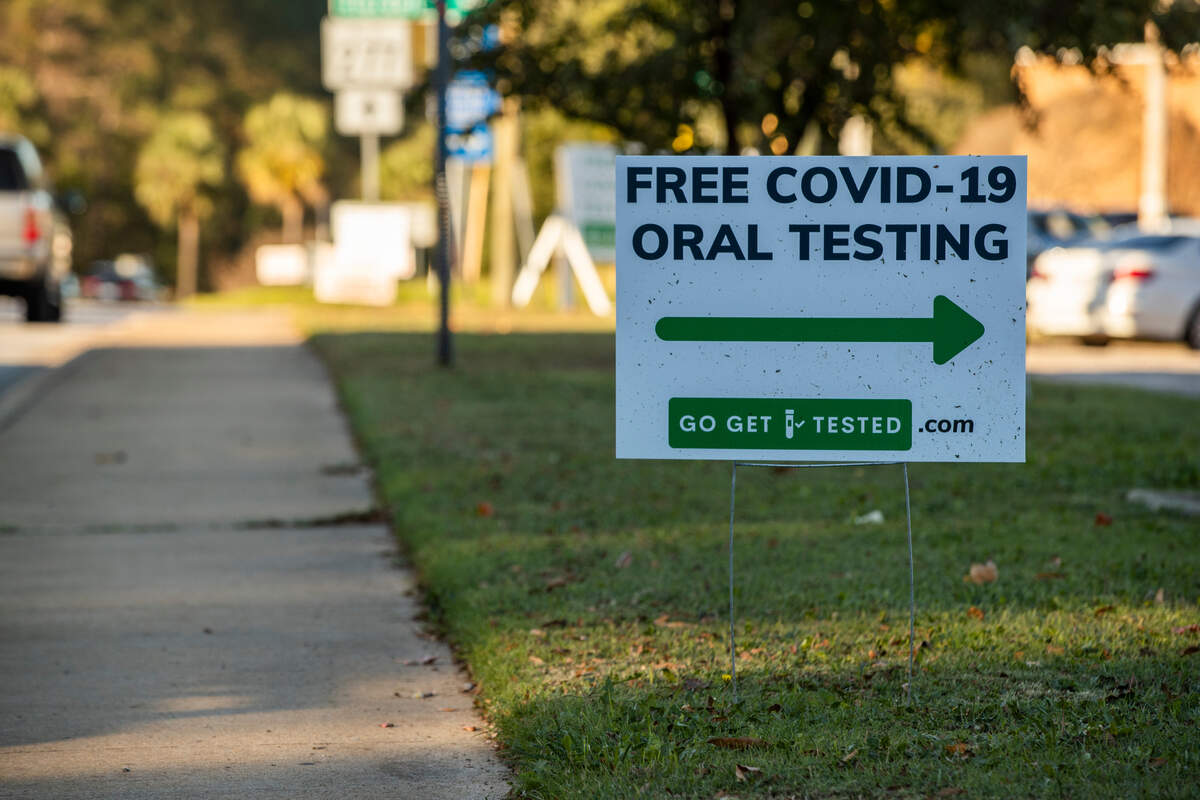
‘It was expected’
The drop in testing is not a surprise, experts say.
“As more people get vaccinated, there’s just going to be less cases, and therefore less testing,” Rennert said.
Fewer residents are likely infected now, he said, meaning there are fewer people with COVID-19 symptoms who want to get tested for SARS-CoV-2, the novel coronavirus.
At one point in early January, during the peak of South Carolina’s winter surge, the state’s seven-day average of daily COVID-19 tests was roughly 24,609.
The testing average then fell to about 15,861 in mid-April, representing a 35.5% decrease, according to an analysis of DHEC data.
That low demand forced S.C. health care systems to reevaluate their pandemic operations.
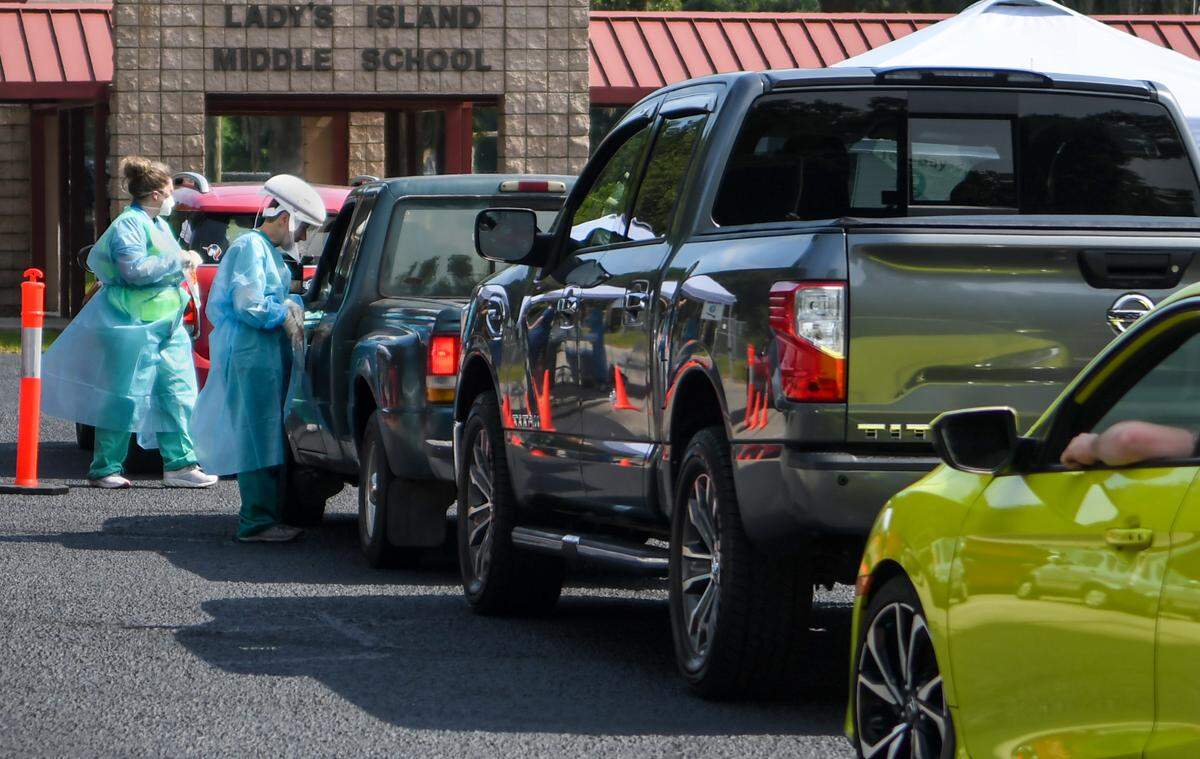
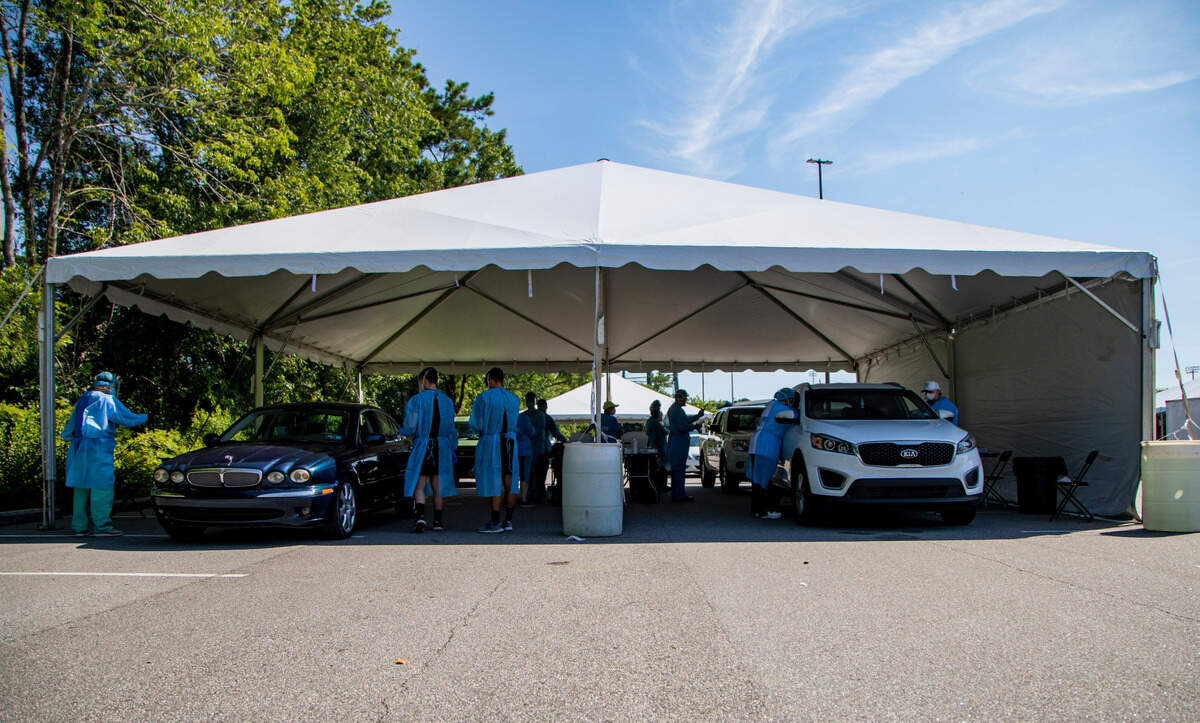
Prisma Health started to close its drive-thru testing sites around the Upstate and Midlands in late March. MUSC recently shut down a similar set up in West Ashley. And the Hilton Head Regional Healthcare System ended its drive-thru events in late April.
Diane Osterman, director of emergency services at Hilton Head Hospital, said the medical center in mid-March noticed a sharp decline in testing interest. (South Carolina’s Phase 1b of vaccine eligibility opened March 8.)
“It was expected,” she said. “Obviously, the busiest days we had were right around the holidays. Right before Thanksgiving, right after Thanksgiving. The same with Christmas. And then after New Year’s.”
The hospital on Jan. 4 tested over 480 patients at a drive-thru clinic, Osterman said.
“After that, it sort of leveled out,” she said. “February was pretty consistent with the (numbers) that we saw — about 150 to 200 every day — and then right around the middle of March, we started dropping to between 70 and 100. ... The past couple weeks we’ve only averaged about 40 a day.”
At the same time, the seven-day average of South Carolina’s positivity rate took a plunge.
The average was about 17.3% in early January, while in mid-April it was 5.2%, marking a 69.9% decrease, state data show.
Why is testing still important?
Dr. Brannon Traxler, DHEC’s director of public health, in late April expressed concern about the testing drop.
COVID-19 tests are still a crucial part of pandemic recovery efforts, especially given the millions of unvaccinated South Carolinians, experts say.
Tests will allow health officials to better gauge how close the state is to reaching an initial herd immunity threshold, Rennert said.
And testing will also help scientists monitor the coronavirus if it becomes endemic, much like seasonal influenza viruses that regularly wane and wax, he said.
Schmidt, of MUSC, added that at-home testing kits provide an easy, cheap way of quickly confirming whether you could endanger someone who’s at high risk for COVID-19.
The importance of testing has been evident for years, experts say. They point to the global campaign against smallpox in the 1900s.
“The eradication of smallpox required concerted, decades-long efforts, including vaccination; communication and public engagement; and test, trace, and isolate measures,” researchers wrote in a recent article published in The Lancet. “Even at the end of vaccination campaigns, such public health measures must be maintained to some extent or new waves of infections might lead to increased morbidity and mortality.”
What are the CDC’s testing recommendations?
The Centers for Disease Control and Prevention says that anyone with COVID-19 symptoms should get tested, even if they are fully vaccinated. (Someone is considered fully vaccinated two weeks after their second Pfizer-BioNTech or Moderna dose and two weeks after their first Johnson & Johnson dose.)
Unvaccinated or partially vaccinated people should also get a test if they’ve been within six feet of someone with COVID-19 for a total of 15 minutes or more over a 24-hour period.
Residents who tested positive for COVID-19 and recovered in the three months before their close contact with a currently infected person don’t need a test, unless they begin to exhibit symptoms, according to the CDC.
Testing options
You can search for COVID-19 testing clinics in South Carolina via an online DHEC map: http://bit.ly/VirusTesting
The MIT Technology Review has published a guide to at-home testing kits.
This story was originally published May 5, 2021 at 10:01 AM.