‘Pivotal for our area’: Surge begins to show Thanksgiving’s COVID-19 toll in Beaufort Co.
Beaufort County’s coronavirus outbreak has taken a dismaying turn for the worse.
Thirteen days after Thanksgiving, the county is again recording case numbers like it did in early August, right after the area’s peak of infections on July 31.
At that apex, Beaufort County was announcing roughly 98 new cases every 24 hours over the course of a given week.
Now, as of Monday, it’s reporting almost 60. And experts warn that a further surge of infections is still possible.
The full effects of Thanksgiving on local SARS-CoV-2 transmission won’t be clear for another few days, doctors say. One federal official predicted Monday that the holiday’s impact won’t be felt until Dec. 14.
But if it’s any indication, the state’s daily coronavirus reports already paint a grim picture: Thanksgiving did not go well for the public health officials trying to mitigate COVID-19’s rapid spread across South Carolina.
The Palmetto State has recorded more than 2,000 new cases every day since Friday. State officials, though, take two days to announce newly confirmed infections, so that trend actually began last Wednesday.
Coronavirus symptoms can appear up to 14 days after exposure, but typically pop up within four to five.
By that logic, if local residents were infected on Thanksgiving, their positive PCR test results probably weren’t added to countywide case totals until Saturday or Sunday, at the very earliest, assuming they were symptomatic, got tested last week and the area’s test results are still being confirmed within 72 hours at the county’s medical centers.
Beaufort County logged 70 new infections Sunday and 71 cases Saturday, marking the highest daily totals since Aug. 11.
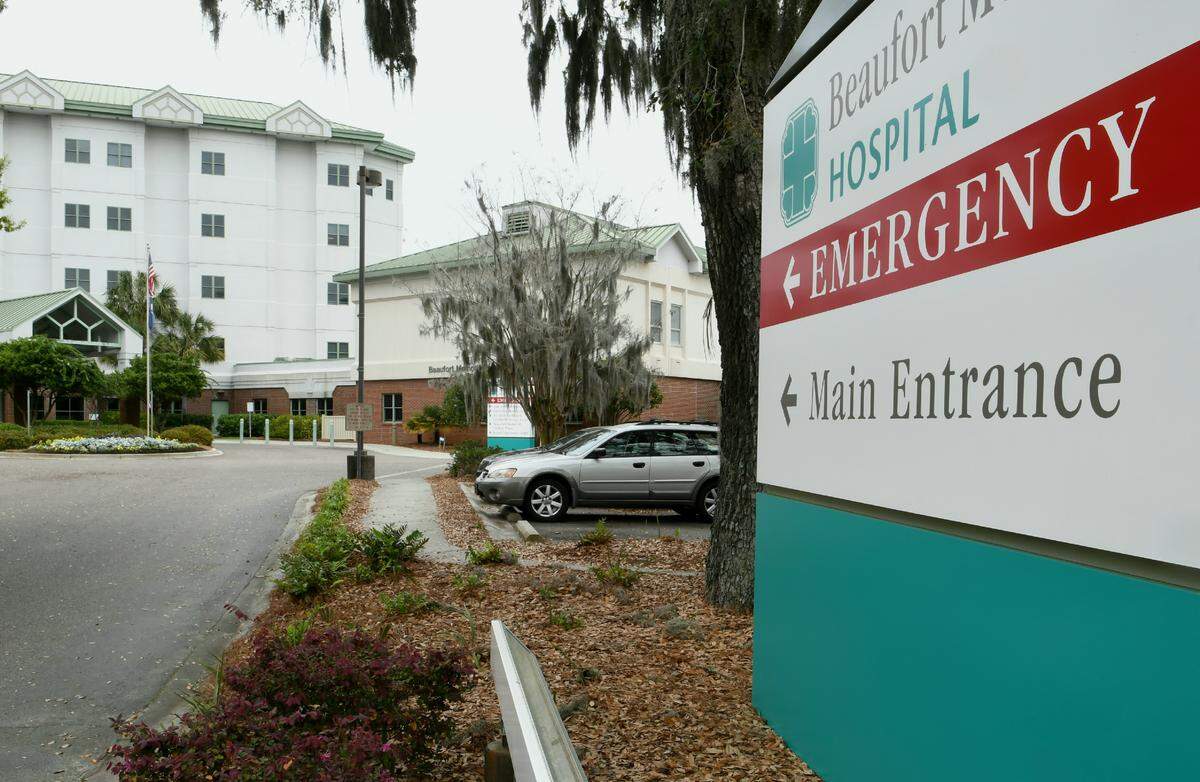
“The virus is lurking more and more,” said Dr. Stephen Larson, medical director at Beaufort Memorial Hospital’s emergency center.
‘Pivotal for our area’
Larson predicted that, at some point this week, BMH will start to admit patients who contracted the pathogen during Thanksgiving get-togethers and later developed COVID-19-related complications.
Residents hospitalized for the disease typically have pneumonia and are admitted about seven to 10 days after an infection, he said.
“We’re going to now see people come through the ER who are short of breath, their oxygen level will be low, and then we’ll do an X-ray and we can see findings of COVID pneumonia, which has a patchy look to it,” he said Monday. “It’s pretty classic.”
BMH was treating 11 COVID-19 patients as of Friday morning, according to spokesperson Courtney McDermott.
Dr. Faith Polkey, chief clinical officer at Beaufort Jasper Hampton Comprehensive Health Services, also said the county will have a better idea of Thanksgiving’s toll by Dec. 12 and Dec. 13.
“I think the next week is going to be pretty pivotal for our area,” she said Friday.
Coronavirus spread, she and Larson both said, is being driven at the household-level. Larson said he’s recently noticed that young people are infecting older family members inside their own homes.
“Exposure to the younger age population is probably the biggest risk now,” he said.
That’s exactly why Thanksgiving was so dangerous, experts say, especially in a county where more than 40% of all coronavirus cases since March have been recorded among 11- to 30-year-olds. Twenty-two percent of cases in the county from Dec. 1 to Dec. 5, meanwhile, were identified in the 21- to 30-year-old age range, as of early Tuesday.
With residents visiting family or friends outside of their typical “bubble,” Larson said the potential for COVID-19 exposure was high in late November, especially when eating inside without masks.
College students returning home for the holidays may have also contributed to local transmission just before Thanksgiving, he added.
A similar trend was evident in the area’s Latino community during earlier stages of the pandemic, Larson said.
“Young frontline workers came home, and all of a sudden grandma and grandpa were in the ICU,” he said.
Averting disaster
Even if it sounds silly, Larson said wearing a mask while indoors could be helpful, especially if college students are visiting. Masking has proved effective, he said, noting the rapid decline in local disease spread a few weeks after county mask mandates went into effect this past summer.
The new challenge with holidays like Thanksgiving, he said, is that groups of people are gathering indoors to eat without face coverings, sometimes in poorly ventilated buildings.
Younger people or others returning home, meanwhile, should get tested for COVID-19, he and Polkey added.
“Now is the time,” she said.
Linda Bell, the state’s top epidemiologist, also told reporters last week that South Carolina can avert disaster if people follow public health guidelines.
“If we all pay careful attention to those measures — the use of masks, physical distancing, avoiding large groups, being careful even in your family gatherings, where we are seeing the greatest number of clusters — if we take to heart all of those measures that are available to all of us now,” she said, “in a matter of about four to six weeks, we can see a different trajectory in South Carolina than what we’re seeing in other states.”